


Why Trump chose to extend ceasefire with Iran
4 min read



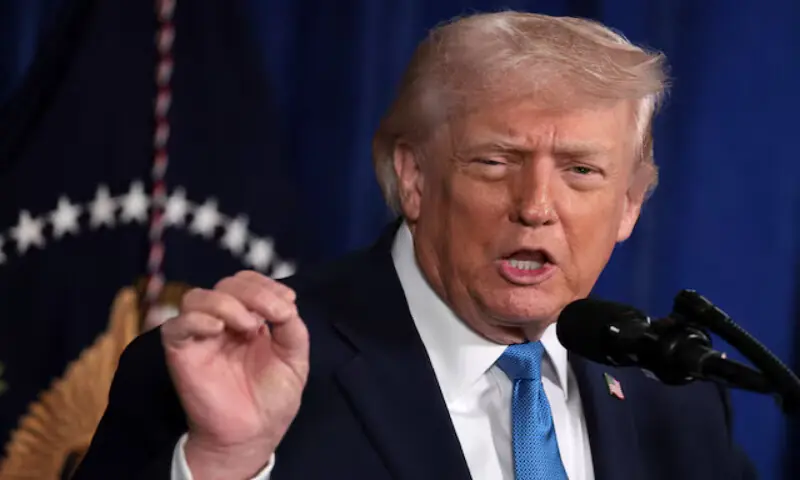
When US President Donald Trump met his national security team at the White House on Tuesday, they faced a key question: how to proceed on Iran as the ceasefire deadline approached, CNN said in a report.
With time running out, Air Force Two was already prepared at Joint Base Andrews for Vice President JD Vance’s planned trip to Pakistan for another round of talks.
But there was a problem: Washington had received no response from Tehran, the report added.
In the days leading up to the meeting, the US had shared a set of broad proposals with Iran, hoping for preliminary agreement before in-person discussions.
However, officials said there had been no reply, raising doubts about whether sending a delegation would achieve anything at this stage.
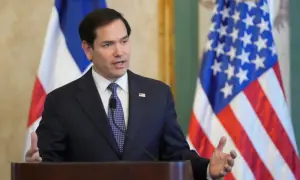
According to the report, during the meeting, Trump was joined by senior officials, including Secretary of State Marco Rubio, Defence Secretary Pete Hegseth, Joint Chiefs Chairman Dan Caine, and CIA Director John Ratcliffe.
The report stated that US officials had also urged Pakistan’s military chief Field Marshal Asim Munir, who is acting as a mediator, to secure at least some response from Iran before Vance’s departure.
But even hours later, there was still silence.
US officials believe the lack of response may reflect divisions within Iran’s leadership.
According to their assessment, there appears to be no clear consensus on key issues, particularly around uranium enrichment and Iran’s stockpile of enriched material — both central sticking points in the talks.
Part of the uncertainty, officials say, stems from the role of Iran’s new Supreme Leader, Mojtaba Khamenei.
There are questions over whether he has provided clear direction to negotiators or whether officials are left guessing his position.
His low public profile has also complicated internal decision-making, according to US assessments, the report stated.
Despite these challenges, officials say talks could still resume if there are signs of progress, though the timing remains uncertain.
Ceasefire extended without a deadline
Instead of escalating militarily, Trump opted to extend the ceasefire just hours before it was due to expire — this time without setting a new deadline, the CNN report said.
In a social media post, Trump described Iran’s leadership as “seriously fractured” but reiterated his preference for a diplomatic outcome.
The move reflects Trump’s reluctance to reignite a broader conflict, particularly one he has previously claimed the US had already won.
However, the stalled negotiations highlight the difficulties in reaching a deal that satisfies Washington’s demands, the report pointed out.
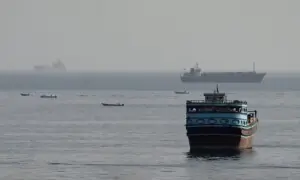
Iran, for its part, has insisted that the US lift its blockade on ships entering or leaving Iranian ports via the Strait of Hormuz before it returns to talks.
Trump has rejected that condition, saying the waterway would not be reopened until a final agreement is reached.
US and Pakistani officials had pushed for extending the ceasefire to give Iran more time to unify its position.
While that may create space for diplomacy, there is no guarantee Tehran will engage.
Pressure, risks, and uncertainty
The officials are of the view that talks could resume quickly if Iran shows it is ready to engage.
Both sides are under economic strain while the Strait of Hormuz remains effectively closed, which keeps the door open — at least in theory — for negotiations to restart.
So far, however, there has been little sign of flexibility from Tehran.
An adviser to the Iranian parliament speaker dismissed the ceasefire extension, suggesting that continued economic pressure is no different from an ongoing conflict.
Inside the Trump administration, there are also concerns that easing pressure without clear commitments might give Iran time to stall negotiations while rebuilding its position.
Several key issues are still unresolved, including Iran’s nuclear programme, what happens to its stockpile of enriched uranium, and how much sanctions relief the US is willing to offer.
These questions will be central to whether any deal can be reached.
Outlook remains uncertain
Donald Trump has remained confident that he can secure a stronger agreement than the 2015 nuclear deal he withdrew from during his first term. Still, the path ahead is far from clear.
For now, the extension in the ceasefire provides breathing space — but it also shows just how fragile the situation remains, with both sides still far apart on the core issues.
For the latest news, follow us on Twitter @Aaj_Urdu. We are also on Facebook, Instagram and YouTube.



Comments are closed on this story.