


Iran rejects Trump’s uranium claims, calls them ‘false’
3 min read
A senior Iranian official has denied US President Donald Trump’s claim about Iran’s nuclear programme and dismissed US assertions that Tehran had agreed to transfer its enriched uranium stockpile abroad.
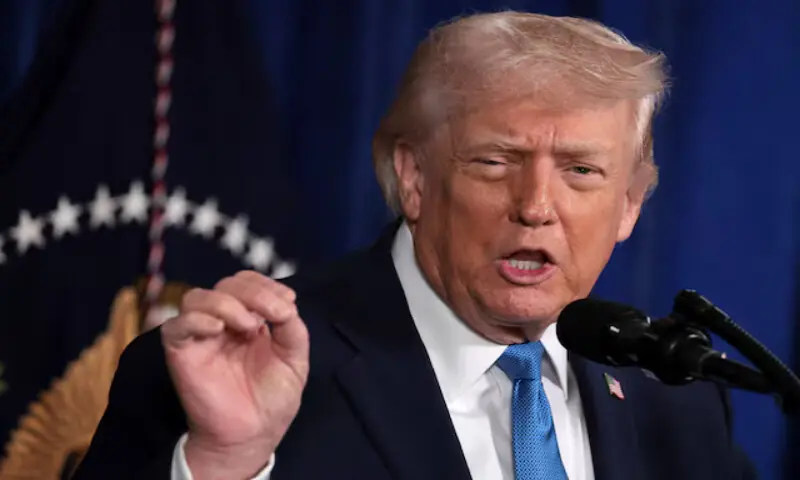
President Trump told Reuters on Friday that the US will work with Iran to recover its enriched uranium and bring it back to the United States.
“We’re going to get it together. We’re going to go in with Iran, at a nice leisurely pace, and go down and start excavating with big machinery… We’ll bring it back to the United States,” Trump said during a phone interview.
Iranian officials, however, strongly rejected a series of claims made by Donald Trump regarding Tehran’s nuclear programme and its policies in the strategic Strait of Hormuz.
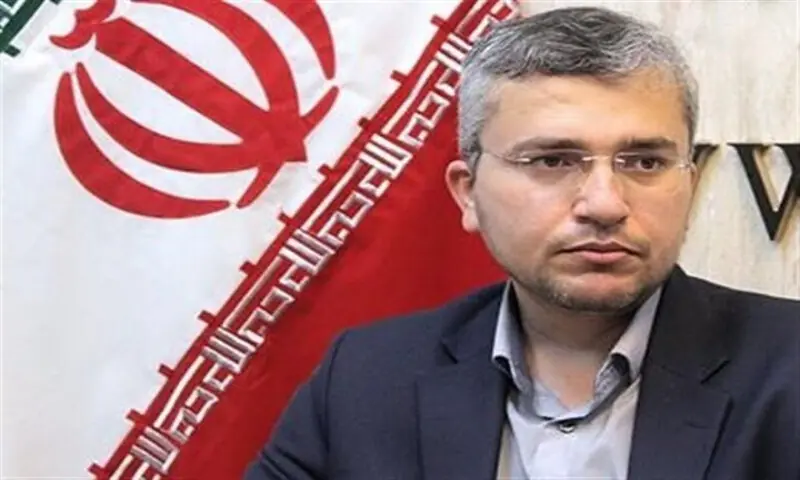
Ebrahim Rezaei, spokesperson for Iran’s National Security Committee, dismissed Trump’s claim that Tehran had agreed to hand over its enriched uranium stockpile.
Speaking to Al Jazeera Mubasher, Rezaei said Iran “categorically rejects” any move toward halting uranium enrichment or dismantling what it describes as its peaceful nuclear programme, calling such demands a “strategic red line.”
Trump has repeatedly claimed that Iran would hand over its enriched uranium, stating in a recent social media post that the United States would obtain all nuclear material.
However, Iran’s Foreign Ministry spokesperson Esmaeil Baghaei also rejected the claim, stressing that enriched uranium is “as sacred as Iranian soil” and would not be transferred “under any circumstances.”
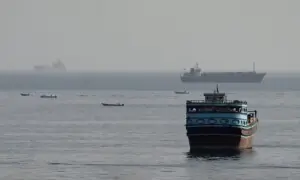
Separately, Iran’s Parliament Speaker Mohammad-Baqer Qalibaf pushed back against what he described as “false claims” by Trump concerning Iran’s stance on the Strait of Hormuz.
In a post on X, Qalibaf said the US president had made multiple inaccurate statements within a short span of time.
Trump had claimed that Iran agreed not to close the strait and claimed that a US naval blockade would remain in effect until a broader agreement with Tehran was finalised.
He also suggested that ceasefire negotiations were nearing completion.
Qalibaf rejected these assertions, warning that if US pressure continues, the strait’s status could change.
He emphasised that passage through the waterway would be governed by Iran’s rules, including designated routes and prior authorisation.
“Whether the strait remains open or closed will be determined on the battlefield, not on social media,” he said.
Iranian officials also accused Washington of engaging in “media warfare” and spreading misinformation during both military escalation and ongoing diplomatic efforts.
Qalibaf argued that such tactics had failed to deliver results during the conflict and would be equally ineffective in negotiations.
Baghaei reiterated that Iran remains committed to a previously proposed framework for negotiations, which includes a full cessation of hostilities, lifting of sanctions, and compensation for damages as core demands.
For the latest news, follow us on Twitter @Aaj_Urdu. We are also on Facebook, Instagram and YouTube.




Comments are closed on this story.