


Bushehr nuclear plant under repeated attack, raising Gulf-wide safety fears
2 min read


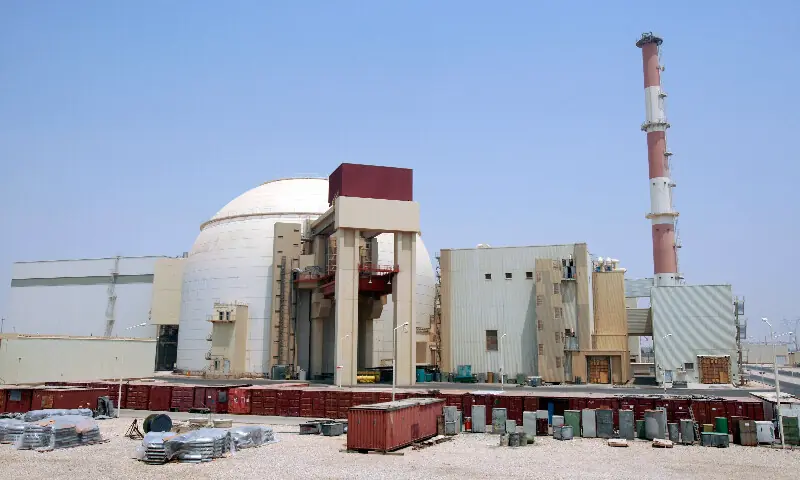
Iran’s only operating nuclear facility, the Bushehr power plant, has been repeatedly targeted in the ongoing US-Israel conflict, sparking concerns over a potential nuclear incident affecting the entire Gulf region.
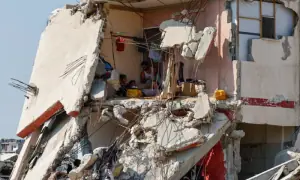
The most recent attack on Saturday hit a location near the plant, killing one security guard and damaging a side building, according to Iran’s Atomic Energy Organisation (AEOI).
Iranian Foreign Minister Abbas Araghchi said Bushehr has now been “bombed” four times since the war began on February 28 and criticised what he described as a “lack of concern” for nuclear safety by the United States and Israel.
Experts warn that a direct hit could release radioactive isotopes like Caesium-137, contaminating air, soil, water, and food for decades, with health risks including burns and cancer.
The Russia-built plant, located in the coastal city of Bushehr, has one operational reactor providing around 1,000MW to Iran’s national grid.
Two additional units are planned by 2029. Hundreds of Russian staff work at the site, some of whom were evacuated after recent strikes.
The UN nuclear watchdog, the International Atomic Energy Agency (IAEA), has repeatedly warned against attacks on Bushehr.
Director-General Rafael Grossi said any strike on the reactor or its fuel storage could trigger a regional catastrophe, requiring evacuations, iodine distribution, and monitoring of food and water supplies for hundreds of kilometres beyond Iran.
Regional concerns include Gulf waters, where radioactive contamination could disrupt marine life and halt desalination, a key source of drinking water for countries like Qatar.
Officials there warned that a Bushehr strike could render seawater unsafe, potentially causing water shortages within days.
International law prohibits attacks on civilian nuclear facilities.
Article 56 of Protocol I of the Geneva Conventions forbids targeting installations containing dangerous forces, including nuclear materials, while IAEA guidelines require the protection of staff and systems critical to preventing reactor meltdown.
Iran has criticised the muted response from Western nations compared to international reactions to the Zaporizhzhia nuclear plant in Ukraine, which faced heavy artillery attacks in 2022.
In that case, the UN, NATO, and the EU issued statements condemning the strikes and coordinated monitoring efforts.
Past nuclear disasters underline the stakes: Japan’s Fukushima reactors melted after a 2011 earthquake, prompting mass evacuations, while the 1986 Chornobyl explosion caused widespread radiation exposure, thousands of cases of thyroid cancer, and long-term displacement of over 300,000 people.
For the latest news, follow us on Twitter @Aaj_Urdu. We are also on Facebook, Instagram and YouTube.









Comments are closed on this story.