


Pakistan’s bid to mediate US-Iran talks faces mounting challenges
3 min read


Pakistan’s diplomatic efforts to bring the US and Iran to the negotiating table are facing a stiff challenge as Israel continues to strike civilian targets in Iran and the Pentagon plans an increased US military presence in the Gulf, a media report said.
Islamabad is pursuing a careful approach, positioning itself as neutral territory where both Iran and the US may be willing to engage in dialogue, even as the conflict shows signs of deepening.
According to a report in The Guardian, Pakistan is banking on its relatively even-handed relations with both Washington and Tehran to act as a go-between.
Officials say Pakistan’s position is strengthened by the fact that it is not directly involved in the Middle East conflict and does not host US military bases — factors that could make it a more acceptable venue for both sides to come together.
At the same time, Pakistan’s military chief, Field Marshal Asim Munir, maintains close ties with President Donald Trump.
Additionally, Islamabad’s relationship with Tehran has quietly improved in recent years, giving Pakistan rare access to both sides of the conflict.
Both Iran and the US have indicated willingness to engage in talks, according to government officials in Islamabad.
However, the widening conflict and deep mistrust between the two sides pose major obstacles.
Pakistani officials see Israel as the most likely spoiler.
On Friday, Israel bombed two of Iran’s largest steel plants, civilian nuclear sites, and two universities, which Tehran said contradicted US President Donald Trump’s announcement of a pause on attacks against civilian infrastructure to allow diplomacy a chance.
“The toughest part is believing Trump’s word. He is not a rational player. He’s completely whimsical,” said Maleeha Lodhi, former Pakistani ambassador to the US.
Iran is seeking not only a ceasefire but guarantees that the war is fully over.
Tehran has suggested maintaining control over the Strait of Hormuz, a vital waterway for Gulf oil exports, an idea the US secretary of state rejected, though Trump has floated joint US-Iranian administration of the strait.
Pakistan has been relaying proposals between the two sides, noting that while positions remain hardline, a negotiated settlement could still be reached if both sides are serious.
Diplomatic activity intensified over the weekend.
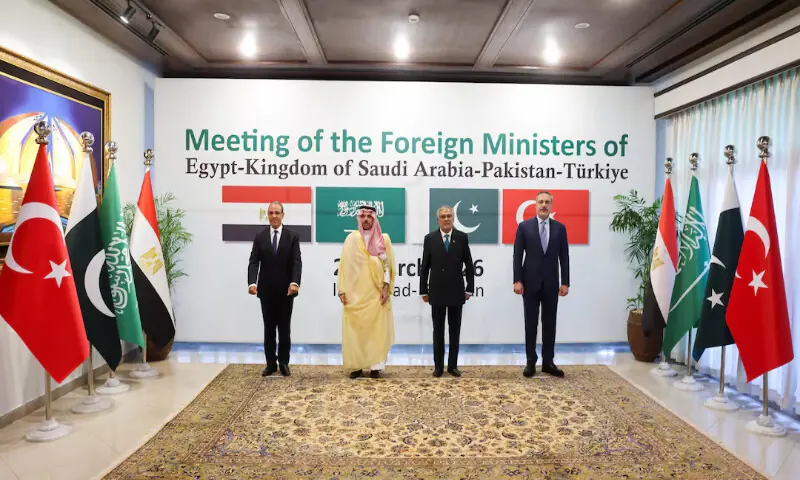
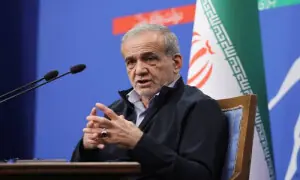
Prime Minister Shehbaz Sharif spoke with Iranian President Masoud Pezeshkian and announced that the foreign ministers of Turkey, Egypt, Saudi Arabia, and Pakistan will meet in Islamabad to explore options for ending the war.
These four countries are emerging as a new regional alignment, combining military strength, nuclear capabilities, and Saudi Arabia’s financial resources.
Yet Saudi officials, who have themselves been targeted by Iranian attacks, have privately signalled a desire for the bombardment to continue.
Any talks are expected to be indirect, with Pakistani officials shuttling between US and Iranian delegations, as Tehran refuses face-to-face meetings with Washington.
Pakistan’s nuclear and military capabilities are seen as crucial to providing a secure venue for talks and safe passage for Iranian officials.
Iran is deeply sceptical of the US’s intentions, pointing to past instances where talks were followed by attacks.
Now, with reports that the Pentagon is considering sending thousands more troops to the Middle East, authorities in Tehran said that the United States may be preparing for more fighting rather than genuinely pursuing diplomacy.
Pakistan has proposed that the US be represented by Vice President JD Vance in the talks, an idea Tehran reportedly supports.
Vance has expressed scepticism about the war, noting that the US has largely achieved its military objectives but plans to continue operations “for a little while longer.”
For Islamabad, there is added urgency. Last year, Pakistan signed a defence agreement with Saudi Arabia, potentially obliging it to enter the war on Riyadh’s side.
With a long border with Iran and the world’s second-largest Shia population, Pakistan is determined to avoid being drawn into the conflict.
For the latest news, follow us on Twitter @Aaj_Urdu. We are also on Facebook, Instagram and YouTube.



Comments are closed on this story.