


Iran war damage to Qatar hits global LNG outlook, upends Asia demand growth
4 min read



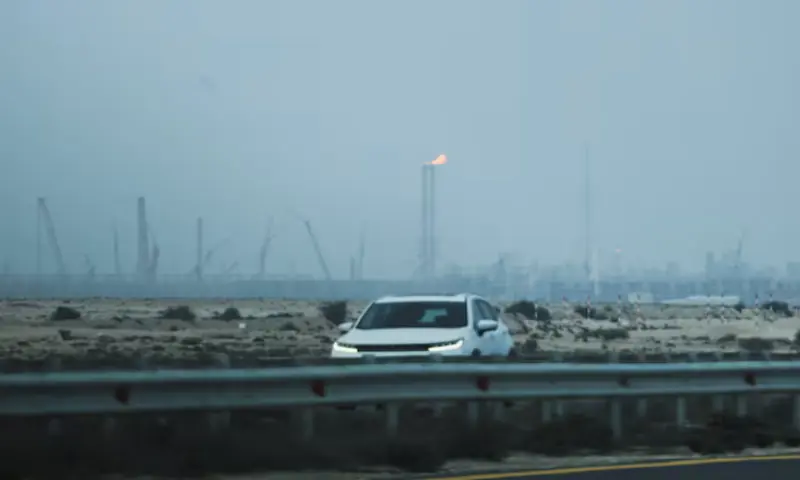
The Iran war is upending the global LNG outlook as soaring prices, damage to major supplier Qatar’s export infrastructure and potential delays to new supply raise doubts about previously expected demand from price-sensitive Asian buyers.
Before the war, analysts expected global liquefied natural gas supply to rise as much as 10% this year to between 460 million and 484 million metric tons as new capacity, mainly in the US and Qatar, came online, with demand forecast to grow in tandem.
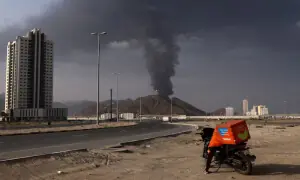
Now, Iran’s blocking of the Strait of Hormuz, which handles 20% of global LNG flows, and damage to Qatar’s liquefaction trains - sidelining 12.8 million tons per year of LNG for three to five years - have prompted consultancies S&P Global Energy, ICIS, Kpler and Rystad Energy to cut global supply outlooks by as much as 35 million tons.
That is equal to about 500 LNG cargoes, enough to meet over half of Japan’s annual imports or Bangladesh’s for five years.
“We expect this gas price crisis will lead some countries to reconsider growing their gas demand at the rate we previously forecast, and so LNG demand growth will be lower than our pre-war forecast,” said S&P Global Energy analyst Lucien Mulberg.
S&P Global Energy expects a 33-million-ton drop in exports out of Qatar and the United Arab Emirates this year, and trimmed projected supply by a further 19 million tons each year from 2027 to 2029 due to expected delays at Qatar’s North Field expansion and ADNOC’s Ruwais LNG projects under construction.
LNG PRICES SOAR ABOVE ASIAN BUYERS’ COMFORT ZONE
With the supply shock, Asia LNG prices have jumped 143% since the US-Israeli war with Iran began on February 28, the second major spike in four years following Russia’s invasion of Ukraine.
At a more than three-year high of $25.30 per million British thermal units (mmBtu), prices are well above the $10 per mmBtu threshold at which emerging market demand picks up, and analysts see prices remaining above that comfort zone through 2027.
Rabobank expects Asia prices to average $16.62 per mmBtu this year and $13.60 in 2027, while UBS raised its forecast to $23.60 per mmBtu for this year and to $14.50 for next year.
“In the near term, the market rebalances primarily through higher prices and demand destruction in South Asia,” said Laura Page, manager of LNG Insight at Kpler.
INDUSTRIAL DEMAND SHRINKS IN SOUTH AND SOUTHEAST ASIA
Roughly 80% of Qatar’s LNG supply goes to Asia. Price-sensitive buyers such as Bangladesh and India are seeking replacement LNG supplies while switching fuels to coal and domestic gas.
Pakistan, which heavily relies on Qatar for LNG, is rationing energy through a four-day work week.
Demand is shrinking in energy-intensive sectors like fertilisers and textiles.
“There is a demand destruction process going on,” said Iqbal Ahmed, Chairman and CEO, Pakistan GasPort, which co-owns an LNG import terminal.
In India, petrochemical and ceramic production have also been hit, said industrial players.
The US, the world’s largest LNG exporter, is unlikely to fill supply gaps as American export plants are running nearly at full capacity, with most of their volumes locked into long-term contracts.
“There’s just no way to easily replace the lost volumes, and no amount of portfolio optimisation or cargo swaps will bridge the gap between the lost supply and current demand… which is a significant blow to energy security for those countries that are relying on those volumes,” said Seb Kennedy, independent analyst at Energy Flux News.
The crisis could spur a renewed push in Asia for domestic energy alternatives, leading to permanent LNG demand destruction, said Sam Reynolds, LNG research lead at pro-renewables think tank IEEFA.
NORTH ASIAN LNG BUYERS ARE UNDAUNTED
The top buyer China, had already been easing reliance on LNG.
Imports grew rapidly for a decade before Beijing shifted focus to domestic gas production, higher Russian pipeline imports and renewable energy.
A Chinese state gas trader said steady growth in domestic gas production, more gas via the Power of Siberia pipeline and ongoing volumes from Russia’s Arctic LNG 2 project will more than offset the loss of Qatari shipments, which account for 6% of China’s roughly 400 billion cubic metres of annual gas use.
However, in less price-sensitive markets like second- and third-placed importers Japan and South Korea, the war is unlikely to materially change gas procurement plans, given a lack of significant domestic production or piped gas access.
JERA, Japan’s biggest LNG buyer, said Qatar remains a reliable supplier and its contracting approach will not change.
“I don’t think the fundamental fact that the Middle East - and Qatar in particular - plays an important role will change,” said executive Ryosuke Tsugaru.
For the latest news, follow us on Twitter @Aaj_Urdu. We are also on Facebook, Instagram and YouTube.











Comments are closed on this story.