


US waives oil sanctions — Iran plays the long game
5 min read


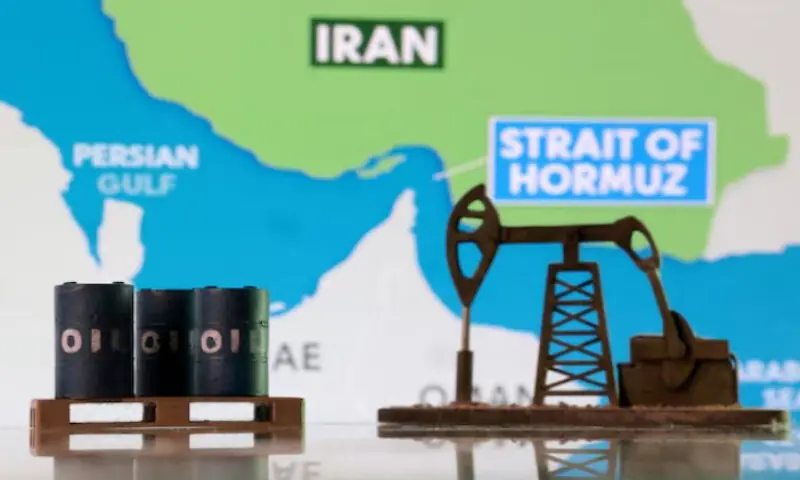
When the United States announced a 30-day waiver allowing the sale of Iranian oil, it was presented as a necessary step to cool surging global energy prices. The move could release an estimated 140 million barrels into the market, enough in theory to ease short-term supply pressure.
But oil markets are not governed by supply alone, especially in times of war. They are shaped by perception, risk, and strategy. And in that arena, Iran is playing a very different game.
The uncomfortable reality for policymakers in Washington is that this waiver may soften the edges of the crisis, but it is unlikely to resolve it. Tehran’s objective is not to maximise exports. It is to maximise pressure.
A conflict engineered to spread economic pain
Since the outbreak of direct confrontation involving Israel and the U.S., Iran’s response has been calculated and asymmetric. Rather than matching force conventionally, it has targeted the arteries of the global economy, including energy infrastructure, shipping lanes, and regional stability.
The escalation around the South Pars gas field, shared with Qatar and forming part of the world’s largest natural gas reserve, marked a turning point. What was once a regional conflict has evolved into a systemic threat to global energy security.
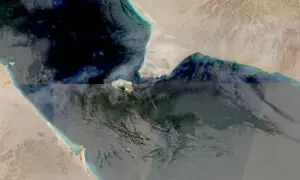
By threatening flows through the Strait of Hormuz, a narrow passage that carries roughly one-fifth of the world’s oil and a significant share of liquefied natural gas, Iran has effectively turned geography into leverage. Its message is simple. If it cannot export oil freely, the world may not either.
Energy analysts warn that if disruptions persist, prices could spike sharply, with some cautioning that oil could move towards extreme levels under worst-case scenarios.
Prices tell the real story
The numbers already reflect the scale of the shock. Before the conflict escalated in late February, Brent crude hovered near 60 dollars a barrel. Within weeks, it surged past 100 dollars, with spikes approaching 110. That is an increase of more than 50 per cent.
Natural gas markets have reacted even more sharply. European benchmark prices have climbed to multi-year highs, while in the U.S., gasoline prices have risen by roughly 25 to 30 per cent, feeding directly into inflation and household costs.
This is not just volatility. It is systemic stress. Rising energy prices ripple across economies, pushing up manufacturing costs, transport expenses, and food prices. Growth forecasts are being revised downward, while central banks face renewed pressure to contain inflation.
This is precisely the environment Iran appears to be cultivating, one where the economic cost of war becomes politically difficult for its adversaries to sustain.
Why Iran may not fully use the waiver
At first glance, the U.S. assumption seems straightforward. More Iranian oil should help lower prices. But this overlooks Tehran’s incentives.
Even with sanctions eased, logistical constraints remain. Shipping routes are under threat, insurance costs for tankers have surged, and the risk premium on Gulf energy flows remains elevated.
More importantly, Iran benefits from tight markets. Elevated prices strain Western economies, fuel inflation, and create political pressure, particularly in sensitive election periods.
In such a scenario, Iran does not need to maximise exports. It only needs to maintain uncertainty. And uncertainty keeps prices high.
The global economy under strain
The ripple effects are already visible across major economies.
In Europe, industrial heavyweights like Germany and Italy face renewed energy pressure, reviving fears of a slowdown. The United Kingdom, heavily reliant on gas-fired electricity, is particularly exposed to rising gas prices.
In Asia, vulnerability is even sharper. Japan depends almost entirely on imported energy, much of it routed through Hormuz, while India imports around 85 to 90 per cent of its crude, leaving it exposed to both price shocks and currency stress.
For more fragile economies such as Pakistan and Sri Lanka, the consequences are severe. These include fuel shortages, inflation spikes, and emergency economic measures.
Gulf States: caught in the crossfire
Even energy-rich Gulf states are not immune.
Countries like Kuwait, Bahrain, and Qatar face a paradox. Prices are high, but exports are constrained due to security risks and disrupted routes. In some cases, energy infrastructure has come under direct threat, further complicating supply flows.
At the same time, tourism, a key pillar of economic diversification in the Gulf, is taking a hit. Regional instability is deterring travel, disrupting aviation networks, and weakening investor confidence.
The broader economic model of the Gulf, built on stability, connectivity, and reliable energy exports, is now under strain.
A shrinking toolkit in Washington
The U.S. waiver on Iranian oil does not stand alone. It follows earlier moves to ease restrictions on other oil supplies and relax domestic shipping rules. This suggests that Washington’s economic toolkit is being stretched.
Yet the effectiveness of these measures remains limited. Energy markets respond not just to supply volumes but to geopolitical risk. As long as the Strait of Hormuz remains vulnerable and regional tensions persist, additional barrels are unlikely to stabilise prices in a meaningful way.
Strategy outweighs supply
The central flaw in the current approach lies in treating this as a conventional supply shock. It is not. This is a strategic disruption that is being sustained and amplified.
Iran is not simply reacting to war. It is reshaping the economic battlefield. By keeping markets on edge, it increases the global cost of conflict and shifts pressure onto its adversaries.
In that context, the sanctions waiver may offer temporary relief, but it does not change the underlying dynamics. Iran does not need to maximise exports to benefit. It only needs to maintain instability.
Until the geopolitical conditions for stability are restored, global energy markets will remain hostage, not just to supply, but to strategy.
The writer is a seasoned journalist covering the economy and international affairs.
For the latest news, follow us on Twitter @Aaj_Urdu. We are also on Facebook, Instagram and YouTube.









Comments are closed on this story.