


Iraq, KRG agree to resume oil exports via Turkey’s Ceyhan hub
3 min read



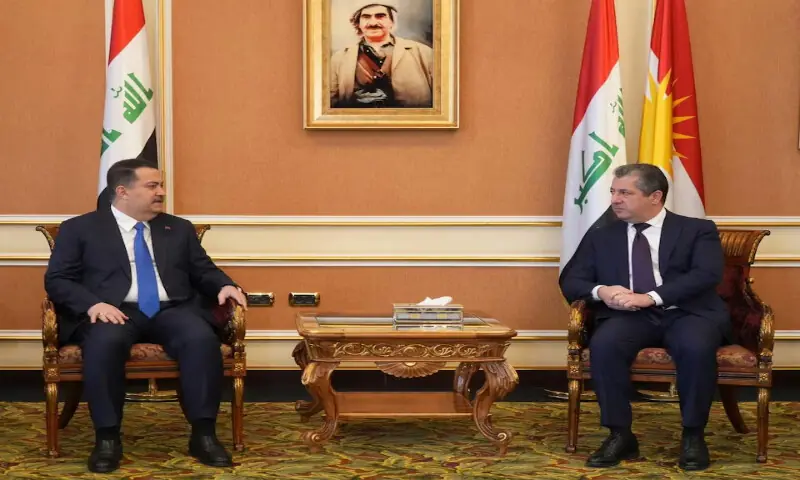
The Iraqi government and the Kurdistan Regional Government reached an agreement to resume oil exports to Turkey’s Ceyhan energy hub starting on Wednesday, Iraq’s oil minister said on Tuesday.
Oil flow from Ceyhan port is expected to start at 10am local time on Wednesday, state media said, citing Iraqi Oil Minister Hayan Abdel-Ghani.
The KRG confirmed the agreement, saying in a statement the two sides would form a joint committee to prepare for resuming oil exports via the region’s pipeline from Wednesday, with revenue to be returned to the federal treasury.
The two sides also agreed to take the necessary security measures to protect oilfields and ensure the continuity of export operations, the KRG said.
KRG Prime Minister Masrour Barzani said in a post on X the region would allow crude exports through the Kurdistan pipeline at the earliest possible time “in light of the exceptional circumstances the country is confronting.”
“Discussions with Baghdad will continue to urgently lift restrictions on imports and trade to the region, and to provide the necessary guarantees to oil and gas companies to ensure they can resume production in a safe environment,” he added.
Barzani later said on X that during a phone call with US envoy Tom Barrack, he had instructed the KRG team to provide all necessary facilities to resume oil exports in the interest of citizens amid the difficult circumstances.
Iraq’s Kurdish authorities said on Sunday that Baghdad had failed to address security and economic challenges facing the oil sector, rejecting an accusation that they were refusing to allow crude exports through a regional pipeline.
The statement came after Iraq’s oil ministry said the KRG had refused to let it use a pipeline as an alternative route for crude flows disrupted by the Iran conflict, accusing authorities there of putting in place arbitrary conditions.
PRODUCTION PLUNGE FROM IRAN CONFLICT
Earlier on Tuesday, the Iraqi presidency urged both the Iraqi federal government and the KRG to cooperate to resume crude oil exports, a presidency statement said.Iraq’s parliament on Wednesday also issued a seven-point decision during a session devoted to oil exports through the Ceyhan pipeline, calling on the federal government to find outlets for Iraqi crude to avoid economic damage amid current security conditions, the state news agency reported.
The parliamentary decisions appeared aimed at reinforcing Baghdad’s authority over the country’s oil sector and followed a late meeting on Tuesday with Iraq’s oil minister to assess the impact of halted oil exports after the closure of the Strait of Hormuz.
In a statement, parliament said it was prepared to approve any measures needed to support that effort and called on the federal government to assert control over all sources of oil production, transport and distribution.
It also urged the government to supply fuel oil to state-run and private factories to prevent refinery stockpiles from rising, and to rehabilitate the Iraqi pipeline route from Kirkuk through western Mosul, Zummar and Fishkhabour toward Ceyhan.
Oil production from Iraq’s main southern oilfields, where most of its crude is produced and exported, has plunged 70% to just 1.3 million barrels per day, sources told Reuters on March 8, as the Iran conflict effectively shut the vital Strait of Hormuz through which some 20% of global oil passes.
Iraq’s oil ministry sent a letter in early March to the KRG seeking permission to pump at least 100,000 bpd of crude from Kirkuk oilfields through the Kurdistan pipeline network to Turkey’s Ceyhan energy hub, two oil officials told Reuters last week.
Kurdish officials say tensions with Baghdad have risen after the federal government moved to implement a new electronic customs system, allowing it to monitor imports and revenue, a step the KRG sees as undermining its autonomy and control over trade.
For the latest news, follow us on Twitter @Aaj_Urdu. We are also on Facebook, Instagram and YouTube.












Comments are closed on this story.