Live
Iran israel war

Iran ready for US ground operation: Parliament speaker

Published 29 Mar, 2026 02:25pm 0 min read
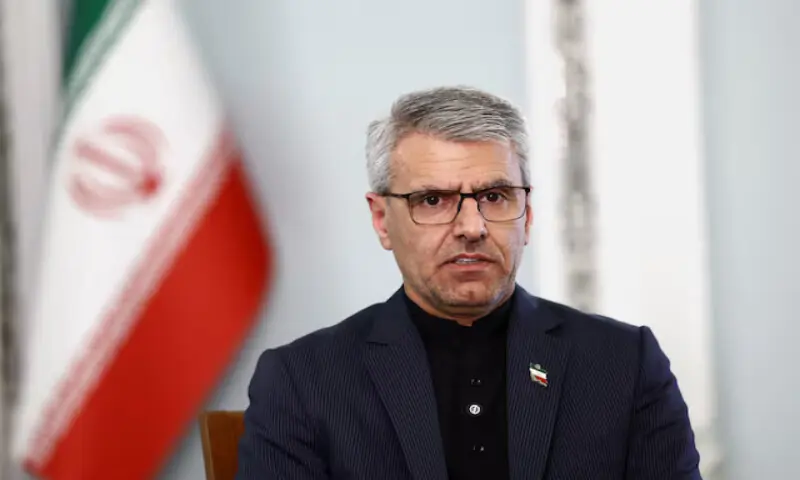
Iranian Parliament Speaker Mohammad Bagher Ghalibaf. – Reuters

Iran’s armed forces are prepared for a US ground operation, the speaker of the country’s parliament has said, amid reports that the Pentagon is preparing for a ground assault.

Mohammad Bagher Ghalibaf accused the administration of US President Donald Trump of publicly calling for negotiations while preparing for a ground attack inside Iran.

He warned that any such move would provoke a strong response from Iranian forces and could lead to retaliation against US regional allies.

“The enemy openly sends a message of negotiation and dialogue while secretly planning a ground attack,” Ghalibaf said.

“Our forces are ready, our missiles are in place, and our determination has only grown stronger.”

He also claimed that Iranian forces were aware of what he described as weaknesses within US forces and suggested that any ground incursion would be met with force.

Ghalibaf has recently emerged as a key figure in Tehran’s engagement with Washington, according to US media reports.

For the latest news, follow us on Twitter @Aaj_Urdu. We are also on Facebook, Instagram and YouTube.

Dar, Turkish FM discuss regional situation, reaffirm strategic partnership

Updated 29 Mar, 2026 02:29pm 0 min read
Photo courtesy APP
Photo courtesy APP

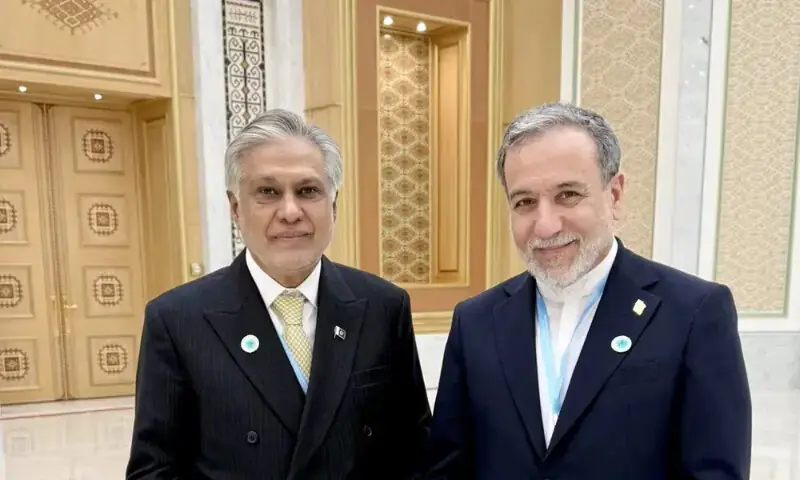
Deputy Prime Minister and Foreign Minister Senator Ishaq Dar and the Foreign Minister of the Republic of Turkiye, Hakan Fidan, exchanged views on recent regional developments, including the evolving situation in Iran, on Sunday.

During a bilateral meeting at the Foreign Office, they emphasised the importance of dialogue and sustained diplomatic engagement to promote peace and stability.

Foreign Minister Hakan Fidan is visiting Pakistan alongside the Foreign Ministers of Saudi Arabia and Egypt for consultations on the evolving regional situation and ongoing efforts aimed at de-escalation.

During the meeting, Ishaq Dar underscored the historic and fraternal ties between Pakistan and Turkiye, rooted in shared history, culture, and mutual respect, the Foreign Office spokesperson said in a press release.

Dar expressed satisfaction at the positive trajectory of bilateral relations and reaffirmed Pakistan’s commitment to expanding cooperation with Turkiye across all sectors of mutual interest.

The discussions provided an opportunity to review the full spectrum of bilateral relations and explore avenues for strengthening the longstanding strategic partnership between the two brotherly countries.

Both sides reaffirmed their unwavering support for each other’s core national interests, agreed to maintain close coordination, and to continue working together to deepen the strategic partnership between Pakistan and Turkiye.

For the latest news, follow us on Twitter @Aaj_Urdu. We are also on Facebook, Instagram and YouTube.

Yemen’s Houthis enter Iran war with attacks on Israel, while US Marines arrive in region

Published 29 Mar, 2026 01:50pm 0 min read
Streaks of light illuminate the sky during an interception attempt, amid the U.S.-Israeli conflict with Iran, as seen from Ashkelon, Israel. – Reuters

The risk of an expanded Iran war ​grew as Yemen’s Iran-aligned Houthis on Saturday launched their first attacks on Israel since the start of the conflict, as additional U.S. forces reached the Middle East.

Washington has dispatched thousands ‌of Marines to the Middle East in the month-old war. The first of two contingents arrived on Friday on an amphibious assault ship, the U.S. military said on Saturday.

The Washington Post reported on Saturday that U.S. officials said the Pentagon was preparing for weeks of ground operations in Iran, possibly involving raids by Special Operations and conventional infantry troops. Whether President Donald Trump would approve plans for deploying ground troops remained uncertain, the Post reported.

Reuters has reported that the Pentagon was considering military operations that ​could include deploying ground troops in Iran.

Strait of Hormuz map

For the latest news, follow us on Twitter @Aaj_Urdu. We are also on Facebook, Instagram and YouTube.

Israel, Iran exchange strikes as conflict enters second month

Published 29 Mar, 2026 11:47am 0 min read
An explosion caused by a projectile impact after Iran launched missiles into Israel in Tel Aviv, Israel. – Reuters

Israel and Iran traded fresh missile and drone attacks on Sunday as the Middle East war entered its second month.

Major aluminium plants in the United Arab Emirates and Bahrain were targeted in attacks that left several people injured.

Iran’s Islamic Revolutionary Guard Corps (IRGC) claimed responsibility for the strikes, stating that the facilities were linked to the US military and the space sector in the region.

In Abu Dhabi, six workers were injured in the attack, while in Bahrain, two people sustained minor injuries after a strike on one of the world’s largest aluminium production plants.

Meanwhile, Israel and the United States have intensified their strikes on multiple locations across Iran.

In Iran’s Hormozgan province, at least five people were killed and four others injured in an attack on a port, which also damaged two vessels and a vehicle.

In a separate incident near the city of Shaft, one person was killed and five others wounded after a strike hit a residential area.

The Israeli military said it had completed a new wave of attacks targeting alleged weapons depots and air defence systems across various parts of Iran, including Tehran.

Loud explosions were heard in Tehran and the nearby city of Karaj in the early hours of Sunday, with smoke seen rising from mountainous areas, though full details of the targets remain unclear.

Hezbollah claims attacks on Israel

Sirens continued to sound in northern Israel in the early hours of Sunday due to incoming rocket fire from Lebanon.

In a statement, Lebanese group Hezbollah claimed the strikes and issued details about these attacks.

Hezbollah said it targeted the town of Metula with a rocket salvo at 5am, and attacked the village of Shtul with a rocket salvo at 6.20am.

The group said it also carried out a drone attack on the Rawiya base in the occupied Golan Heights and launched rockets at a site in the village of Ghajar at 6.25am.

Saudi Arabia intercepts 10 drones

The Saudi Defence Ministry has said that it destroyed 10 drones over the past few hours.

The ministry gave no details on where the drones were downed or whether there was any damage or casualties.

For the latest news, follow us on Twitter @Aaj_Urdu. We are also on Facebook, Instagram and YouTube.

Islamabad hosts four-nation talks today on Iran crisis

Published 29 Mar, 2026 09:43am 0 min read

Pakistan ​is set to host foreign ministers of Saudi Arabia, Turkey and Egypt for talks in Islamabad today to resolve the ongoing conflict in the Gulf.

The move is part of Pakistan’s intensified diplomatic efforts to halt the US-Israel attacks on Iran and Tehran’s retaliatory strikes on US bases in neighbouring countries.

The talks aimed at bringing key regional countries to the table.

According to the Foreign Office, Egypt’s Foreign Minister Dr Badr Abdelatty, Turkish Foreign Minister Hakan Fidan, and Saudi Foreign Minister Prince Faisal bin Farhan Al Saud have arrived in Islamabad on a two-day visit.

The foreign ministers of the four countries are expected to hold detailed discussions on the current regional situation, particularly the ongoing tensions in the Middle East and the prospects for a possible ceasefire.

Various proposals aimed at de-escalating the conflict and paving the way for sustainable peace in the region will be considered during the meeting.

The talks come at a time when rising tensions related to the Iran war have impacted the entire region, and their effects were being felt globally.

The visiting ministers are also scheduled to meet Prime Minister Shehbaz Sharif, where they will be briefed on Pakistan’s diplomatic efforts and proposals for peace.

Discussions are expected to focus on mutual cooperation, regional stability, and future strategy, sources said.

Meanwhile, Deputy Prime Minister and Foreign Minister Ishaq Dar said that Pakistan remains actively engaged in efforts to promote peace in the region.

In a statement, he stated that Pakistan is in contact with all parties, including Iran, and believes in resolving issues through dialogue.

Dar further emphasised that Pakistan attaches great importance to its relations with Saudi Arabia, Türkiye and Egypt, adding that the visit provides an opportunity to further strengthen cooperation across various sectors.

The four countries’ foreign ministers will hold “in-depth discussions on a range of issues, ​including efforts to de-escalate tensions in the region” during the two-day talks, ​the foreign ministry said in a statement on Saturday.

Turkish Foreign Minister ⁠Hakan Fidan said the meeting would seek to establish a mechanism aimed at ​de-escalation.

“We would discuss where the negotiations in this war are heading and how ​these four countries assess the situation and what can be done,“ he told broadcaster A Haber.

The four nations have been involved in trying to mediate between Washington and ​Tehran in the war launched by the US and Israel on February 28, ​and all are acutely vulnerable to threats to energy supplies and trade routes.

Pakistan has conveyed to ‌Tehran ⁠a US proposal for ending the war and offered to host talks, with Iranian officials indicating any negotiations could take place in Pakistan or Turkey.

For the latest news, follow us on Twitter @Aaj_Urdu. We are also on Facebook, Instagram and YouTube.

Iran to allow 20 ships under Pakistani flag through Hormuz: Dar

Published 29 Mar, 2026 09:05am 0 min read
Ishaq Dar. – APP file

Deputy Prime Minister and Foreign Minister Senator Ishaq Dar has said the government of Iran has agreed to allow 20 more ships under the Pakistani flag to pass through the Strait of Hormuz, adding that two ships will cross the strait daily.

In a post on X, he said, “I am pleased to share great news that the government of Iran has agreed to allow 20 more ships under the Pakistani flag to pass through the Strait of Hormuz; two ships will cross the Strait daily.

“This is a welcome and constructive gesture by Iran and deserves appreciation. It is a harbinger of peace and will help usher in stability in the region. This positive announcement marks a meaningful step toward peace and will strengthen our collective efforts in that direction,” he added.

“Dialogue, diplomacy, and such confidence-building measures are the only way forward,” Dar added,

Dar speaks with Araghchi

Deputy Prime Minister and Foreign Minister Senator Ishaq Dar on Saturday held a telephonic conversation with Iranian Foreign Minister Abbas Araghchi.

The two leaders discussed the evolving regional situation and ongoing developments.

The deputy prime minister emphasised the need for de-escalation, stressing that dialogue and diplomacy remained the only viable path for lasting peace.

He also underscored the importance of an end to all attacks and hostilities.

Dar said that Pakistan remained committed to supporting all efforts aimed at restoring regional peace and stability.

For the latest news, follow us on Twitter @Aaj_Urdu. We are also on Facebook, Instagram and YouTube.

Anti-Trump ‘No Kings’ rallies pop up in thousands of US cities

Published 29 Mar, 2026 08:51am 0 min read
A demonstrator holds a sign during a “No Kings” protest against US President Donald Trump’s policies, in Los Angeles, California. – Reuters
A demonstrator wears a costume during a “No Kings” protest against US President Donald Trump’s policies in Los Angeles, California. – Reuters
A dressed-up demonstrator, with the words “Uncle Scam” on their costume, on the day of “No Kings” protest against US President Donald Trump’s policies in New York City. – Reuters
Demonstrators hold signs during a “No Kings” protest against US President Donald Trump’s administration policies in New York City. – Reuters
Demonstrators attend a “No Kings” protest against US President Donald Trump’s administration policies in Washington, DC. – Reuters
US President Donald Trump’s effigy is seen as demonstrators attend a “No Kings” protest against President Trump’s administration policies in Washington, DC. – Reuters
Demonstrators participate in a “No Kings” protest as part of nationwide demonstrations against US President Donald Trump’s administration policies in Washington, DC. – Reuters
A demonstrator holds an upside down US flag during a “No Kings” protest against US President Donald Trump’s policies, in Los Angeles, California. – Reuters
Demonstrators participate in a “No Kings” protest as part of nationwide demonstrations against US President Donald Trump’s administration policies in Washington, DC. – Reuters
Demonstrators take part in a “No Kings” protest during nationwide demonstrations against US President Donald Trump’s administration policies in Washington, DC. – Reuters
A drone view of demonstrators congregating at the Minnesota State Capitol during a “No Kings” protest against US President Donald Trump’s administration policies in St. Paul, Minnesota. – Reuters
Demonstrators hold signs during a “No Kings” protest against US President Donald Trump’s policies, in Los Angeles, California. – Reuters

Massive protests against US President Donald Trump were held across the United States and beyond on Saturday, as millions of people vented their anger over what they see as his authoritarian bent and law-trampling governance. It is the third time in less than a year that Americans have taken to the streets as part of a grassroots movement called ‘No Kings’, the most vocal and visual conduit for opposition to Trump since he began his second term in January 2025.

For the latest news, follow us on Twitter @Aaj_Urdu. We are also on Facebook, Instagram and YouTube.

Hundreds of Israelis protest against war, clash with police

Published 29 Mar, 2026 12:21am 0 min read
Israeli police arrest a protester from the weekly anti-war demonstration at HaBima Square in Tel Aviv on March 28, 2026. AFP

Hundreds of Israeli protesters gathered in Tel Aviv and some other cities on Saturday to protest the war in the Middle East, in unauthorised demonstrations that security forces sought to disperse.

Weekly protests against the war launched by Israel and the United States against Iran on February 28 have been taking place in Tel Aviv and other major cities, initially drawing only a few dozen participants.

Numbers now appear to be rising, though far from the tens of thousands who filled Tel Aviv’s streets last year to protest the war in Gaza.

A number of former parliamentarians and prominent left-wing organisations joined Saturday’s rallies, including Standing Together, Peace Now and Women Wage Peace.

AFP footage showed law enforcement officers removing demonstrators in Tel Aviv. Similar scenes were filmed by activists in the northern city of Haifa.

Under wartime security guidelines, gatherings of more than 50 people are prohibited in Israel, as the country faces daily barrages of missiles and rockets from Iran and Lebanon.

A spokesperson for one of the organising groups told AFP that the protests had not been authorised.

In Tel Aviv, AFP journalists reported that security forces pushed back some demonstrators forcefully, knocking several to the ground — at times on top of one another — while at least one protester was held in a chokehold.

According to an AFP journalist, at least four people were detained.

The Israeli police said the “illegal demonstration” in Tel Aviv was dispersed after a Home Front Command representative clarified that such a gathering was prohibited under emergency regulations.

Police said 13 people were arrested in the city.

Another five were detained in Haifa, where “rioters began blocking the road and did not comply with the officers’ instructions,” police said.

Organisers from the Jewish-Arab activist group Standing Together said in a statement that police had been “instructed to carry out arrests and silence dissent,” adding that “the government fears the expansion of the protest movement.”

Public support for the war against Iran remains high in Israel. A poll published Friday by the Israel Democracy Institute found that 78 per cent of Jewish Israelis back the war - compared to just 19 per cent among the Arab Israeli minority.

However, the share of those opposed has grown from 4 per cent in early March to 11.5 per cent now, the institute found.

For the latest news, follow us on Twitter @Aaj_Urdu. We are also on Facebook, Instagram and YouTube.

Anti-Trump protests launch on ‘No Kings’ day in US

Published 29 Mar, 2026 12:13am 0 min read
A view of the stage is seen as people gather at Boston Common during the “No Kings” national day of protest in Boston, Massachusetts, on March 28, 2026. AFP

Massive protests against President Donald Trump kicked off on Saturday across the United States and beyond, as millions of people vent fury over what they see as his authoritarian bent and law-trampling governance.

It is the third time in less than a year that Americans have taken to the streets as part of a grassroots movement called “No Kings,” the most vocal and visual conduit for opposition to Trump since he began his second term in January 2025.

Now they have something new to fume over — the war against Iran that Trump launched alongside Israel, with ever-shifting goals and timelines for completion.

US protests began in several cities including Washington, Boston and Atlanta, where thousands of people gathered in a park to decry authoritarianism.

“No country can govern without the consent of the people,” 36-year-old military veteran Marc McCaughey told AFP in Atlanta.

“We’re out here because we feel that the Constitution is under threat in a multitude of different ways. Things aren’t normal. They aren’t okay.”

In the Michigan town of West Bloomfield, near Detroit, people braved below-freezing temperatures to protest.

And in the capital, Washington, marchers — some carrying banners that blared “Trump Must Go Now!” and “Fight Fascism” — walked across a bridge over the Potomac River to the Lincoln Memorial, site of historic civil rights demonstrations of years past.

The anti-Trump mood has spilled beyond US borders, with rallies Saturday in European cities including Amsterdam, Madrid and Rome, where 20,000 people marched under a heavy police presence.

“We don’t want a world governed by kings… who make decisions from on high,” said 29-year-old researcher Andrea Nossa.

Record numbers expected

The first “No Kings” nationwide protest day came last June on Trump’s 79th birthday and coincided with a military parade he organized in Washington. Several million people turned out, from New York to San Francisco.

The second such protest, in October, drew an estimated seven million protesters, according to organisers.

The goal now is to bring out even more people Saturday, as Trump’s approval rating sinks below 40 percent and midterm elections loom in November, when Trump’s Republicans could lose control of both chambers of Congress.

Just as Trump is worshipped by many in his “Make America Great Again” movement, he is disliked with equal passion on the other side of America’s wide political chasm.

Foes bemoan his penchant for ruling by executive decree, his use of the Justice Department to prosecute opponents, his apparent obsession with fossil fuels and climate change denial.

They also dislike his gutting of racial and gender diversity programs, and his taste for flexing US military power after campaigning as a man of peace.

“Since the last time we marched, this administration has dragged us deeper into war,” said Naveed Shah of Common Defence, a veterans association connected to the “No Kings” movement.

“At home, we’ve watched citizens killed in the streets by militarized forces. We’ve seen families torn apart and immigrant communities targeted. All of it done in the name of one man trying to rule like a king.”

Springsteen in Minnesota

Organisers say more than 3,000 rallies are planned, in major cities, suburbs and rural areas – even in the Alaskan town of Kotzebue, above the Arctic circle.

Minnesota is a key focal point, months after becoming ground zero for the national debate over Trump’s violent immigration crackdown.

Legendary rocker Bruce Springsteen, a fierce critic of the president, is scheduled to perform his song “Streets of Minneapolis” in the twin city of St. Paul, the capital of the northern state.

Springsteen wrote and recorded the protest ballad in just 24 hours in memory of Renee Good and Alex Pretti, two US citizens shot dead by federal agents during January protests against Trump’s immigration offensive.

What began in 2025 as a simple day of defiance has mushroomed into a “No Kings” movement of national resistance to Trump.

Organisers say two-thirds of those who plan to rally Saturday do not live in big cities, which in America are often Democratic strongholds — a data point that is up sharply since the last protest.

For the latest news, follow us on Twitter @Aaj_Urdu. We are also on Facebook, Instagram and YouTube.

Israel army says struck Iran complex producing naval weapons

Published 29 Mar, 2026 12:02am 0 min read
A journalist stands next to the wreckage of a vehicle at car service centre in eastern Tehran that was hit by a missile strike, on March 28, 2026. AFP

The Israeli military said on Saturday it had struck an industrial complex in Tehran used for the research and development of naval weapons.

“The IDF struck the headquarters of the Iranian terrorist regime’s Marine Industries Organisation,” the military said, adding the strike was part of a wave of attacks conducted overnight from Friday to Saturday.

“This headquarters is responsible for the research, development, and production of a wide range of naval weaponry, including surface and sub-surface vessels, manned and unmanned equipment, as well as engines and weapons.”

Later on Saturday, the military said it had intensified strikes on Iran’s military industries.

“I can now say that within a few days, we will complete attacks on all critical components of this industry,” military spokesman Brigadier General Effie Defrin said in a televised briefing.

“This means we will destroy most of its military production capabilities, and it will take the regime a long time to rebuild them.

Since the start of the war on February 28, the joint US-Israeli attacks have also struck Iran’s nuclear sites, including a uranium processing facility and a heavy water reactor.

For the latest news, follow us on Twitter @Aaj_Urdu. We are also on Facebook, Instagram and YouTube.

Medics say 11 wounded in Iran missile strike on Israeli village

Published 29 Mar, 2026 12:00am 0 min read
First responders and security forces work at the site of a projectile strike in Eshtaol, near Beit Shemesh in central Israel, on March 28, 2026. AFP

A direct Iranian missile strike on a village in central Israel on Saturday wounded 11 people and left a massive crater, medics said, as the Middle East war entered its second month.

The missile hit a residential area in the village of Eshtaol, near Beit Shemesh, where nine people — including four minors — were killed in the early days of the war by a missile fired from Iran.

Several buildings were badly damaged in Saturday’s strike, with metal wreckage and concrete debris scattered around, AFP footage showed.

The blast also wrecked several cars and gouged a large crater at the impact site.

At the scene, rescue workers and security forces operated near a house whose roof tiles had been completely blown away, leaving only the shell of the structure.

It was a “direct hit by an Iranian missile,” Ohad Moyal, commander from the military’s Home Front Command, told an AFP correspondent at the site of the strike.

“Lots of buildings were hit,” he added.

The military also confirmed to AFP that the strike was caused by an Iranian missile.

Military spokesman Lieutenant Colonel Nadav Shoshani posted a video clip of the site on X, writing: “A family home in Eshtaol — destroyed by an Iranian missile”.

The Middle East has been engulfed in war since February 28, triggered by joint US and Israeli strikes on Iran.

Since then, Iran has responded with missile and drone attacks targeting Israel and several countries in the region.

For the latest news, follow us on Twitter @Aaj_Urdu. We are also on Facebook, Instagram and YouTube.

Israeli govt, military nearing collapse, claims Ghalibaf

Published 28 Mar, 2026 10:09pm 0 min read
Mohammad Bagher Ghalibaf. File photo

Mohammad Bagher Ghalibaf has claimed that Israel’s government and military are moving towards collapse, asserting that Iran’s retaliatory actions will accelerate the process.

In a statement posted on social media platform X, Ghalibaf cited remarks attributed to Israeli military chief Eyal Zamir, who reportedly warned of internal strain within the armed forces due to prolonged fighting.

According to Israeli media reports referenced by Ghalibaf, the military chief had highlighted multiple risks facing the army, including mounting operational pressure.

Ghalibaf said Israel was attempting to deflect from internal challenges by escalating attacks on Iran’s industrial infrastructure, describing such actions as efforts to restore confidence within its military ranks.

He added that Iran’s response would be decisive and would intensify pressure on Israel’s military and political leadership.

The remarks come amid continued escalation between Iran and Israel, with both sides exchanging strikes that have heightened fears of a broader regional conflict.

For the latest news, follow us on Twitter @Aaj_Urdu. We are also on Facebook, Instagram and YouTube.

US seeks exit from Iran war, says JD Vance

Published 28 Mar, 2026 10:00pm 0 min read
U.S. Vice President JD Vance. Reuters file

U.S. Vice President JD Vance has said Washington does not intend to prolong the war with Iran and will exit the conflict once its objectives are secured.

In an interview with podcaster Benny Johnson, Vance said the United States had achieved most of its military goals inside Iran, but President Donald Trump wanted operations to continue for a limited period to ensure long-term weakening of the Iranian government.

He acknowledged that the conflict had driven up global oil prices but described the increase as temporary, saying prices would stabilise once the war ends.

Vance stressed that the U.S. administration does not seek a prolonged military engagement and intends to disengage after completing its objectives.

The conflict, which began on February 28 following U.S. and Israeli strikes on Iran, has entered its second month. It has caused thousands of casualties across Iran, Israel, Lebanon, and parts of the Gulf, while displacing millions and disrupting global markets.

Iran has responded with drone and missile attacks targeting U.S. and Israeli assets across the region.

On Saturday, Tehran also claimed strikes in Dubai, including attacks on U.S. positions and a facility linked to Ukrainian anti-drone systems.

Meanwhile, diplomatic efforts to secure a ceasefire are intensifying.

Foreign ministers from Saudi Arabia, Turkiye, and Egypt are expected to arrive in Islamabad for talks with Pakistan’s leadership on de-escalation, as well as broader economic, political, and security cooperation.

For the latest news, follow us on Twitter @Aaj_Urdu. We are also on Facebook, Instagram and YouTube.

Ukraine agrees defence cooperation with UAE, Qatar as Zelenskiy visits Gulf

Published 28 Mar, 2026 09:36pm 0 min read
UAE President Sheikh Mohamed bin Zayed Al Nahyan meets with Ukraine’s President Volodymyr Zelensky in the United Arab Emirates in this undated handout picture released on March 28, 2026. Reuters

Ukraine on Saturday agreed to cooperate on defence with the United ‌Arab Emirates and Qatar as President Volodymyr Zelensky travelled to both countries amid escalating tensions in the region.

Qatar’s defence ministry said in a statement on Saturday that Doha and Kyiv have signed a defence cooperation agreement, which includes ​the exchange of expertise in countering missiles and unmanned aerial systems.

“We are talking about a 10-year ​partnership. We have already signed the agreement with Saudi Arabia, and we have ⁠just signed a similar 10-year agreement with Qatar,” Zelensky told reporters during an online briefing.

“We ​will also sign a 10-year agreement with the UAE. It will happen within the next several days.”

Zelensky ​had earlier been to the UAE and met President Sheikh Mohamed bin Zayed Al Nahyan as the two countries agreed to cooperate in the fields of security and defence.

The U.S.-Israeli war on Iran has killed more than 2,000 ​people, upended global markets and effectively shut the Strait of Hormuz.

KYIV OFFERS DRONE TECHNOLOGY, EXPERTISE

Ukraine has ​offered its air-defence expertise and drone technology to countries in the region.

Zelensky hopes to draw support from the ‌Gulf nations ⁠in Ukraine’s war against Russia, which is now in its fifth year, as Western military aid faces new uncertainty and Kyiv scrambles for cash to cover its budget deficit and fund domestic weapon production.

More than 200 Ukrainian military and security experts have been dispatched to advise Middle East ​countries on how to intercept ​drone attacks that ⁠have wreaked havoc on energy infrastructure across the region.

Zelensky said that during his visits, he sought to build strategic relationships with the Gulf region, and ​raise funds to invest in weapons production in Ukraine.

The talks focused on ​weapons co-production, ⁠exchanging experiences, and also on securing energy and fuel supplies to Ukraine, Zelensky said.

Zelensky agreed on diesel supplies for a year to Ukraine but provided no other details. Diesel is key for the Ukrainian ⁠armed ​forces and for the country’s agricultural sector.

Ukraine needed about 700,000 ​litres of diesel a month, Zelensky said, adding that the army was fully supplied.

Earlier this week, Zelensky visited Saudi Arabia, where the two ​countries also signed an agreement on defence cooperation.

For the latest news, follow us on Twitter @Aaj_Urdu. We are also on Facebook, Instagram and YouTube.

12 US troops wounded in Iran strike on Saudi base: reports

Published 28 Mar, 2026 08:54pm 0 min read

An Iranian attack on a base in Saudi Arabia has wounded at least 12 American soldiers, two of them seriously, US media reported on Friday.

Iran has kept up retaliatory attacks on Gulf nations it accuses of serving as a launchpad for US strikes on the country, which began in a joint operation with Israel on February 28.

The attack on the Prince Sultan Air Base in Saudi Arabia included at least one missile and several drones, The New York Times and The Wall Street Journal reported, citing unidentified officials.

The soldiers were inside a building at the base when it was struck, the Journal reported.

Several aerial refuelling planes also suffered damage in the attack, the reports said.

Saudi Arabia has previously intercepted several missiles fired near the base.

The Pentagon and US Central Command did not immediately respond to AFP requests for comment.

Thirteen US military service members have been killed since the conflict with Iran broke out, with seven killed in the Gulf and six in Iraq. More than 300 more have been wounded.

Iran’s government has not released an updated casualty toll, but a US-based activist group said on March 23 that around 1,167 Iranian troops had been killed and that the status of 658 troops was unknown.

AFP is not able to independently verify tolls in Iran due to reporting restrictions.

For the latest news, follow us on Twitter @Aaj_Urdu. We are also on Facebook, Instagram and YouTube.

Kuwait airport radar hit in Iran drone strikes

Updated 28 Mar, 2026 08:27pm 0 min read
Smoke rises from the area of the Kuwait International Airport after a reported drone strike hit a fuel depot on March 25, 2026. AFP

Kuwait International Airport sustained “significant damage” to its radar system after multiple drone attacks, Kuwait’s civil aviation authority said on Saturday, blaming Iran and allied groups for the strikes.

According to the state news agency KUNA, no casualties were reported. Authorities said emergency teams responded immediately to assess the damage, secure the facility, and work to restore full operational readiness.

Spokesperson Abdullah Al Rajhi of the Public Authority for Civil Aviation said officials were coordinating with relevant agencies to ensure the safety and security of civil aviation, while taking necessary measures to stabilise operations.

The airport, already largely closed to commercial flights, has faced repeated attacks since the regional conflict escalated on February 28 following strikes on Iran by the United States and Israel.

The latest strike adds to a series of incidents in recent weeks.

On Wednesday, a drone attack hit a fuel depot at the airport, triggering a large fire.

Earlier, on March 14, multiple drones targeted the airport’s radar system, while a March 8 strike damaged fuel tanks.

In a separate earlier incident, a passenger terminal was hit, leaving several people with minor injuries.

The sustained attacks have disrupted aviation activity across the Gulf, with major airlines suspending or scaling back operations due to fuel shortages and security risks.

The broader conflict has intensified over the past month, with U.S. and Israeli air operations inside Iran reportedly causing heavy casualties.

In response, Iran has launched drone and missile strikes targeting Israel as well as Jordan, Iraq, and Gulf states hosting U.S. military assets.

The escalating exchanges have raised concerns over regional stability, with critical infrastructure increasingly coming under attack and global energy and aviation markets facing mounting pressure.

For the latest news, follow us on Twitter @Aaj_Urdu. We are also on Facebook, Instagram and YouTube.

Israeli strike kills three journalists in south Lebanon

Updated 28 Mar, 2026 10:51pm 0 min read
Gear that was used by a media crew of journalists who were killed in an Isareli strike earlier is displayed near the husk of their destroyed vehicle along the side of a road leading to Jezzine in southern Lebanon on March 28, 2026. AFP

An Israeli strike killed three journalists on Saturday in south Lebanon, their channels and a Lebanese military source said, while Israel said one of them was a Hezbollah member.

This came as Israel continued its raids on southern Lebanon, and Hezbollah announced it had targeted Israeli forces that had entered border villages.

Lebanon was pulled into the Middle East war when Tehran-backed militant group Hezbollah fired rockets at Israel on March 2 to avenge the US-Israeli killing of Iran’s supreme leader, Ayatollah Ali Khamenei.

Israel has responded with large-scale airstrikes across Lebanon and a ground offensive in the south.

A Lebanese military source told AFP earlier on Saturday that Ali Shoeib of Hezbollah’s Al Manar channel and Fatima Ftouni of Al Mayadeen, seen as close to the Iran-backed movement, were killed in Jezzine, alongside Ftouni’s brother, a cameraman.

Al Mayadeen and Al Manar confirmed the deaths of their journalists.

Shoeib was one of Al Manar’s most prominent war correspondents, having covered Israeli attacks on Lebanon for decades.

In a statement, the Israeli military said it had targeted Shoeib, accusing him of being a “terrorist in the intelligence unit of Hezbollah’s Radwan Force”.

Shoeib, it said, “operated within the Hezbollah terrorist organisation under the guise of a journalist for the Al Manar network, while operating systematically to expose the locations of IDF soldiers operating in southern Lebanon and along the border”.

‘Blatant crime’

Lebanese President Joseph Aoun condemned the killings, calling them “a blatant crime that violates all the norms and treaties under which journalists enjoy international protection in wars”.

Prime Minister Nawaf Salam said the targeting of journalists was “a flagrant violation of international humanitarian law.”

Several journalists have been killed in southern Lebanon since the start of the previous round of hostilities between Israel and Hezbollah in 2023.

A strike on central Beirut earlier this month killed Mohammad Sherri, Al Manar’s political programmes director.

In October 2024, during the previous war, three journalists — including a cameraman for Al Manar and a cameraman and broadcast engineer for Al Mayadeen — were killed in an Israeli airstrike that targeted the place where they were sleeping in southern Lebanon.

Al Mayadeen correspondent Farah Omar, cameraman Rabih Maamari and fixer Hussein Aqil were killed while on assignment in the south in November 2023.

In October 2023, Reuters journalist Issam Abdallah was killed and six others were wounded, including AFP journalists Dylan Collins and Christina Assi, while covering the conflict near the Israeli border.

An independent AFP investigation concluded that two Israeli 120mm tank shells were fired from the Jordeikh area inside Israel.

The findings were corroborated by other international probes, including those by Reuters, the Committee to Protect Journalists, Human Rights Watch, Amnesty International and Reporters Without Borders.

Strikes on south

Israel launched a new series of raids on southern Lebanon on Saturday.

Lebanon’s state-run National News Agency reported “a series of strikes” at dawn on southern towns and villages.

It said several Israeli strikes also targeted the city of Nabatiyeh, hitting “residential and commercial buildings and a fuel station”.

At the same time, the agency reported strikes on border towns, particularly Taybeh, along with “an attempt by enemy forces to advance toward the Litani area”.

The Israeli military said Saturday morning that “at this time, the IDF continues to strike Hezbollah terrorist infrastructure across Lebanon”.

Hezbollah, for its part, said in separate statements that it had targeted gatherings of Israeli forces in Debel, a predominantly Christian border town where some residents remain despite the fighting.

Israeli forces have been pushing into areas near the border in southern Lebanon, where Israeli officials have announced plans to establish a buffer zone up to the Litani River, around 30 kilometres (20 miles) north of the border.

For the latest news, follow us on Twitter @Aaj_Urdu. We are also on Facebook, Instagram and YouTube.

Yemen’s Houthis strike at Israel as attacks on Iran continue

Published 28 Mar, 2026 07:05pm 0 min read
Israeli rescue personnel work at the impact site following Iranian missile barrages as the U.S.-Israeli conflict with Iran continues, in central Israel, on March 28, 2026. Reuters

Yemen’s Iran-aligned Houthis launched missiles at Israel on Saturday, their first such attack since the start of the Iran war, heightening the risk that a conflict that ​has entered its fifth week could expand further across the region.

Speaking earlier, Secretary of State Marco Rubio said the United States expected to conclude military operations within weeks, but the Houthis said they would continue their ‌operations until the “aggression” on all fronts ended.

Iranian President Masoud Pezeshkian spoke to Pakistan’s Prime Minister Shehbaz Sharif, whose government hosts a meeting with the Turkish and Saudi foreign ministers on Sunday to seek to ease regional tensions.

But with no sign of a diplomatic breakthrough in sight, the war, launched with U.S. and Israeli strikes on Iran on February 28, has spread across the Middle East, killing thousands and hitting the world economy with the biggest-ever disruption to global energy supplies.

On Saturday, Israel said it carried out a wave of strikes on Tehran, targeting what the military said were infrastructure sites belonging to the Iranian government. Iran ​also kept up its attacks, hitting an air base in Saudi Arabia and wounding 12 U.S. military personnel, two of them seriously.

HOUTHIS CAN STRIKE TARGETS FAR FROM YEMEN

The attack by the Houthis represented a potentially ominous new threat to global shipping, ​already severely disrupted by the effective closure of the critical Strait of Hormuz, the conduit for around a fifth of world oil supplies.

The group, which has launched regular missile attacks against Israel in recent ⁠years, has shown an ability to strike targets far beyond Yemen and disrupt shipping lanes around the Arabian Peninsula and the Red Sea, as it did in support of Hamas in Gaza after October 7, 2023.

On Friday, they said they were prepared to act if ​what they called an escalation against Iran and the “Axis of Resistance” continued in the war.

If the Houthis open a new front in the conflict, one obvious target would be the Bab al-Mandab Strait off the coast of Yemen, a key choke point for sea traffic towards the ​Suez Canal that could add to the turmoil in world trade.

The disruptions have already rippled across the world, adding to inflation pressures that have squeezed businesses and consumers, including those in the United States.

With crucial midterm elections approaching in November, the increasingly unpopular war has weighed on Trump’s Republican Party, and he has appeared eager to end it quickly. Speaking on Friday before the Houthi attack, Rubio said Washington was “on or ahead of schedule”. He said military operations were expected to be concluded in “weeks, not months”.

Rubio also told Group of Seven counterparts in France that European and Asian countries which benefit from trade ​through the Strait of Hormuz should contribute to efforts to secure free passage, adding to earlier calls by Trump, who said the lack of support from NATO allies had implications for the West’s most important alliance.

“We would have always been there for them, but now, ​based on their actions, I guess we don’t have to be, do we?” Trump told an investment forum in Miami on Friday.

“Why would we be there for them if they’re not there for us? They weren’t there for us.”

The charter underlying the North Atlantic Treaty Organisation, which has long ‌been led by ⁠the U.S., says an attack on one member is an attack on all, requiring them to support each other.

But Washington’s allies, which were not consulted before the U.S. and Israeli strikes, have been notably reluctant to be drawn into a war which may still escalate further if Trump decides to deploy ground troops to try to open the Strait of Hormuz.

Rubio said the U.S. could achieve its aims without ground troops but acknowledged it was deploying some to the region “to give the president maximum optionality and maximum opportunity to adjust the contingencies, should they emerge”.

Washington has dispatched two contingents of thousands of Marines to the region, the first of which is due to arrive in the coming days on a huge amphibious assault ship. The Pentagon is also expected to deploy thousands of elite airborne soldiers.

MORE STRIKES ​WHILE TRUMP SPEAKS OF NEGOTIATIONS

As the fighting has continued and the ​economic impact has mounted, financial markets have reacted with increasing ⁠alarm.

Stock markets tumbled sharply on Friday on fears the conflict will drag on, while the Brent crude oil benchmark topped $112, up more than 50% since the war began.

In the U.S., where Trump is politically vulnerable to rising fuel prices, diesel in California hit a record average high of $7.17 a gallon, the American Automobile Association said.

Trump has threatened to hit Iranian power stations and other energy infrastructure if Iran ​does not open the Strait of Hormuz, a potentially devastating escalation that could trigger similar Iranian strikes against Washington’s Gulf allies. But he has extended the deadline he imposed for this ​week, giving Iran another 10 days to ⁠respond.

In a post in English on the social media platform X, Iran’s President Pezeshkian said it would “retaliate strongly if our infrastructure or economic centres are targeted”.

“To the countries of the region: If you want development and security, don’t let our enemies run the war from your lands,” he said.

Pakistan, Egypt and Turkey have been relaying messages between the warring sides, though Tehran has repeatedly asserted that it has not been negotiating with Washington. Two people familiar with the back-channel efforts expressed doubt that direct talks would take place anytime soon.

As the war moved into ⁠its fifth week, ​the United Arab Emirates and Bahrain reported missile attacks early on Saturday, with five people injured and fires reported after a missile was intercepted near Abu Dhabi’s Khalifa ​Port, one of the Gulf’s main deepwater container ports. Kuwait International Airport was also targeted by multiple drone attacks that caused significant damage to its radar system, state news agency KUNA said on Saturday.

At least five people were killed and seven injured after a U.S.-Israeli attack on a residential unit in Iran’s northwestern city of ​Zanjan, Iranian media reported early on Saturday. The Iran University of Science and Technology in Tehran was also struck, media reported.

For the latest news, follow us on Twitter @Aaj_Urdu. We are also on Facebook, Instagram and YouTube.

Iran claims strike on Ukraine-linked anti-drone depot in Dubai

Published 28 Mar, 2026 06:44pm 0 min read

Iran has claimed it carried out a strike in Dubai targeting a warehouse allegedly storing Ukraine-linked anti-drone systems, in an operation it said also hit positions associated with U.S. forces.

According to Iranian state media, a spokesperson for the Khatam al-Anbia Central Headquarters of the Islamic Revolutionary Guard Corps (IRGC) said the facility was being used to support American military operations. The spokesman stated that the depot, which reportedly housed anti-drone systems linked to Ukraine, was destroyed in a joint operation conducted by the IRGC’s aerospace and naval forces.

The official claimed that the strike coincided with attacks on what he described as hideouts of American commanders and personnel in Dubai, alleging “heavy casualties.” He further said that 21 Ukrainian personnel were present at the warehouse at the time of the strike and were “likely killed,” though no confirmed details on their fate were available.

There has been no immediate independent verification of the claims, and authorities in the United Arab Emirates have not publicly commented on the reported incident.

The development comes as Volodymyr Zelenskyy is visiting the UAE. On Saturday, he met UAE President Mohamed bin Zayed Al Nahyan in Abu Dhabi, where both sides agreed to strengthen bilateral cooperation.

According to a statement from Ukraine, the meeting included discussions on security cooperation and efforts by Ukrainian military experts in the UAE to counter Iranian drone threats.

The leaders also reviewed the broader regional security situation, including tensions surrounding the Strait of Hormuz and potential implications for global oil markets.

Both sides discussed possible measures to address emerging challenges and agreed to expand cooperation in defence and security sectors. The talks follow Ukraine’s recent defence cooperation agreement with Saudi Arabia.

The claim by Iran, if confirmed, would mark a significant escalation, potentially widening the geographic scope of the conflict and raising concerns over the security of critical infrastructure in the Gulf region.

For the latest news, follow us on Twitter @Aaj_Urdu. We are also on Facebook, Instagram and YouTube.

PM condemns Israeli strikes in call with Iran president

Published 28 Mar, 2026 05:12pm 0 min read
Prime Minister Shehbaz Sharif and Iranian President Masoud Pezeshkian. APP

Prime Minister Shehbaz Sharif on Saturday reiterated Pakistan’s strong condemnation of continued Israeli attacks on Iran, including recent strikes targeting civilian infrastructure, during a detailed telephone conversation with Iranian President Masoud Pezeshkian.

According to the Prime Minister’s Office, the call lasted over an hour and focused on the escalating situation in the Middle East, ongoing hostilities, and efforts to restore peace through dialogue.

PM Shehbaz apprised President Pezeshkian of Pakistan’s ongoing diplomatic outreach, led by himself, the deputy prime minister, and Chief of Army Staff and Chief of Defence Forces Field Marshal Syed Asim Munir.

He said Pakistan is actively engaging the United States, as well as brotherly Gulf and other Islamic countries, to help create a conducive environment for negotiations and de-escalation.

He highlighted the strong endorsement Pakistan’s peace initiative has received and expressed hope that coordinated international efforts could help identify a viable path to end the conflict and prevent further destruction.

Reaffirming solidarity with Iran, the prime minister conveyed Pakistan’s support for the Iranian people in what he described as a difficult time. He also expressed condolences over the loss of more than 1,900 lives in the recent escalation and prayed for the recovery of the injured and displaced.

During the conversation, President Pezeshkian shared Iran’s perspective on what he termed ongoing Israeli aggression and stressed the need for confidence-building measures to facilitate meaningful negotiations and mediation.

The Iranian president appreciated Pakistan’s diplomatic efforts and praised its supportive role in promoting peace. Both leaders agreed on the importance of sustained engagement to reduce tensions and advance dialogue.

In a statement posted on social media after the call, PM Shehbaz said he had reiterated Pakistan’s condemnation of Israeli strikes and briefed the Iranian leader on Islamabad’s diplomatic contacts aimed at facilitating dialogue.

He also thanked President Pezeshkian for acknowledging Pakistan’s efforts to promote peace.

The prime minister assured that Pakistan would continue to play a constructive role in efforts to restore stability in the region.

For the latest news, follow us on Twitter @Aaj_Urdu. We are also on Facebook, Instagram and YouTube.

A month of war: How the Middle East changed in 28 days

Published 28 Mar, 2026 03:44pm 0 min read
Pictures of child victims killed in US and Israeli strikes are displayed in a square in Tehran, Iran, on Saturday. – Reuters

One month into the attacks by the United States and Israel on Iran and Tehran’s retaliatory strikes on US bases in neighbouring countries, the Middle East is unrecognisable.

Energy prices are soaring, violence has intensified, and efforts at diplomacy have been overshadowed by threats and escalating attacks from both sides.

Analysts note that the past four weeks have produced profound political, security, and economic consequences, according to an Al Jazeera report.

Many high-ranking Iranian leaders have been killed, while the US struggles to rally allies to its side.

By the end of March, more than 1,937 people had died in Iran, alongside additional casualties across the region, including US military personnel.

Here’s a week-by-week look at how the conflict has unfolded.

Week 1: Shock and awe

The war broke out on February 28 with massive strikes by the US and Israel, reportedly twice the scale of the 2003 “shock and awe” campaign in Iraq.

The initial attacks claimed the lives of Iran’s Supreme Leader Ali Khamenei and several top officials, including General Abdolrahim Mousavi and IRGC commander Mohammad Pakpour.

In response, Iran launched hundreds of missiles and drones at Israel, US forces, and energy infrastructure across the Gulf.

It also closed the Strait of Hormuz, a key route for global oil supply.

Six US soldiers were killed in Kuwait, and three fighter jets were accidentally shot down in friendly fire.

Hezbollah joined the fight, which prompted Israeli air strikes and a ground invasion in southern Lebanon.

Gulf states condemned Iran’s attacks, stressing their neutrality in the conflict.

President Trump described the campaign as a mission to bring “freedom” to the Iranian people, though US officials later clarified that the aim was more limited: to weaken Iran’s military capabilities.

The Iranian government remained intact, with no major defections or protests.

By week’s end, 1,332 people had died in Iran, including more than 170 children in a bombing at a girls’ school in Minab.

Hundreds were killed and displaced in Lebanon.

Oil prices jumped past $90 per barrel from $70 pre-war, and civil aviation across the region was curtailed.

Week 2: Iran pushes back

At least six crew members were killed when a US refuelling aircraft crashed in Iraq.

US-Israeli strikes targeted Tehran’s oil depots, producing black rain over the city.

Hezbollah and Iran launched coordinated rocket attacks on Israel, while Israel bombarded Beirut and the southern suburbs.

Control over the Strait of Hormuz was strengthened by Tehran.

Iran also attacked Saudi Arabia, killing two people.

Iran appointed Mojtaba Khamenei as the new supreme leader, defying US demands.

Hezbollah called for a “long confrontation” with Israel.

Nearly 10,000 civilian sites in Iran were damaged. Lebanon saw over 800,000 displaced people and more than 770 deaths.

Oil briefly exceeded $110 per barrel. Iran moved quickly after the death of its longtime leader, choosing Mojtaba Khamenei — the son of the late Supreme Leader — to take the country’s top job.

Tehran’s choice was seen as a direct challenge to the United States, which had publicly criticised the idea of his appointment and said it would not accept a successor hand‑picked in the midst of war.

At the same time, Lebanon’s Hezbollah signalled that it is prepared for a prolonged fight with Israel.

Week 3: Energy and Escalation

The third week of the war saw major escalations.

Israel carried out targeted assassinations, killing Iran’s security chief Ali Larijani and the head of the Basij paramilitary force, Gholamreza Soleimani.

Iran retaliated with missile attacks that penetrated Israeli defences, causing significant damage in the southern cities of Dimona and Arad.

In a dramatic escalation, Israel struck the South Pars gasfield, one of Iran’s key energy facilities.

Iran responded by targeting energy infrastructure across the region, including sites in Qatar and Israel.

The US deployed 10,000 interceptor drones to the Middle East to counter Iranian attacks, while Hezbollah ramped up its rocket fire, striking deeper into Israel than ever before.

President Trump tried to distance himself from Israel’s strike on the Iranian gasfield, signalling concerns about the conflict spiralling further out of control.

At the same time, Iran spelt out its terms for a ceasefire, calling for guarantees that attacks would stop and demanding reparations for the damage already done.

Qatar expelled Iranian military and security attachés.

Saudi Arabia condemned Iranian strikes as destroying remaining trust.

The Iranian Red Crescent reported at least 204 children killed, with Iran’s death toll surpassing 1,444.

Casualties in Lebanon crossed 1,000, and over one million people were displaced.

Iranian missile and drone attacks disabled 17% of Qatar’s LNG exports, causing $20 billion in lost revenue. US petrol prices neared $3.90 per gallon.

Week 4: Diplomacy and stalemate

The US claimed the first diplomatic contact with Iran.

Trump threatened to destroy Iranian power plants if the Strait of Hormuz remained closed, later extending the deadline.

Thousands of US troops were deployed to the region.

Israel carried out air strikes on Iranian steel factories and a nuclear reactor, while Hezbollah and Iranian forces attacked Israeli tanks and other key infrastructure.

Iran denied holding direct talks with Washington and rejected a 15-point US proposal.

Meanwhile, Qatar and the UAE urged diplomacy to resolve the conflict, even as Israel signalled plans to annex parts of southern Lebanon.

Yemen’s Houthis threatened to join the war if the conflict escalated further.

Iran’s death toll neared 2,000; 25 deaths occurred across the Gulf.

The human cost in Lebanon was staggering: at least 121 children lost their lives in Israeli attacks, and more than 1.2 million people were forced to flee their homes.

The conflict sent oil prices soaring past $112 per barrel, their highest level since 2022.

At the same time, uncertainty over the war rattled global markets, causing sharp declines on US stock exchanges.

For the latest news, follow us on Twitter @Aaj_Urdu. We are also on Facebook, Instagram and YouTube.

Russia’s quiet hand: Supporting Iran without changing the battlefield

Published 28 Mar, 2026 02:39pm 0 min read
Damage on a building at the impact site following Iranian missile barrages in Tel Aviv, Israel, on Saturday. – Reuters

Russia is providing limited but notable military and intelligence support to Iran amid the ongoing conflict with the United States and Israel, according to analysts and officials, though experts say the assistance may not significantly alter the balance on the battlefield.

US President Donald Trump downplayed Moscow’s role earlier this month, saying Russia “might be helping them a bit,” a view partially echoed by Iranian Foreign Minister Abbas Araghchi, who described bilateral military cooperation as “good.”

According to a report by Al Jazeera, analysts suggest that Russia is likely sharing satellite intelligence with Tehran, including data on US naval and air assets.

Much of this information is believed to come from Moscow’s Liana satellite system, designed to track and target naval forces such as US carrier strike groups.

Russia has also played a role in strengthening Iran’s space programme — for example, helping launch the Khayyam satellite in 2022, which is capable of capturing detailed, high-resolution images of Earth.

Experts say Moscow could theoretically combine its own satellite intelligence with Iranian data to enhance Tehran’s situational awareness.

Despite these capabilities, US officials have dismissed some Iranian claims of successful strikes on American assets as exaggerated or false.

Meanwhile, Washington has not confirmed other reported incidents involving its naval forces.

Beyond intelligence sharing, Russia has long supplied Iran with military equipment, including air defence systems and aircraft.

Since the current conflict began, sources indicate Moscow has continued to provide technical support, components, and expertise.

Military cooperation between the two countries has been reciprocal.

Since Russia launched its attack on Ukraine in 2022, Iran has provided Moscow with drones, ammunition, and other military equipment — bringing the two countries closer together.

One of the most important areas of cooperation has been drone warfare.

During the war, Russia has adapted and improved Iran-designed Shahed drones, making them faster, better at navigating, and more resistant to electronic interference.

Some of these improvements — such as anti-jamming technology — are now believed to have been shared back with Iran and its regional allies.

Western officials say Iran has also adopted Russian tactics, such as deploying waves of drones — both real and decoys — to overwhelm air defence systems.

However, some analysts believe Iran’s recent drop in drone use could point to supply issues, which may be weakening the impact of its strategy.

Experts also stress that Russia’s support, while present, is careful and calculated rather than game-changing.

Moscow hasn’t stepped directly into the conflict and doesn’t have a formal mutual defence pact with Tehran.

At the same time, some observers suggest Russia might be gaining indirectly. Higher global oil prices could boost its economy and help sustain its ongoing war effort in Ukraine under President Vladimir Putin.

Although Moscow extends support to Tehran diplomatically and militarily, many observers see this backing as more symbolic than substantial — a way of showing solidarity rather than offering a decisive edge.

In the end, analysts say Iran likely understands that Russian support on its own won’t be enough to turn the tide, reinforcing the view that Moscow’s role, while real, remains limited.

For the latest news, follow us on Twitter @Aaj_Urdu. We are also on Facebook, Instagram and YouTube.

Pakistan to host Saudi, Turkish, Egyptian FMs for Iran talks

Published 28 Mar, 2026 01:34pm 0 min read
Ishaq Dar. – File photo

Pakistan will host the foreign ministers of Saudi Arabia, Türkiye and Egypt for a two-day visit beginning March 29 to discuss the Iran conflict, the Foreign Office said on Saturday.

The visit is being held at the invitation of Deputy Prime Minister and Foreign Minister Ishaq Dar.

The visiting dignitaries include Faisal bin Farhan Al Saud, Hakan Fidan, and Badr Abdelatty, according to a statment issued by the Foreign Office.

During their stay, the ministers are expected to hold in-depth discussions on a range of regional and international issues, with a particular focus on efforts to de-escalate tensions in the Middle East amid the US and Israeli attack on Iran and Tehran’s retaliatory strikes on US assets in neighbouring countries.

The visiting leaders will also call on Prime Minister Shehbaz Sharif during the stay.

Officials said the visit underscores Pakistan’s close ties with Saudi Arabia, Türkiye and Egypt, and will provide an opportunity to further strengthen cooperation and coordination across multiple areas of mutual interest.

For the latest news, follow us on Twitter @Aaj_Urdu. We are also on Facebook, Instagram and YouTube.

Houthis say ‘fingers on the trigger’ as US-Israeli war on Iran widens

Published 28 Mar, 2026 11:27am 0 min read
A Houthi supporter holds a poster with an image of the Houthis’ leader Abdul Malik Al Houthi during a demonstration in solidarity with Iran in Sanaa, Yemen. – Reuters

Yemen’s Iran-aligned Houthis said on Friday they were ready to intervene militarily if other countries joined the United States and Israel in ​their war against Iran, or if the Red Sea was used to ‌launch attacks on the Islamic Republic.

“We confirm that our fingers are on the trigger for direct military intervention” if any new alliances join Washington and Israel against Iran and its allies, or ​if the Red Sea is used for “hostile operations” against Iran, the group’s military ​spokesperson Yahya Saree said in a televised speech.

Saree also said the Houthis ⁠were prepared to act if what he called the escalation against Iran and ​the “axis of resistance” continued, but did not say what form any intervention would take.

The warning ​raises the prospect of a broader regional confrontation, particularly given the Houthis’ ability to strike targets far beyond Yemen and disrupt shipping lanes around the Arabian Peninsula.

Iran’s allies in Lebanon and Iraq ​have already joined the war in the region triggered by US and Israeli strikes on ​Tehran.

The Houthis had not until now announced any direct entry into the war, despite their military ‌capabilities ⁠and geographic position overlooking the Red Sea.

In his speech, Saree also said the group would not allow the Red Sea to be used to carry out “hostile operations” against Iran or any Muslim country.

He warned against any further tightening of what he described ​as “the blockade on Yemen.”

Saree ​called for an immediate ⁠halt to US and Israeli attacks on Iran and allied countries, including Palestinian territories, Lebanon and Iraq, and urged the implementation ​of the Gaza ceasefire agreement.

After the war in Gaza, the Houthis began attacking international shipping in the Red Sea, saying they were acting in support of Palestinians.

The group also launched ⁠drones ​and missiles towards Israel, drawing retaliatory air strikes from Israel ​and US attacks on Houthi targets in Yemen.

The Houthis halted those attacks after a US-brokered ceasefire between Israel ​and Hamas in October 2025.

For the latest news, follow us on Twitter @Aaj_Urdu. We are also on Facebook, Instagram and YouTube.

Israel detects missile from Yemen amid escalating Iran war

Published 28 Mar, 2026 10:44am 0 min read
An Israeli rescue staffer works at the impact site following Iranian missile barrages in Tel Aviv, Israel, on Saturday. – Reuters

Israel said on Saturday it had detected a missile fired from Yemen, the first since the Iran war began, while Secretary of State Marco ‌Rubio said the US expected to conclude military operations within weeks, not months.

A month after the US and Israel launched strikes on Iran, the conflict has spread across the Middle East, killing thousands and causing the biggest disruption ever to energy supplies, hitting the global economy and fuelling inflation fears.

While Israel said it was again hitting targets across Iran’s capital on Saturday, it identified what it said was a missile launched from Yemen.

Risk of broadening the war

Hours earlier, Yemen’s Iran-aligned Houthis said they ​were prepared to act if what the group called an escalation against Iran and the “axis of resistance” continued, but did not say what form any intervention would take.

Houthi involvement in the war would ​risk broadening the conflict, given their ability to strike targets far beyond Yemen and disrupt shipping lanes around the Arabian Peninsula and the Red Sea, ⁠which they had done in support of Hamas in Gaza after October 7, 2023.

Israel’s military said on Saturday it had detected incoming missiles from Iran, and Syrian state television reported explosions heard above the capital Damascus from Israeli intercepts of the Iranian missiles.

The United Arab Emirates and Bahrain also reported missile attacks early on Saturday, with five people injured and fires reported after a missile was intercepted near Abu Dhabi’s KEZAD economic zone.

At least five people were killed and seven injured after a ⁠US-Israeli attack ​on a residential unit in Iran’s northwestern city of Zanjan, Iranian media reported early on Saturday.

The Iran University of Science ​and Technology in Tehran was also struck, media reported.

For the latest news, follow us on Twitter @Aaj_Urdu. We are also on Facebook, Instagram and YouTube.