Live
Iran israel war

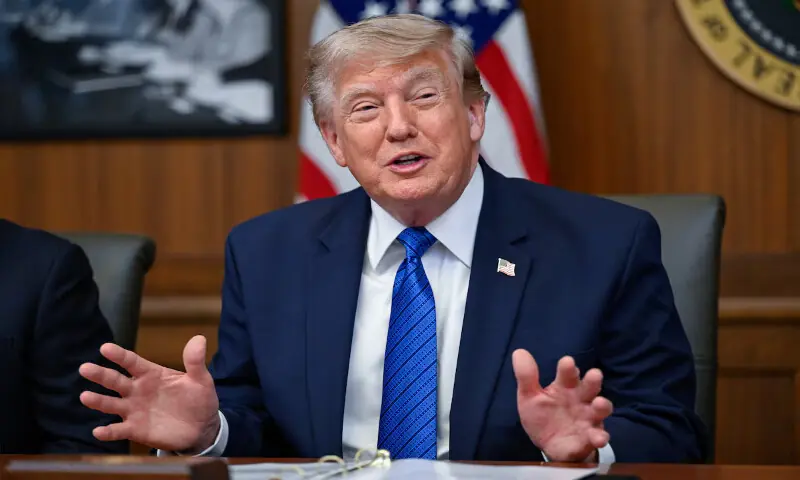
Trump: US in no rush but 'clock is ticking' for Iran

Published 24 Apr, 2026 12:25am 0 min read
The USS George H.W. Bush aircraft carrier. Reuters file

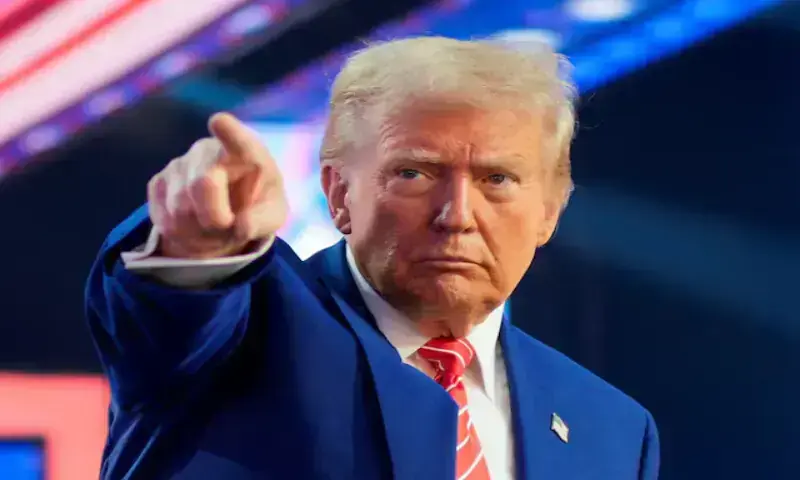
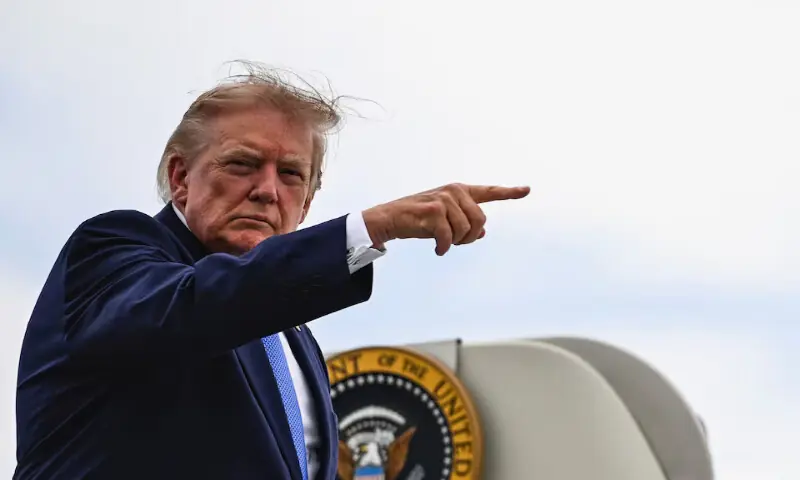
President Donald Trump said on Thursday the United States is in no rush to end the war with Iran but “the clock is ticking” for the Islamic Republic, as a third aircraft carrier arrived in the Middle East.

Iranian media reported blasts over the capital Tehran, a first since an increasingly tenuous ceasefire in the Middle East war came into effect two weeks ago.

It was not clear what caused the blasts, though an Israeli security source told AFP that their country was not currently striking Iran.

Prospective peace talks in Pakistan were hanging in the balance, meanwhile, with no sign of a return to diplomacy to end a standoff in the Strait of Hormuz.

Since Trump indefinitely extended a ceasefire in the Middle East war, the US and Iran have shifted their focus to Hormuz, a blockaded waterway through which a fifth of oil and liquefied natural gas exports ordinarily flow.

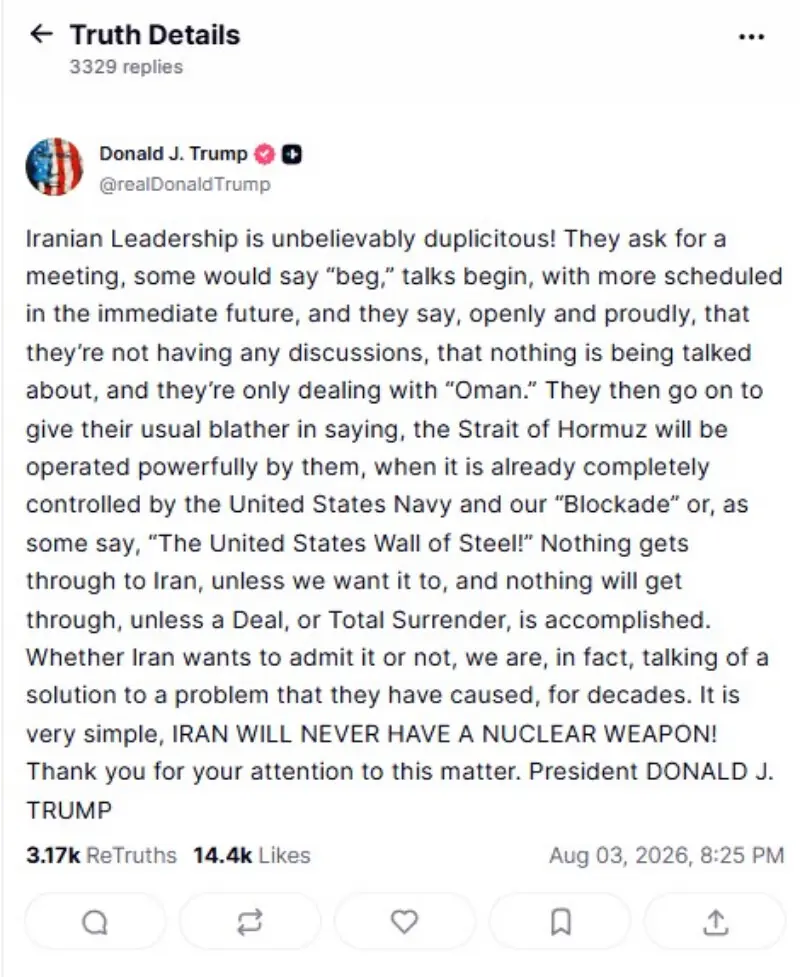
“I have all the time in the World, but Iran doesn’t — The clock is ticking!” Trump said on social media, adding that Iran’s military was destroyed and “their leaders are no longer with us, the Blockade is airtight and strong and, from there, it only gets worse.”

Trump had earlier ordered the US Navy to destroy any Iranian boat caught laying mines in Hormuz, which Iran has blockaded since the start of the war that spread across the region following a massive US-Israeli attack on the Islamic Republic.

‘Shoot and kill’

The USS George H.W. Bush aircraft carrier has arrived in the Middle East, the US military said Thursday, bringing the number of the massive American warships operating in the region to three.

A second carrier was operating in the Red Sea on Thursday, while a third is also in the region, according to social media posts by CENTCOM.

Iran’s state news agency IRNA said the “sound of air defence firing” was heard in western Tehran, while the Mehr news agency reported that air defence systems were activated in several parts of the capital to counter “hostile targets”.

Earlier, a US fleet had boarded a vessel in the Indian Ocean that was transporting oil from Iran and a senior Iranian official said Tehran had banked its first proceeds from the tolls it exacts on shipping through the strait.

Trump had said he “ordered the United States Navy to shoot and kill any boat, small boats though they may be… that is putting mines in the waters of the Strait of Hormuz”.

Israel’s Defence Minister Israel Katz meanwhile said “we are awaiting a green light from the United States — first and foremost to complete the elimination of the Khamenei dynasty… and additionally to return Iran to the Dark Age and the Stone Age”.

Iran has vowed it would keep the strait closed to all but a trickle of approved vessels for as long as the US Navy blockades its ports, brushing off demands from Trump to both reopen Hormuz and surrender its enriched uranium.

The US responded to Iran’s action by imposing its own blockade of Iranian ports, and on Thursday, the Pentagon announced that US forces had “carried out a maritime interdiction and right-of-visit boarding of the sanctioned stateless vessel M/T Majestic X transporting oil from Iran, in the Indian Ocean”.

‘Not possible’

Deputy parliament speaker Hamidreza Hajibabaei said Iran received its first revenue from tolls it is imposing on ships seeking to cross Hormuz.

Analysts said Tehran believes its blockade gives it sufficient economic leverage to force Washington to back down on its main demands in peace talks.

Responding to remarks from Trump suggesting that Iranian leadership was “seriously fractured”, the Islamic Republic’s president, parliament speaker and chief justice all posted a nearly identical message on social media on Thursday.

“One God, one nation, one leader, and one path; that path being the path to the victory of our dearer-than-life Iran,” they all said.

Peace talks?

On Wednesday, Trump told the New York Post that talks could resume in Pakistan within two to three days, though no delegations were presently headed to Islamabad.

In the Pakistani capital, blanket security remained in place for the fourth straight day in anticipation of possible talks.

Iran’s Revolutionary Guards on Wednesday said they forced two ships to the Iranian shore from the Strait of Hormuz.

The US military’s Central Command said its forces had so far “redirected 33 vessels since the start of the blockade against Iran”.

For the latest news, follow us on Twitter @Aaj_Urdu. We are also on Facebook, Instagram and YouTube.

Israel awaiting US green light to 'return Iran to Stone Age': Defence minister

Published 23 Apr, 2026 11:17pm 0 min read
Israeli Defence Minister Israel Katz. Reuters file

Defence minister Israel Katz said on Thursday that Israel was “prepared to resume the war against Iran”, adding that his country was awaiting a green light from the United States to return Iran to “the Stone Age”.

“The IDF is ready both defensively and offensively, and the targets have been marked,” Katz said in a video statement.

“We are awaiting a green light from the United States — first and foremost to complete the elimination of the Khamenei dynasty… and additionally to return Iran to the Dark Age and the Stone Age by destroying key energy and electricity facilities and dismantling its national economic infrastructure,” he added.

The opening US-Israel attack of the war on February 28 killed Iran’s supreme leader Ali Khamenei, whose son later succeeded him but has yet to appear in public, creating speculation over his condition and if he is still alive.

“This time, when the attack resumes, it will be different and lethal, adding devastating blows at the most sensitive points — following the tremendous strikes the Iranian terror regime has already sustained — that will shake and bring down its foundations,” Katz said.

US President Donald Trump on Tuesday announced an indefinite extension of the ceasefire between the United States and Iran, which came into effect on April 8, to create space for talks with Tehran.

Plans for renewed negotiations in Pakistan hang in the balance.

The Middle East war has engulfed the region, leaving several thousand people dead, mainly in Iran and Lebanon, and continuing to destabilise the global economy.

For the latest news, follow us on Twitter @Aaj_Urdu. We are also on Facebook, Instagram and YouTube.

Blasts heard in Tehran as air defences activated: Report

Updated 24 Apr, 2026 12:01am 0 min read
A representational image. File photo

Air defence systems were activated in parts of Tehran on Thursday evening amid reports of hostile aerial activity, Iranian state media said in the first such reports since a ceasefire began.

The IRNA state news agency said the “sound of air defence firing” was heard in western Tehran, while the Mehr news agency reported that the systems were activated in several parts of the capital to counter “hostile targets”, without elaborating further.

Israel is not attacking Iran: security source

An Israeli security source told AFP on Thursday that the country was not carrying out airstrikes in Iran, following reports in Iranian state media of blasts over the capital Tehran.

“Israel is not attacking in Iran,” the source said on condition of anonymity.

Earlier on Thursday, Defence Minister Israel Katz said Israel was “prepared to resume the war against Iran”, adding that his country was awaiting a green light from the United States to return Iran to “the Stone Age”.

This is a developing story… Follow for more…

For the latest news, follow us on Twitter @Aaj_Urdu. We are also on Facebook, Instagram and YouTube.

Iran's Mojtaba Khamenei 'gravely wounded' but 'mentally sharp': NYT

Published 23 Apr, 2026 09:59pm 0 min read
Commuters drive past a large billboard depicting Iran's Supreme Leader Ayatollah Mojtaba Khamenei on a street in Tehran on April 20, 2026. AFP

Iran’s new Supreme Leader Mojtaba Khamenei was seriously wounded in the US-Israeli airstrike that killed his father and predecessor Ali Khamenei but is mentally sharp, the New York Times reported on Thursday.

Citing several Iranian officials which it did not name, the Times said Mojtaba Khamenei had “at least for now” delegated decision-making to generals in the Revolutionary Guards ideological army.

Mojtaba Khamenei has not appeared in public since succeeding his father and only issued written statements, creating speculation over his condition and if he is still alive.

Although Mojtaba Khamenei was “gravely wounded (in the February 28 airstrike), he is mentally sharp and engaged,” said the NYT.

“One leg was operated on three times, and he is awaiting a prosthetic. He had surgery on one hand and is slowly regaining function. His face and lips have been burned severely, making it difficult for him to speak,” it cited the officials as saying, adding that “eventually, he will need plastic surgery.”

Access for security reasons is extremely limited to Khamenei, who remains in hiding, with only handwritten messages passed on, it said.

Guards commanders do not visit him but President Masoud Pezeshkian, who is also a heart surgeon, has been involved in his care, it said.

It said the generals from the Guards who viewed the war with the US and Israel “as a threat to the regime’s survival” that has now been contained.

They have also been in charge of military strategy, including the blockade of the Strait of Hormuz.

For the latest news, follow us on Twitter @Aaj_Urdu. We are also on Facebook, Instagram and YouTube.

Iran war impact seeps ever deeper into global economy

Published 23 Apr, 2026 06:49pm 0 min read
An employee works on USB cables production at a plastic accessories factory, as rising oil prices drive up production costs for plastic manufacturers, in Dongguan, Guangdong province, China, on April 2, 2026. Reuters file

The global economy is facing ever more tangible strains from the energy shock triggered by the Iran war as factories grapple with soaring production costs and activity weakens even ​in the services sectors, major surveys showed on Thursday.

While much of the world’s economy has shown resilience in the face of the worst disruption to energy supplies ‌in modern times, the knock-on effects of the near-two-month conflict are starting to push up inflation while raising alarm bells about food supplies and prompting downgrades to economic growth.

This week has already seen a string of downbeat business and consumer morale readings and cautious outlooks from top-listed companies. The closely watched set of S&P Global surveys of purchasing managers released on Thursday showed worse to come.

They pointed to the 21 countries of the ​eurozone as among the hardest hit, with the preliminary reading of its headline index for the region falling from 50.7 in March to 48.6 in April — a sub-50 ​tally that indicates a shrinkage in activity.

The input price index surged to 76.9 from 68.9, showing how eurozone factories are facing a ⁠jump in their production costs. The index covering the bloc’s dominant services industry, meanwhile, sank to 47.4 from 50.2, well below a Reuters poll estimate of 49.8.

“The eurozone is ​facing deepening economic woes from the war in the Middle East,” said Chris Williamson, chief business economist at S&P Global.

“Increasingly widespread supply shortages, meanwhile, threaten to dampen growth further while adding more ​upward pressure to prices in the coming weeks.”

COMPANIES WARN OF FINANCIAL HIT FROM CONFLICT

Counter-intuitively, purchasing managers reported higher output levels in Japan, India, Britain and France — an effect that S&P in some cases attributed to companies speeding up production on concerns of greater supply chain disruption.

That notably meant that Japan saw the strongest expansion in its factory output since February 2014, even as input costs rose at their sharpest rate since early 2023.

If such “front-loading” is happening, ​that would be akin to the effect seen early last year when companies raced to push out their products ahead of a rise in US trade tariffs — and implying a ​commensurate drop in activity later on.

The PMI readings tallied with cautious statements around first-quarter earnings this week, with companies from French food group Danone to elevator-maker Otis Worldwide citing war-related shipment disruption.

According to a Reuters review ‌of 166 ⁠company statements since the start of the war, 26 companies have withdrawn or cut financial guidance, 38 have signalled price hikes, and 32 have warned of a financial hit from the conflict.

The rising cost of fuel has led automatically to increases in the headline rate of inflation, with US consumer prices up by the most in nearly four years in March and rises in Britain and across the eurozone. So-called “core” inflation rates excluding fuel have not seen such sharp increases, at least so far.

TECH AND FINANCE AMONG THE RARE OUTLIERS

There are a few stark ​outliers. The global surge in AI investment continues ​to benefit technology activity, while the sheer ⁠volatility of world markets is a boon to trading firms.

South Korea, for example, delivered its fastest growth in nearly six years last quarter thanks to a jump in chip exports, while the tech sector is seen leading US first-quarter earnings higher.

London Stock Exchange Group said earlier on Thursday ​it expects annual revenue growth at the upper end of its forecast range after posting record first-quarter revenue boosted by a surge in ​trading activity.

With no clear ⁠prospect as to how the conflict initiated by US and Israeli strikes on Iran will end, the future impact on the world’s economy remains dependent on how long it continues to logjam shipping through the Strait of Hormuz.

The International Monetary Fund last week cut its global growth outlook to 3.1% for this year but warned the world was already drifting toward a more adverse scenario - including outright recession ⁠if the ​disruptions continue.

Jamie Thompson, head of macro scenarios at Oxford Economics, said its review of the scarring impacts of previous ​energy shocks from the Yom Kippur War of the early 1970s to the 2022 invasion of Ukraine by Russia showed lingering impacts on inflation, investment and energy production years later.

He said one-in-four businesses surveyed by Oxford now believed ​that disruptions would be felt beyond the end of this year. “This evidence highlights the risk of an abrupt adjustment in sentiment,” he concluded.

For the latest news, follow us on Twitter @Aaj_Urdu. We are also on Facebook, Instagram and YouTube.

Iran shows off its control over Strait of Hormuz

Published 23 Apr, 2026 06:11pm 0 min read
This screen grab taken from undated video footage released by Iran's Revolutionary Guards and made available via Iran's state broadcaster, IRIB, on April 23, 2026, shows IRGC naval forces allegedly boarding a ship attempting to cross the Strait of Hormuz. AFP

Iran showed off its tightened grip over the Strait of Hormuz on Thursday with video of its commandos storming a huge cargo ship, after the collapse of peace talks that Washington had hoped would open the world’s most important shipping corridor.

State television broadcast footage overnight ​of masked troops pulling up in a grey speedboat alongside the MSC Francesca, climbing a rope ladder to a shell door in the hull and jumping through brandishing rifles.

The footage, presented with an action-movie-style ‌soundtrack and no commentary, also included views of another ship, the Epaminondas. Iran claimed to have captured both on Wednesday, accusing them of trying to cross the Strait without permits.

The vice speaker of parliament, Hamidreza Hajibabaei, said the first revenue from a toll that Iran was now collecting from ships using the strait had been transferred to the central bank’s account. He gave no further details about who had paid it, when or how much.

Iran’s judiciary chief Gholamhossein Mohseni-Ejei said the merchant vessels attacked in the strait had “faced the law”. Iranian speedboats and marine drones were sheltering ​in sea caves off an island near the mouth of the strait and keeping the U.S. Navy from approaching.

PAKISTAN STILL IN TOUCH WITH SIDES ABOUT TALKS

Iran, which has effectively blocked the strait to ships apart from its own ​since the United States and Israel launched the war in February, has been left in apparent control of the waterway since last-ditch peace talks were called off on Tuesday, hours ⁠before a two-week ceasefire expired.

Tehran says it will not consider opening the strait, normally the route for a fifth of global oil and liquefied natural gas, until the US lifts a blockade of Iran’s own shipping, which Washington imposed during the ​ceasefire and Tehran calls a violation of that truce.

The US military has intercepted at least three Iranian-flagged tankers in Asian waters and is redirecting them away from their positions near India, Malaysia and Sri Lanka, shipping and security sources said on Wednesday.

US President ​Donald Trump cancelled threats to restart attacks on Iran in the ceasefire’s final hours on Tuesday, but has refused to lift the blockade. There has been no formal extension of the ceasefire, and no plans have been announced for further talks.

Iranians, who endured six weeks of US and Israeli bombardment before the ceasefire on April 8, described a nerve-wracking environment under the threat of renewed warfare.

“In a situation that is neither peace nor war, things are somewhat frightening. At every moment, you think that Israel or the US might launch an attack,” Arash, 35, a ​government employee in Tehran, told Reuters by phone. “You cannot make decisions about the future in such a situation.”

Pakistan, which hosted the only peace talks of the war earlier this month and had been preparing to host a second round before it ​was called off on Tuesday, was still in touch with both sides, a Pakistani government source said.

The Pakistani source said Iranian officials were still declining to commit to sending a delegation, citing the US blockade and other reasons.

“Yesterday, diplomats from various countries met different Pakistani ‌authorities and asked ⁠about the expected dates for the next round of talks, but they could not give them any timeframe, clearly,” the Pakistani source said.

Iran has said publicly it is willing to talk in principle, but that the US blockade and inconsistent demands from Washington made it impossible to commit. The US delegation, led by Vice President JD Vance, never left Washington.

“You did not achieve your goals through military aggression, and you will not achieve them by bullying either,” the head of Iran’s negotiating team, Parliament Speaker Mohammad Bagher Ghalibaf , wrote on social media on Wednesday. “The only way is recognising the Iranian people’s rights.”

The United States was separately due to host a second round of talks between Israel and Lebanon on Thursday, with Lebanon seeking an extension of a ​ceasefire reached last week in a war that has run ​in parallel to the Iran war.

Israeli strikes killed five ⁠people, including a journalist in Lebanon on Wednesday, the deadliest day there since the US-brokered truce took effect last week. Iran says maintaining the Lebanon ceasefire is a precondition for talks on the wider war.

For the latest news, follow us on Twitter @Aaj_Urdu. We are also on Facebook, Instagram and YouTube.

Iran economy looks set to withstand US naval blockade

Published 23 Apr, 2026 05:59pm 0 min read
Ships and boats in the Strait of Hormuz off the coast of Musandam, Oman, on April 20, 2026. Reuters file

A US naval blockade of Iranian ports is likely to squeeze Iran’s oil output in the coming weeks but claims it will throw the Islamic Republic into economic free fall remain premature, analysts say.

After weeks of bombing and counter-strikes, focus has shifted to the standoff in the Strait of Hormuz, which ordinarily carries around a fifth of the world’s oil and liquefied natural gas.

In response to Iran’s blockade of the strait since the start of the Middle East war, the US imposed a counter-blockade of the Islamic republic’s ports, a push to force its leaders into a compromise in peace talks.

That bid, however, looks set to fail, at least in the short term.

“If the blockade lasts for more than two or three months, it can cause more damage” to Iran, economic analyst and professor at Shahid Beheshti University in Tehran Saeed Laylaz told AFP.

“If Iran suffers any damage, the damage to the countries in the southern Persian Gulf will definitely be greater,” he added.

There’s a limit on how long Iran can bide its time, however.

Arne Lohmann Rasmussen, chief analyst at Global Risk Management said Iran “was expected to run out of storage capacity within approximately one month, but it may already be forced to shut in part of its oil production within a couple of weeks”.

‘Collapsing financially’?

Trump said on Tuesday that Iran was “collapsing financially” under the blockade imposed by the US Navy on April 12, claiming that the country was “starving for cash”.

Treasury Secretary Scott Bessent said the blockade meant storage at Iran’s Kharg Island, the main export terminal through which most of the country’s crude is shipped, “will be full and the fragile Iranian oil wells will be shut in”.

Jamie Ingram, managing editor of Middle East Economic Survey (MEES), told AFP it was likely the timeline for Iran to hit its oil storage limits would be measured in “weeks rather than days”.

He added it was likely that “Iran will slightly reduce production before getting to the stage where storage constraints start to bite”.

According to an analysis by oil expert Homayoun Falakshahi shared by energy intelligence firm Kpler, Iran’s crude production has already slowed since the start of the war.

Output fell by around 200,000 barrels per day in March to 3.68 million bpd and is expected to drop a further 420,000 bpd in April to about 3.43 million bpd, reflecting “the broader impact of export disruptions and refining constraints linked to the ongoing conflict,” Falakshahi said.

But Laylaz in Tehran said beyond the psychological effect of the blockade, the “real material effect has been small so far”.

Ingram said Kharg Island “shouldn’t be a particular bottleneck” for Iran.

“This is the final storage facility used before oil is exported, and Iran can divert crude oil to other facilities rather than straight to Kharg,” he said.

‘Mutually assured disruption’

The MEES expert also said Iran’s dependency on oil exports via Hormuz had “deepened due to the damage caused by US and Israeli strikes to other sections of the Iranian economy”.

“But Iran has also proven its ability to withstand huge oil-revenue declines during previous rounds of sanctions. I would not underestimate the regime’s resilience in this regard,” he added.

As the initial two-week truce between Iran and the US was set to expire Trump had said Tuesday he would maintain the ceasefire to allow more time for peace talks.

Iran said it welcomed the efforts by mediator Pakistan but made no other comment on Trump’s announcement, while vowing not to reopen Hormuz so long as the US blockade remains in place.

“It will take a long time before such economic pain forces Iran to compromise,” Ingram said, explaining it is “more likely economic disruption… pushes China into exerting more pressure on Iran to negotiate”.

Ali Vaez, Iran project director at the International Crisis Group, said: “Iran’s economy was battered before the war, is contending with added strains caused during it, and now faces the combination of sanctions, seizures and potential strikes”.

“Iran’s leadership has previously shown a high threshold for pain, even if the pressure on ordinary Iranians increases. It also likely calculates that its own efforts to subdue traffic through Hormuz act as a sort of mutually assured disruption,” he added.

For the latest news, follow us on Twitter @Aaj_Urdu. We are also on Facebook, Instagram and YouTube.

Iran receives first revenue from Strait of Hormuz tolls: official

Published 23 Apr, 2026 05:50pm 0 min read
This screen grab taken from undated video footage released by Iran's Revolutionary Guards and made available via Iran's state broadcaster on April 23, 2026, shows IRGC naval forces allegedly boarding a ship attempting to cross the Strait of Hormuz. AFP

A senior Iranian parliament official said on Thursday that Tehran has received the first revenue from tolls it imposed on the strategic Strait of Hormuz in its war with the United States and Israel.

“The first revenue received from the Strait of Hormuz tolls was deposited into the Central Bank account,” said deputy speaker of parliament Hamidreza Hajibabaei, according to Tasnim News Agency.

Other Iranian media carried the same statement, without elaborating.

The Strait of Hormuz, a key energy chokepoint, has become a major flashpoint since the outbreak of the Middle East war on February 28.

Iran has allowed only a trickle of ships to pass through the waterway, a route that in peacetime accounts for a fifth of the world’s oil and gas flows, along with other vital commodities.

Before the announcement of revenue from tolls, Iran’s parliament had been deciding whether to impose them on shipping through the strait, with Iranian officials warning that maritime traffic through the strait would “not return to its pre-war status”.

On March 30, Iranian state media said the parliament’s security commission had approved plans to impose tolls, but it was not clear if a final parliamentary vote on the proposal had taken place.

US President Donald Trump has been pushing Iran to open the Strait.

Britain, France and military planners from over 30 countries have held talks to protect navigation through the strait, with Paris and London saying they would lead a multinational mission as “soon as conditions allow”.

For the latest news, follow us on Twitter @Aaj_Urdu. We are also on Facebook, Instagram and YouTube.

Shifting goals blur picture of US blockade on Iran

Published 22 Apr, 2026 11:51pm 0 min read
This US Navy handout photograph released on April 21, 2026, by US Central Command Public Affairs shows Arleigh Burke-class guided-missile destroyer USS Michael Murphy patrolling the Arabian Sea during a maritime blockade on April 15, 2026. AFP

The United States has vowed to blockade Iran’s ships until the country makes a deal to end their war. But is the blockade working?

Analysts and ship-tracking data paint a complicated picture. Shifting objectives and shadowy activity by vessels make the success of the US operation hard to measure.

“There’s been confusion over the scope and the parameters of the blockade because of conflicting information given by the US administration and some delays in when information has been released,” Bridget Diakun, an analyst at shipping journal Lloyd’s List Intelligence, told AFP.

Here are facts about the military standoff over shipping access to the Strait of Hormuz, based on data from tracking sources including Kpler and its MarineTraffic platform, and Bloomberg.

Where is the blockade?

After the US and Israel launched strikes on Iran on February 28, Iranian forces effectively closed the Strait by targeting vessels trying to cross between its southeastern coast and the northern tip of Oman.

After later peace talks failed during a ceasefire, US forces launched a counter-blockade on April 13. The chairman of the US Joint Chiefs of Staff, Dan Caine, said the US blockade would be enforced further east, at the mouth of the Gulf of Oman.

What are its terms?

Launching the operation, US Central Command said its blockade applied to ships of all nations going to or from Iranian ports.

The US Navy later said it would also block ships suspected of carrying “contraband” including oil, weapons and nuclear material linked to Iran — regardless of their location.

Lloyd’s List Intelligence on Wednesday quoted an unnamed US defence official as saying that the force was now gauging the blockade’s success on how badly it damaged Iran’s trade, not on how many rogue vessels crossed the line.

Has it been breached?

Tracking data and satellite images analysed by maritime firms show that dozens of ships that potentially fall under these terms have crossed the line, including Iranian-flagged vessels under US sanctions and vessels going to and from Iranian ports.

US Central Command says similar numbers have turned around under US orders. It issues daily updates on its operation, and up until April 17, said that “zero” vessels had evaded the blockade.

On April 18, it said the blockade had “completely halted economic trade going into and out of Iran by sea”. But since then, it has only listed the number of vessels turned around – currently standing at 28.

Can ships dodge it?

Counting the number of rogue vessels that may have skirted the blockade is difficult due to the conflicting definitions and other factors.

Some sanctioned vessels have sailed west into the Gulf beyond Hormuz, but flagged their destination as Iraq or other non-Iranian destinations.

Once inside the Gulf, Diakun said, vessels can “spoof” their transponders to hide their positions and even perform ship-to-ship transfers of Iranian oil, testing the terms of the US blockade.

Several Iranian-linked vessels also appear to have turned off their transponders while sailing out of the Gulf before reappearing in the Arabian Sea, satellite imagery seen by maritime firms apparently confirming their route.

Are there exemptions?

US officials suggested early in the blockade that certain vessels would be granted exemptions on humanitarian grounds, but did not specify the exact conditions.

Tracking data showed that at least two vessels travelled in and out of the Gulf unimpeded, having either dropped off or picked up food at Iranian ports.

For the latest news, follow us on Twitter @Aaj_Urdu. We are also on Facebook, Instagram and YouTube.

Pezeshkian: Distrust, threats and blockade hinder talks

Published 22 Apr, 2026 11:42pm 0 min read
Iranian President Masoud Pezeshkian.

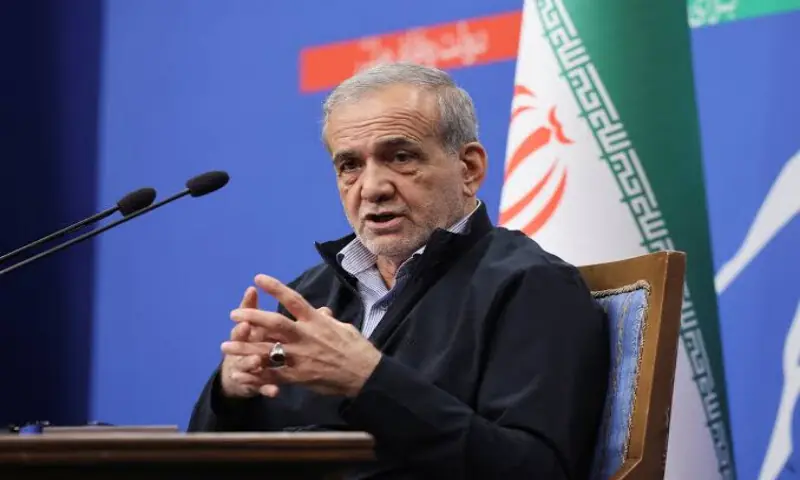
Iran’s President Masoud Pezeshkian said Tehran remains committed to dialogue and agreements but warned that distrust, blockades and threats are the main obstacles to meaningful negotiations.

In a statement on social media, Pezeshkian said, “The Islamic Republic of Iran has welcomed dialogue and agreement and continues to do so. Breach of commitments, blockade and threats are main obstacles to genuine negotiations. World sees your endless hypocritical rhetoric and contradiction between claims and actions.”

He added that the world was witnessing what he described as “hypocritical and hollow rhetoric” and a clear contradiction between words and actions.

Hormuz reopening tied to conditions

Separately, Iran’s parliament speaker Mohammad Bagher Ghalibaf said the strategic Strait of Hormuz cannot be reopened unless blockades are lifted and ceasefire violations end.

In a post on X on Wednesday, Ghalibaf said a ceasefire can only be effective if it is respected and accompanied by the removal of all forms of blockade.

He warned that continued pressure on Iran and disruption to global trade would prevent regional stability, adding that “holding the global economy hostage” would only deepen tensions.

Ghalibaf also called for an end to what he described as attacks by “Zionist elements,” saying failure to halt such actions could further escalate the situation.

He said reopening the strait under current conditions would amount to accepting ongoing ceasefire violations.

Pressure tactics ‘ineffective’

The speaker stressed that military action, pressure and threats have failed to achieve their objectives, and urged recognition of the Iranian people’s rights as the only viable path to resolving the crisis.

Pakistan, which has been playing a mediating role in the conflict, is still working to bring both sides back to the negotiating table.

Preparations for proposed talks in Islamabad had been completed, but discussions could not take place due to the absence of delegations from both Iran and the United States, according to Pakistani officials.

Efforts are ongoing, and there remains a possibility that talks could resume in the future.

Major issues between the two sides — including a ceasefire, naval blockade, Iran’s nuclear programme and control of the Strait of Hormuz — remain unresolved.

Analysts say these disagreements are sustaining regional tensions and disrupting global energy flows, as a significant share of the world’s oil and gas supplies passes through the vital waterway.

For the latest news, follow us on Twitter @Aaj_Urdu. We are also on Facebook, Instagram and YouTube.

US nuclear safety official sidelined after undercover video leaks sensitive remarks

Published 22 Apr, 2026 10:35pm 0 min read

A senior US military official overseeing nuclear and chemical safety has been placed on administrative leave after an undercover video surfaced showing him discussing sensitive and controversial issues with a stranger.

The footage, released by conservative activist James O’Keefe, allegedly shows Andrew Hugg speaking candidly during a meeting at a public restaurant.

Hugg serves as a branch chief responsible for nuclear and chemical surety, a role focused on safeguarding weapons systems and personnel reliability.

A US military spokesperson said Hugg had been removed from his position pending a full investigation. He was also reportedly escorted out of the Pentagon following the video’s release.

In the video, Hugg appears to describe protocols governing nuclear weapons access, stressing that personnel must be mentally stable given the destructive potential of such systems.

He also makes a striking claim regarding Iran, suggesting that Iran’s Supreme Leader Mojtaba Khamenei could be a target for the US military if he “does not change course,” raising alarm over the nature of the remarks.

Hugg further comments on US military operations, acknowledging that children killed in air strikes are described as “collateral damage,” and adding that civilian casualties are an unfortunate reality of war.

The official also appears to discuss US missile launch procedures, including verification systems that require personnel to act on authenticated orders regardless of who delivers them, provided all checks are met.

He references US capabilities involving space-based sensors that can track the speed and size of incoming threats.

In another concerning detail, Hugg mentions the presence of the nerve agent Sarin in Maryland, and claims that a laboratory chemist recently died after exposure due to not wearing proper protective equipment. These claims have not been independently verified.

Most of the assertions in the video remain unverified and originate from material released by O’Keefe’s organisation, which is known for conducting undercover operations that have sparked both scrutiny and criticism.

The US military has not confirmed the accuracy of specific statements attributed to Hugg but said the matter is under active review.

The incident comes at a sensitive time amid ongoing diplomatic engagement between Washington and Tehran. Analysts say the apparent disclosure of such remarks by a senior official could raise fresh questions about internal discipline and safeguards within the US defence establishment.

For the latest news, follow us on Twitter @Aaj_Urdu. We are also on Facebook, Instagram and YouTube.

Attacks in south Lebanon strain ceasefire on eve of Washington talks

Published 22 Apr, 2026 08:39pm 0 min read
A family drives past shops and houses damaged by an Israeli strike, amid a 10-day ceasefire between Lebanon and Israel, in Mansouri village, southern Lebanon, on April 21, 2026. Reuters

An Israeli strike killed two people in southern Lebanon ​on Wednesday, Lebanon’s state news agency reported, and Hezbollah said it launched an attack drone at Israeli forces in the south, further straining a ceasefire between ‌the Iran-backed group and Israel.

On the eve of talks in Washington between Lebanese and Israeli ambassadors, Lebanese President Joseph Aoun said Beirut would seek an extension of the 10-day, US-mediated ceasefire, which is set to expire on Sunday.

Hostilities between Hezbollah and Israel reignited on March 2, when the Lebanese group opened fire in support of Iran.

The US-brokered ceasefire in Lebanon emerged separately from Washington’s efforts to resolve its conflict with Tehran, though Iran had called ​for Lebanon to be included in any broader truce. The United States has denied any link between the tracks.

Lebanon’s state-run National News Agency said the Israeli strike hit a ​car in al-Tiri, a village in south Lebanon, killing two people inside. The Israeli military didn’t immediately respond to a request for comment.

Hezbollah ⁠said it attacked an Israeli artillery position in southern Lebanon with a drone, in response to what it said was an Israeli violation of the ceasefire. The Israeli military said it had ​intercepted “a hostile aircraft” launched by Hezbollah towards Israeli soldiers in south Lebanon.

More than 2,400 people have been killed in Lebanon since Israel launched an offensive in response to Hezbollah’s March 2 attack, ​according to Lebanese authorities. Israel has seized a belt of territory at the border where its troops remain, saying it aims to create a buffer zone to shield northern Israel from attacks by Hezbollah, which fired hundreds of rockets at Israel during the conflict.

BEIRUT TO SEEK END TO ISRAELI DEMOLITIONS

Aoun said Beirut’s envoy to Thursday’s talks, Lebanese Ambassador to Washington Nada Moawad, would seek a ceasefire extension and a halt to demolitions being carried ​out by Israel in villages in the south, according to a statement.

A Lebanese official said Beirut wants a ceasefire extension as a prerequisite for talks to expand beyond the ambassadorial level ​to the next phase, in which Lebanon would push for an Israeli withdrawal, the return of Lebanese detained in Israel and a delineation of the land border.

Hezbollah, which says the Lebanon ceasefire was the fruit ‌of Iranian pressure, ⁠has condemned Beirut for seeking talks with Israel, reflecting wider splits with the government that has sought Hezbollah’s peaceful disarmament for a year.

Israeli Foreign Minister Gideon Saar, in a speech, said Israel had taken a “historic decision to negotiate directly with Lebanon after more than 40 years” whilst also calling it a “failed state”.

“I call on the Government of Lebanon: Let’s work together against the terror state that Hezbollah built in your territory. This cooperation is needed by you even more than by us,” he said.

The Israeli military said it had killed two militants who had crossed its “Forward Defence ​Line” in south Lebanon on Tuesday and approached ​Israeli soldiers, saying they had violated the ⁠ceasefire.

DRUZE LEADER URGES CLEAR AGENDA, INCLUDING WITHDRAWAL

US Secretary of State Marco Rubio is set to attend Thursday’s meeting. Israel will be represented by its ambassador to Washington, Yechiel Leiter.

Aoun has cited goals including halting Israeli attacks on Lebanon and securing the withdrawal of Israeli troops. In a speech ​on Friday, he said a ceasefire should be transformed into “permanent agreements that preserve the rights of our people, the unity of our ​land, and the sovereignty of ⁠our nation”.

Announcing the ceasefire on April 16, US President Donald Trump said he had instructed Rubio, Vice President JD Vance and Chairman of the Joint Chiefs of Staff Dan Caine to work with the two countries to achieve lasting peace.

Lebanon and Israel have remained in an official state of war since the establishment of Israel in 1948.

Lebanon’s most senior Shi’ite state official, Parliament Speaker Nabih Berri, is against ⁠face-to-face negotiations ​with Israel, saying Beirut could have negotiated indirectly.

Lebanon’s leading Druze politician, Walid Jumblatt, said on Tuesday that the most ​Lebanon could offer is an update to a 1949 armistice agreement with Israel.

In comments to reporters after a meeting with Berri, Jumblatt said there should be a clear agenda for talks that includes a withdrawal of Israeli troops still in ​southern Lebanon.

For the latest news, follow us on Twitter @Aaj_Urdu. We are also on Facebook, Instagram and YouTube.

Trump signals possible Friday for second US-Iran talks

Published 22 Apr, 2026 06:43pm 0 min read
US President Donald Trump. File photo

US President Donald Trump has indicated that a second round of talks between Washington and Tehran could take place as early as Friday, amid ongoing mediation efforts led by Pakistan.

In an interview with the New York Post, Trump said “good news” on renewed negotiations may emerge within days. Responding to a query via text, he said: “It’s possible!”

Pakistani sources in Islamabad said diplomatic engagement with Iran has intensified, raising the likelihood of fresh talks within the next 36 to 72 hours.

The development follows Trump’s decision to extend the current ceasefire with Iran, giving its leadership more time to present a unified proposal.

“I have directed our military to continue the blockade and remain ready,” Trump said in a post on Truth Social, adding that the ceasefire would remain in place until discussions are concluded.

Officials in Islamabad said the truce has largely held despite heightened rhetoric, signalling restraint from both sides.

“The ceasefire is holding, and there has been no military escalation,” a source said, describing the situation as a sign of positive intent.

Pakistan continues to play a central mediating role, leveraging diplomatic channels to bring both sides back to the negotiating table, the source added.

For the latest news, follow us on Twitter @Aaj_Urdu. We are also on Facebook, Instagram and YouTube.

Iran says ‘Israeli-linked’ ship among two vessels seized in Hormuz

Published 22 Apr, 2026 04:09pm 0 min read
According to the IRGC, MSC-Francesca belongs to the Israeli regime. – Courtesy Press TV

Iran’s Islamic Revolutionary Guard Corps (IRGC) Navy said on Wednesday it had seized two vessels in the Strait of Hormuz and escorted them into Iranian territorial waters, warning that any disruption to security in the strategic waterway would not be tolerated.

The IRGC Navy said, “disrupting order and safety in the Strait of Hormuz is considered a red line for Iran”.

In a statement, the IRGC identified the ships as the MSC Francesca, which it claimed is linked to Israel, and the Epaminodes.

It accused both vessels of operating without authorisation, repeatedly violating maritime regulations, tampering with navigation systems, and attempting to pass through the Strait covertly.

The IRGC said its forces intercepted the ships based on “intelligence dominance” in order to enforce Iran’s laws and protect maritime security.

The vessels have since been moved to Iran’s coast, where their cargo and documents are being inspected.

The development follows earlier incidents in the Strait, where at least one vessel was fired upon off Iran’s coast and another sustained damage after coming under attack near Oman.

Reiterating its stance, the IRGC Navy said maintaining order in the Strait of Hormuz is a “red line” for Iran, warning that any actions deemed to threaten safe passage would be closely monitored and met with decisive action.

For the latest news, follow us on Twitter @Aaj_Urdu. We are also on Facebook, Instagram and YouTube.

Why Trump chose to extend ceasefire with Iran

Published 22 Apr, 2026 03:43pm 0 min read
Donald Trump. – Reuters

When US President Donald Trump met his national security team at the White House on Tuesday, they faced a key question: how to proceed on Iran as the ceasefire deadline approached, CNN said in a report.

With time running out, Air Force Two was already prepared at Joint Base Andrews for Vice President JD Vance’s planned trip to Pakistan for another round of talks.

But there was a problem: Washington had received no response from Tehran, the report added.

In the days leading up to the meeting, the US had shared a set of broad proposals with Iran, hoping for preliminary agreement before in-person discussions.

However, officials said there had been no reply, raising doubts about whether sending a delegation would achieve anything at this stage.

According to the report, during the meeting, Trump was joined by senior officials, including Secretary of State Marco Rubio, Defence Secretary Pete Hegseth, Joint Chiefs Chairman Dan Caine, and CIA Director John Ratcliffe.

The report stated that US officials had also urged Pakistan’s military chief Field Marshal Asim Munir, who is acting as a mediator, to secure at least some response from Iran before Vance’s departure.

But even hours later, there was still silence.

US officials believe the lack of response may reflect divisions within Iran’s leadership.

According to their assessment, there appears to be no clear consensus on key issues, particularly around uranium enrichment and Iran’s stockpile of enriched material — both central sticking points in the talks.

Part of the uncertainty, officials say, stems from the role of Iran’s new Supreme Leader, Mojtaba Khamenei.

There are questions over whether he has provided clear direction to negotiators or whether officials are left guessing his position.

His low public profile has also complicated internal decision-making, according to US assessments, the report stated.

Despite these challenges, officials say talks could still resume if there are signs of progress, though the timing remains uncertain.

Ceasefire extended without a deadline

Instead of escalating militarily, Trump opted to extend the ceasefire just hours before it was due to expire — this time without setting a new deadline, the CNN report said.

In a social media post, Trump described Iran’s leadership as “seriously fractured” but reiterated his preference for a diplomatic outcome.

The move reflects Trump’s reluctance to reignite a broader conflict, particularly one he has previously claimed the US had already won.

However, the stalled negotiations highlight the difficulties in reaching a deal that satisfies Washington’s demands, the report pointed out.

Iran, for its part, has insisted that the US lift its blockade on ships entering or leaving Iranian ports via the Strait of Hormuz before it returns to talks.

Trump has rejected that condition, saying the waterway would not be reopened until a final agreement is reached.

US and Pakistani officials had pushed for extending the ceasefire to give Iran more time to unify its position.

While that may create space for diplomacy, there is no guarantee Tehran will engage.

Pressure, risks, and uncertainty

The officials are of the view that talks could resume quickly if Iran shows it is ready to engage.

Both sides are under economic strain while the Strait of Hormuz remains effectively closed, which keeps the door open — at least in theory — for negotiations to restart.

So far, however, there has been little sign of flexibility from Tehran.

An adviser to the Iranian parliament speaker dismissed the ceasefire extension, suggesting that continued economic pressure is no different from an ongoing conflict.

Inside the Trump administration, there are also concerns that easing pressure without clear commitments might give Iran time to stall negotiations while rebuilding its position.

Several key issues are still unresolved, including Iran’s nuclear programme, what happens to its stockpile of enriched uranium, and how much sanctions relief the US is willing to offer.

These questions will be central to whether any deal can be reached.

Outlook remains uncertain

Donald Trump has remained confident that he can secure a stronger agreement than the 2015 nuclear deal he withdrew from during his first term. Still, the path ahead is far from clear.

For now, the extension in the ceasefire provides breathing space — but it also shows just how fragile the situation remains, with both sides still far apart on the core issues.

For the latest news, follow us on Twitter @Aaj_Urdu. We are also on Facebook, Instagram and YouTube.

Three container ships fired upon in Strait of Hormuz

Published 22 Apr, 2026 02:36pm 0 min read
Reuters file
Reuters file

At least three container ships were hit by gunfire ​in the Strait of Hormuz on Wednesday, maritime security sources ‌and the United Kingdom Maritime Trade Operations (UKMTO) said.

Iran has imposed restrictions on ships using the strait, first in retaliation for the US-Israeli bombardment of the ​country, and then in response to a US blockade of Iranian ports.

​A Liberia-flagged container ship sustained damage to its bridge after ⁠being hit by gunfire and rocket-propelled grenades northeast of Oman.

The UKMTO ​said the master of the vessel reported being approached by an IRGC ​gunboat.

The vessel, it said, was subsequently fired upon. All crew members were safe and there was no fire or environmental impact due to the incident.

Maritime security ​sources said that three people were onboard that gunboat.

The master of the Greek-operated container ​ship also reported that no radio contact was made prior to the incident and ‌that ⁠the vessel had been initially informed that it had permission to transit the Strait of Hormuz.

The UKMTO later said that a second container vessel had been fired upon about eight nautical miles west of Iran. ​

The Panama-flagged vessel was not damaged ​and its ⁠crew members are safe.

Maritime security sources said that a third container ship was fired upon about eight ​nautical miles west of Iran while transiting outbound of ​the Strait ⁠of Hormuz.

The Liberia-flagged vessel, which was not damaged had stopped in the water. Its crew are safe, the sources said.

Before the war began on ⁠February 28, ​the waterway typically handled roughly one-fifth of ​the world’s oil and liquefied natural gas supply.

For the latest news, follow us on Twitter @Aaj_Urdu. We are also on Facebook, Instagram and YouTube.

Strait of Hormuz closure exposes global energy vulnerability

Published 22 Apr, 2026 01:47pm 0 min read
Strait of Hormuz. – Reuters

The standoff over the Strait of Hormuz has highlighted a long-standing weakness in the global energy system: while alternative export routes do exist, none were ever built to fully replace this vital maritime corridor.

According to a report by the Dubai-based Gulf News, the Strait is far more than just a busy shipping lane.

It is the only sea passage linking the Arabian Gulf to the open oceans.

According to the United Nations Conference on Trade and Development (UNCTAD), roughly 20%-25% of the world’s seaborne oil and about 20% of global liquefied natural gas pass through it every day.

Because so much of the world’s energy flows through this single route, even small disruptions can quickly spread through global markets and drive prices up, the report said.

The International Energy Agency (IEA) has called the current situation the most serious oil supply disruption ever recorded.

Its Executive Director, Fatih Birol, has called it the “biggest energy crisis in history,” according to Reuters.

Unsurprisingly, oil prices have climbed as markets factor in the possibility of prolonged supply pressure from the Gulf.

Saudi Arabia: the biggest but limited workaround

According to the report, Saudi Arabia offers the region’s most significant alternative route through its East-West pipeline.

The 1,200-kilometre system links eastern oilfields to the Red Sea port of Yanbu and can carry up to 7 million barrels per day, although actual usable capacity is closer to 4.5 million bpd due to infrastructure constraints.

This route allows Saudi crude to avoid the Gulf entirely, heading instead toward Europe via the Suez Canal or toward Asia through the Bab Al Mandeb Strait.

But this also shifts the risk to another sensitive corridor — the Red Sea — where shipping has faced its own security challenges in recent years.

According to Bloomberg, Saudi Arabia has increased use of this pipeline since the disruption began, reinforcing its role as a key safety valve in the system.

UAE: bypassing the Strait by design

The UAE takes a more direct geographical workaround, the report stated.

Its Habshan-Fujairah pipeline, operated by ADNOC, moves crude from inland fields straight to Fujairah on the Gulf of Oman, completely avoiding Hormuz.

The pipeline has a capacity of around 1.5-1.8 million barrels per day, Reuters reports.

Fujairah has steadily developed into a key global hub for storage and refuelling, playing an important role in keeping exports moving smoothly.

However, its capacity is still quite limited when compared to the region’s overall production levels, and the facility has also seen security incidents during periods of rising regional tensions.

In simple terms, it does provide some support — but it cannot fully protect exports from broader regional risks.

Iraq: multiple routes, limited scale

Still reeling after the devastation caused by the US-led invasion, Iraq’s oil export network is fragmented and depends on a number of smaller pipelines instead of one large, reliable alternative route, the report stated.

The Kirkuk-Ceyhan pipeline to Turkey provides access to the Mediterranean, but even with planned upgrades, it handles only a fraction of Iraq’s total exports.

In response to disruptions, Iraq has also looked at overland export routes through Syria, according to Reuters.

However, these alternatives are more expensive to operate and face a lot of logistical challenges, so in practice, they only offer limited relief from Iraq’s reliance on the Strait of Hormuz.

Iran: a workaround still in progress

Over the years, Iran has attempted to develop its own alternative through the Goreh-Jask pipeline, designed to carry about 1 million barrels per day to terminals on the Gulf of Oman.

However, the IEA notes that the Jask terminal is still not fully operational.

Reuters has also reported that while a shipment on a trial basis took place in 2024, the system has yet to reach its intended capacity.

For now, that leaves Iran’s bypass route incomplete and unable to fully offset disruptions.

Long-term fixes still a distant prospect

Over the years, several ideas have been floated to reduce dependence on the Strait of Hormuz, including proposed pipelines from Iraq to Oman’s Duqm port and another linking Iraq to Jordan’s Aqaba.

But most of these projects could not take off, mostly because of financing difficulties, political differences, and security concerns.

Some more ambitious ideas — such as constructing a canal to link the Gulf with the Arabian Sea — are still largely on paper.

The main reason is simple: the engineering hurdles are enormous, and the cost would be staggering.

A deeper structural issue

Even with all these proposals and discussions, the reality remains unchanged.

None of the available alternatives can match the sheer scale of the Strait of Hormuz.

Every day, around 20 million barrels of oil and refined products move through the Strait.

According to the IEA, that volume is far higher than what all existing alternative routes can handle combined.

The agency also notes that there are no viable alternatives for large volumes of LNG that currently move through the Strait.

This mismatch explains the market reaction.

According to Bloomberg, markets are now steadily factoring in the risk of supply disruptions and rising geopolitical tensions, which have led to increased volatility in trading.

Conclusion

Saudi Arabia, the UAE, Iraq, and Iran all have some alternative routes in place, but none of them fully replace the Strait of Hormuz.

Put simply, global energy flows still rely heavily on this one critical chokepoint.

And as long as that remains true, any extended disruption is likely to squeeze supply, raise shipping risks, and keep global energy prices under pressure.

For the latest news, follow us on Twitter @Aaj_Urdu. We are also on Facebook, Instagram and YouTube.

Europe readies response to second energy crisis in four years

Published 22 Apr, 2026 11:55am 0 min read
Electric power transmission miniatures are seen in front of displayed EU flag in an illustration. – Reuters file

The European ​Commission is expected to set out plans on Wednesday to cut electricity taxes and coordinate the summer refill ‌of countries’ gas storage, as it seeks to cushion the energy fallout from the Iran war.

Draft proposals show the EU will, for now, avoid major market interventions such as capping gas prices or taxing energy companies’ windfall profits — measures it used in 2022 ​when Russia cut gas supplies and prices hit record highs.

Instead, the Commission plans to curb EU tax rules ​to favour electricity over oil and gas, and make it easier for governments ⁠to cut industries’ electricity taxes to zero, according to the drafts, which could still change before ​publication.

The EU would also step in to coordinate countries’ efforts to fill gas storage in the coming months, and provide ​guidance on how governments should handle potential jet fuel shortages.

Europe’s heavy reliance on oil and gas imports has left it exposed to spiralling prices since the Strait of Hormuz, a vital fuel shipping route, was effectively closed and Iran started attacking ​energy infrastructure in the Middle East.

Europe’s benchmark gas price on Tuesday was roughly a third higher ​than before the US-Israeli war with Iran began on February 28.

However, the EU’s biggest oil and gas suppliers — the ‌US and ⁠Norway — are outside the Middle East, and the Iran crisis has not yet triggered fuel shortages in Europe.

Airlines have warned, though, that jet fuel shortages could emerge in weeks.

EU officials told Reuters the bloc’s relatively restrained response reflects the fact that national governments, rather than Brussels, control many crisis-management levers, including subsidies and ​cutting national taxes and levies.

The Commission’s plans outline ​non-binding ways for governments ⁠to provide “immediate relief”, including requiring businesses to avoid air travel where possible.

Some officials said the response also reflects an assessment that the war-driven energy shock could last ​for months, making it prudent to hold back more extreme measures for now.

Elisabetta Cornago, assistant director at the Centre ​for European ⁠Reform think tank, said continued closure of the Strait of Hormuz “may lead us to a worse shock regarding oil than in 2022, a similar gas shock, but I think a smaller shock on electricity prices”.

That’s ⁠because countries ​have significantly expanded renewable electricity since 2022, she said.

The EU produced 71% ​of its electricity from low-carbon sources, including renewables and nuclear, last year, up from around 60% in 2022, data from think ​tank Ember showed.

For the latest news, follow us on Twitter @Aaj_Urdu. We are also on Facebook, Instagram and YouTube.

Iranian forces fire on container ship in Strait of Hormuz

Published 22 Apr, 2026 11:05am 0 min read
Reuters file
Reuters file

Iran’s paramilitary Revolutionary Guard opened fire on a container ship in the Strait of Hormuz on Wednesday, damaging the vessel’s bridge, according to maritime authorities and Iranian state-linked media.

The British military’s United Kingdom Maritime Trade Operations said the incident occurred at around 7.55am local time when an Islamic Revolutionary Guard Corps gunboat approached a container ship and opened fire without issuing any prior warning or hail.

The UKMTO said the vessel sustained heavy damage to its bridge, but no injuries were reported among the crew and no environmental damage was observed.

It added that the ship was approached in the Strait of Hormuz.

Iran did not immediately acknowledge the attack.

However, the semi-official Tasnim News Agency reported that Iranian forces had “enforced maritime law” on a vessel that ignored repeated warnings.

The UKMTO account, however, said the master of the vessel reported being approached by an IRGC gunboat that subsequently fired on the ship, causing significant damage to the bridge structure.

Earlier this week, reports indicated that US forces had seized an Iranian-linked container ship and boarded another tanker in the Indian Ocean, adding to the broader escalation in waters around the Gulf.

For the latest news, follow us on Twitter @Aaj_Urdu. We are also on Facebook, Instagram and YouTube.

Shehbaz welcomes Trump’s ceasefire extension, reaffirms push for talks

Published 22 Apr, 2026 10:46am 0 min read
APP
APP

Prime Minister Shehbaz Sharif has welcomed the extension of the ceasefire announced by US President Donald Trump, expressing appreciation for Trump’s decision and reaffirming Pakistan’s role in facilitating dialogue to de-escalate tensions.

In a post on his X account, Prime Minister Shehbaz Sharif thanked President Trump for responding positively to Pakistan’s request.

“On my personal behalf and on behalf of Field Marshal Syed Asim Munir, I sincerely thank President Trump for graciously accepting our request to extend the ceasefire to allow ongoing diplomatic efforts to take their course,” he wrote.

The prime minister said Pakistan would continue its efforts to support a negotiated settlement and expressed hope that both sides would maintain the ceasefire and move towards a comprehensive peace agreement through ongoing talks in Islamabad.

The development came after US President Donald Trump announced on Wednesday an extension of the ceasefire between the United States and Iran, following a request from Pakistan’s leadership, including Prime Minister Shehbaz Sharif and Field Marshal Asim Munir.

Posting on his Truth Social account, Trump said the decision was made in view of internal divisions within Iran and on Pakistan’s request to allow time for a unified proposal from Iranian officials.

He said he had directed US forces to maintain readiness and continue the blockade, while extending the ceasefire until negotiations were concluded.

Trump’s announcement followed an earlier ceasefire arrangement agreed on April 8, which was set to expire at 4.50am PST on Wednesday.

Meanwhile, Deputy Prime Minister and Foreign Minister Ishaq Dar held a meeting with US Chargé d’Affaires Natalie A. Baker, where he stressed the importance of sustained engagement between Washington and Tehran.

He urged both sides to extend the ceasefire further and give diplomacy a full chance to succeed.

Dar reiterated Pakistan’s consistent position that dialogue remains the only viable path to regional peace and stability.

Separately, officials said Pakistan remains in close contact with Iranian authorities as part of its mediation efforts, while awaiting Tehran’s formal response on participation in the second round of Islamabad talks.

For the latest news, follow us on Twitter @Aaj_Urdu. We are also on Facebook, Instagram and YouTube.

Trump’s approval on economy slips as Iran conflict weighs on prices: Poll

Published 22 Apr, 2026 10:26am 0 min read
US President Donald Trump. – Reuters

US President Donald Trump is facing declining public confidence in his handling of the economy, as rising prices linked to the Iran conflict appear to be eroding support, according to a new poll.

The survey by The Associated Press-NORC Centre for Public Affairs Research shows Trump’s economic approval rating fell to 30% in April, down from 38% a month earlier.

His overall job approval also slipped to 33%.

The findings highlight growing frustration among Americans over inflation and a prolonged conflict involving Iran, which has contributed to volatility in global energy markets.

Public approval of Trump’s handling of Iran stands at 32%, unchanged from March.

The poll was conducted between April 16 and 20, a period marked by instability in the Strait of Hormuz, which was briefly reopened and then shut again, underscoring the unpredictability of the crisis.

Trump, who had pledged to bring down gasoline prices, has faced criticism as fuel costs surged following US strikes on Iran earlier this year.

He has downplayed the economic impact of the conflict, recently describing it as a “little journey” and expressing surprise that oil prices had not risen further.

Only about one-quarter of Americans approve of his handling of the cost of living, making it one of his weakest areas.

Inflation, measured by the consumer price index, rose 3.3% in March compared with a year earlier.

The poll also points to softening support within Trump’s own party.

While a majority of Republicans still back his economic policies, approval has dropped to 62%, down from 74% in March.

Among independents, approval remains low at around 20%.

Younger Republicans appear particularly dissatisfied, with a majority under 45 disapproving of Trump’s approach to living costs.

However, support remains strong among core supporters aligned with his Make America Great Again movement.

Broader sentiment about the US economy has also deteriorated.

Around three-quarters of Americans now describe economic conditions as poor, reflecting continued uncertainty in financial markets and rising fuel costs tied to the conflict.

Despite the decline, immigration remains a relative strength for Trump, with about 40% of Americans approving of his handling of the issue.

The drop in approval could pose challenges for Republicans ahead of the upcoming midterm elections, as the party seeks to defend its congressional majorities.

For the latest news, follow us on Twitter @Aaj_Urdu. We are also on Facebook, Instagram and YouTube.

No response yet from Tehran to Trump’s ceasefire extension

Published 22 Apr, 2026 09:03am 0 min read
People walk near an anti-US billboard on a building in Tehran, Iran. – Reuters

The Iranian government has yet to issue any official response to the ceasefire extension announced by US President Donald Trump at Pakistan’s request on Wednesday night.

The last-minute extension in ceasefire allows more time for negotiations being mediated by Pakistan.

Trump said the decision followed a request from Pakistan, which has been facilitating talks between Washington and Tehran.

He added that US forces would maintain a naval blockade of Iranian ports while attacks remain paused.

The extension comes despite Trump’s earlier threats to strike Iranian infrastructure.

However, there is no official response from Tehran to the ceasefire extension as the Iraniana authorities were taking a calculated and cautious approach, sources said.

Tehran insisted that the US blockade of Iranian ports must be lifted for bilateral talks to continue.

According to officials in Tehran, the lack of immediate reaction reflects a calculated and cautious approach rather than indecision.

The main hurdle is longstanding mistrust between Iran and the United States, rooted in past negotiations.

Iranian officials say their hesitation is rooted in lack of trust in US sincerity.

They maintain that Washington repeatedly failet to honour past agreements or follow through on commitments made during earlier negotiations.

Because of that, their attention right now isn’t really on the ceasefire extension itself.

Instead, they’re thinking bigger — about what kind of guarantees they would need to feel confident entering any new round of talks.

At the heart of it is trust. Officials stress that without rebuilding that trust first, meaningful diplomacy simply isn’t possible.

Still, their silence doesn’t mean the door is closed. Behind the scenes, they’re signaling that they are open to talks — but only if there’s real, visible progress in addressing their concerns.

Since the war started, fighting has killed at least 3,375 people in Iran and more than 2,290 in Lebanon.

Additionally, 23 people have died in Israel and more than a dozen in Gulf Arab states.

Fighting also claimed the lives of 15 Israeli soldiers in Lebanon and 13 US service members throughout the region.

For the latest news, follow us on Twitter @Aaj_Urdu. We are also on Facebook, Instagram and YouTube.

Trump extends Iran ceasefire after Pakistan request

Updated 22 Apr, 2026 02:49am 0 min read
Prime Minister Shehbaz Sharif, US President Donald Trump, and Field Marshal Syed Asim Munir. File photo

US President Donald Trump on Wednesday extended a ceasefire with Iran, delaying its expiry to allow more time for negotiations mediated by Pakistan.

Trump said the decision followed a request from Pakistan, which has been facilitating talks between Washington and Tehran. He added that US forces would maintain a naval blockade of Iranian ports while attacks remain paused.

The extension comes despite Trump’s earlier threats to strike Iranian infrastructure.

In a statement, Trump said attacks on Iran would remain on hold, but military readiness and the blockade would continue.

Trump said that he was extending a ceasefire between the US and Iran until Tehran submitted a “unified proposal” and “discussions are concluded, one way or the other”.

“Based on the fact that the Government of Iran is seriously fractured, not unexpectedly so and, upon the request of Field Marshal Asim Munir, and Prime Minister Shehbaz Sharif, of Pakistan, we have been asked to hold our Attack on the Country of Iran until such time as their leaders and representatives can come up with a unified proposal.

“I have therefore directed our Military to continue the Blockade and, in all other respects, remain ready and able, and will therefore extend the Ceasefire until such time as their proposal is submitted, and discussions are concluded, one way or the other,” he posted on his Truth Social platform.

Trump’s statement came as the Pakistan-brokered ceasefire agreed on April 8 neared its deadline. The original deadline for the ceasefire was set for April 21 at 8.00 p.m. ET, but Trump said on Monday that it was to continue till “Wednesday evening Washington time”.

He had said he would not extend it beyond Wednesday, but reversed course at the last moment.

Pakistan’s Information Minister Attaullah Tarar had earlier said the truce would end at 4:50 a.m. PST on April 22.

Blockade dispute clouds talks

Tensions remain high over the US naval blockade, which Tehran has described as a violation of the ceasefire.

Iran’s Foreign Minister Abbas Araqchi called the blockade an “act of war” and accused Washington of breaching the truce.

“Iran knows how to neutralize restrictions, how to defend its interests, and how to resist bullying,” he posted on X.

Iran has also tightened control over the Strait of Hormuz in response, raising concerns over global oil flows.

Uncertainty over Islamabad talks

The ceasefire extension comes amid uncertainty over a planned second round of talks in Islamabad.

US Vice President JD Vance, expected to lead the American delegation, had not departed Washington as of Tuesday. A US official said he remained engaged in policy meetings at the White House.

At the same time, Iran signalled hesitation over participating.

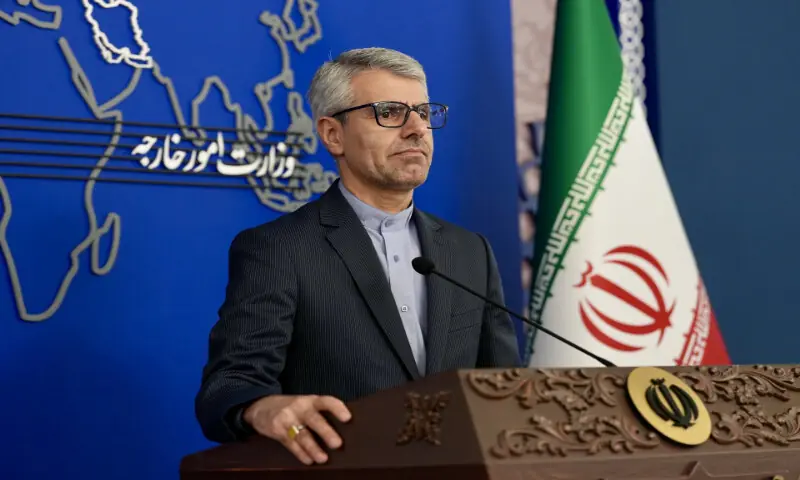
“The reason for this is not indecision; the reason for this situation is that we are faced with contradictory messages, contradictory behaviours, and unacceptable actions from the American side,” said foreign ministry spokesman Esmaeil Baqaei.

Despite the uncertainty, Trump expressed confidence in Washington’s position.

“We’re going to end up with a great deal. I think they have no choice,” he told CNBC.

Both sides have accused each other of violating the ceasefire since the first round of talks in Islamabad. The US has enforced a maritime blockade, while Iran has restricted access through the Strait of Hormuz.

Pakistan has continued diplomatic efforts to keep negotiations on track.

Foreign Minister Ishaq Dar urged both sides “to consider extending the ceasefire and to give dialogue and diplomacy a chance,” according to a foreign ministry statement.

Information Minister Attaullah Tarar said Islamabad was still awaiting confirmation from Tehran on participation in the next round of talks, calling the decision “critical”.

Iranian parliament speaker Mohammad Bagher Ghalibaf warned that Tehran would not negotiate “under the shadow of threats” and would “show new cards on the battlefield” if fighting resumes.

Earlier, the US Defence Department said it had intercepted and boarded a “stateless sanctioned” vessel linked to Iranian activity as part of enforcement measures.

For the latest news, follow us on Twitter @Aaj_Urdu. We are also on Facebook, Instagram and YouTube.

Iran calls US port blockade ‘act of war’, alleges ceasefire breach

Published 21 Apr, 2026 11:49pm 0 min read
Iran’s Foreign Minister Abbas Araghchi. – Social media

Iran’s Foreign Minister Abbas Araqchi on Tuesday described the United States’ blockade of Iranian ports as an “act of war,” accusing Washington of violating the ongoing ceasefire.

“Blockading Iranian ports is an act of war and thus a violation of the ceasefire,” Araqchi said in a post on X, warning that such actions undermine efforts to de-escalate tensions.

He further alleged that a commercial vessel had been struck and its crew taken hostage, calling it “an even greater violation” of the truce.

Araqchi said Iran is capable of countering external pressure and safeguarding its national interests.

“Iran knows how to neutralise restrictions, how to defend its interests, and how to resist bullying,” he said.

The remarks come amid heightened tensions between Washington and Tehran, as both sides navigate a fragile ceasefire and uncertain prospects for renewed negotiations.

For the latest news, follow us on Twitter @Aaj_Urdu. We are also on Facebook, Instagram and YouTube.

Pakistan awaits Iran’s response for second round of talks with US

Updated 22 Apr, 2026 02:55am 0 min read
Security personnel stand guard at a security checkpost ahead of anticipated US-Iran peace talks in Islamabad on April 20, 2026. AFP

Pakistan is still awaiting a formal response from Iran on whether it will send a delegation for a second round of talks with the United States, as a fragile ceasefire between the two sides nears expiry.

Information Minister Attaullah Tarar said on Tuesday that confirmation from Tehran remains pending, calling it “critical” with only hours left before the truce ends.

“Formal response from Iranian side about confirmation of delegation to attend Islamabad Peace Talks is still awaited,” he said in a post on X.

The minister noted that the ceasefire is set to expire at 4:50 a.m. on April 22, prompting an intensification of diplomatic efforts. He added that Pakistan, acting as a mediator, is in contact with Iran and continues to push for its participation in the negotiations.

Islamabad has positioned itself as a facilitator to bring both sides to the table, aiming to ease regional tensions and pave the way for a lasting settlement.

Separately, Deputy Prime Minister and Foreign Minister Ishaq Dar has urged both Washington and Tehran to consider extending the ceasefire to allow space for dialogue.

During a meeting with US Chargé d’Affaires Natalie A. Baker in Islamabad, Dar reiterated that negotiations and diplomacy remain the only viable path to resolving conflicts and ensuring long-term stability.

According to the Ministry of Foreign Affairs Pakistan, he stressed the need for direct engagement between the United States and Iran and called for serious steps to de-escalate tensions.

The US side appreciated Pakistan’s constructive role in promoting peace and facilitating dialogue, the statement added.

Pakistan has completed preparations to host the negotiations in Islamabad, but uncertainty persists over the arrival of high-level delegations. Media reports suggest the Iranian side may still participate, with officials expressing cautious optimism.

Some reports also indicate that if progress is made, senior US leadership could join the talks at a later stage.

With the ceasefire deadline looming, the extension of the truce is increasingly seen as crucial to keeping negotiations alive and preventing a return to escalation.

For the latest news, follow us on Twitter @Aaj_Urdu. We are also on Facebook, Instagram and YouTube.