


India eyes sharp rise in defence outlay in annual budget
2 min read



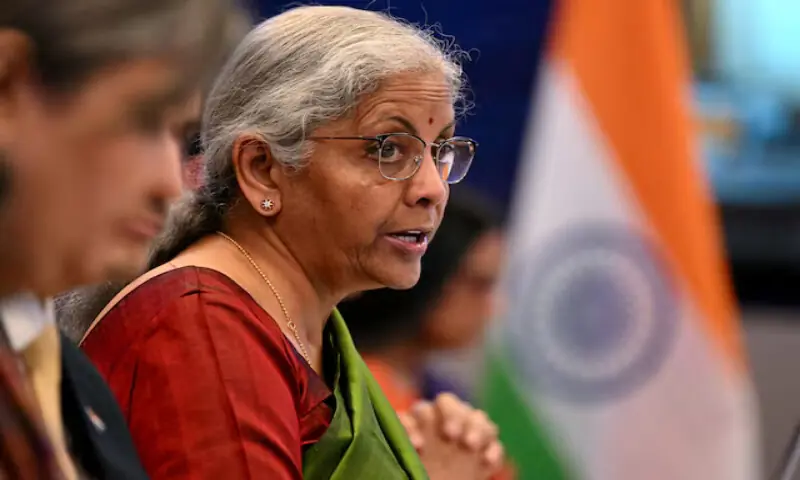
India announces its annual budget on Sunday, with the Defence Ministry seeking higher military spending, industry urging cuts in tax rates on market transactions and customs duties, and the government planning to ease foreign investment rules.
Below are some measures expected to be in the budget for the fiscal year from April, which Finance Minister Nirmala Sitharaman is to present from 11am (India time).
Fiscal deficit, govt borrowing
Economists expect the budget to focus on cutting government debt to a range of 49% to 51% of gross domestic product, a metric closely watched by global investors, by 2031 from 56%.
The government is likely to aim for a fiscal deficit at 4.2% of GDP for 2026-27, down from 4.4% this fiscal year.
Gross borrowing is expected to rise to between Rs16 trillion and Rs16.8 trillion ($174 billion-$183 billion) from Rs14.6 trillion rupees this year.
Defence
The Defence Ministry wants a 20% increase in military spending after a short but deadly conflict with Pakistan.
New Delhi is likely to ease conditions for foreign investments into defence units.
The Federation of Indian Chambers of Commerce and Industry, which has 250,000 companies as members, has suggested setting up defence-industrial corridors and an export-promotion council to meet the country’s defence-export target of $5.5 billion by 2029.
Infrastructure spending
Economists expect the government to maintain capital spending around 3.1% of GDP.
Income- and consumption-tax cuts this year constrain the government’s ability to significantly increase capital spending beyond 12 trillion rupees, from this fiscal year’s 11.2 trillion rupees.
Exports
The Federation of Indian Export Organisations is seeking lower import duties on key inputs for export-oriented industries such as textiles, electronic components and chemicals to encourage domestic manufacturing.
The group wants supportive regulatory measures and access to long-term finance as exporters face pressure from President Donald Trump’s 50% tariffs on Indian goods entering the US.
Taxes
Tax experts have called for abolishing the securities-transaction tax, levied on equity and derivatives trades, even if they result in losses.
To strengthen contract manufacturing in India, the lobby group FICCI has urged changes to income-tax rules that hinder the ability of firms such as Apple from supplying machinery to contract manufacturers.
For the latest news, follow us on Twitter @Aaj_Urdu. We are also on Facebook, Instagram and YouTube.
















Comments are closed on this story.