


Pentagon plans reduced role in North Korea, shifts responsibility to Seoul
4 min read

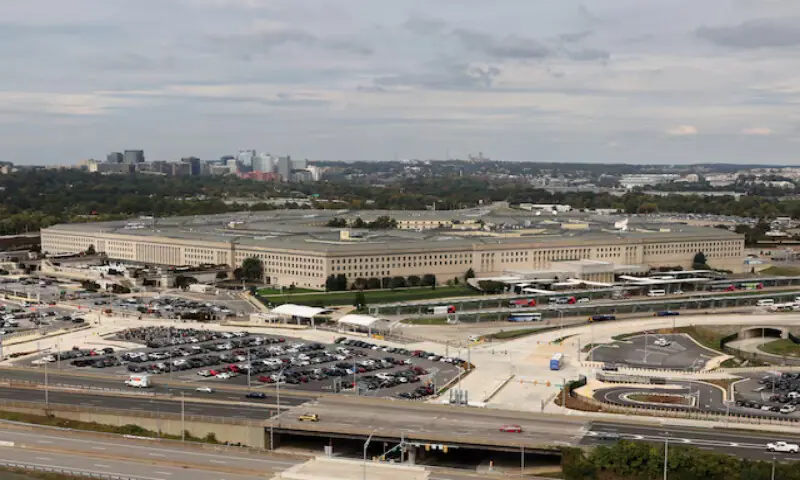
The Pentagon foresees a “more limited” role in deterring North Korea, with South Korea taking primary responsibility for the task, according to a policy document released on Friday, a move that could lead to a reduction of US forces on the Korean Peninsula.
South Korea hosts about 28,500 US troops in a combined defence against North Korea’s military threat, and Seoul has raised its defence budget by 7.5% for this year.
“South Korea is capable of taking primary responsibility for deterring North Korea with critical but more limited US support,” the Pentagon said in the 25-page National Defence Strategy document that guides its policies.
“This shift in the balance of responsibility is consistent with America’s interest in updating US force posture on the Korean Peninsula.”
In recent years, US officials have signalled a desire to make US forces in South Korea more flexible, to potentially operate outside the Korean Peninsula in response to a broader range of threats, such as in defending Taiwan and checking China’s growing military reach.
South Korea has resisted the idea of shifting the role of US troops, but has worked to grow its defence capabilities in the past 20 years, with the goal of being able to take on the wartime command of combined US and South Korean forces.
South Korea has 450,000 troops.
The Pentagon’s top policy official, Elbridge Colby, is due to travel to Asia next week and is expected to visit South Korea, a US official said.
The wide-ranging document, which each new administration publishes, said the Pentagon’s priority was defending the homeland.
In the Indo-Pacific region, the document said, the Pentagon was focused on ensuring that China could not dominate the United States or US allies.
“This does not require regime change or some other existential struggle. Rather, a decent peace, on terms favourable to Americans but that China can also accept and live under, is possible,” the document said, without mentioning Taiwan by name.
China claims Taiwan as its own territory and has not ruled out the use of force to take control of the island.
The Pentagon document is based on US President Donald Trump’s National Security Strategy, published last year, which said the United States will reassert its dominance in the Western Hemisphere, build military strength in the Indo-Pacific, and possibly reassess its relationship with Europe.
Iran seeks to rebuild military
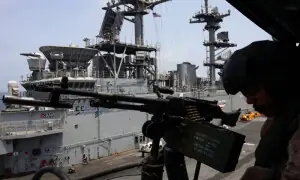
President Trump said on Thursday the United States has an “armada” heading toward Iran but that he hoped he would not have to use it, as he renewed warnings to Tehran against killing protesters or restarting its nuclear programme.
The deployments to the Middle East expand the options available to Trump, both to better defend US forces in the region at a moment of high tension and to take any additional military action after striking Iranian nuclear sites in June.
The Pentagon document said that while Iran had suffered setbacks in recent months, it was aiming to rebuild its military, with Tehran leaving open the possibility that it could “try again to obtain a nuclear weapon.”
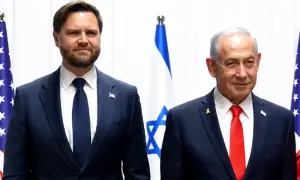
Even with US troops heading to the region, the document said Israel was a “model ally” and could be further empowered to defend itself.
The United States has had a sometimes-strained relationship with Israel over its war in Gaza.
US to remain engaged in Europe
Trump’s National Security Strategy from last year drew an outcry from Europeans after it said that Europe faced “civilisational erasure” and may one day lose its status as a reliable US ally.
The Trump administration is putting pressure on Kyiv to reach a peace deal in the war triggered by Russia’s full-scale invasion in February 2022, with Moscow demanding Kyiv cede its entire eastern industrial area of Donbas before it stops fighting.
The Pentagon’s strategy document was more measured on European allies, saying that while the United States would remain engaged in Europe, it would prioritise defending the United States and deterring China.
It said that Russia would remain a “persistent but manageable” threat for NATO’s eastern members, and that the Pentagon would provide Trump with options to “guarantee US military and commercial access to key terrain” in different parts of the world, including in Greenland.
Trump said earlier this week he had secured total and permanent US access to Greenland in a deal with NATO, whose head said allies would have to step up their commitment to Arctic security to ward off threats from Russia and China.
For the latest news, follow us on Twitter @Aaj_Urdu. We are also on Facebook, Instagram and YouTube.









Comments are closed on this story.