


A trillion-rupee opportunity
6 min read


Pakistan’s economy is often discussed in terms of official figures, statistics, and performance indicators, yet a very large part of the country’s economic life happens outside these recorded systems. This is known as the informal economy, and it plays a role far greater than people realise. Understanding this sector is essential for any assessment of the country’s economic health, its challenges, and growth potential.
The informal economy is not simply a marginal activity carried out by a few individuals; it is deeply woven into the social and commercial fabric of Pakistan. It includes millions of livelihoods, countless transactions, and entire industries that function without formal recognition.
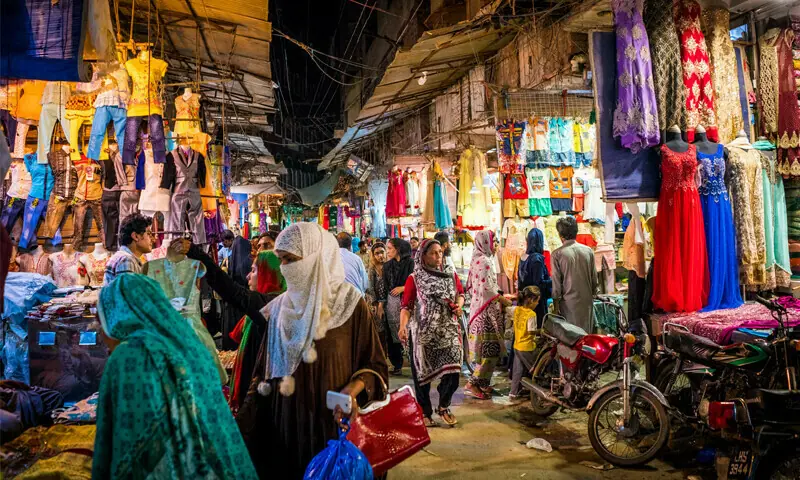
Informal economic activities range from roadside vendors and home-based workers to unregistered factories, transport services, retail shops, and even segments of the real estate and wholesale markets. Many people assume that the informal economy only consists of poor or small-scale earners, but in Pakistan, it includes businesses of all sizes. Some informal enterprises are tiny and barely sustain a family, while others handle large sums of money yet prefer to remain outside the formal system to avoid taxation, documentation, and compliance.
A key reason for the informal economy’s large size is the ease with which people can enter it. Formal registration processes are often complicated, slow, and costly. Many entrepreneurs, especially in rural areas or low-income neighbourhoods, find it easier to set up shop without going through lengthy bureaucratic procedures. Even urban traders and manufacturers sometimes avoid formalisation because they perceive government regulation as burdensome or inconsistent. As a result, countless businesses across the country operate without licences, tax numbers, or social security registrations. For many households, the informal sector offers the fastest and most flexible way to earn a living, especially when formal job opportunities fall short of the demands of a growing population.
Another important factor is the limited capacity of state institutions to enforce regulations. Pakistan’s federal and provincial authorities often lack the resources to track, document, and monitor economic activities. Markets are dense and diverse, making it difficult to apply uniform oversight. In addition, informal arrangements are often supported by local systems of trust. Customers rely on familiar vendors, suppliers trust longstanding retailers, and communities trade with each other without requiring formal paperwork. These social networks allow economic activity to continue smoothly even when official documentation is absent.
Estimating the true size of Pakistan’s “unrecorded” informal economy is challenging. Economists use indirect methods to calculate it, such as analysing currency in circulation, comparing energy consumption to recorded production, or noting differences between household income and expenditure. Over the years, studies suggested that the informal economy could account for anywhere between 30% and 60% of the country’s total economic output. Some estimates place it even higher, suggesting that the shadow economy might be almost equal in size to the formal one.
A recent study conducted jointly by the Small and Medium Enterprises Development Authority and the International Labour Organisation estimated the value of Pakistan’s informal economy at around $457 billion – 40% of the country’s total GDP. This provides a powerful indication of how large and economically significant the unrecorded sector truly is.
While these studies examine the hidden economy, the latest official economic figures provide context for understanding the scale of what remains outside the formal system. According to the Economic Survey released in mid-2025, Pakistan’s economy grew 2.68% in the fiscal year 2024-25. The National Accounts Committee reported that total GDP reached $407.2 billion, or Rs113.7 trillion. The Economic Survey also noted that the per capita income rose to around $1,824 during the same period. This marks an important milestone, as Pakistan’s economy has officially surpassed the $400 billion mark for the first time. Inflation also fell sharply, reaching just 0.3 per cent in April 2025, its lowest level in decades, due to tighter monetary policy and improvements in supply conditions. On the fiscal front, the government achieved a primary surplus of 3% of GDP between July and March and reduced the fiscal deficit to 2.6% of GDP. National savings increased to 14.1% of GDP, exceeding the investment-to-GDP ratio of 13.8%. Externally, Pakistan recorded a current account surplus of $1.9 billion, marking a significant improvement after several years of deficits.
Despite these encouraging developments, the informal economy continues to cast a long shadow and poses a major challenge for fiscal policy. With an estimated 40% of the economy believed to be untaxed or lightly regulated, government revenue remains far lower than its potential. Many informal businesses do not pay income tax, sales tax, or business levies, which limits the state’s ability to provide high-quality public services such as healthcare, education, and infrastructure. If even a portion of the informal sector could be integrated into the formal economy, tax collection would become more consistent, economic planning would become more accurate, and public spending could be better targeted.
Yet the informal economy also plays a major role in the socioeconomic landscape. It employs millions of people who might otherwise struggle to find work. Street vendors, carpenters, tailors, domestic workers, mechanics, and small traders ensure that the communities function smoothly and that essential goods and services remain accessible. In many regions, the informal economy is the backbone of survival, absorbing unskilled and semi-skilled labour, especially where formal employment is limited. During economic crises, informal enterprises often prove more adaptable and resilient than larger companies because they can shift quickly, relocate, or change their business models without incurring high costs.
At the same time, the informal sector carries significant risks for workers and business owners. Many employees lack legal protections, written contracts, social security coverage, or health benefits. Women make up a large share of home-based workers in Pakistan and are particularly vulnerable to unstable income and low wages. Informal businesses, while flexible, often struggle to access financing, bank loans, or formal credit lines, which restricts their ability to expand or modernise.
The challenge for Pakistan is to find the right balance: recognising the importance of the informal sector for livelihoods, while encouraging more businesses to formalise, pay taxes, and participate in the economy. Simplifying registration processes, reducing unnecessary regulations, and offering incentives for formalisation could help. Digital solutions such as mobile banking, online tax filing systems, and electronic payment platforms provide an important bridge by making it easier for small businesses to document transactions and build financial histories.
Building trust between citizens and the state is also necessary. Many informal business owners are reluctant to formalise because they feel they will not receive any real benefit in return for paying taxes. Strengthening public institutions, reducing corruption, and improving service delivery could make people more willing to enter the formal economy. At the same time, financial inclusion initiatives, such as microcredit, training programmes, and financial literacy campaigns, can help small enterprises grow and transition more confidently.
Understanding the real size of Pakistan’s informal economy, especially in the context of its GDP now estimated at over $407 billion, is important for effective policymaking. If the large unrecorded sector remains invisible, the government will continue to base its planning, budgeting, and development programmes on incomplete information. This will distort macroeconomic indicators and limit long-term growth prospects.
Pakistan’s informal economy is both a challenge and an opportunity. It highlights institutional weaknesses but also reflects the resilience, creativity, and determination of millions of Pakistanis. Bringing even part of this hidden sector into the formal system could increase tax revenues, widen social protections, and strengthen economic stability. At a time when the country’s economy stands at around $411 billion, with moderate growth and rising per capita income, the importance of the informal sector in shaping future outcomes cannot be overstated. Formalising it gradually, through better governance, practical reforms, and meaningful support for small businesses, could transform lives and contribute to a more inclusive and sustainable economic future for Pakistan.
The writer is a seasoned journalist and a communications professional.
He can be reached at [email protected]





Comments are closed on this story.