


Pakistan clear of Ethiopian volcano ash as cloud drifts towards India
2 min read



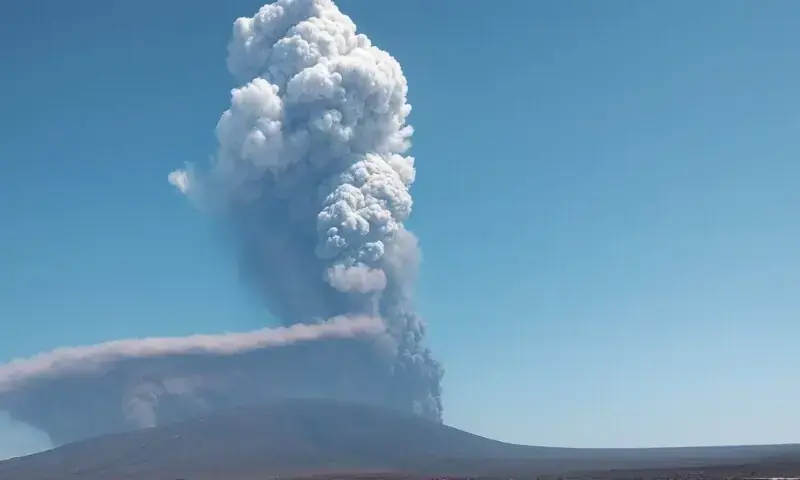
Pakistan’s Meteorological Department said on Tuesday that the country faces no further risk from the massive ash cloud generated by a rare volcanic eruption in northern Ethiopia, the first such incident to trigger an ash alert in Pakistan’s history.
The eruption of the Hayli Gubbi volcano, dormant for nearly 12,000 years, produced a dense ash plume that initially moved towards Oman, Yemen, and Pakistan before shifting east towards India.
Met Department spokesperson Anjum Nazir said Pakistan’s airspace is now clear.
“The ash cloud from Ethiopia has moved towards India. It will not affect Pakistan’s northern regions,” he said. The plume is currently drifting towards Rajasthan, according to the department.
Earlier, the Met Office had issued an aviation alert, warning that a thick ash mass had formed 60 nautical miles south of Gwadar, rising up to 45,000 feet.
Officials cautioned that domestic flights cruising between 34,000 and 36,000 feet and international flights between 40,000 and 45,000 feet could face engine hazards if exposed to volcanic ash.
Geologists from the US Geological Survey and British agencies called the eruption an extraordinary event, noting the region has seen minimal volcanic activity for thousands of years.
Scientists said the presence of magma deep beneath the surface indicated that melting processes had been ongoing, even without recorded eruptions.
There are no reports of casualties, local authorities in Ethiopia said, though communities surrounding the volcano may still face significant ash-related impacts.
India’s Meteorological Department reported ash effects in Gujarat, New Delhi, Rajasthan, Punjab, and Haryana, prompting changes to flight routes.
According to Indian media, Air India cancelled several flights as a precaution.
Pakistan’s Met Office added that the ash cloud is now moving towards China and is expected to exit Indian airspace by 7:30 p.m. on Tuesday.
Experts say the sudden activation of the Hayli Gubbi volcano amid rising seismic activity in the region warrants further scientific study.
For the latest news, follow us on Twitter @Aaj_Urdu. We are also on Facebook, Instagram and YouTube.














Comments are closed on this story.