


Afghan Taliban responsible for border closure, stalled trade and projects: FO
3 min read

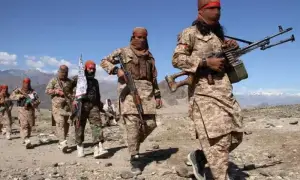
Pakistan on Friday said the Afghan Taliban are fully responsible for the ongoing border closure, suspended trade, and delays in regional connectivity projects, citing Kabul’s continued support for anti-Pakistan terrorist groups.
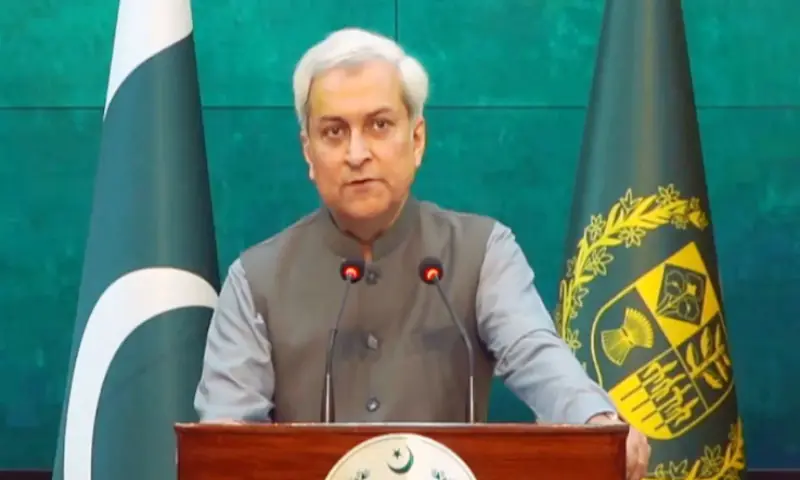
Foreign Office spokesperson Tahir Andrabi, in the weekly briefing, said Pakistan closed all border crossings and halted trade after the Afghan Taliban regime failed to curb Fitna al-Khawarij, Fitna al-Hindustan and their affiliated outfits operating from Afghan soil.
“The onus for the delay in opening the border crossings rests with the Afghan Taliban,” Andrabi said.
“Similarly, the projects like TAPI and CASA-1000,” he said and reiterated that Afghanistan should also stop the misuse of its soil for terrorist attacks inside Pakistan.
He said Pakistan had tried to remain engaged with Kabul despite repeated terror attacks claimed by networks based inside Afghanistan.
“There is a threshold of patience. I think that threshold of patience has been crossed. We cannot let the trade happen as if trade is to licence the killing of Pakistanis from Afghan soil.”
Commenting on a statement by an Afghan leader about preparing 4,000 bombers for Pakistan, Andrabi said the threat confirmed Islamabad’s long-standing position that Afghan soil was being used to orchestrate attacks against Pakistan.
Asked about US President Donald Trump’s remarks regarding assurances by Indian Prime Minister Narendra Modi on avoiding war with Pakistan, the spokesperson said such statements were taken “with a pinch of salt”, noting that India’s political and military leadership continued issuing hostile and aggressive rhetoric.
On Iran’s nuclear programme, Andrabi reiterated Pakistan’s principled stance recognising Tehran’s right to peaceful nuclear enrichment within international legal limits.
He also described the conclusion of a recent US congressional report, which acknowledged Pakistan’s overwhelming success, as “quite a telling.”
Highlighting diplomatic engagements, he noted Deputy Prime Minister and Foreign Minister Ishaq Dar’s participation in the SCO Heads of Government meeting in Russia and the Pakistan-EU Strategic Dialogue in Brussels.
He said Pakistan and Hungary had renewed an MoU offering 400 scholarships for Pakistani students under the Stipendium Hungaricum Programme 2026–28.
Condemning continued Israeli actions in the occupied West Bank, including raids at Al-Aqsa Mosque, Andrabi reaffirmed Pakistan’s unwavering support for a two-state solution based on pre-1967 borders with Al-Quds Al-Sharif as the capital of a sovereign Palestinian state.
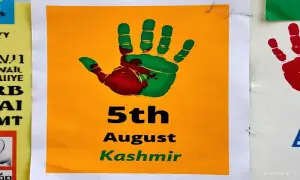
Andrabi expressed deep concern over the persistent human rights situation in Indian-occupied Jammu and Kashmir (IIOJK), saying Indian policies marked by widespread detentions, arbitrary arrests, and severe restrictions on fundamental freedoms amounted to collective punishment of the Kashmiri population.
“India continues to alter the demographic character of the occupied territory and undermine the religious, cultural, and social heritage of the Kashmiri people… Thousands of Kashmiri youth remain missing, while many genuine political representatives remain in arbitrary detention. Such coercive measures cannot weaken the Kashmiri people’s enduring commitment to their internationally recognised right to self-determination,” he said.
He called on the international community, including the United Nations, to take full cognisance of the grave human rights situation in IIOJK and urged immediate remedial action, accountability for documented violations, and access for credible international human rights organisations to conduct independent assessments.
“A just, peaceful, and lasting resolution of the Jammu and Kashmir dispute, in accordance with relevant UN Security Council resolutions and the aspirations of the Kashmiri people, remains essential for durable peace and stability in South Asia,” he added.
On the sentencing of a former Bangladeshi prime minister, Andrabi said the matter was internal to Bangladesh and should be addressed through its constitutional and democratic processes.
For the latest news, follow us on Twitter @Aaj_Urdu. We are also on Facebook, Instagram and YouTube.






Comments are closed on this story.