



1937-47: The decade that yielded Pakistan
9 min read


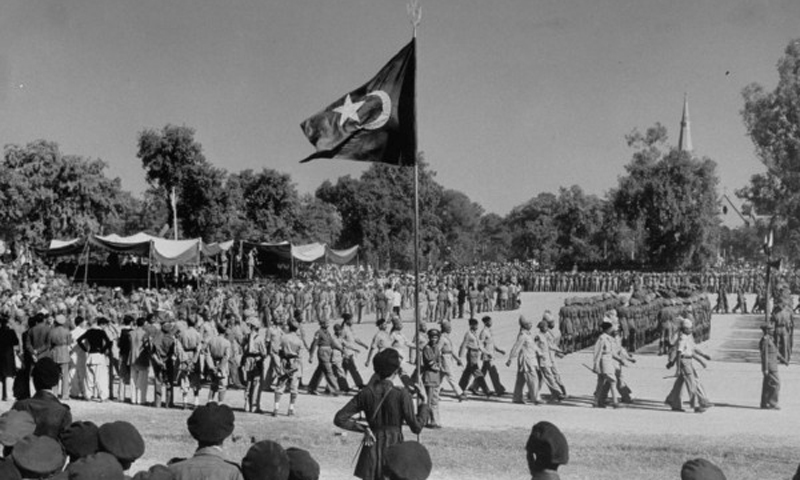
 —Photo by ReshareIt
The momentous decade that yielded Pakistan in 1947 began with much fanfare in 1937. That critical year was as much a watershed as the traumatic 1857. If the later signified the final demolition of Muslim power in the subcontinent, the former heralded the beginning of the Muslim ques for power either in a decentralised all-India federation or in the north-west and north-east India. Indeed, its criticality can by no means be emphasised too much.
In that year came into force the provincial part of the Government of India Act 1935, granting autonomy to Indians for the first time in the provinces. In that year the Congress came out as the dominant party in Indian politics: it swept the polls in general constituencies, commanded comfortable majorities and came to power, initially in six provinces, and in the limited provincial arena gave a foretaste of what Congress rule would mean for Muslims.
As a sequel to this the Muslim League under Jinnah's dynamic leadership came to be revived, turned into a mass organisation, and made their political spokesman at Lucknow in that very year. Simultaneously, on the one hand, Jinnah launched his marathon campaign against the Congress, with the exclusion of Muslims from the portals of power as his most telling theme, he, on the other, boldly promised restitution of political power to Muslim India - a goal which had long haunted it and had long lain close to it. Thus, in that momentous year were launched certain trends in Indian politics whose crystallisation in subsequent years made the partition of the subcontinent inevitable in 1947.
The year started out with provincial elections, and a Congress-League entente. The Muslim League, newly organised, hoped for Congress co-operation in ministry formation even as there was during election time. But the Congress, once it had secured a majority in six legislatures, turned its back on the coalition idea, on the League's offer for co-operation. The logic of "majority rule" was sought to be strictly enforced, and one-party Congress governments came to be installed.
Nor could the Congress see, on the morrow of its electoral victory, any justification for coalescing with the League. Should the League group (in the various legislatures) be anxious to get some share in the government, it should first disband its party in the legislature, join the Congress Party unreservedly, and submit to its control. Here, after all, it was argued, was a god-sent opportunity for the Congress to absorb the League even as it had previously absorbed the Red Shirts in the Frontier. Then, why should not the Congress suck it into its fold and become the only political organisation in the country?
And the Congress tried with all the resources at its command - but only to be unexpectedly discomfited in the end. The Congress' ultimatum drew forth a quick, bitter rebuff from the League which rejected it out of hand. Unruffled, however, the Congress went ahead with its well-laid plans. Determined to send the League into political wilderness; it took into the cabinets only such Muslims who were willing to sign its pledge.
All this, of course, betrayed a frankly totalitarian approach to India's knotty constitutional problem. All this obviously made the Muslims gravely suspicious of, and seriously alarmed at, Congress' ultimate intentions. Hence, Jinnah's assertion at the beginning of his marathon campaign against the Congress at Lucknow in October 1937 that "the Muslims can expect neither justice nor fairplay" at the Congress' hands they readily agreed with him.
Henceforward, the gulf between the Congress and the League, between Hindus and Muslims, widened over the years. Certain other features of the developing Congress policy (in which the Congress was made coterminus with India and the Muslims were counted out as an entity) confirmed the Muslims in their distrust of the Congress, and drove the fence-sitters into the Muslim League's fold. The most prominent among them were Sir Sikandar Hayat Khan of the Punjab, Maulvi Fazlul Haq of Bengal, and Sir Muhammad Sadullah of Assam along with their followers. All of them were premiers of their respective provinces.
This occurred at the League Lucknow session in October 1937, which a turning point in modern Muslim India's history no less than in that of the Muslim League. At that session, the League changed its creed to independence, a party flag and an anthem were adopted, a hierarchy of command was established, the League's structure was democratized, and a two-anna membership fixed. "We are here not to follow history, but to create history," declared the Raja of Mahmudabad, Reception Committee Chairman. And the Lucknow session did create history. Indeed, Lucknow witnessed the successful culmination of Jinnah's untiring efforts to unite all the Muslims on one political platform, as it represented the first major breakthrough in his sustained attempts to revitalize and reorganise the Muslim League as Muslim Indians' sole political spokesman. Lucknow electrified and enthused the Muslim masses as nothing else had done before. It also produced immediate results. Within three months, some 90 new branches were set up and about 100,000 new members were enrolled in the United Provinces alone.
The spectacular growth of the League under Jinnah's leadership was reflected both in the strength and composition of delegates to the annual sessions and in the membership figures in the post-Lucknow era. While the 1933 session had to be abandoned for want of quorum and the quorum itself had to be lowered from 75 to 50 in 1931, the League session in April 1936 was attended by 200 delegates, the figure rising to 2,000 at Lucknow in 1937. The seating capacity of the pandal was 5,000 at Lucknow, 15,000 at Calcutta (special session, April 1938), and over 60,000 at Lahore (1940). Actually, the attendance at Lahore, far in excess of the seating capacity, was estimated at over 100,000 and the session itself has been described as "one of the most representative gatherings of the Musalmans of India". Likewise, total membership which stood at 1,333 in 1927 showed a phenomenal rise. Madras, with a mere 6 percent Muslim population, alone counted 112,078 members in 1941, while Bengal enrolled 550,000 members in 1944 - the figure exceeding "the number ever scored by any organisation in the Province not excluding the Congress". For the same year (1943-44), Sindh claimed the enrolment of some 300,000 members - ie, about 25 percent of the adult male Muslim population.
A more sure index to the growing strength of the League was provided by the by-elections in the post-Lucknow period: between 1 January 1938 and 12 September 1942, it won 46 (83%) out of 56 Muslim seats, as against three seats (about 5%) won by the Congress and seven by independents. Further testimony was provided by the enthusiastic response that Jinnah's call to commemorate December 22, 1939 as "Deliverance Day - ie, deliverance from "tyranny, oppression and injustice" of the Congress raj - elicited throughout the subcontinent. Three months earlier came the British recognition of League's growing strength when on the outbreak of the war the Viceroy invited Jinnah along with Gandhi for talks. Later, in August 1940, the British scuttled the federal part of the 1935 Act, conceding one of the core League's demands.
In yet another respect as well, the three years between 1937 and 1940 were extremely crucial in Muslim India's history, in the evolution of Muslim politics. To a series of challenges, psychological, cultural and political, the Muslims were increasingly exposed to and all their attempts to settle down as a sub-national group in a multinational state were torpedoed ab initio.
By 1940, however, the Muslims had developed "the will to live as a nation." They also discovered that nature had also endowed them with a territory with a Muslim demographic dominance, which they could occupy and make a state as well as a cultural home for the newly discovered nation.
These two pre-requisites, as laid down by Renan, provided them with the intellectual justification for claiming a distinct nationalism for themselves. Thus, when, after their long pause, the Muslims spelled out their innermost yearnings, these turned out to be in favour of a separate Muslim nationhood and of a separate nationalism.
"We are a nation", they claimed in the ever eloquent words of the Quaid-i-Azam - "we are a nation with our own distinctive culture and civilisation, language and literature, art and architecture, names and nomenclature, sense of values and proportion, legal laws and moral codes, customs and calendar, history and tradition, aptitude and ambitions; in short, we have our own distinctive outlook on life and of life. By all canons of international law, we are a nation."
Extremely significant was the impact, on Indian politics, of this discovery on the part of Indian Muslims. From a minority supplicating for safeguards, even paper safeguards, they had turned into a nation, separate and distinct, and entitled in their own right to a separate, sovereign state within the subcontinent.
The formulation of the Muslim demand for Pakistan in 1940 had a tremendous impact on the nature and course of Indian politics. On the one hand, it shattered forever the Hindu dreams of a pseudo-Indian, but, in fact, a "Congress Raj" on British exit from India. On the other, it heralded an era of Islamic renaissance and creativity in which the Indian Muslims were active participants.
The Hindu reaction, was, of course, quick, bitter, malicious. Equally hostile were the British to the Muslim demand, their hostility having stemmed from their belief that the unity of India was their main achievement and their greatest contribution. But the tragedy was both the Hindus and the British missed to consider the astonishingly tremendous response the Pakistan demand had spontaneously elicited from the Muslim masses. Above all, they failed to realise how a hundred million people had suddenly become supremely conscious of their distinct nationhood and their high destiny.
In channelling the course of Muslim politics towards Pakistan no less than in directing it towards its consummation in the establishment of Pakistan in 1947, no one had played a more decisive role than did Quaid-i-Azam Jinnah. It was his powerful advocacy of the case for Pakistan and his dextrous strategy in the delicate negotiations that followed the formulation of the Pakistan demand, particularly in the post-war period, that made Pakistan possible.
And with the emergence of Pakistan on August 14-15, 1947, the Indian Muslims had come into their own, after a long and ardous struggle. At every stage in that struggle beginning almost with mid-eighteenth century, the Muslims had to face countless trials and tribulations. But they shirked nothing: neither suffering nor sacrifices. Actually, in the last phase of the struggle alone, almost one-half million perished, and seven million became uprooted from their ancestral hearths and homes - and became refugees.
Even, so, when the little ship of Muslim freedom, though battered heavily by winds and tides, though scarred and seamed in many a fierce encounter with embattled house, at last reached the promised land of Pakistan, eighty million souls wildly rejoiced at the birth of freedom. They also rejoiced that the one man who had contributed the most in calling this nation and this state of Pakistan into existence had lived to see his dream come true. A new day had dawned for them, a day with new hopes, a day with immense promise and possibilities. And a day for which they had breathlessly waited for almost two centuries.—Business Recorder
Written by Sharif Al Mujahid






Comments are closed on this story.