Subscribing is the best way to get our best stories immediately.
The debate around development in Sindh has become emotional and highly political. For many, daily life is shaped by a confusing mix of visible improvement and persistent problems.
Roads, transport projects, hospitals, and schools do exist, and some have improved access and mobility.
At the same time, broken streets, water shortages, poor drainage, weak services, and slow repairs remain part of everyday experience for millions.
Between these two realities stands a strong public narrative, often driven by political rivalry, in which certain anti-PPP elements present the Sindh government as having done nothing at all.
This mindset, combined with the governance failures, has created a situation where truth, exaggeration, progress, and neglect are all tangled together.
It is important to acknowledge that development in Sindh has not been absent.
Over the years, several major projects have been completed, especially in urban areas.
Public transport systems such as bus services have helped working people, students, and women who previously struggled to travel safely and cheaply.
Flyovers, underpasses, and expanded roads have reduced travel time in certain parts of Karachi and other cities.
Some hospitals have been upgraded with new equipment, emergency units, and specialised departments, and a number of universities and colleges have expanded their campuses.
Digital systems for land records and government services have also been introduced in parts of the province, making some processes easier than before.
These are not imaginary achievements, and for the people who benefit from them, they matter in real ways.
However, these developments exist alongside serious and longstanding problems.
Many roads are still in poor condition, especially in the low-income urban areas and rural districts.
Drainage systems regularly fail during the monsoon season, causing flooding, damage to homes, and disruption to daily life.
Clean drinking water remains unavailable in many places, forcing people to rely on unsafe sources.
Hospitals outside major cities are often understaffed and poorly equipped, while schools in rural areas suffer from absent teachers and crumbling buildings.
This uneven picture makes it difficult for people to feel satisfied, even when they can see that some progress has been made.
The unequal distribution of development plays a major role in public frustration.
Large projects are often concentrated in visible urban locations, where they attract media attention and political credit.
Meanwhile, many neighbourhoods and villages see little change over long periods of time.
Even within Karachi, some areas appear modern and well-connected, while others feel forgotten.
For residents of neglected areas, development elsewhere does not bring hope; instead, it highlights their own exclusion.
This sense of being ignored feeds anger and disappointment, making it easy for the political critics to claim that the government only serves a small group of people.
At the same time, the political environment in Sindh has made honest discussion of development very difficult.
The Pakistan Peoples’ Party has ruled the province for a long time, and this long rule has naturally created opposition and fatigue among sections of the population.
Certain anti-PPP political elements and commentators often present every problem in Sindh as proof of total failure.
In this narrative, no road is ever counted as progress, no hospital upgrade is acknowledged, and no reform is seen as genuine.
Even projects that clearly exist are dismissed as corruption schemes or propaganda exercises.
This approach simplifies a complex reality into a single message of blame.
This mindset has been strengthened by examples of poor governance.
Corruption allegations, weak accountability, and visible mismanagement have damaged public trust.
When people see roads breaking soon after construction or streets being dug up repeatedly, they are more likely to believe that nothing honest is happening.
Anti-PPP voices then use these examples to argue that all development claims are lies.
In many cases, genuine criticism turns into blanket rejection, where facts no longer matter as much as political identity.
Supporters and critics speak past each other, and the public is left confused and frustrated.
Social media and television debates have also played a role in shaping this environment.
Short videos of flooded streets or broken roads spread quickly and create a powerful emotional impact.
These images are important, but they often appear without context.
At the same time, images of completed projects are dismissed as staged or meaningless.
As a result, public discussion becomes more about scoring political points than understanding what has worked, what has failed, and why.
Ordinary citizens are caught between official claims of success and opposition claims of total collapse, unsure whom to believe.
The rural-urban divide further complicates the picture. In many rural parts of Sindh, development has been slow and inconsistent.
Villages still lack basic facilities, and the people feel left behind.
For them, political arguments about bus projects or flyovers in cities feel irrelevant.
When opposition voices say that the government has done nothing, this matches their lived experience, even if it ignores progress elsewhere.
At the same time, urban residents who benefit from certain projects may feel that criticism is unfair or exaggerated.
This difference in experience deepens social and political divisions.
Natural disasters, especially heavy rains and floods, repeatedly expose weaknesses in infrastructure.
Each year, the same scenes of waterlogged streets and damaged homes appear.
These failures are real and painful, and they strengthen the belief that development has been superficial or poorly planned.
Opposition groups use these moments to reinforce their message of incompetence and neglect.
Besides, the government often responds with promises and explanations that fail to convince the people who have heard them many times before.
Over time, this cycle has made public trust extremely fragile.
Health and education services show a similar pattern.
Some improvements exist, particularly in major hospitals and institutions, but many facilities remain overcrowded and under-resourced.
Announcements of new projects create brief hope, which quickly fades when services do not improve in daily life.
Anti-PPP critics point to these failures as evidence that all spending is wasted.
Supporters argue that change takes time and resources are limited.
Between these positions, ordinary people continue to struggle, feeling that political debates do little to improve their situation.
The long-term rule of one party has also created a perception of weak accountability.
Many citizens believe that elections do not lead to meaningful change in governance.
This feeling makes people more receptive to harsh criticism and absolute accusations.
When expectations are already low, it becomes easy to accept the idea that nothing good has happened at all.
In this environment, even genuine development struggles to change public opinion, because trust has already been lost.
Yet it would be unfair to deny that Sindh’s challenges are also shaped by broader national issues.
Rapid population growth, climate change, limited financial resources, and federal–provincial tensions all affect development outcomes.
Blaming a single provincial government for every problem ignores these wider factors.
At the same time, using these factors as excuses for poor planning and weak implementation is also unfair to the public.
A balanced view must recognise both the constraints and the responsibilities of those in power.
The tragedy is that extreme political narratives often prevent meaningful reform.
When critics refuse to acknowledge any progress, and the government refuses to fully accept its failures, space for honest improvement disappears.
Citizens become cynical, believing that development is only a slogan and criticism is only politics.
This cynicism leads to disengagement, where people stop expecting better services and stop believing that their voices matter.
The situation in Sindh cannot be reduced to either complete development or complete neglect.
It is a complex mix of some real progress, many serious failures, and a highly charged political mindset that amplifies anger and accusation.
Certain anti-PPP elements play a role in shaping a narrative of total collapse, while the government’s own mistakes make this narrative believable to many.
For ordinary people, the result is ongoing frustration and emotional exhaustion.
What people want is not political victory for one side or the other, but steady, honest improvement in their daily lives.
They want roads that last, drains that work, schools that teach, and hospitals that heal.
They want criticism that pushes for better performance, not just louder blame, and leadership that accepts responsibility rather than hiding behind achievements or excuses.
Until development becomes more balanced, transparent, and people-centred, and until political debate becomes more honest and less hostile, Sindh will continue to live with a sense of disappointment shaped by both problems and deep-rooted political narratives.
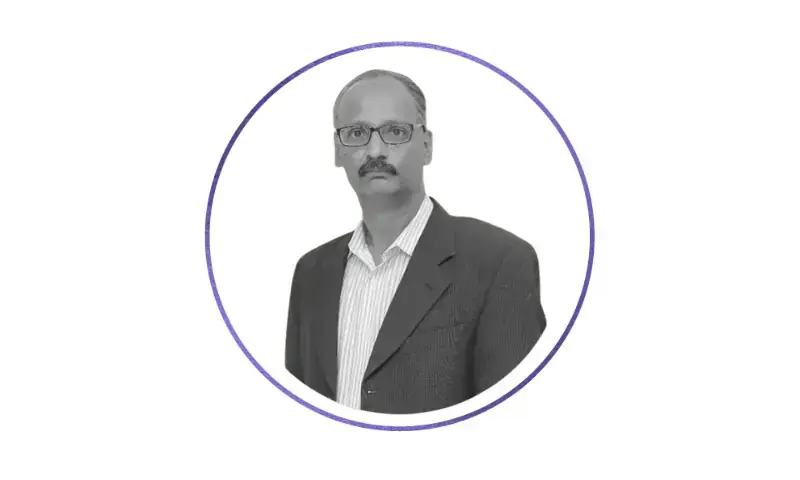
The writer is a seasoned journalist and a communications professional.
He can be reached at tariqkik@gmail.com