Resources insufficient to defend Israel from Iran, US general warns
3 min read



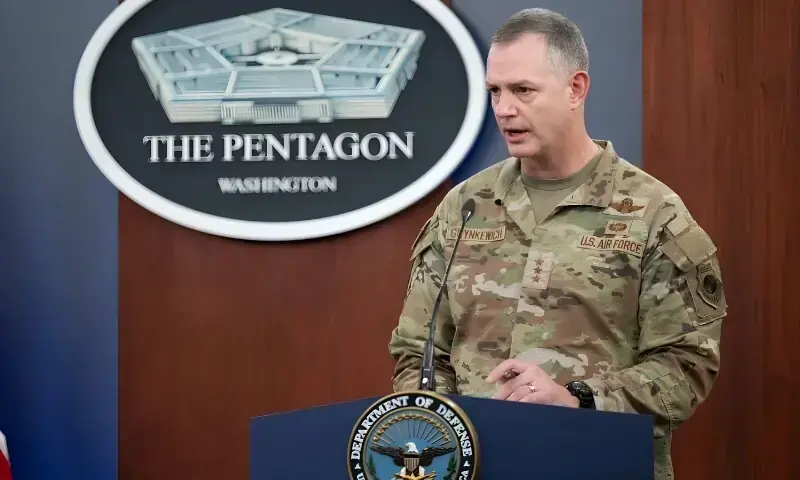
The head of the US military’s European Command (EUCOM) has warned the Pentagon that current naval resources are insufficient to defend Israel against Iranian ballistic missile attacks, according to a report by The Washington Post.
The newspaper reported that Gen Alexis Grynkewich informed senior Pentagon officials in writing this week that EUCOM lacked the naval assets required to provide adequate missile defence for Israel amid the escalating conflict with Iran.
According to the report, the commander warned that unless the US Navy deployed an additional aircraft carrier, he would have to prioritise the defence of the United States over protecting Israel.
A US defence official told the newspaper that such written warnings from military commanders are not unusual when operational demands exceed available resources.
The official said commanders routinely notify the Pentagon of capability gaps so policymakers can make informed decisions on force allocation.
Growing strain on US military resources
The warning comes as the five-month conflict between Washington and Tehran has entered a critical phase, with hostilities resuming after the collapse of a proposed peace agreement.
The renewed fighting has placed increasing pressure on US missile defence systems and military stockpiles.
US aircraft carriers operating in the eastern Mediterranean have long supported Israel’s missile defence network, using advanced radar systems and interceptor missiles to help counter threats from Iran and the Iran-backed Houthi movement in Yemen.
The report said the Trump administration’s decision to blockade Iranian ports in response to Tehran’s closure of the Strait of Hormuz has further stretched US naval resources.
Multiple theatres, limited assets
EUCOM oversees US military operations in the Mediterranean and is also responsible for monitoring potential threats from Russia against NATO allies, adding to the command’s operational burden.
According to the US Department of Defence, five US Navy destroyers are based in Rota, Spain, with a sixth expected to arrive later this year. However, ongoing operations related to the Iran conflict have delayed maintenance schedules, affecting the availability of naval assets.
As of Friday, the report said the USS Paul Ignatius and USS Roosevelt were deployed in the eastern Mediterranean, while the USS Arleigh Burke, USS Bulkeley and USS Oscar Austin remained stationed at Rota.
In the Arabian Sea, the United States has deployed the USS George W. Bush, USS Abraham Lincoln and at least 15 other warships, including 11 aircraft carriers, to protect commercial shipping and enforce the blockade of Iranian ports around the Strait of Hormuz.
Meanwhile, the USS Gonzalez is operating in the Red Sea, where Yemen’s Houthi movement has declared a blockade of Saudi shipping routes. Saudi Arabia has also stepped up efforts to secure maritime traffic in the area.
Reports of possible new strikes
The Washington Post report comes as domestic criticism of the Iran conflict grows in the United States, with public support declining and lawmakers from both major parties urging the Trump administration to present a clearer strategy for ending the war.
Separately, The Wall Street Journal reported that President Donald Trump has authorised the US military to prepare fresh strikes against Iran.
According to the report, the United States and Israel are considering attacks on Iranian energy facilities that could be carried out as early as the end of the weekend.
Iran has responded by warning the United States and Israel that any attack on its energy infrastructure or other critical facilities would have “serious consequences.”
For the latest news, follow us on Twitter @Aaj_Urdu. We are also on Facebook, Instagram and YouTube.