

Fed leaves rates unchanged; three policymakers dissent in favour of a hike
3 min read


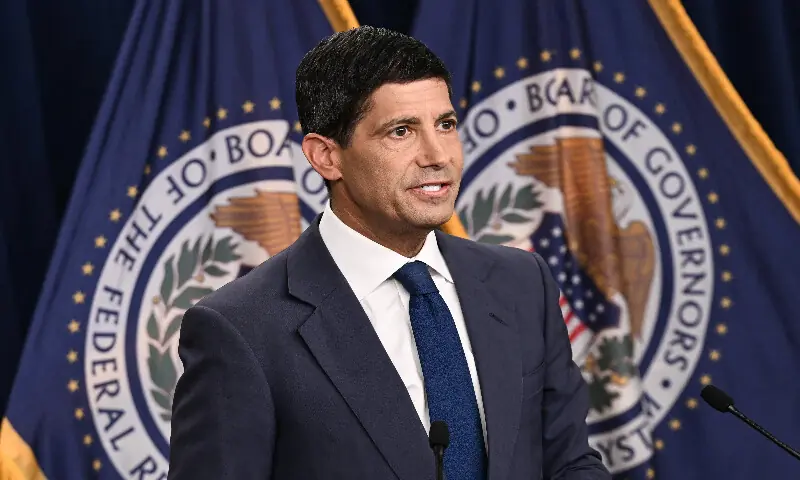
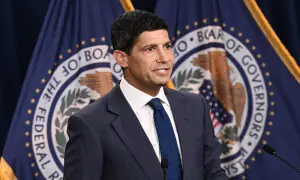
The Federal Reserve held interest rates steady on Wednesday, a choice that may intensify questions about how US central bank chief Kevin Warsh will deliver on his commitment to bring inflation back down to the 2% target.
The widely expected decision to leave the benchmark interest rate in the 3.50%-3.75% range drew dissents from three of the 12 members of the policy-setting Federal Open Market Committee who “preferred” a quarter-percentage-point hike at this meeting.
Those same three, the presidents of the Fed’s Cleveland, Dallas and Minneapolis regional banks, had also dissented at Jerome Powell’s final meeting as central bank chief in late April, that time in favour of removing the implied promise of lower rates.
Warsh, who took over as head of the Fed in May, has said he has “no tolerance” for inflation that has been running above the central bank’s target for more than five years, and up until last month was accelerating as the war in the Middle East pushed up global fuel and food prices, and investment in data centres and other spending tied to artificial intelligence drove up demand.
“Inflation remains elevated relative to the Committee’s 2% goal,” the Fed said in a short policy statement after the end of its latest two-day meeting. It replicated word for word all of the June 17 statement’s assessment of the economy.
The Fed said economic activity is “expanding at a solid pace,” noting, as it did in June, that job gains “have kept pace with the workforce, and the unemployment rate has changed little.”
US stocks pared losses after the release of the statement while yields on US Treasuries pared gains. The dollar fell against a basket of currencies.
“At this stage, I think we should expect the FOMC to hike rates by 25 basis points in September unless the labour market data collapses, or core inflation prints closer to 2% annualised, which I do not expect in the July or August readings before the September FOMC,” said Omair Sharif, founder and president of forecasting firm Inflation Insights.
In leaving the policy rate pinned in the range it has been since December, Fed policymakers are embracing the idea that current borrowing costs are creating enough friction in the economy to reduce any inflation that isn’t, like the effect of tariffs on goods prices, expected to fade on its own.
Warsh has said little about the mix of risks and nothing about the outlook for the policy rate, though he has expressed the expectation that rising productivity aided by AI will allow the economy to grow faster without also pushing up inflation.
Financial markets ahead of this week’s meeting had priced in about a one-in-three chance of a rate hike and, absent such a move at this week’s meeting, nearly a 100% chance of an increase in September. By then, Fed policymakers will have in hand two more monthly readings on inflation and the jobs market, giving them a better picture of whether the cooling price pressures evident last month have continued.
For the latest news, follow us on Twitter @Aaj_Urdu. We are also on Facebook, Instagram and YouTube.