


Iran outplays Trump at his own game, deepening war dilemma: CNN
5 min read
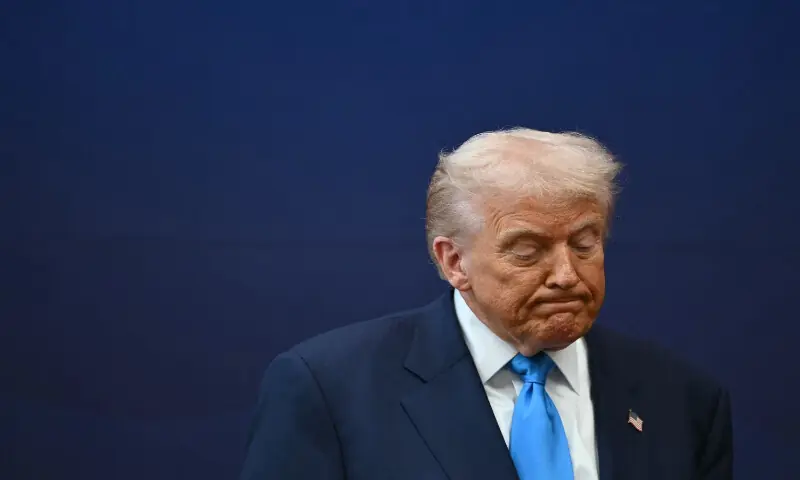
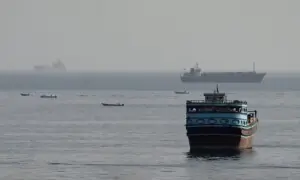
Iran appears to be beating US President Donald Trump at his own game, according to a CNN analysis, deepening Washington’s dilemma over how to respond to Tehran’s renewed grip on the Strait of Hormuz.
Trump complained on Monday that Iran could not be trusted to honour agreements, criticising its leaders for a tactic he himself has used repeatedly.
He told Fox News the memorandum of understanding that had briefly paused the war was “a done deal, and then they broke it,” adding that Iran “always” reneges on deals.
CNN’s analysis noted the irony in that complaint.
Trump has himself walked away from multiple international agreements, including exiting the Paris Climate Accord twice, and scrapped the Obama-era nuclear deal with Iran during his first term.
Critics trace Washington’s current predicament partly to that earlier decision, the report said.
Later in the day, a frustrated Trump vowed to impose his own toll on ships crossing the strait.
Iran responded, in what CNN described as an offer laced with sarcasm, by proposing an even steeper rate, one that topped the offer of the “Art of the Deal” author himself.
Iranian Foreign Minister Abbas Araghchi wrote on X that Trump was correct, arguing the US had effectively endorsed Tehran’s position on charging vessels for passage through the waterway. Araghchi added that a 20 per cent rate was too high and that Iran would be fairer.
The analysis said Trump is discovering that Iran drives a hard bargain and has its own reading of the memorandum’s terms.
Weeks after signing the MOU and declaring he had permanently ended Iran’s nuclear programme and brought peace to the Middle East, Trump struck a different tone on Monday, telling a radio show the deal had been a test Iran failed and no longer meant much, CNN reported.
Trump cannot change the reality of the war
The ceasefire arrangement unravelled because Iran acted to defend its central gain from the war: effective control over the strait, according to CNN.
This exposed a difficult truth for Washington.
Despite Trump’s threats and military strength, Tehran continues to dictate the terms of the confrontation.
The equation that has defined the war remains unchanged, with Iran using geography and a shrewd understanding of its limited power to outmanoeuvre a far stronger adversary, the analysis said.
The renewed standoff stemmed partly from the administration’s rush to negotiate a memorandum containing imprecise language, CNN reported.
Trump’s negotiating team, led by Vice President JD Vance, failed to anticipate what more experienced diplomatic observers immediately recognised: that Iran would use the ambiguity to gain fresh leverage.
The agreement had required Tehran to arrange free and safe passage for commercial vessels through the strait for 60 days, and to work with Oman on future maritime administration there.
While this appeared to give Washington the normal operation of the strait it wanted, Iran instead treated it as confirmation that it would control the waterway once a permanent deal was reached, the analysis said, explaining why Tehran is now fighting to shape the new status quo.
This misstep followed an earlier one: failing to anticipate that Iran would close the strait in the first place.
CNN noted that the issue persisting a month after the MOU was signed suggests the deal’s 60-day timeline, covering even Iran’s nuclear programme, was unrealistic from the outset.
The report raised questions over whether renewed strikes and the restored US naval blockade would prove any more effective in shifting Iranian behaviour than earlier measures, noting Iran needed only a handful of missiles and drones to shut the strait again.
It also flagged rising economic costs, with oil and diesel futures climbing on Monday, and asked whether that pressure might again push Trump to step back, as he had suggested last month he might.
Why full-scale war could still be avoided
CNN’s analysis offered one reason for cautious optimism: the renewed clashes may reflect both sides trying to cement their own reading of the MOU ahead of future diplomacy, rather than seeking wider war.
Trump has shown no willingness to risk heavy US casualties by invading Iran’s oil hub at Kharg Island, one option for asserting American dominance, unlike former presidents Lyndon Johnson and George W. Bush, who intensified inconclusive wars during their terms, the report noted.
Unlike Russian President Vladimir Putin, Trump has not responded to strategic setbacks by launching all-out attacks on civilians, CNN said.
It noted that an errant US strike early in the war hit an Iranian school, killing 168 children and 14 teachers according to Iranian officials, and that the full civilian toll from the conflict remains unknown.
Even so, Trump has not followed through on earlier threats to target infrastructure such as bridges and power plants, and Iran has similarly limited its own escalation to reprisals against US regional bases and Gulf allies.
The current fighting reflects a conflict that is simmering rather than spiralling out of control, the analysis said.
Danny Citrinowicz, a senior researcher at Israel’s Institute for National Security Studies, told CNN’s Becky Anderson on Connect the World that room for diplomacy remains despite expanded US strikes and Iranian retaliation, though sustained daily exchanges make it increasingly difficult to preserve any restraint.
The analysis concluded that even if the renewed conflict stays contained, Trump still faces a question he has struggled to answer for nearly five months: how to end the war.
For the latest news, follow us on Twitter @Aaj_Urdu. We are also on Facebook, Instagram and YouTube.



Comments are closed on this story.