


Muhammad retains top place in England and Wales baby name rankings
3 min read

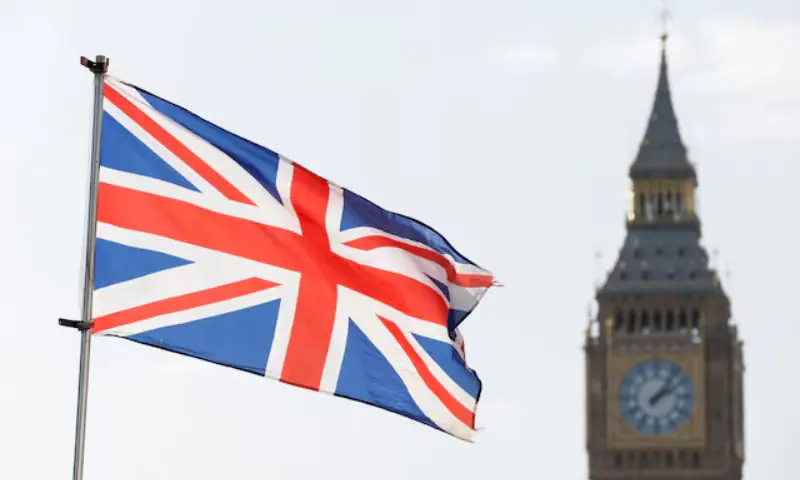
Muhammad retained its position as the most popular name for baby boys born in England and Wales in 2025, topping the rankings for the third consecutive year, official data showed.
Around 6,000 boys were given the name Muhammad in 2025, nearly 2,000 more than Noah, which remained the second most popular boys’ name. The two names have occupied the top two positions since 2023, with the gap between them widening from 1,580 last year.
Leo and Luca climbed to third and fourth place respectively, overtaking Arthur, Oliver and George. Two alternative spellings of Muhammad also featured in the top 100, with Mohammed ranking 20th and Mohammad 55th, accounting for a further 2,600 babies. The Office for National Statistics (ONS), which compiles the rankings, records different spellings separately rather than combining them.
Among girls, Olivia remained the most popular name, followed by Lily, Amelia, Isla and Florence.
Muhammad has ranked among the top 10 boys’ names since 2016 and has appeared in the top 100 every year since 1997, when it first entered the list.
Historical records show that three spellings of the name featured in the top 100 in 1954, while the spelling Mohammed first entered the rankings in 1924 at 91st place.
The different spellings reflect varying transliterations of the Arabic name into English and different linguistic traditions. Mohammed is more commonly associated with the Middle East, while Muhammad is more frequently used by families with Pakistani heritage, Britain’s largest Muslim community.
The ONS has previously noted that many of the most popular baby names in England and Wales have origins outside Britain, including Freya from Scandinavia, Leo, Luca and Isabella from Italy, and Noah from Hebrew.
The statistics agency has previously attributed Muhammad’s continued popularity to several factors, including the growth of Britain’s Muslim population, which stands at nearly four million people, or about 6% of the UK population.
The name remains especially popular among Muslim families, particularly those seeking to maintain a connection with their cultural and religious heritage, at a time when boys’ names have become increasingly diverse overall.
Britain’s first significant Muslim migration dates back to the late 19th century, when seamen and workers from countries including Yemen and Egypt settled in port cities such as London, Cardiff and Liverpool.
“There were Muslim seamen in Britain in the 19th century and into the 20th, with little enclaves dotted around various coastal towns,” David Coleman, a professor at the University of Oxford who specialises in migration and ethnic minority demography, told The National last year.
Coleman said migration accelerated during the 1950s and 1960s following the passage of the 1948 British Nationality Act, which granted British subjects the right to enter and settle in the United Kingdom.
The legislation potentially applied to around 900 million people across the British Empire and Commonwealth. While it was introduced primarily to safeguard the rights of people from countries such as Australia, New Zealand and Canada, it also facilitated migration from the Caribbean and Asia as Britain sought workers for industries facing labour shortages, including the textile sector.
For the latest news, follow us on Twitter @Aaj_Urdu. We are also on Facebook, Instagram and YouTube.








Comments are closed on this story.