


Gilgit-Baltistan votes today as 396 candidates vie for 24 seats
2 min read
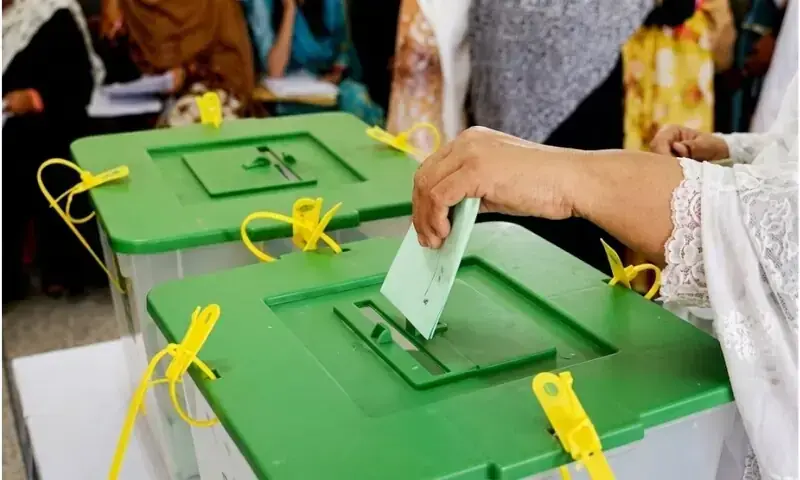
Polling will begin across Gilgit-Baltistan on Sunday, as voters head to the polls to elect representatives in the region’s fourth general election, a contest widely seen as crucial to shaping the political future of the mountainous territory.
Voting is being held in 24 constituencies from 8:00 a.m. to 5:00 p.m., with 396 candidates contesting for seats in the Gilgit-Baltistan Assembly.
The Election Commission said all arrangements for the polls had been completed. A total of 1,368 polling stations have been established across the region for more than 958,000 registered voters. Of these, 551 polling stations have been declared highly sensitive.
According to official figures, 958,480 voters are eligible to cast their ballots, including 503,772 men and 454,708 women.
The election campaign concluded after weeks of rallies, corner meetings and voter outreach drives by political parties and independent candidates.
Campaigning also featured competing claims and criticism among rival parties.
Party-wise, the Pakistan Peoples Party (PPP) has fielded candidates in 23 constituencies, while the Pakistan Muslim League-Nawaz (PML-N) is contesting 22 seats.
The Istehkam-e-Pakistan Party has entered candidates in 15 constituencies, while the Pakistan Nazriyati Party is contesting 10 seats. Another 11 candidates from the Pakistan Muslim League are also in the race.
Nineteen candidates affiliated with Pakistan Tehreek-e-Insaf (PTI) are contesting as independents, while a total of 266 independent candidates are participating in the election.
Eight women candidates are also among those seeking election to the assembly.
Authorities have implemented extensive security measures to ensure peaceful polling.
More than 3,500 police personnel have been deployed in three constituencies of Gilgit alone, while additional security arrangements and monitoring have been instituted at sensitive and highly sensitive polling stations.
The elections are considered a key test for the region’s political landscape, with the outcome expected to influence governance, development priorities and political stability in Gilgit-Baltistan over the coming years.
For the latest news, follow us on Twitter @Aaj_Urdu. We are also on Facebook, Instagram and YouTube.



Comments are closed on this story.