


A bachelor’s in rare earths? In China, there are schools for that
4 min read


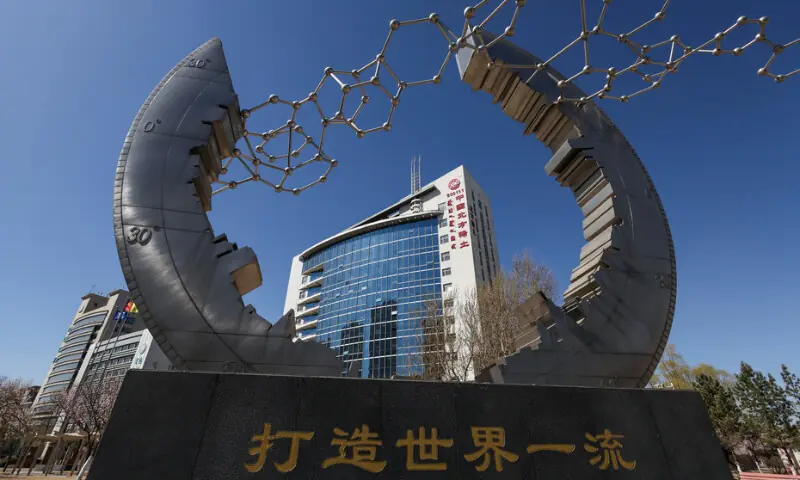
Every year, several hundred young adults head to the steppes of northern China to learn about rare earths at schools like the Inner Mongolia University of Science and Technology.
After completing undergraduate study, they may venture a few kilometres up the six-lane Rare Earths Street in Baotou, where they can work for state-owned refiners that convert the critical minerals into magnets that power jet engines, electric vehicles and wind turbines.
Or, the graduates may pursue further studies at the nearby Baotou Rare Earth Research Institute – roughly 150 km from the world’s largest rare earths mine.
US President Donald Trump and other Western leaders have pledged billions of dollars in investments to break China’s chokehold on rare earths refining.
But China still holds a significant advantage in the pipeline of talent that it has developed over decades in places like Baotou.
China has created an ecosystem of more than 40 specialist rare earth laboratories that produce cutting-edge research, supplemented by at least 11 universities and technical colleges that collectively enrol more than 500 students annually in rare earths degree programs, a Reuters examination has found.
Reuters identified 41 dedicated rare earth laboratories and institutes in China, many close to known rare earth mines.
“In China, I used to hire kids right out of university, and they’re immediately productive,” said Constantine Karayannopoulos, former chief executive of rare earths companies Neo Performance Materials and Molycorp.
“Anywhere else I need to train them for three years.”
Beijing is now tightly guarding this expertise. China has, over the years, increased restrictions on exports of rare earths technology and equipment.
China has also limited contact between industry professionals and foreigners, with some technicians having been ordered to surrender their passports, according to three people familiar with the matter.
Billions of federal dollars have flowed into US mining schools, research programs and other related areas since 2024 as the country seeks to rebuild mining expertise.
The US Congress is also considering legislation that would fund international cooperation with allies for mining education.
In contrast, researchers, universities and industry continue to collaborate closely in China.
Scientists at the National Engineering Research Centre for Rare Earths in Beijing developed a new technology, which state-owned Gansu Rare Earth New Materials adopted in 2023 at a refining facility that can churn out 50,000 metric tons of highly processed rare earths annually.
China produces over 90% of the world’s processed rare earths and rare earth magnets.
Course materials published by some of the universities and reviewed by Reuters also show a heavy focus on meeting the needs of industry.
Students majoring in rare earths engineering at Inner Mongolia University receive more than 100 hours of teaching in courses such as rare earths chemistry and material science.
One of the foundational courses is done in partnership with rare earths labs and companies, and students have the option of attending lectures at corporate facilities.
The 70 students that the Jiangxi University of Science and Technology told state media are set to enrol in its newly created rare earths degree will study the supply chain from processing and metallurgy to magnets.
Before graduating, students will also work on research projects with companies.
David Parker, a rare earths expert at Britain’s Durham University who reviewed the Chinese institute’s course outline for Reuters, described it as “highly specialised” and reflective of the “pre-eminent position of China in rare earth science and engineering.”
Chinese rare earths engineering postgraduates are often more narrowly focused in their fields of research than would be the case elsewhere, said Portuguese physicist Luís Carlos, who has visited research institutes in the country for nearly 20 years.
Rare earths are “core bargaining chips” in global politics, Li Chaozhong, dean of Jiangxi University of Science and Technology’s rare earths program, told state broadcaster CCTV in April.
The university’s new programme is designed not only for science, but also for.
It is “also to ensure that China continues to maintain its global leading position in the development of rare earth resources.”
The Colorado School of Mines, widely regarded as one of the world’s top mining schools, is developing two new critical minerals research facilities with the Energy Department to complement existing programs. It expects the first to open in 2027.
“The US minerals industry needs to be clear that we need the talent and that this is a great career path,” said Kunal Sinha, Valour’s CEO.
For the latest news, follow us on Twitter @Aaj_Urdu. We are also on Facebook, Instagram and YouTube.








Comments are closed on this story.