


US and Iran inch towards short-term deal to end fighting
4 min read


The United States and Iran are edging toward a limited, temporary agreement to halt their war, sources and officials said on Thursday, with a draft framework that would stop the fighting but leave the most contentious issues unresolved.
The emerging plan centres on a short-term memorandum rather than a comprehensive peace deal, underscoring deep divisions between the two sides and signalling that any agreement at this stage would be an interim step.
Hopes that even a partial deal could lead to the reopening of the Strait of Hormuz have already moved markets, with Asian stocks trading around record highs on Thursday and oil prices nursing steep losses on bets that supply disruptions could ease.
Tehran and Washington have scaled back ambitions for a sweeping settlement as differences persist, particularly over Iran’s nuclear programme — including the fate of its highly enriched uranium stockpiles and how long Tehran would halt nuclear work.
Instead, they are working toward a temporary arrangement aimed at preventing a return to conflict and stabilising shipping through the strait, the sources and officials said.
“Our priority is that they announce a permanent end to war and the rest of the issues could be thrashed out once they get back to direct talks,” a senior Pakistani official involved in mediation between the two sides told Reuters.
The proposed framework would unfold in three stages: formally ending the war, resolving the crisis in the Strait of Hormuz and launching a 30-day window for negotiations on a broader agreement, according to the sources and officials.
A Pakistani source and another source briefed on the mediation said a one-page memorandum to formally end the conflict was close, though gaps remain between the sides.
Trump optimistic, Iran sceptical
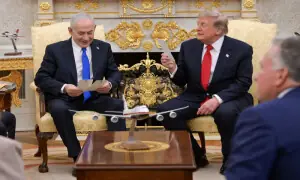
US President Donald Trump, who has repeatedly played up the prospect of a breakthrough since the war began on February 28, struck an optimistic tone.
“They want to make a deal… it’s very possible,” he told reporters at the White House on Wednesday, adding later that “it’ll be over quickly.”
The proposal would formally end the conflict while leaving unresolved key US demands that Iran suspend its nuclear programme and reopen the Strait of Hormuz, the sources said.
Iranian officials signalled scepticism.
A foreign ministry spokesperson said Tehran would respond in due course, while lawmaker Ebrahim Rezaei described the proposal as “more of an American wish-list than a reality.”
Iran’s parliament speaker Mohammad Baqer Qalibaf appeared to mock reports that indicated the two sides were close, writing on social media that “Operation Trust Me Bro failed” and portraying the negotiations as US spin following its failure to reopen the Strait of Hormuz.
Oil down on deal hopes
Reports of a possible agreement caused global oil prices to tumble to two-week lows on Wednesday, with benchmark Brent crude futures falling about 11% to around $98 a barrel at one point before rebounding above $100 and easing to roughly $99 on Thursday.
Global share prices also leapt and bond yields fell on optimism about an end to a war that has disrupted energy supplies.
“The contents of the US-Iran peace proposals are thin, but there is an expectation in the market that further military action will not take place,” said Takamasa Ikeda, a senior portfolio manager at GCI Asset Management.
Military, regional tensions
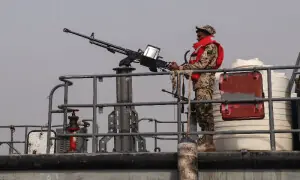
Trump on Tuesday paused [a two-day-old naval mission](https://www.reuters.com/world/china/trump-sees-swift-end-war-iran-reviews-us-peace-proposal-2026-05-07/paused a two-day-old naval mission) aimed at reopening the blockaded strait, citing progress in talks.
NBC News, citing two unnamed US officials, said Trump decided on the pause after Saudi Arabia suspended the US military’s ability to use a Saudi base for the operation.
Saudi officials were surprised and angered by Trump’s announcement that the US would help escort ships through the Strait, leading them to tell Washington they would deny the US permission to fly military aircraft out of a Saudi base or through Saudi airspace, NBC reported.
The White House did not immediately respond to a request for comment on the report.
The US military has kept up its own blockade on Iranian ships in the region.
US Central Command said forces fired at an unladen Iranian-flagged tanker on Wednesday, disabling the vessel as it attempted to sail toward an Iranian port in violation of the blockade.
Key demands left out
Even if agreed, the memorandum would leave fundamental disputes unresolved.
The source briefed on the mediation said the US negotiations were being led by Trump’s envoy Steve Witkoff and son-in-law Jared Kushner.
If both sides agreed on the preliminary deal, that would start the clock on 30 days of detailed negotiations to reach a full agreement.
The sources said the memorandum did not mention several key demands Washington has made in the past, which Iran has rejected, such as the restrictions on Iran’s missile programme and an end to its support for proxy militias in the Middle East.
The sources also made no mention of Iran’s existing stockpile of more than 400 kg of near-weapons-grade uranium — one of Washington’s central concerns.
For the latest news, follow us on Twitter @Aaj_Urdu. We are also on Facebook, Instagram and YouTube.






Comments are closed on this story.