


Rats infest Gaza's tent camps, biting children and spreading disease
3 min read



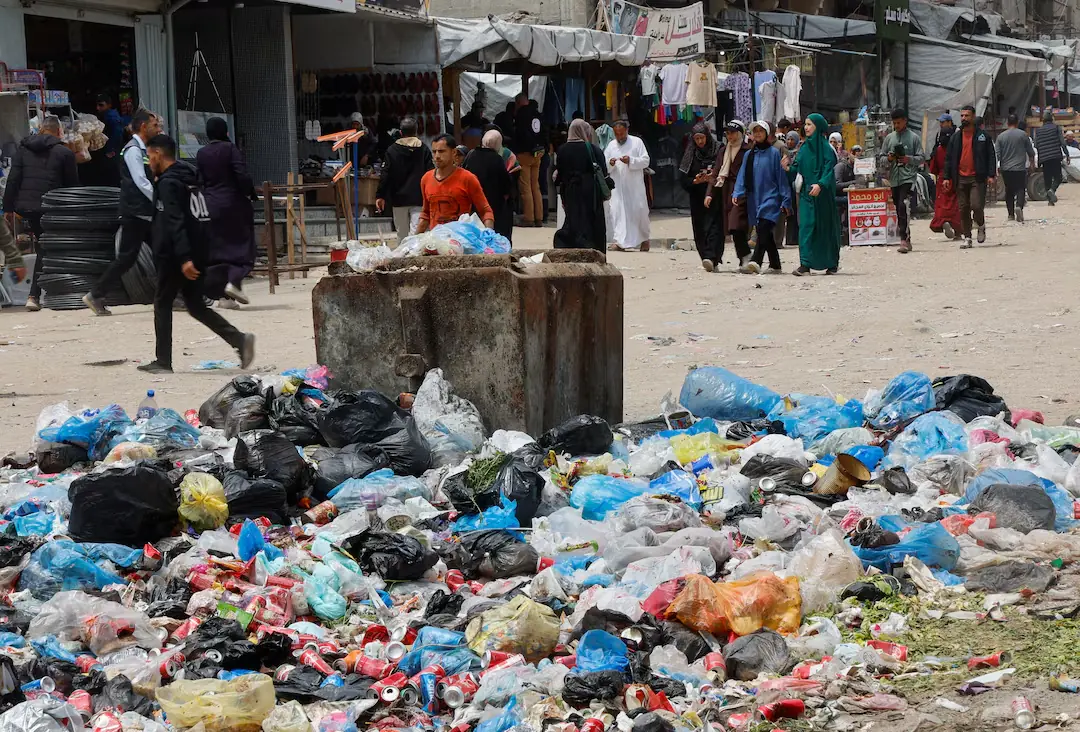
Rats and parasites are spreading through Gaza’s tent camps for displaced Palestinians, biting children’s fingers and toes as they sleep, gnawing through people’s few remaining treasured possessions, and spreading disease.
The outbreak is unfolding as most of Gaza’s more than 2 million people have been displaced, many now living in bombed-out homes and makeshift tents pitched on open ground, roadsides, or atop the ruins of destroyed buildings.
Just days before her wedding day, Amani Abu Selmi, displaced with her family in Khan Younis in the south, discovered that rats had gnawed through the garments and bags of her wedding trousseau inside the tattered tent where they had been sheltering.
She and her mother showed Reuters holes the rodents had eaten through her gown, a traditional burgundy embroidered dress that is customary in Palestinian weddings.
“All my happiness was gone, it turned to sadness, turned to heartbreak - that my things are gone, my wedding trousseau is gone,” said Abu Selmi, 20.
Rats strike as people sleep
A rat bit the hand and toes of Khalil Al-Mashharawi’s 3-year-old son several weeks ago, he said. Last Friday, he himself was bitten.
He said he and his wife now sleep in shifts to protect their children and one another from an infestation they are unable to control or defend themselves against, with rodent traps largely ineffective in Gaza’s ruined homes and tent encampments.
“They strike in our sleep,” said Al-Mashharawi, 26, who lives with his family in the ruins of their house in the Tuffah neighbourhood in northern Gaza.
“They may disappear for a day or two before they strike again, (forcing) their way under the tiles of the floor of the house.”
Mohamed Abu Selmia, head of Gaza’s largest hospital, said he expects the problem to worsen as summer approaches and amid an Israeli ban on pest control materials such as rat poison. Israel generally restricts the entry to Gaza of items that it says can have dual military or civilian use.
“Every day, hospitals record cases of patients being admitted due to rodent-related incidents, particularly among children, the elderly, and the sick,” Abu Selmia, of Al Shifa Hospital, said.
Abu Selmia said there is also widespread fear and serious concern about the spread of dangerous diseases, including rat-bite fever, leptospirosis, and even plague.
Rat infestations in a ‘collapsed’ living environment
An October ceasefire between Israel and Hamas has done little to ease the suffering of Palestinians in Gaza, where sewage and sanitation systems have been mostly destroyed by Israel, and humanitarian aid is subject to Israeli restrictions.
Israel cites security concerns for curbs on Gaza, where it has continued to carry out deadly attacks, saying its action is due to threats from Hamas. It has killed more than 800 Palestinians since October, with four Israeli soldiers killed during the same period.
With waste collection largely halted, contaminated water and refuse have accumulated near the tent cities where families sleep, cook, and wash. This has given rodents and parasites a unique environment within which they can spread, aid groups say.
Reinhilde Van de Weerdt, the World Health Organisation’s local representative, said there were around 17,000 rodent and ectoparasitic infection-related cases in Gaza so far this year.
“This is just the unfortunate but predictable consequence when people live in a collapsed living environment,” she said.
For the latest news, follow us on Twitter @Aaj_Urdu. We are also on Facebook, Instagram and YouTube.













Comments are closed on this story.