Doubts over Lebanon, sanctions cast shadow on US-Iran talks
3 min read


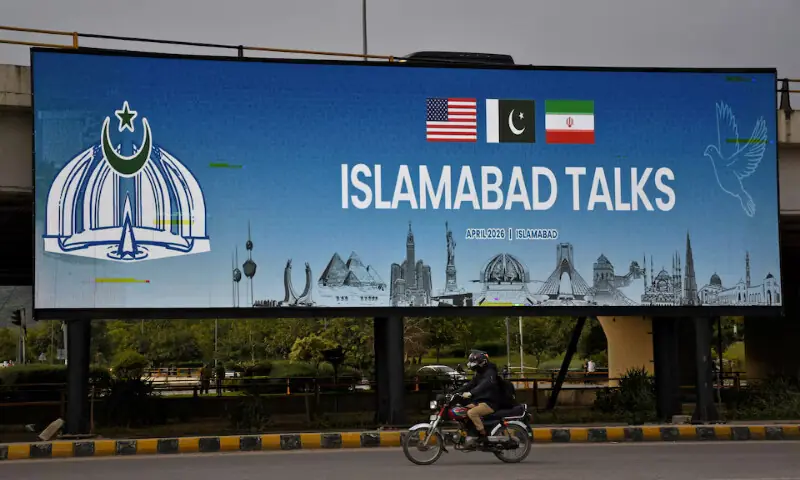
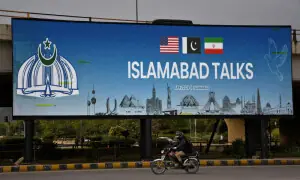
The US and Iran were to hold negotiations in Islamabad on Saturday to end their six-week-old war, although Tehran threw the talks into doubt by saying they could not begin without commitments on Lebanon and sanctions.
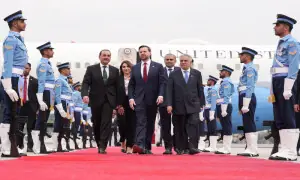
The US delegation, led by Vice President JD Vance and including President Donald Trump’s special envoy Steve Witkoff and son-in-law Jared Kushner, was on its way to Islamabad after a refuelling stop in Paris.
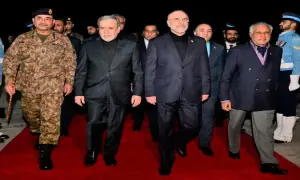
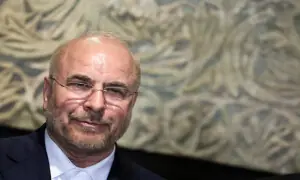
The Iranian delegation, led by parliamentary Speaker Mohammad Baqer Qalibaf and Foreign Minister Abbas Araqchi, arrived on Friday.
“Two of the measures mutually agreed upon between the parties have yet to be implemented: a ceasefire in Lebanon and the release of Iran’s blocked assets prior to the commencement of negotiations,” Ghalibaf said in a post on the social media platform X.
“These two matters must be fulfilled before negotiations begin.”
Iran has ‘no cards’, says Trump
Qalibaf said on X that Washington had previously agreed to unblock Iranian assets and to a ceasefire in Lebanon, where Israeli attacks have killed nearly 2,000 people since the start of the fighting in March.
He said talks would not start until those pledges were fulfilled.
Israel and the US have said the Lebanon campaign is not part of the Iran-US ceasefire, while Tehran insists it is.
Qalibaf said separately that Iran was ready to reach a deal if Washington offered what he described as a genuine agreement and granted Iran its rights, Iranian state media reported.
The White House did not immediately comment on the Iranian demands, but Trump posted on social media that the only reason the Iranians were alive was to negotiate a deal.
“The Iranians don’t seem to realise they have no cards, other than a short-term extortion of the World by using International Waterways. The only reason they are alive today is to negotiate!” he said.
Vance, speaking as he headed to Pakistan, said he expected a positive outcome but added: “If they’re going to try to play us, then they’re going to find the negotiating team is not that receptive.”
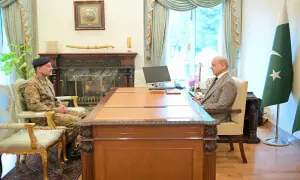
Security was tightened in Islamabad on Saturday with thousands of paramilitary personnel and army troops on the streets ahead of what Prime Minister Shehbaz Sharif called “make-or-break” talks.
Trump announced a two-week ceasefire in the war on Tuesday, which has halted US and Israeli air strikes on Iran.
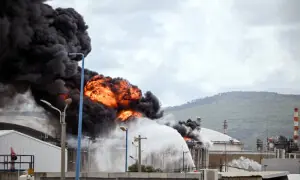
But it has not ended Iran’s blockade of the Strait of Hormuz, which has caused the biggest-ever disruption to global energy supplies, or calmed the parallel war between Israel and Iran-backed Hezbollah in Lebanon.
Fighting continues in Lebanon
The Israeli ambassador to the US, Yechiel Leiter, and his Lebanese counterpart, Nada Hamadeh Moawad, will hold talks in Washington on Tuesday, Israeli and Lebanese officials said, amid the conflicting accounts on what those talks would cover.
Lebanon’s presidency said the two had held a phone call on Friday and agreed to discuss announcing a ceasefire and setting a start date for bilateral talks under US mediation.
But Israel’s embassy in Washington said the talks would constitute the start of “formal peace negotiations” and that Israel had refused to discuss a ceasefire with Hezbollah.
Israeli attacks continued across southern Lebanon on Friday.
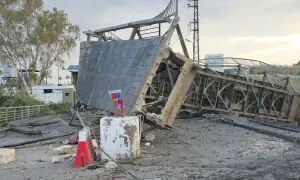
One strike on a government building in the city of Nabatieh killed 13 members of Lebanon’s state security forces, President Joseph Aoun said in a statement.
For the latest news, follow us on Twitter @Aaj_Urdu. We are also on Facebook, Instagram and YouTube.