


Fire at UAE’s major Fujairah oil hub, as Iran vows retaliation for US attack on Kharg Island
5 min read
Iran warned it could hit selected targets, including U.S. “hideouts” in the United Arab Emirates, and warned civilians to evacuate on Saturday, projecting defiance after U.S. forces hit military sites at its own main oil hub a day earlier.
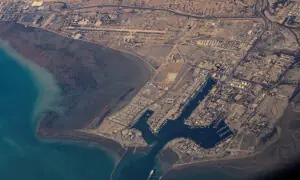
Some oil-loading operations have been suspended in the UAE’s Fujairah emirate, a major bunkering hub and crude export terminal, industry and trade sources said, with TV footage showing plumes of dark, thick smoke rising into the air.
An Iranian military spokesperson called on people in the UAE to evacuate the ports, docks, and ‘American hideouts’, saying U.S. forces had targeted Iranian islands from those areas.
U.S. President Donald Trump had threatened to strike the oil infrastructure of Iran’s Kharg Island hub unless Tehran stopped attacking vessels in the Strait of Hormuz, a warning that could further roil markets coping with a historic supply disruption.
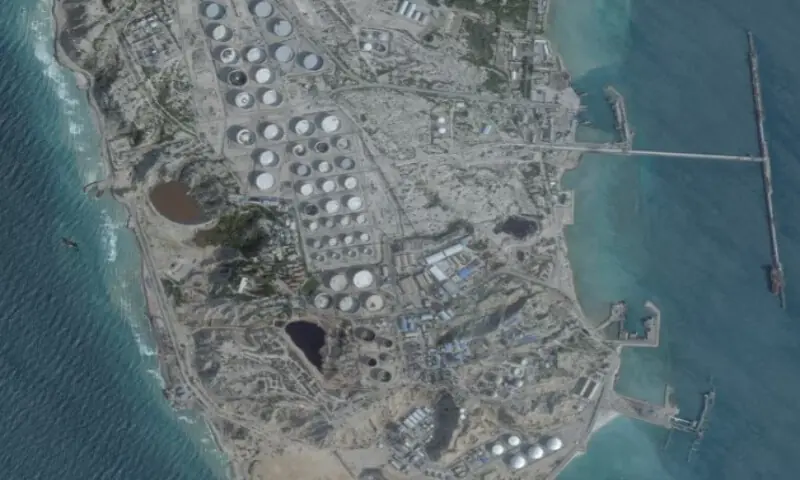
Trump paired his Friday ultimatum with a social media post saying the U.S. had “totally obliterated” military targets on the island, the export terminal for 90% of Iran’s oil shipments, which lies about 300 miles (500 km) northwest of the strait.
As the war entered its third week, Iran, however, played down the extent of the damage on Kharg while threatening to step up its use of more powerful weapons and warning that parts of the UAE were a legitimate target.
“We declare to the leaders of the UAE that Iran considers it a legitimate right to defend its national sovereignty and territory by targeting the origin of American enemy missile launches in the shipping ports, docks, and military shelters of the U.S. hidden in some cities of the UAE,” a spokesperson for Iran’s Revolutionary Guards said.
The UAE’s foreign ministry did not immediately respond to the Iranian accusation that the attack on Kharg Island came through the UAE.
Nine ballistic missiles and 33 drones were launched from Iran towards the UAE on Saturday, the Ministry of Defence said.
Iran warned residents to leave areas near Jebel Ali port in Dubai, Khalifa port in Abu Dhabi and the UAE’s Fujairah port and said it was targeting branches of U.S. banks in the Gulf.
Fujairah, outside the Strait of Hormuz, is the outlet for about 1 million barrels per day of the UAE’s Murban crude oil — a volume equal to about 1% of world demand.
“The IRGC is sending a message that there is no safe harbour in this rapidly expanding conflict,” said Helima Croft, analyst at RBC Capital.
“The fact this comes hours after the U.S. strike on Kharg Island also signals that Tehran will not let Washington control the terms of escalation and impose dominance.”
Trump on Saturday said many countries would be sending warships together with the United States to open the Strait of Hormuz, a conduit for 20% of the world’s fossil energy supplies. He did not provide details on which countries would do so, but in his Truth Social post, he said he hoped that China, France, Japan, South Korea, Britain and others would send ships to the area.
Iranian Supreme Leader Mojtaba Khamenei, who replaced his slain father, has said the strategic waterway should remain closed as a tool of pressure.
The U.S. Central Command on Saturday said its forces had struck more than 90 Iranian military targets on Kharg Island, destroying sites including naval mine storage facilities and missile storage bunkers.
Behind the scenes, resentment had already been mounting in Gulf Arab capitals at being drawn into a war they neither initiated nor endorsed, but are now paying for economically and militarily, regional sources have told Reuters.
Anwar Gargash, diplomatic adviser to the United Arab Emirates president, said in an X post on Saturday: “The Iranian strategy, which reflects its inability to confront U.S. and Israeli strikes by targeting Arab Gulf states, reveals a military impotence, a moral bankruptcy, and a political isolation.”
IRAN SHOWS NO SIGN OF CAPITULATION AS STRIKES SPREAD
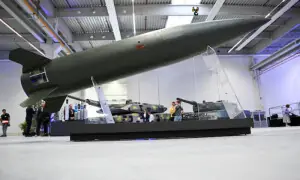
Iran also vowed to increase its usage of upgraded weapons, particularly ballistic missiles and other missiles with greater destructive power, a defence ministry spokesperson was quoted as saying in state media.
Oil exports from Kharg Island were continuing normally despite the U.S. attack, a senior provincial governor was quoted by the IRNA news agency as saying, while the monitoring service Tanker Trackers reported two new tankers loading there.
Iran’s armed forces responded to the Kharg attack by saying any strike on their country’s oil and energy infrastructure would lead to strikes on facilities owned by oil companies cooperating with the U.S. in the region, Iranian media reported.
Iran, which ramped up oil output in the run-up to the February 28 launch of the war by Israel and the U.S., has continued to ship oil. Much of the oil from Iran via Kharg goes to China, the top global crude importer.
Oil prices have swung sharply on Trump’s changing comments about the likely duration of the war, which began with massive U.S. and Israeli bombardments of Iran and quickly spread into a regional conflict with broad consequences for worldwide energy and stock markets.
After two weeks of war, 2,000 people have been killed, mostly in Iran but many in Lebanon and a growing number in the Gulf. Several million people have been displaced from their homes.
U.S. forces have suffered casualties, including the deaths of all six crew members aboard a refuelling aircraft that crashed in western Iraq.
For the latest news, follow us on Twitter @Aaj_Urdu. We are also on Facebook, Instagram and YouTube.





Comments are closed on this story.