


Clashes cast shadow over Syria’s newly announced Kurdish ceasefire
4 min read

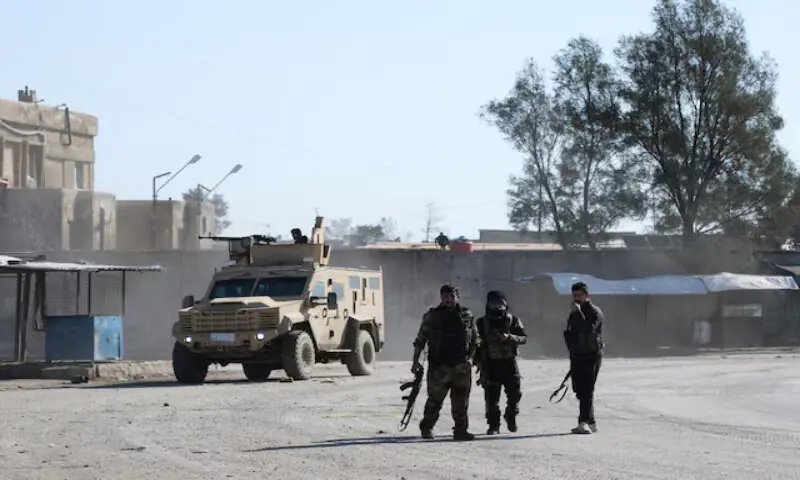
Syria’s government accused the Kurdish-led Syrian Democratic Forces of attacks it said killed 11 soldiers on Wednesday, but the SDF disputed key elements of the account, blaming at least one deadly blast on explosives being moved by Syrian troops.
The incidents threaten to derail a four-day ceasefire announced on Tuesday after days of fighting in Syria’s northeast, as Damascus presses the SDF to agree to a plan for integration into the central state.
Syria’s government said a drone strike by the SDF killed seven of its soldiers as they were securing a captured military base containing explosives, calling it a dangerous escalation.
The SDF denied carrying out any strike.
The SDF, previously the main US ally in Syria, said the blast occurred when Syrian soldiers were moving explosives and accused the Syrian army of violating the truce with attacks in several locations.
Damascus said later on Wednesday that a total of 11 soldiers had been killed and 25 wounded in SDF attacks on army positions on the first day following the ceasefire announcement.
The SDF did not comment on that broader accusation.
After days of rapid gains against the SDF, the government on Tuesday said it had reached an agreement with the Kurdish group on a four-day ceasefire for it to integrate into the central state, and that otherwise the SDF would face an assault on the last two main cities it holds.
Four-day ceasefire
The government advance against the SDF has put into doubt years of Kurdish de facto autonomy in the northeast and could affect Syria’s ties with the United States and Turkey and the fate of thousands of detained militants.
Turkish President Tayyip Erdogan, a main ally of Syrian President Ahmed Al Sharaa, said on Wednesday that the SDF, which it regards as a terrorist group, must lay down arms and disband now to avoid further bloodshed.
The US, which backed the SDF as its main ally in driving Daesh militants from swathes of Syria in bloody fighting a decade ago, did not stand in the way of the offensive and on Tuesday urged the group to accept the government’s offer.
The US said the reasons for its partnership with the SDF had expired, but that it was still concerned about the fate of thousands of detained Daesh militants and civilians associated with them in facilities guarded by the SDF.
The US military said on Wednesday its forces had launched a mission in Syria to transfer Daesh prisoners to Iraq.
The SDF said on Tuesday it had accepted the ceasefire and that it would not engage in any military action unless attacked.
SDF leader Mazloum Abdi had earlier said it regarded the protection of Kurdish-majority areas as a “red line”.
Wedged into a triangle between the Turkish and Iraqi borders, northeast Syria has areas with both Arab and Kurdish majorities and contains most of Syria’s energy reserves.
Syrian troops were still positioned outside the last main Kurdish-held cities in the northeast, Hasakah and Qamishli, on Wednesday, Reuters reporters in the area said.
The government forces had brought in significant reinforcements the previous evening, with convoys of tanks and other military vehicles, as well as buses packed with fighters, arriving late into the night.
The troops had frozen their advance after Sharaa’s new ceasefire announcement and were waiting for further orders that would be shaped by the SDF’s reply to Sharaa’s proposal.
Relations with Turkey, US
The strategic picture in Syria has changed entirely over the past 13 months since rebels under former Al Qaeda commander Sharaa ousted President Bashar Al Assad.
The SDF, which had at times fought Sharaa’s rebels during Syria’s civil war, had controlled around a quarter of Syria, where it maintained autonomous rule from Assad in Damascus.
The US maintained a small military presence in the area and helped the SDF fend off attacks by Assad and allied forces.
However, Sharaa has developed good ties with Washington, changing the U.S. relationship with Damascus.
Turkey, which regards the SDF as affiliated with the Kurdistan Workers Party (PKK) that has waged a decades-long insurgency inside Turkey, had a military presence in other parts of northern Syria in support of rebel groups there.
Ankara and the PKK are now engaged in a peace process, and Turkey regards the end of SDF control in Syria as a vital part of that.
Speaking to parliament on Wednesday, Erdogan welcomed the declared ceasefire in Syria, saying he hoped the group’s “full integration” into the Syrian state would herald a new era in Syria.
Erdogan and Trump discussed Syria in a phone call overnight, touching on the situation of prisoners in Syrian jails and the continued fight against Daesh.
For the latest news, follow us on Twitter @Aaj_Urdu. We are also on Facebook, Instagram and YouTube.






Comments are closed on this story.