Iran avoids economic collapse despite war, but hardship deepens
3 min read


Iran’s economy has so far avoided collapse despite five months of conflict with the United States, but soaring inflation, deepening poverty and prolonged sanctions are placing increasing pressure on households, according to economists and analysts.
Although the resource-rich country of more than 92 million people remains one of the world’s major oil producers, years of international sanctions have pushed Tehran to diversify its economy by expanding agriculture, manufacturing and services while relying on informal trade networks and domestic production to cushion the impact of external shocks.
Experts say those measures have helped keep the economy functioning despite the ongoing conflict, but at a growing cost to ordinary Iranians, according to a report by Al Jazeera.
Welfare economist Hadi Kahalzadeh said Iran has not reached the point of economic collapse, defining such a scenario as one in which the government is unable to pay public sector workers or provide basic services.
He argued that while the combined impact of war, sanctions and trade restrictions has severely damaged the economy, it has not yet pushed the country into systemic failure.
Instead, the economic burden has largely been transferred to households through soaring inflation and the sharp depreciation of the country’s currency.
Annual inflation has climbed to around 90%, with food prices rising sharply over the past year.
The cost of essential items such as meat, cooking oil and eggs has more than tripled, while imported goods have become increasingly expensive as the rial continues to weaken against the US dollar.
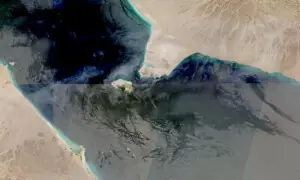
The closure of the Strait of Hormuz following the outbreak of the US-Iran conflict has further disrupted supply chains, adding to inflationary pressures.
Economists say the government has sought to soften the impact through cash assistance and subsidies, although the country’s monthly minimum wage remains below $100.
Government spokesperson Fatemeh Mohajerani said authorities have resumed payments under an electronic food coupon programme, but acknowledged that many participating retailers have yet to receive funds because several major banks remain affected by cyberattacks reported more than a month ago.
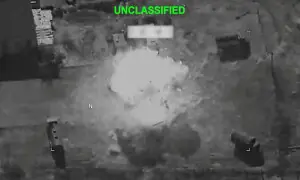
She also said recent US air strikes damaged key infrastructure, including bridges, tunnels and parts of Iran’s energy network.
However, she noted that authorities had managed to limit electricity rationing for manufacturers to two days a week instead of the three days initially anticipated.
A report by the Saba Pension Strategies Institute estimated that the share of Iranians living below the poverty line has risen from just over 30% five years ago to about 45% this year, with the trend expected to continue.
Mohammad Reza Farzanegan, a professor specialising in Middle East economics at Germany’s Philipps University Marburg, said corruption remains one of the most serious structural challenges facing Iran’s economy.
He argued that oil revenues have allowed authorities to delay reforms while encouraging dependence on the state, weakening the private sector and discouraging long-term investment.
According to Farzanegan, the prolonged economic crisis has led households to cut spending, businesses to delay investment and skilled professionals to consider emigrating, contributing to the erosion of the country’s middle class.
Iranian officials have also acknowledged significant financial irregularities linked to oil revenues.
Zabihollah Khodaeian, head of Iran’s General Inspection Organisation, said individuals entrusted with repatriating proceeds from sanctioned oil sales had withheld at least $11 billion, including $1.6 billion that he alleged had been misused.
He also said more than 20,000 exporters have yet to return approximately 94 billion euros (about $107 billion) in export earnings as required under Iranian law.
Despite mounting economic challenges, analysts say Iran’s economy continues to function, supported by domestic production, informal trade and oil exports.
However, they warn that without a reduction in geopolitical tensions and renewed diplomacy, sanctions and continued conflict are likely to leave the economy under prolonged strain, even if it avoids outright collapse.
For the latest news, follow us on Twitter @Aaj_Urdu. We are also on Facebook, Instagram and YouTube.