


Anthropic accuses Alibaba of massive AI model extraction campaign
2 min read



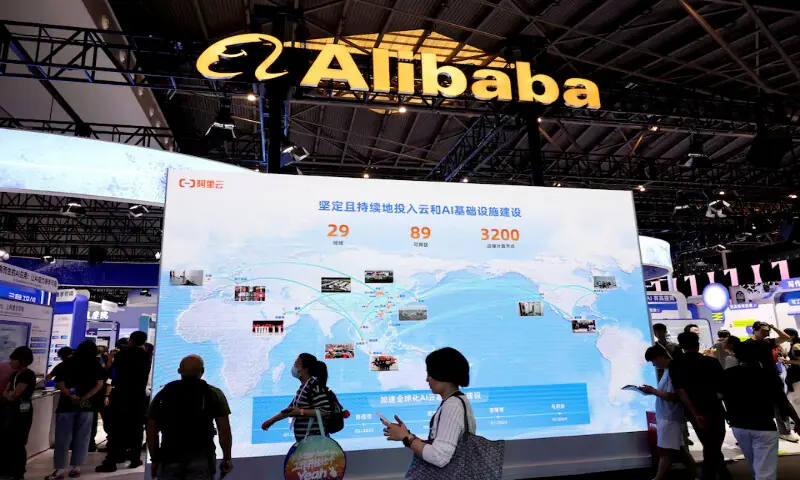
US AI company Anthropic accused Alibaba, the Chinese technology and e-commerce giant, of illicitly extracting its Claude AI model capabilities in what it said was the largest known attack of its kind on the company, according to a letter seen by Reuters.
The strike by Alibaba is described as a “distillation” effort, which Anthropic has said involves training a less capable model on the outputs of a stronger one.
Anthropic said the campaign was conducted between April 22 and June 5, 2026, and generated more than 28.8 million exchanges with Claude through almost 25,000 fraudulent accounts.
Anthropic said in the letter that distillation is a way to help accelerate China’s ability to reach Anthropic’s advanced Mythos Preview capabilities.
It said the campaign was conducted by operators affiliated with Alibaba and Alibaba Qwen, Alibaba’s AI lab.
Alibaba did not immediately respond to a request for comment.
The letter, dated June 10, was sent to Senators Tim Scott and Elizabeth Warren, the chair and ranking member, respectively, of the US Senate Banking Committee, ahead of a scheduled hearing on AI.
In April, the White House accused China of stealing US AI labs’ intellectual property on an industrial scale.
Anthropic said in the letter that it was supportive of the US government’s efforts to combat the attacks, including partnering with private sector AI companies through threat-intelligence sharing and other exercises.
Anthropic said in a February posting that it had identified a campaign by Chinese AI startup DeepSeek — whose low-cost AI model sent shockwaves through the technology world in January 2025 — and two other Chinese AI labs to illicitly extract capabilities from its Claude AI platform.
It said DeepSeek’s operation involved over 150,000 exchanges, while Moonshot AI was at a scale of over 3.4 million, and MiniMax over 13 million.
It also said at the time that the campaigns were growing in “intensity and sophistication” and that addressing the threat would require “rapid, coordinated action among industry players, policymakers and the global AI community.”
Alibaba was added to the Pentagon’s Chinese military companies list this month, a designation it is challenging.
But the Commerce Department has held off placing DeepSeek on a trade blacklist, as Reuters exclusively reported this month, despite it being deemed a national security risk by an interagency governmental committee, as the department tries to avoid escalating tensions with Beijing.
Meanwhile, on June 12, two days after Anthropic sent the letter, the Commerce Department imposed controversial restrictions on Anthropic’s latest Mythos and Fable AI models because officials feared they could be deployed by military intelligence users in China and other countries of concern.
The restrictions resulted in Anthropic disabling access to the models globally.
For the latest news, follow us on Twitter @Aaj_Urdu. We are also on Facebook, Instagram and YouTube.

















Comments are closed on this story.