


Pakistan targets 4% growth in Rs18.77tr FY27 budget
4 min read



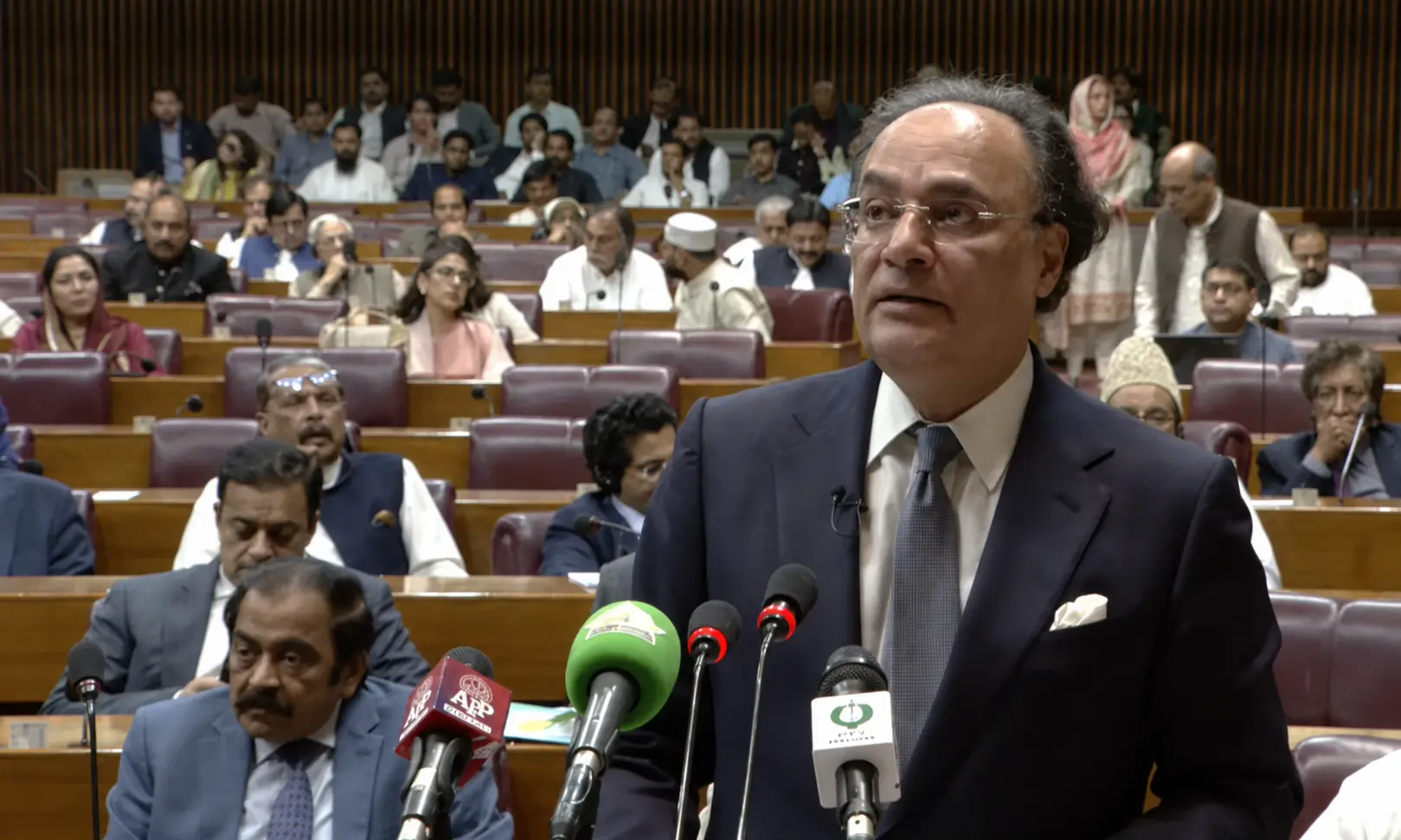
Finance Minister Muhammad Aurangzeb on Friday presented Pakistan’s federal budget for fiscal year 2026-27, targeting GDP growth of 4% and projecting inflation at 8.2%, as the government seeks to sustain macroeconomic stability amid regional uncertainty.
The budget carries a total outlay of Rs18.77 trillion, up from Rs17.6 trillion in the previous year. The federal deficit is projected at Rs7.02 trillion, or 3.6% of GDP, while the government targets a primary surplus of 2% of GDP.
Key macroeconomic targets
The government projects GDP growth of 4% in FY27, compared to an estimated 3.7% in the outgoing year.
Inflation is projected at 8.2%, against 7% this year. Per capita income has risen to $1,901, the finance minister said, adding that foreign exchange reserves are sufficient to cover three months of imports.
Remittances are expected to reach $41 billion by the close of the current fiscal year, with 92% now received through banking channels.
FBR’s tax collection target for FY27 has been set at Rs15.26 trillion, up over 8% from Rs14.13 trillion. Provinces will receive Rs8,848 billion from federal revenues. Non-tax revenues are projected at over Rs5.34 trillion.
Defence and debt
Defence spending has been raised to over Rs3 trillion in FY27, up from Rs2.56 trillion last year.
“Defence spending has been increased considerably to make the country invincible due to the uncertainty in the region,” Aurangzeb said. He also highlighted that the defence sector has begun earning valuable foreign exchange, and described the strategic defence agreement with Saudi Arabia as a moment of national pride.
Rs8.054 trillion has been allocated for debt servicing, while Rs1.169 trillion has been set aside for pension expenses.
Development and infrastructure
The federal PSDP has been allocated Rs1 trillion, with priority given to water infrastructure, transport, energy transmission, digital transformation, and climate resilience.
The largest share within the development budget — Rs365 billion — goes to infrastructure.
This includes Rs100 billion for the N-25 expressway linking Karachi to Chaman, Rs25 billion for the Karachi-Rohri rail section, and Rs93 billion for Gwadar port and inter-provincial transport links.
Rs116.2 billion has been earmarked for the power sector, with electricity supply to Special Economic Zones listed as a priority.
Rs103.1 billion has been allocated for 43 hydro projects, including Rs14 billion for Diamer Bhasha Dam and Rs10 billion for Karachi’s K-IV water project. Aurangzeb noted that last year’s floods caused Rs822 billion in economic losses.
Rs54.6 billion has been set aside for housing, with 150,000 low-cost residential units to be built at federal and provincial levels.
Rs71 billion has been allocated for the Prime Minister’s Apna Ghar scheme.
Social spending
The BISP allocation has been raised to Rs838 billion, up 17% from last year, with coverage to be extended to 12 million families. Rs25.1 billion has been allocated for health, Rs46 billion for higher education — up from Rs34.9 billion last year — and Rs3.6 billion separately for science and technology.
AJK will receive Rs146 billion, Gilgit-Baltistan Rs88 billion, and KP’s merged districts Rs95 billion from current expenditure allocations.
Tax relief measures
The finance minister announced income tax relief across four salary slabs for salaried individuals.
The tax rate on annual salaries between Rs2.2 million and Rs3.2 million has been proposed at 20%, while the rate on Rs3.2 million to Rs4.1 million has been cut to 25% from 30%.
Salaries between Rs4.1 million and Rs5.6 million will attract 29% tax, down from 35%, and those between Rs5.6 million and Rs7 million will be taxed at 32%, also down from 35%. The surcharge on salaried persons has been abolished entirely.
Super tax on income between Rs150 million and Rs500 million has been fully eliminated, while the rate on income exceeding Rs500 million has been cut from 10% to 8%.
Withholding tax on property purchase for filers has been halved to 1.25%, and on property sales to 2.75%. The tax on use of credit or debit cards abroad has been slashed from 5% to 0.5%.
Capital value tax on foreign assets has been removed, and taxes on sanitary pads and women’s health products have been abolished.
For IT exports, a 0.25% exemption has been extended until 2029. Advance income tax on exports has been reduced from 2% to 1.25%.
A fixed tax scheme has been introduced for small shopkeepers, with 1% annual tax on sales up to Rs200 million.
FBR officials will not be permitted to enter shops for routine questioning, and no routine audits will be conducted.
Compliant shopkeepers will be issued a green signboard. Penalties imposed over the past seven years will be adjusted for inflation.
Aurangzeb said the government aims to boost tax revenue through compliance and enforcement rather than new taxes, with production monitoring systems expected to generate an additional Rs61 billion.
For the latest news, follow us on Twitter @Aaj_Urdu. We are also on Facebook, Instagram and YouTube.












Comments are closed on this story.