


Israel strikes Lebanon, putting fragile ceasefire at risk
3 min read

Israel bombed more targets in Lebanon on Thursday, putting the Middle East ceasefire in further jeopardy after its biggest attacks of the war on its neighbour killed more than 250 people and threatened to torpedo Donald Trump’s truce from the outset.
Iranian negotiators were expected to set off later on Thursday for Pakistan for the first peace talks of the war, due to meet a US delegation on Saturday.
But there was no sign Iran had lifted its blockade of the Strait of Hormuz, which has caused the worst disruption to global energy supplies in history.
Tehran said there would be no deal as long as Israel was striking Lebanon.
The shortage drove the price that European and Asian refineries pay for oil to record levels near $150 a barrel, with even higher prices for some products such as jet fuel.
Israel, which invaded Lebanon last month in parallel with the war on Iran to root out Hezbollah, says its actions there are not covered by the ceasefire announced late on Tuesday by Trump.
Washington has also said Lebanon is not covered by the truce, but Iran and Pakistan, which acted as mediator, say it was explicitly part of the deal.
A host of countries, including Britain and France, said the truce should extend to Lebanon.
Israel kills Hezbollah leader’s nephew
The Israeli military said on Thursday it had killed the nephew of Hezbollah’s Secretary-General Naim Qassem, who had served as his personal secretary, and had struck river crossings in Lebanon overnight.
Israel struck Beirut’s southern suburbs just before midnight and at dawn, and hit towns across the south on Thursday morning, Lebanese state media said.
For its part, Hezbollah, which had initially said it would pause attacks on Israel in line with the ceasefire, said it was resuming them on Thursday morning.
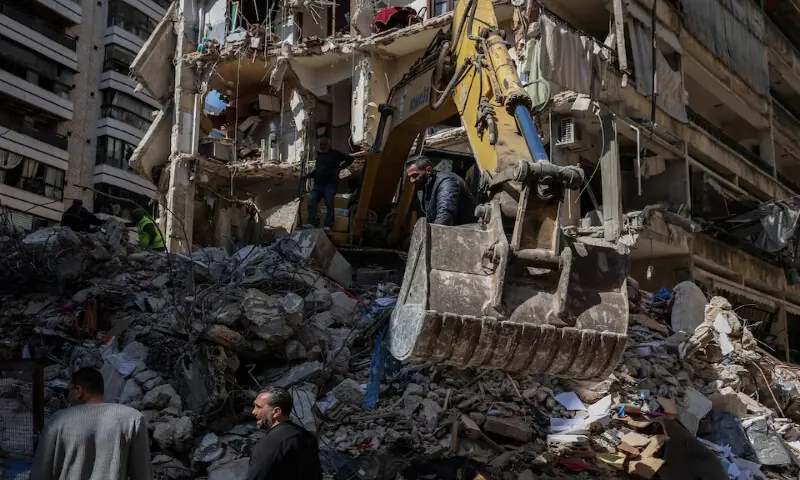
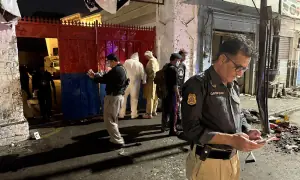
Families gathered on Thursday at Beirut hospitals to identify slain loved ones, and rescuers worked through the night to try to save those trapped under rubble from attacks that hit populated areas without warning to civilians.
“This is my place, this is my house, I’ve been living here like more than 51 years. So, everything destroyed. See?” said Naim Chebbo, sweeping shattered glass and debris from his home in Beirut after strikes destroyed the building next door.
Lebanon declared a day of national mourning and shut state offices.
At one funeral in central Beirut, mourners gathered quietly to bury a man who had been killed.
His wife had survived the bombing, which sheared off half the building and left survivors trapped on upper floors for hours.
Mourning for Khamenei
Iran’s deputy foreign minister Saeed Khatibzadeh told BBC Radio that Israel’s strikes on Lebanon were a “grave violation” of the ceasefire.
“It was a catastrophe, could actually end in more catastrophe, and this is the nature of this rogue behaviour that we are seeing from Israel in the whole Middle East.”
Inside Iran, where the halt to six weeks of US and Iranian air strikes has been portrayed as a total victory for the clerical rulers, huge crowds turned out to commemorate 40 days of mourning for Supreme Leader Ayatollah Ali Khamenei, killed on the war’s first day.
State TV showed crowds in Tehran, Kermanshah, Yazd and Zahedan, with mourners in black carrying Iranian flags and portraits of Khamenei and his son and successor Mojtaba.
Large commemorative billboards were displayed, and a huge Hezbollah flag hung from one building.
For the latest news, follow us on Twitter @Aaj_Urdu. We are also on Facebook, Instagram and YouTube.







Comments are closed on this story.