Live
Iran israel war

Israel escalates war on Iran, shifts focus to underground missile sites

Published 05 Mar, 2026 07:30pm 0 min read
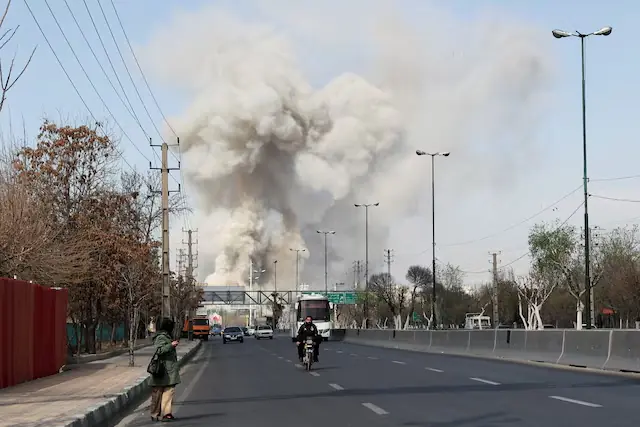
Smoke rises following an explosion, amid the U.S.-Israeli conflict with Iran, in Tehran, Iran. – Reuters

Israel’s war in Iran is entering a second phase that will see its fighter jets attacking ballistic missile sites buried ​deep underground, two sources familiar with Israel’s military campaign said.

The joint air assault with the U.S. in Iran is ‌nearing the end of its first week after opening salvos killed the country’s leaders and set off a regional war with Iranian attacks in Israel, the Gulf and Iraq, and Israeli attacks in Lebanon.

Israel’s military says it has hit hundreds of Iranian missile launchers above ground that could target Israeli cities. The second phase will include ​bunkers storing ballistic missiles and equipment, said the sources, who spoke on condition of anonymity because of the sensitivity of the ​subject.

One said Israel aimed to neutralise Iran’s ability to launch aerial attacks at Israel by the end of the war, ⁠which was also focused on taking out the Islamic Republic’s leadership.

A military spokesperson did not immediately respond to a request for comment on its ​attack plans. The military has previously asserted that it and the U.S. military took control of much of Iran’s airspace in the opening days of ​the attacks.

In a statement on Thursday, the military said that, overnight, the Air Force struck “an underground infrastructure site used by the Iranian regime to store ballistic missiles and storage sites for missiles intended for use against aircraft.”

The military has not previously announced attacks on underground missile facilities, according to a review of its ​public statements since the start of the joint U.S.-Israeli attacks on Saturday.

Estimates of Iran’s missile stockpile vary widely, from roughly 2,500 before the ​war, according to Israel’s military, to around 6,000 according to other analysts. The extent of what remains could prove critical to how the war develops. Tehran ‌has continued ⁠to carry out missile attacks on Israel and across the region.

Douglas Barrie of the UK-based International Institute for Strategic Studies said on Wednesday that the think tank assesses Iran still possesses some land-attack cruise missiles, precision-guided weapons that fly low to evade radar detection.

Israel’s Air Force fighter jets have carried out near-constant sorties since Saturday, accelerating further in pace after Lebanon’s Iran-backed Hezbollah militants fired rockets ​at Israel, drawing heavy Israeli ​airstrikes as far north as Beirut.

In ⁠some cases, the same Israeli warplanes have struck both Iran and Lebanon in a single operation: bombing targets in Tehran or western Iran on the way out, and striking Hezbollah sites on the way ​back, one of the sources familiar with the plans and an Israeli security source said.

Israeli and U.S. ​officials say ballistic ⁠missile and drone launches from Iran have declined since Saturday, a decrease that they attribute in part to U.S. and Israeli strikes on Iranian launch sites and related military infrastructure.

The Israeli military has said that the decrease could also reflect an effort by Tehran to preserve its missile stocks as ⁠it prepares ​for a drawn-out war of attrition.

Eran Lerman, a former Israeli deputy national security adviser, ​said the hope from the initial week of strikes was that Iran’s ruling system would “begin to disintegrate earlier, more quickly”.

“But this has yet to happen, and as long ​as it doesn’t, the system needs to be further and further degraded,” Lerman said.

For the latest news, follow us on Twitter @Aaj_Urdu. We are also on Facebook, Instagram and YouTube.
Live

Israel orders residents to leave southern Beirut

Published 05 Mar, 2026 06:26pm 0 min read
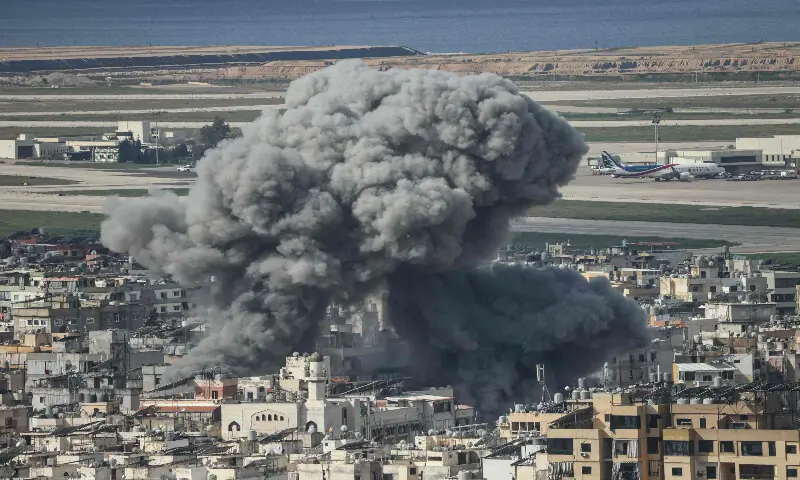
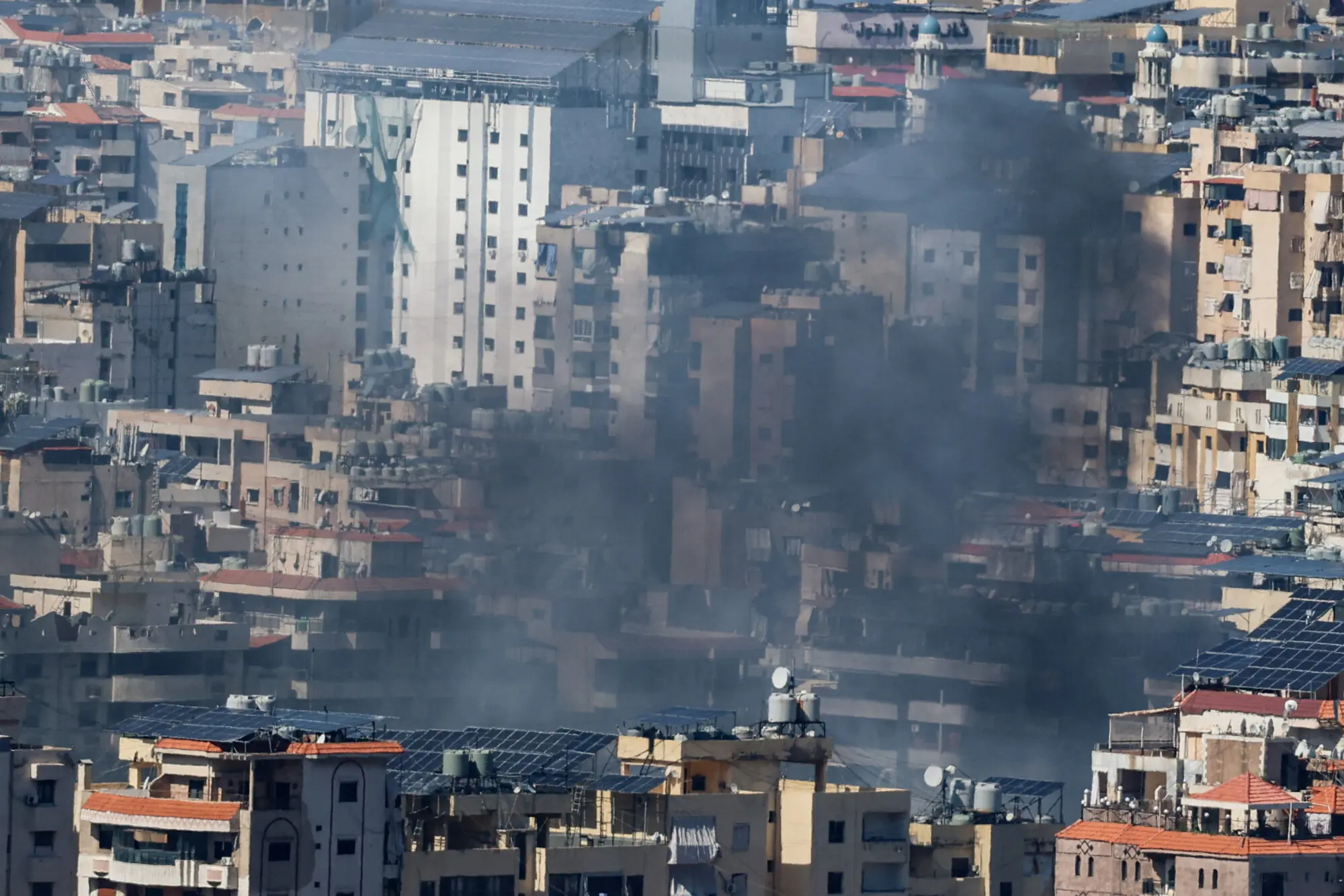
Smoke rises after an Israeli strike on Beirut’s southern suburbs, following an escalation between Hezbollah and Israel amid the U.S.-Israeli conflict with Iran, Lebanon. – Reuters

The Israeli military warned residents to leave Beirut’s southern suburbs on Thursday, instructing them to move north and east of the Lebanese capital, the first time Israel has issued a warning covering entire neighbourhoods in the Hezbollah-controlled area.

“Save your lives, evacuate your homes immediately,” Israeli military spokesperson Avichay Adraee wrote on X, posting a map highlighting four neighbourhoods of the southern suburbs - an area adjacent to Beirut airport.

Lebanon was pulled into the war in the Middle East on Monday, when Iran-backed Hezbollah opened fire, sparking intensified Israeli airstrikes largely focused on the southern suburbs, southern Lebanon and eastern Lebanon.

For the latest news, follow us on Twitter @Aaj_Urdu. We are also on Facebook, Instagram and YouTube.

US-Israeli strikes on Iran in breach of international law, says Italian minister

Published 05 Mar, 2026 06:17pm 0 min read
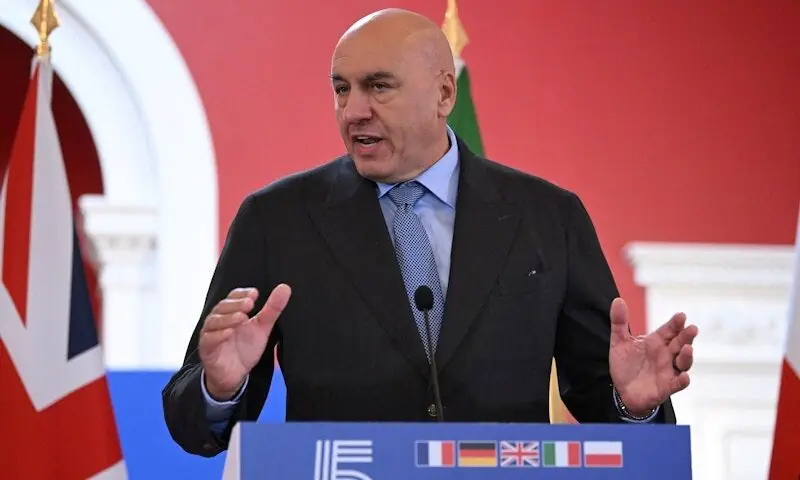
Italian ‌Defence Minister Guido Crosetto. – Reuters file

The U.S.-Israeli attacks on Iran, which sparked the latest Middle East crisis, were ​clearly in breach of international law, Italian ‌Defence Minister Guido Crosetto said on Thursday.

It was the strongest criticism to date from Italy’s right-wing administration, ​which has sought to establish close ​ties with U.S. President Donald Trump since ⁠he took office last year.

The decision to ​launch the strikes last weekend “of course fell outside, ​needless to say, the rules of international law”, Crosetto told the lower house of parliament.

He said Italy ​was being forced to respond to a ​conflict that the United States and Israel had initiated without ‌warning ⁠their allies and partners.

“It is a war that was started without anyone in the world knowing. One in which we, like the ​rest of ​the world, ⁠find ourselves having to manage (the consequences),” said Crosetto, who is a ​member of Prime Minister Giorgia Meloni’s ​Brothers ⁠of Italy party.

Italy has said it will send air defence aid to Gulf countries and naval assets to Cyprus to help them ​protect against Iranian strikes launched in response to the U.S.-Israeli ​attacks.

For the latest news, follow us on Twitter @Aaj_Urdu. We are also on Facebook, Instagram and YouTube.
NATO not involved in Iran war but providing support

Published 05 Mar, 2026 04:24pm 0 min read
Mark Rutte. –  Reuters
Mark Rutte. – Reuters

Mark Rutte said on Thursday that NATO would not become directly involved in the escalating conflict involving Iran, despite growing regional tensions and military action by Western allies, in an interview with Reuters.

Speaking as fighting intensified between Iran and its adversaries, Rutte praised strikes carried out by the United States and Israel against Iranian targets but stressed that the NATO alliance itself had no plans to join the conflict militarily.

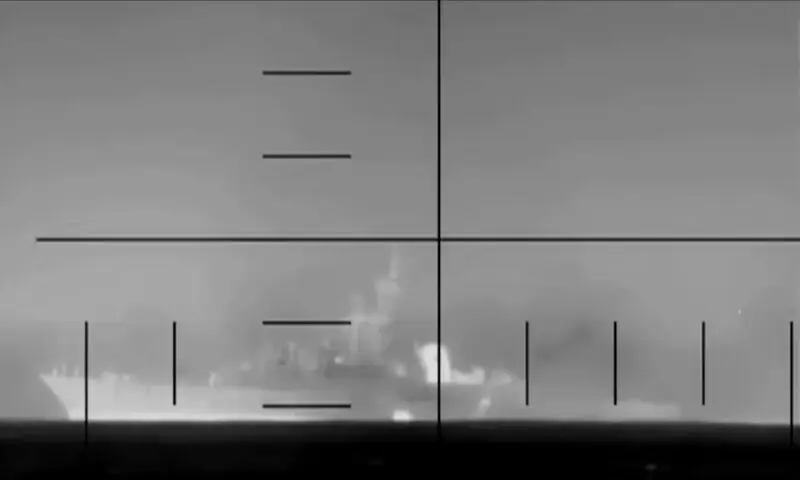
His comments came as tensions surged following a U.S. attack that sank an Iranian warship near Sri Lanka, an incident that Tehran condemned and warned Washington would “bitterly regret.” The strike reportedly killed dozens of Iranian sailors and further heightened fears of a widening regional war.

The conflict has already triggered missile launches and military responses across the Middle East.

One missile headed toward Turkey was intercepted by NATO defences, underscoring the alliance’s role in regional security even as it avoids direct combat.

Rutte’s remarks highlight NATO’s attempt to support allies politically while preventing the crisis from expanding into a broader confrontation between the Western military alliance and Iran.

For the latest news, follow us on Twitter @Aaj_Urdu. We are also on Facebook, Instagram and YouTube.

US Republicans block measure to halt US air campaign

Published 05 Mar, 2026 04:16pm 0 min read
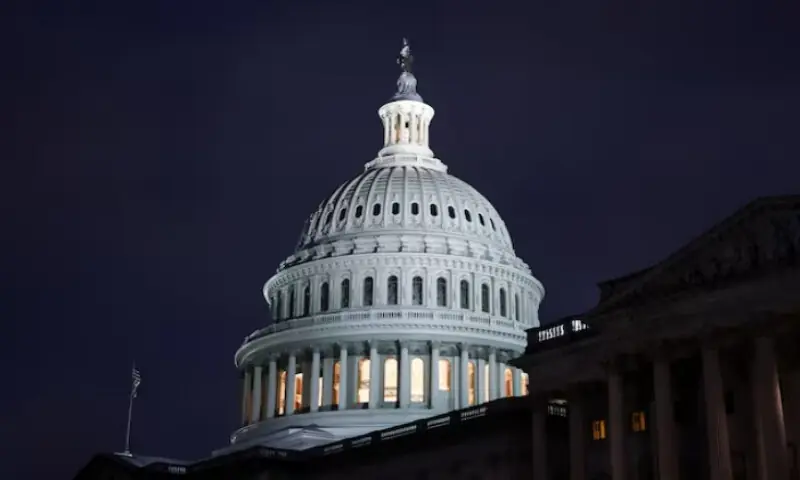
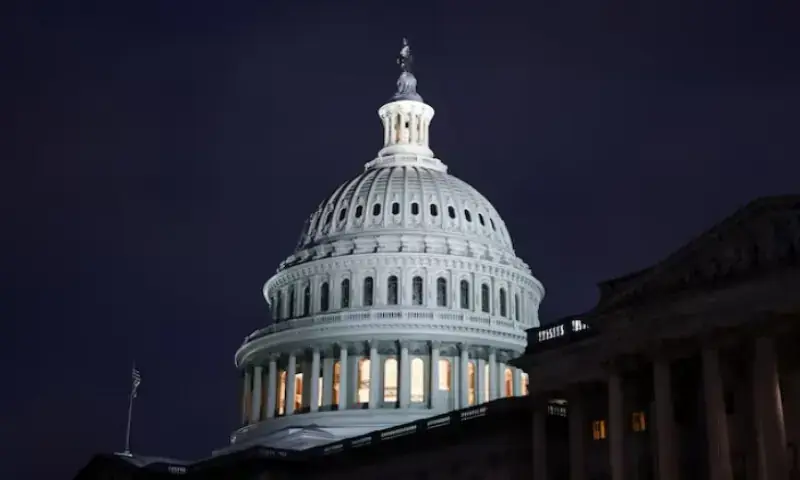
A view of the U.S. Capitol building at night in Washington, D.C., U.S., on March 2, 2026. Reuters file

Israel launched a large wave of strikes on Tehran on Thursday, ‌targeting what it said was infrastructure belonging to the Iranian authorities, after Iranian missiles sent millions of Israelis rushing into bomb shelters.

As the U.S.-Iran war entered its sixth day, the conflict has widened beyond Gulf states and into Asia, convulsing global markets and prompting thousands of stranded tourists and residents to try to flee the Middle East.

Iran’s foreign minister called the sinking of an Iranian warship off Sri Lanka on Wednesday, which killed at least 80 people, an “atrocity ​at sea”.

Revolutionary Guards say Iran controls Strait of Hormuz

He said the Iranian frigate Dena, a guest of the Indian navy with nearly 130 sailors on board, had been ​struck without warning in international waters, and warned that Washington would “bitterly regret” the precedent it had set.

“We have decided to fight Americans wherever they ⁠are,” General Kioumars Heydari, a commander of the Islamic Revolutionary Guard Corps, told state TV, adding Iran did not care how long the war lasts.

Later on Thursday, the Revolutionary Guards said they ​had hit a U.S. tanker in the northern part of the Gulf, and the vessel was on fire. The Guards said in the statement carried by state media that in time of ​war, passage through the Strait of Hormuz would be under the control of the Islamic Republic.

NATO air defences destroyed an Iranian ballistic missile fired towards the country on Wednesday, Turkey said, marking the first time the alliance member bordering Asia has been drawn into the Middle East conflict and raising the possibility of a major expansion involving its bloc allies.

But the Iranian Armed Forces General Staff on Thursday denied it had fired missiles at ​Turkey, saying the Islamic Republic respected the sovereignty of “friendly” Turkey, according to a statement carried by Iranian media.

In Washington late on Wednesday, Republican senators blocked a motion aimed at stopping the U.S. air ​campaign against Iran and requiring that military action be authorised by Congress. That rejection leaves President Donald Trump’s power to direct the war largely unbound, as the conflict continues to widen across the Middle East and ‌beyond.

U.S. Defence Secretary ⁠Pete Hegseth told his Israeli counterpart, Israel Katz, by telephone: “Keep going until the end - we’re with you”, according to a statement issued by Israel’s defence ministry on Thursday.

IMF says conflict testing global economic resilience

The repeated air attacks on Tehran have forced the postponement of the funeral for the late Ayatollah Ali Khamenei, 86, killed by Israeli forces on Saturday in the first strikes of the war.

Mojataba Khamenei, son of the slain supreme leader, has emerged as a frontrunner to succeed him, suggesting Tehran is not about to buckle to pressure from the U.S.-Israeli military campaign that has killed hundreds.

Asian shares rallied on Thursday after days of sharp losses, in line ​with a rebound in U.S. stocks on hopes ⁠the war might end soon. Some traders said the improved sentiment followed a New York Times report that Iranian intelligence had contacted the CIA early in the war about a path towards ending it.

But a source from the Iranian intelligence ministry rejected the article as “absolute lies and psychological warfare ​in the midst of war”, Iran’s semi-official news agency Tasnim reported.

International Monetary Fund Managing Director Kristalina Georgieva said the war was testing “global economic ​resilience”.

“This conflict, if proven ⁠to be prolonged, has obvious potential to affect global energy prices, market sentiment, growth and inflation. And it would place new demands on the shoulders of policy-makers everywhere,” she said at an event in Bangkok.

Shipping through the Strait of Hormuz remained paralysed on Thursday, choking off vital Middle East oil and gas flows, and oil prices rose further. At least 200 vessels remain anchored off the coast, according to Reuters estimates.

Repatriation flights departed ​the Middle East on Wednesday as governments rushed to bring home tens of thousands of stranded citizens. But a ​British repatriation flight did not take off as scheduled from Oman and was rescheduled for later on Thursday, Sky News reported.

Commercial air traffic remained largely absent across much of the region, with major Gulf hubs, including Dubai, the world’s busiest ​airport for international passengers, affected by widespread flight cancellations.

For the latest news, follow us on Twitter @Aaj_Urdu. We are also on Facebook, Instagram and YouTube.
Iran says the US has ‘no exit plan’

Published 05 Mar, 2026 03:59pm 0 min read
Mohammad Bagher Ghalibaf. – Reuters

As missiles continue to fly in the Middle East, a battle of rhetoric is also being waged between the U.S. and Iran.

Iran’s parliament speaker Mohammad Bagher Ghalibaf said on Thursday in a post on X that the United States had suffered “painful damage” from what he described as Iran’s “targeted and effective strikes,” adding that Washington had “no exit plan.”

He said U.S. officials privately acknowledged the situation while publicly making statements aimed at “managing the markets,” and warned that Iran would continue pursuing the “aggressor” until it was punished. 

On Wednesday, U.S. Defence ​Secretary Pete Hegseth said that Iran’s leaders were “toast”.

“America is winning - decisively, devastatingly and without mercy,” he told the reporter.

Trump has suggested that the conflict with Iran could go on for four weeks.

U.S. lawmakers from ​both major political parties have criticised the Trump administration for not spelling out a “day-after” strategy, which appears to largely hinge ​on the hope that ⁠the Iranian people will rise and determine their own future after decades of repression.

“We can sustain this fight easily for as long as we need to,” Hegseth said, adding that the only limit was Trump’s desire to achieve specific objectives.

For the latest news, follow us on Twitter @Aaj_Urdu. We are also on Facebook, Instagram and YouTube.
Sri Lanka says trying to safeguard lives on second Iranian ship

Published 05 Mar, 2026 03:08pm 0 min read
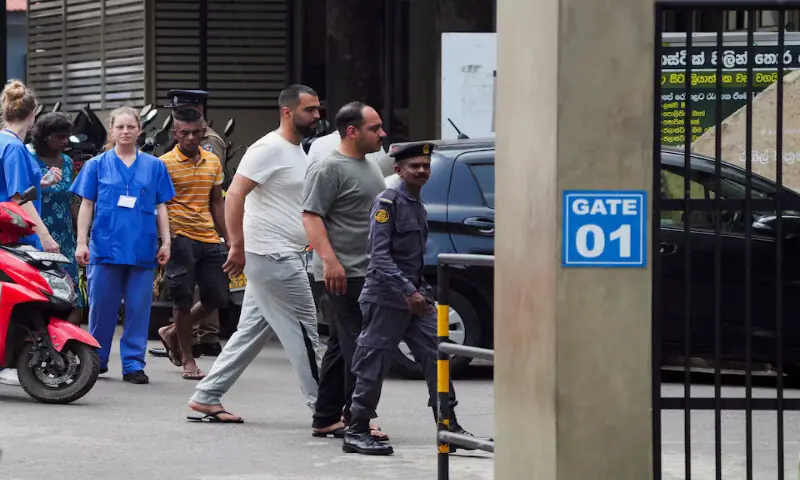
Injured Iranian sailors walk on Galle National Hospital premises where they are receiving treatment in Galle, Sri Lanka, on Thursday. – Reuters

Sri Lanka said it was trying to “safeguard lives” on a second Iranian ship off its coast on ‌Thursday, a day after 87 people were killed in a US submarine strike on an Iranian warship in the same region.

Sri Lanka’s cabinet spokesman told parliament that Colombo was aware that there was another Iranian ship in Sri Lanka’s exclusive economic zone outside its ​maritime boundary and it was “addressing the situation”.

The cabinet spokesman was responding to questions from an opposition leader on whether ​the government was aware that another Iranian ship was near the port of Colombo.

“The President, defence officials, ⁠and all other relevant officials are aware and we are addressing the situation,” spokesman Nalinda Jayatissa said. “We are doing our utmost to safeguard ​lives.”

He did not say whether the ship was a military vessel or not.

For the latest news, follow us on Twitter @Aaj_Urdu. We are also on Facebook, Instagram and YouTube.
How many people have been killed in the US-Israel war on Iran?

Published 05 Mar, 2026 02:49pm 0 min read
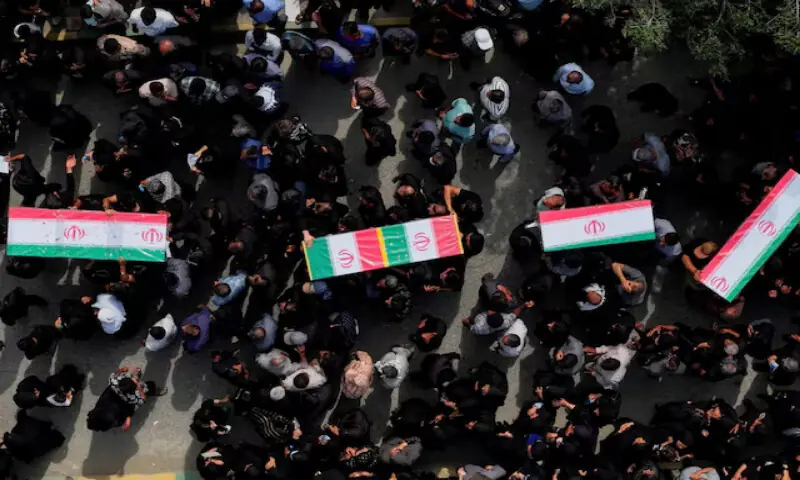
People carry coffins as they attend the funeral of the victims following an Israeli strike on a school in Minab, Iran. – Reuters

Scores of people have been killed across the Middle East since the US and Israel attacked Iran on February 28, with Gulf states ​that host US military bases and personnel and Lebanon quickly drawn ‌into the conflict.

Here are the death tolls from the war so far as reported by involved countries as of March 5, the sixth day of the war.

Reuters has not independently ​verified these deaths.

IRAN 1,045 people killed, including 175 schoolgirls and staff killed ​in a missile strike on a primary school in Minab in ⁠the country’s south on the war’s first day, according to the non-profit humanitarian ​group Iranian Red Crescent Society.

It was unclear if the overall death toll included ​Islamic Revolutionary Guard Corps military casualties.

  • ISRAEL 10 civilians killed, including nine people in an Iranian missile strike on Beit Shemesh near Jerusalem on March 1, according to Israel’s ambulance service Magen David ​Adom. The Israel Defence Forces has not reported any military casualties.
  • LEBANON 77 people killed ​in Israeli strikes, according to Lebanon’s health ministry.
  • BAHRAIN One person killed after fire broke out in ‌Bahrain’s Salman ⁠Industrial City following missile interception, according to the interior ministry.
  • KUWAIT Three people, including two Kuwaiti soldiers, killed in Iranian attacks on the country, according to Kuwait’s health and foreign ministries.
  • OMAN One person killed after a projectile hit the Marshall Islands–flagged product tanker ​MKD VYOM off the ​coast of Muscat.
  • UNITED ⁠ARAB EMIRATES Three people killed, according to the UAE’s defence ministry.
  • US MILITARY Six US service members were killed in a strike on a ​facility in Kuwait, according to US Central Command.
  • SYRIA Four people were ​killed when ⁠an Iranian missile struck a building in the southern Syrian city of Sweida on Saturday, state news agency SANA said.
  • IRAQ At least 13 people were killed, according to ⁠Iraqi ​health authorities, including 11 militiamen, one army soldier ​and one civilian, based on health registration figures.

For the latest news, follow us on Twitter @Aaj_Urdu. We are also on Facebook, Instagram and YouTube.

US will ‘bitterly regret’ sinking Iranian ship, says Araqchi

Published 05 Mar, 2026 02:36pm 0 min read
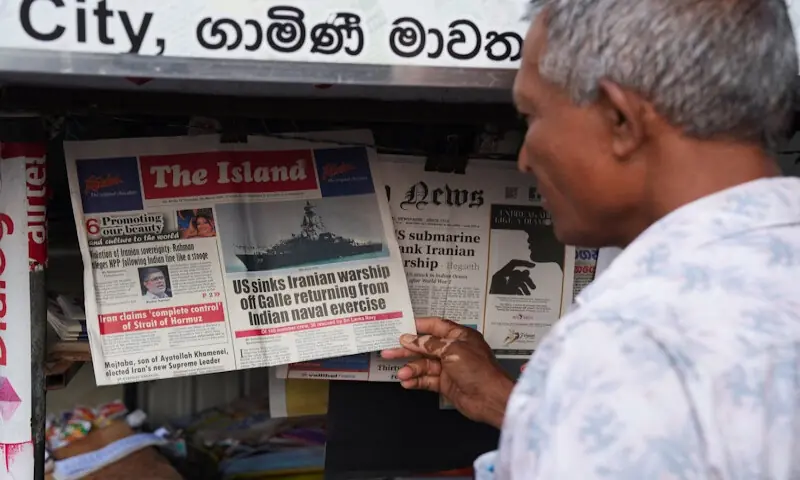
A man in Galle reads about a submarine attack on an Iranian military ship off the coast of Sri Lanka on Thursday. – Reuters

Iran’s Foreign Minister Abbas Araqchi has warned of repercussions after the US struck the Iranian frigate Dena in international waters without warning, saying the ship was a guest of India’s navy.

“The US will bitterly regret the precedent it has set,” Abbas Araqchi wrote on Thursday in a post on X.

A US submarine strike hit the Iranian vessel off Sri Lanka’s southern coast, thousands of miles from the Gulf, on Wednesday.

Thirty-two Iranian sailors who survived a US submarine strike in the Indian Ocean were recovering at a hospital in the Sri Lankan port city of Galle, authorities said after at least 87 were killed in the attack.

Officials at the National Hospital in Galle and navy sources said 87 bodies were brought in by military rescuers who responded to an early-morning distress call from the IRIS Dena on Wednesday.

Search and rescue operations for an estimated 60 people on board who remain unaccounted for would continue on Thursday, authorities said.

The 32 rescued sailors were being treated for minor injuries and could be released from the hospital soon, authorities said.

Two policemen guarded the entrance to ward No. 58 of the hospital as nurses milled about and doctors conducted morning rounds.

Drone attack in Azerbaijan

Azerbaijan’s foreign ministry on Thursday reported drone attacks carried out from Iranian territory.

Two people were injured due to the attacks, the foreign ministry said.

It said that Azerbaijan had summoned the Iranian ambassador and that the country reserves the right to retaliate.

Video footage shared by a source close to the government showed black smoke rising near the terminal of Nakhchivan International Airport, which is about 10 km from the border with Iran.

For the latest news, follow us on Twitter @Aaj_Urdu. We are also on Facebook, Instagram and YouTube.

Govt weighs contingency measures amid Middle East tensions

Published 05 Mar, 2026 02:03pm 0 min read
File photo
File photo

The government has prepared a set of proposals to manage potential disruptions if tensions in the Middle East escalate further, sources said on Thursday.

A high-powered committee has recommended several precautionary measures, including the possibility of starting online classes in educational institutions during March, so that academic activities continue in case of an emergency.

The proposals also include introducing remote work in parts of the corporate sector, with employees working online two days a week.

Similar arrangements are under consideration for the telecom and IT sectors.

Offices may also be asked to operate with only essential staff if the situation requires.

The committee has also discussed steps related to petroleum supplies.

The government may launch awareness campaigns encouraging people to avoid unnecessary travel to help maintain fuel reserves, the sources added.

Under the proposed plan, fuel supply would be ensured for essential services and key locations to maintain uninterrupted energy availability.

The finance ministry sources said that consultations were ongoing to finalise the plan.

If regional tensions increase further, a decision on implementing the plan could be taken soon.

Officials warned that prolonged instability in the Middle East could affect Pakistan’s energy supply, adding that the government is preparing alternative arrangements to deal with any emergency situation.

For the latest news, follow us on Twitter @Aaj_Urdu. We are also on Facebook, Instagram and YouTube.
Live

Kurdish fighters reportedly launch ground operation against Iran

Published 05 Mar, 2026 11:38am 0 min read
File photo
File photo

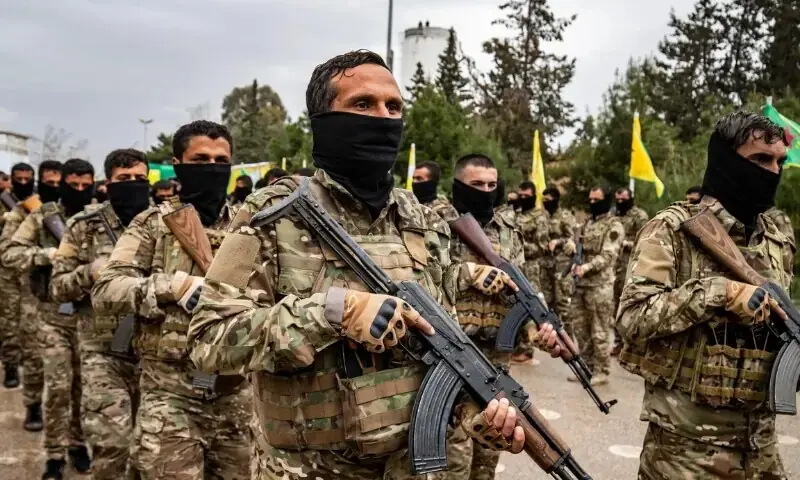
US officials have claimed that Iraqi Kurdish fighters have launched a ground operation against Iran, with approximately 1,000 militants reportedly crossing the border and thousands more attempting to enter Iranian territory.

According to US officials, the operation is focused on Iranian border regions, but actions could widen in the coming days.

US Defence Secretary Pete Hegseth, meanwhile, claimed that the US military is not involved in supplying weapons to the Kurdish fighters.

Speaking to the media, the Pentagon chief acknowledged that other parts of the US government could be involved in arming Kurdish fighters.

Meanwhile, a White House spokesperson denied reports of US ground troop deployments in Iran, stating that no such decision has been made.

The spokesperson added that air superiority over Iranian territory is expected to be achieved within the next few hours.

British media reports indicate that the US and Israel have been arming Kurdish militias over the past year.

Weapons were reportedly dropped for the Kurdish fighters by four to seven helicopters operating in the desert areas around Najaf.

In contrast, Iran’s official news agency has dismissed reports of Kurdish fighters entering the country, denying that any cross-border movement has occurred in the three border provinces.

For the latest news, follow us on Twitter @Aaj_Urdu. We are also on Facebook, Instagram and YouTube.

Live

UAE’s property sector faces reckoning after Iran strikes

Published 05 Mar, 2026 10:58am 0 min read
Cranes stand at a construction site, in Dubai, United Arab Emirates. – Reuters file

The UAE’s years-long property boom faces its first real test after Iranian missile strikes shattered the Gulf’s safe-haven aura, rattling investors and exposing how heavily Dubai ​and Abu Dhabi rely on offshore money to sustain their building spree.

The attacks on airports, ports and residential areas in both cities have punctured the ‌region’s reputation for stability at a moment when concerns about overheating were already surfacing.

Developers that had been selling out off-plan launches within hours now confront a sharply changed demand backdrop.

Off-plan deals made up 65% of Dubai transactions in 2025, according to Betterhomes, meaning most purchases were for homes not yet built.

That pipeline may now face a far tougher market, with foreign appetite set to be the decisive factor.

On ​Wednesday, shares in Dubai and Abu Dhabi developers plunged.

Aldar Properties, Abu Dhabi’s largest listed developer, and Emaar Properties, the force behind downtown Dubai and the Burj ​Khalifa, both fell 5%, while bond prices of major developers dropped sharply.

Bond markets — a critical funding channel for UAE developers — are now ⁠effectively shut for new issuance, with spreads widening across the sector.

Some developers played down the selloff.

“In this region we know things start quickly and end quickly, and we overcome this ​because the fundamentals across the GCC (Gulf Cooperation Council) nations are strong,” said Ziad El Chaar, the CEO of Dar Global, the luxury developer behind a string of Trump-branded projects across the ​Gulf.

“Nothing is on hold … everything is on track,” he said.

Others said the fallout was already visible.

A senior real-estate banker told Reuters his firm had this week shelved a planned UAE property capital raising.

“Investors are not thinking at this stage of investing in the region,” he said, adding that the risk premium for UAE property had become “much higher”.

International lenders, he added, would face pressure to scale back new loans, potentially forcing asset ​sales if the conflict drags on.

Turbocharged rally

Dubai’s skyline has been transformed over two decades by staggering construction ambition.

Palm Jumeirah, once a radical land-reclamation experiment, is now an established luxury ​enclave; Palm Jebel Ali, a second, larger palm-shaped development, is rising from the Gulf with cranes tracing its outline.

Abu Dhabi has also been reshaping its coast through a quieter but equally determined ‌building push.

The ⁠real-estate rally accelerated after COVID-19, as the UAE’s tax-free regime, liberalised visas and economic reforms attracted wealthy migrants.

Russians fleeing the Ukraine war, billionaires, family offices and hedge funds poured money into property, drawn by zero income tax and a business climate aiming to rival global financial hubs.

By 2025, the UAE’s population surpassed 11 million, with expatriates making up nearly 90% of residents, one of the highest such proportions on Earth, according to official data.

Dubai real estate prices jumped 60% between 2022 and the first quarter of 2025, according to Fitch.

Growth continued ​late last year, with residential prices up ​nearly 13% year-on-year in the fourth quarter, ⁠according to property consultants CBRE.

Abu Dhabi residential prices rose almost 32% over the same period.

“The real effect on real estate should be measured on the level of demand once the conflict halts. That is where the true impact will be felt,” said Mohammed Ali ​Yasin, the chief executive of Ghaf Benefits, a Lunate company in Abu Dhabi.

He noted that listed developer stocks fell in line with ​the broader 5% market ⁠drop on Wednesday.

Foreign demand

Even before the US–Israeli strikes on Iran, analysts were warning about supply running ahead of population growth.

JPMorgan said last week that Dubai’s demographic expansion was unlikely to absorb the 300,000–400,000 new units expected by 2028.

“Foreign interest in purchasing property following the conflict will be critical,” Abu Dhabi Commercial Bank economists said in a note on Wednesday.

Expatriates ⁠and non-resident buyers ​are a crucial demand pillar, they added, with new supply expected to rise from the second half of ​this year and remain high through the next two.

The strikes hit just as that supply wave was gathering pace.

“Real estate investment typically relies on stability, visibility and sustained investor confidence, all of which tend to weaken during ​prolonged geopolitical uncertainty,” said Ryan Lemand, co-founder and CEO of Neovision Wealth Management in Abu Dhabi.

For the latest news, follow us on Twitter @Aaj_Urdu. We are also on Facebook, Instagram and YouTube.
Live

Iran war breaks UN Charter, strike on school shocking: UN probe

Published 05 Mar, 2026 10:33am 0 min read
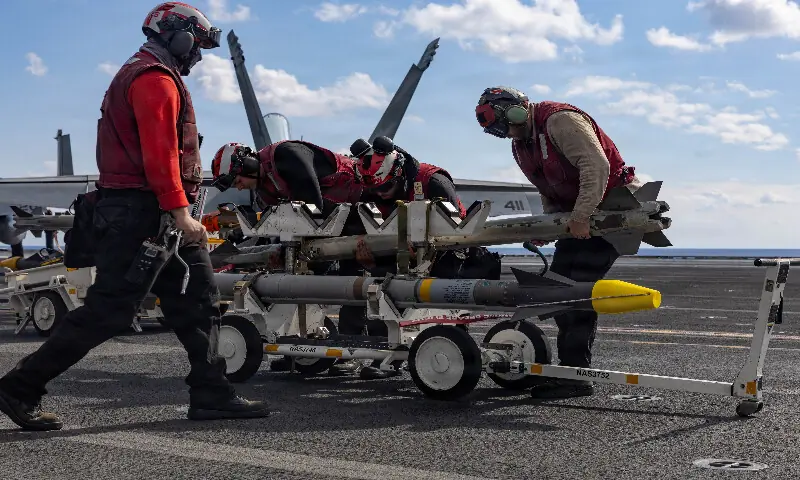
US navy sailors handle ordnance on the aircraft carrier USS Gerald R. Ford while operating in support of attacks on Iran in the eastern Mediterranean Sea. – Reuters

An independent United Nations probe investigating rights violations in Iran condemned ​on Wednesday attacks by Israel and the United States on Iran as well ‌as Tehran’s retaliatory strikes across the region, saying they violated the UN Charter.

The United Nations Charter bans the use of force against the territorial integrity or political independence ​of any state.

“These attacks, which were followed by Iran’s retaliatory strikes ​across the region, run counter to the UN Charter,” the UN Independent ⁠International Fact-Finding Mission on Iran said in a statement.

It also expressed deep ​shock over a strike that hit the Shajareh Tayyebeh girls’ school in Minab ​in southern Iran on Saturday, the first day of the US and Israeli attacks.

Most of the victims appear to have been schoolgirls aged seven to 12, it said.

Earlier on ​Wednesday, a separate UN panel of experts said more than 160 children were ​killed, citing reports.

The UN fact-finding probe said the Iranian population was now caught between ‌a large-scale ⁠military campaign that may go on for weeks and a government in Tehran which has a long record of human rights abuses.

Tens of thousands of people were detained and face torture and the death penalty, the UN ​probe said, following ​a crackdown on ⁠protests that began on December 28, 2025, in response to the country’s economic crisis.

It said protesters currently detained in ​prisons could be put at risk from any US-Israeli strikes.

​A ⁠British couple jailed in Iran described on Tuesday explosions shaking Evin prison where they are being held and damage to their wing as the conflict intensifies.

The statement ⁠said the ​killing of dozens of Iranian officials — who ​have included Supreme Leader Ayatollah Ali Khamenei — in the US-Israeli air strikes was not an acceptable means to ​deliver justice under international law.

For the latest news, follow us on Twitter @Aaj_Urdu. We are also on Facebook, Instagram and YouTube.
Live

Iranian missiles send millions of Israelis into shelter

Published 05 Mar, 2026 09:58am 0 min read
Israelis take cover in a tunnel following alerts of incoming projectiles in Shoresh, Israel. – Reuters

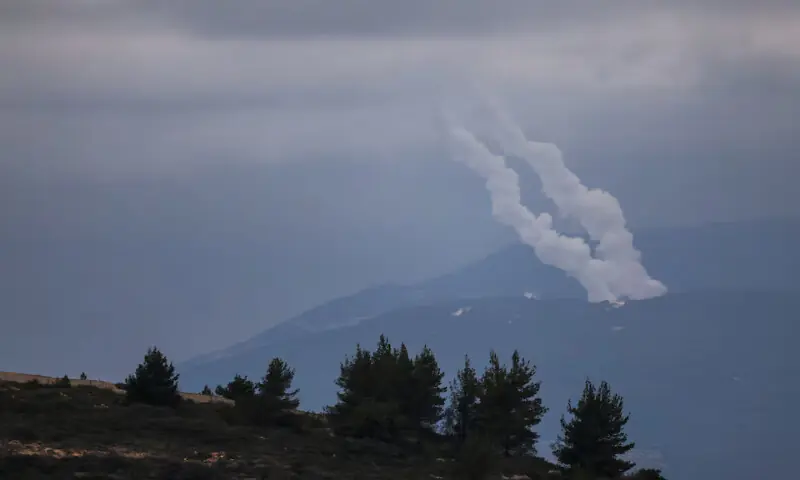
Iran launched a wave of missiles at Israel early on Thursday, sending millions of residents into bomb shelters as the US-Israel war with Iran entered ​its sixth day and just hours after moves to halt the US air assault were blocked in Washington.

Republican senators in Washington voted against a motion aimed ‌at stopping the air campaign and requiring that military action be authorised by Congress, leaving President Donald Trump’s power to direct the war largely unbound, as the conflict continues to widen across the Middle East and beyond.

The US Senate voted 53 to 47 not to advance the resolution, largely along party lines, with all but one Republican voting against the procedural motion and all but one Democrat supporting it.

The US–Iran war has ​widened sharply, with a US submarine sinking an Iranian warship off Sri Lanka on Wednesday, killing at least 80 people, and NATO air defences destroying an Iranian ballistic ​missile fired towards Turkey.

The escalation came as the son of Iran’s slain supreme leader emerged as a frontrunner to succeed him, suggesting Tehran ⁠was not about to buckle to pressure from the United States and Israel’s military campaign that has killed hundreds of civilians and convulsed global markets.

The missile incident is the first time that Turkey – ​which borders Iran and has NATO’s second-largest military – has been drawn into the conflict, but US Defence Secretary Pete Hegseth said there was no sense that it would trigger the Atlantic ​alliance’s collective-defence clause.

The war continued to paralyse shipping through the Strait of Hormuz on Thursday, choking off vital Middle East oil and gas flows.

Trump has pledged to provide insurance and naval escorts for ships to contain soaring costs, with oil prices rising on Thursday.

At least 200 vessels remain anchored off the coast, according to Reuters estimates.

The US navy will escort oil tankers through the Strait of Hormuz “as soon as it ​can” but is focused on the conflict for now, US Energy Secretary Chris Wright said on Fox News on Wednesday.

“No, not yet … We’ll do that as soon as we can. ​Right now, our navy, and of course, our military, is focused on other things, which is disarming this Iranian regime,” Wright said, when asked if any commercial vessels had requested US navy assistance in ‌the Gulf.

Asian ⁠shares rallied on Thursday after days of sharp losses, while US stocks closed up on Wednesday on hopes that the war might end soon.

Some traders said the improved sentiment followed a New York Times report that Iranian intelligence had reached out to the CIA early in the war about a path towards ending it.

A source from the Iranian intelligence ministry rejected the article as “absolute lies and psychological warfare in the midst of war”, Iran’s semi-official news agency Tasnim reported.

Repatriation flights departed the Middle East on Wednesday as governments rushed to bring home tens of thousands ​of citizens stranded by the war.

Commercial air traffic ​remained largely absent across much of ⁠the region, with major Gulf hubs, including Dubai, the world’s busiest airport for international passengers, affected.

Khamenei’s funeral postponed

Plans were in doubt for a funeral for Ayatollah Ali Khamenei, 86, killed by Israeli forces on Saturday in the first assassination of a nation’s top ruler by an air strike.

The ​body had been expected to lie in state in a vast Tehran mosque from Wednesday evening, but Iran announced that three days ​of farewell ceremonies had ⁠been indefinitely postponed, and no funeral date had been announced.

Two Iranian sources, speaking on condition of anonymity, told Reuters that Mojtaba Khamenei, son of Iran’s slain supreme leader, was not in Tehran when his father was killed.

Iran said the Assembly of Experts, which will select the new leader, would announce its decision soon, only the second time it has done so since the Islamic Republic’s founding ⁠in 1979.

Assembly ​member Ayatollah Ahmad Khatami told state TV the candidates had already been identified but did not name them.

Israel ​said it would hunt down whoever was chosen.

Other candidates for supreme leader include Hassan Khomeini, grandson of the Islamic Republic’s founder and a champion of the reformist faction sidelined in recent decades.

For the latest news, follow us on Twitter @Aaj_Urdu. We are also on Facebook, Instagram and YouTube.

Govt prioritising uninterrupted fuel supply amid regional tensions

Published 05 Mar, 2026 09:34am 0 min read
Finance Minister Muhammad Aurangzeb

Finance Minister Muhammad Aurangzeb has said that ensuring an uninterrupted availability of petroleum products remains the government’s foremost priority as authorities monitor the evolving regional situation.

Presiding over a meeting of the committee formed to monitor petrol prices in light of the emerging regional situation, Aurangzeb said the government was closely watching developments and stood ready to take timely measures to safeguard national energy security.

The committee was constituted by Prime Minister Shehbaz Sharif to review fuel supply and pricing amid volatility in international markets.

Aurangzeb said the body was monitoring developments on a daily basis and would take coordinated steps to ensure stability in domestic markets and protect national energy supplies.

The committee also emphasised the need to prevent hoarding, diversion or smuggling of petroleum products during periods of global uncertainty.

Officials directed relevant authorities to maintain heightened vigilance and strengthen coordination with provincial governments to ensure that domestic fuel supplies remain secure.

It was also decided that the chief secretaries of all provinces would participate in the committee’s meeting on Friday to discuss the final summary and a proposed national action plan.

The committee will continue its deliberations to finalise a comprehensive national strategy in coordination with all stakeholders, the finance minister said.

For the latest news, follow us on Twitter @Aaj_Urdu. We are also on Facebook, Instagram and YouTube.

Live

US says Trump got ‘last laugh’ after killing alleged Iran plot leader

Published 05 Mar, 2026 09:09am 0 min read
US Secretary of Defence Pete Hegseth holds a briefing at the Pentagon in Washington, DC. – Reuters

US Defence ​Secretary Pete Hegseth said on Wednesday that President Donald Trump had gotten the “last laugh” after the US military killed an Iranian official who ‌led an effort to assassinate him.

Hegseth used unusually colourful language to describe the war on Iran and invoked Trump’s name repeatedly as he said the Pentagon could sustain activity as long as necessary.

“They are toast and they know it. Or at least soon enough they will know it,” Hegseth said of Iranian leaders.

“America is winning — decisively, devastatingly and without mercy.”

Iranian man killed

Hegseth, who wore a red-white-and-blue tie and pocket square, described the killing of an unnamed Iranian who headed a unit that attempted ​to assassinate Trump in personal terms, even as he stressed the official was not the initial focus of the war.

“Iran tried ⁠to kill President Trump and President Trump got the last laugh,” Hegseth told reporters.

In 2024, the US Justice Department charged an Iranian man in connection with an alleged ​plot ordered by Iran’s Revolutionary Guard Corps to assassinate Trump, then US president-elect.

Tehran has denied accusations that it had targeted Trump and other US officials.

Trump cited the alleged Iranian ​plot when he spoke on Sunday about a joint US-Israeli operation that killed Iran’s Supreme Leader Ayatollah Ali Khamenei, saying to ABC News: “I got him before he got me.”

Hegseth, however, said Trump never mentioned the effort to track down the plot leader as a priority for the Pentagon.

“While that was not the focus of the effort by any stretch of the imagination — in fact, never ​raised by the president or anybody else — I ensured, and others ensured, that those who were responsible for that were eventually part of the target list,” Hegseth ​told reporters.

Strikes deeper inside Iran

The war widened after a US strike hit an Iranian warship off Sri Lanka, deepening a crisis that has paralysed shipping through the Strait of Hormuz and choked ‌off vital ⁠Middle East oil and gas flows.

Hegseth told reporters that the United States and Israel would have complete control of Iranian skies in a few days.

General Dan Caine, chairman of the Joint Chiefs of Staff, said at the briefing that US strikes were expanding as the country establishes air superiority along the southern Iranian coast.

“We will now begin to expand inland, striking progressively deeper into Iranian territory, and creating additional freedom of manoeuvre for US forces,” Caine said.

He said Iran’s launches of theatre-wide ballistic missiles were ​down 86% from the first day of ​fighting, and their one-way attack drone ⁠shots were down 73% from the opening days.

He said US strikes were expanding as the US established localised air superiority across the southern Iranian coast.

Trump has suggested that the conflict with Iran could go on for four weeks.

US lawmakers from ​both major political parties have criticised the Trump administration for not spelling out a “day-after“ strategy, which appears to largely hinge ​on the hope that ⁠the Iranian people will rise up and determine their own future after decades of repression.

“We can sustain this fight easily for as long as we need to,” Hegseth said, adding that the only limit was Trump’s desire to achieve specific objectives.

Only one in four Americans approves of US strikes on Iran that have plunged the Middle East into chaos, ⁠while about ​half — including one in four Republicans — believe President Donald Trump is too willing to use military force, ​according to a Reuters/Ipsos poll.

At the White House, White House Press Secretary Karoline Leavitt said on Wednesday that ground US troops were not part of the plan for Iran operations at this time and Trump ​believed that Americans supported the military strikes.

For the latest news, follow us on Twitter @Aaj_Urdu. We are also on Facebook, Instagram and YouTube.
Live

US warns of ‘missile rain’, vows to crush Iran ‘without mercy’

Published 05 Mar, 2026 08:50am 0 min read
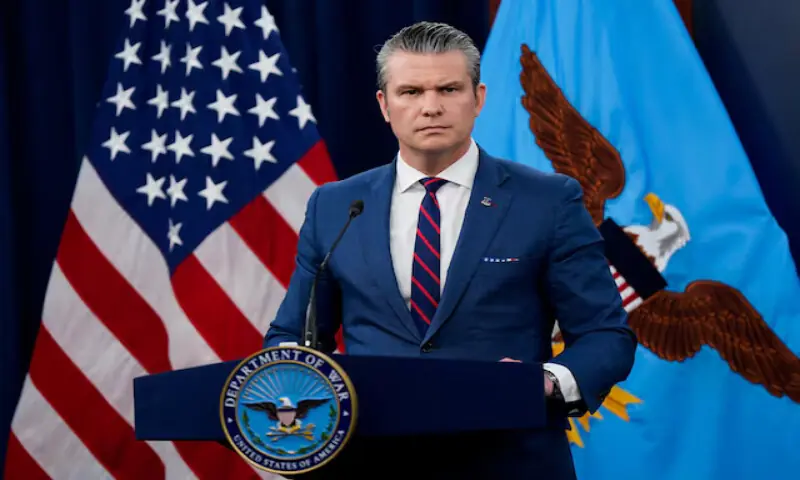
US Secretary of Defence Pete Hegseth holds a briefing at the Pentagon in Washington, DC. – Reuters

Senior United States officials said that Washington’s military campaign against Iran was going on with full force to crush the government in Tehran “without mercy”.

They said the military campaign against Iran was achieving its objectives, while signalling that operations would intensify as American and Israeli forces expand their strikes across the country, causing hundreds of civilian deaths.

Speaking to reporters, US Defence Secretary Pete Hegseth said American forces had loosened their rules of engagement and were operating with fewer restrictions as the campaign continues.

“Iranian leaders [are] looking up and seeing only US and Israeli air power every minute of every day, until we decide it’s over, and Iran will be able to do nothing about it,” Hegseth said.

He added that US aircraft were “controlling the skies, picking targets” and bringing “death and destruction from the sky, all day long”.

“This was never meant to be a fair fight, and it is not a fair fight,” he said.

“We are punching them while they’re down, which is exactly how it should be.”

Iran strongly condemned the remarks.

Foreign Ministry spokesperson Esmaeil Baghaei said Hegseth’s comments amounted to an admission of war crimes and crimes against humanity.

“Only a NAZI mentality can unleash, in cold blood, death and destruction on another nation just to ‘satisfy the desires’ of his boss,” Baghaei wrote on the social media platform X.

Later on Wednesday, White House press secretary Karoline Leavitt echoed the defence chief’s description of the campaign, saying US forces were moving toward “dominance over the skies”.

“In the next few hours, we’ll be achieving that dominance over the skies, which means the United States military will be raining missiles and weapons down on Iran to hit these specific targets that have been identified as crucial to take out by the Department of War,” she said.

Iranian officials have accused the United States and Israel of repeatedly striking civilian infrastructure, including schools and hospitals, during the campaign.

Baghaei listed a series of incidents he said involved attacks on residential buildings, street markets and medical centres across Iran.

One of the deadliest incidents occurred in the early hours of February 28, when a strike hit a girls’ school in the southern city of Minab, killing 165 people.

Earlier on Wednesday, the Pentagon released a map showing US strikes during the first 100 hours of the offensive, which appeared to indicate two attacks in or near Minab.

The United States and Israel have killed Iran’s Supreme Leader Ali Khamenei and several senior officials during the campaign, while also targeting Iranian ships and military facilities.

Despite thousands of US and Israeli strikes, Iran’s ruling structure remains intact, with no visible internal challenge emerging against the Islamic Republic system.

Amid the escalating regional war, US President Donald Trump praised the military campaign.

“And we’re doing very well on the warfront – to put it mildly, I would say,” Trump said on Wednesday.

“Somebody said: ‘On a scale of 10, where would you rate it?’ I said about 15.”

For the latest news, follow us on Twitter @Aaj_Urdu. We are also on Facebook, Instagram and YouTube.

Live

US Senate backs Trump’s military campaign against Iran

Published 05 Mar, 2026 08:10am 0 min read
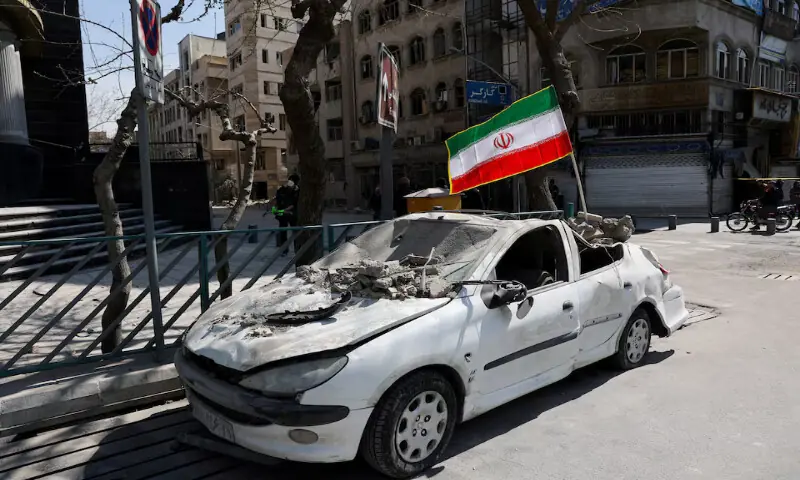
An Iranian flag mounted on a damaged car following an air strike on a police station in Tehran. – Reuters

US Senate Republicans backed President Donald Trump’s military campaign against Iran on Wednesday, voting to block a bipartisan resolution aiming to stop the air war ​and require that any hostilities against Iran be authorised by Congress.

The Senate voted 53 to 47 not to advance the resolution, largely along party ‌lines, with all but one Republican voting against the procedural motion and all but one Democrat supporting it.

The latest effort by Democrats and a few Republicans to rein in President Donald Trump’s repeated foreign troop deployments, the war powers resolution was described by sponsors as a bid to take back Congress’ responsibility to declare war, as spelled out in the US Constitution.

Opponents rejected this, insisting that Trump’s action was ​legal and within his right as commander in chief to protect the United States by ordering limited strikes.

They accused supporters of the resolution of endangering ​US forces.

“This is not a forever war, indeed not even close to it. This is going to end very quickly,” Republican ⁠Senator Jim Risch of Idaho, chairman of the Senate Foreign Relations Committee, said in a speech against the resolution.

The measure had not been expected to succeed. Trump’s fellow Republicans ​hold slim majorities in both the Senate and House of Representatives, and have blocked previous resolutions seeking to curb his war powers.

Backers of the resolution said they would not give ​up, and even some Republicans who voted to block it said they would press for public testimony from Trump aides about the administration’s Iran strategy, especially if the conflict lasts for weeks, as Trump has predicted.

The debate about Trump’s buildup of military assets in the Middle East, and American and Israeli strikes on Iran has centred on whether Trump is pulling the country into another “forever war” like ​the long conflicts in Iraq and Afghanistan.

“Today senators face a choice, stand with the American people who are tired of war in the Middle East, or side with ​Donald Trump, who bumbled America into another war most Americans fiercely oppose,” said Democratic Leader Chuck Schumer of New York, a co-sponsor of the resolution.

With control of Congress potentially shifting to Democrats ‌in November’s ⁠midterm elections, a prolonged Iran war could concern voters.

A Reuters/Ipsos poll released on Tuesday showed that only one in four Americans approved of US strikes on Iran, and about half believe Trump is too willing to use military force.

Besides the Iran campaign, US forces have been firing since September at boats in the southern Caribbean and eastern Pacific in what the administration calls an effort to deter Venezuelan drug trafficking.

Trump in January also sent troops into Venezuela to capture Venezuelan President Nicolas Maduro.

‘It’s a war’

The US-Israel war on ​Iran has already led to damage in Iran, ​Israel and throughout the Middle East, ⁠and claimed US casualties.

“It’s a war,” said Democratic Senator Tim Kaine of Virginia, a lead sponsor, in a speech urging support for the resolution.

He said he had appealed to Trump officials to come to Congress for a war authorisation during a classified briefing for ​lawmakers on Tuesday.

“Your escalating pattern of military action without seeking our approval convinces me that you believe you never need to ​come to Congress, to ⁠wage war against anyone anywhere,” Kaine said.

The House is expected to vote on a similar Iran war powers resolution on Thursday.

On Tuesday, Republican House Speaker Mike Johnson of Louisiana said he thought there were enough votes to defeat the resolution in the House, describing it as an attempt to push something that could put US troops in harm’s way and inspire ⁠Iranian forces.

“Imagine a ​scenario where Congress would vote to tell the commander-in-chief that he was no longer allowed to complete ​this mission. That would be a very dangerous thing,” he told reporters after a classified briefing on the Iran conflict from top administration officials.

Even if a resolution were to pass both the Senate and House, it would ​not go into effect unless it could garner two-thirds majorities in both chambers to survive an expected Trump veto.

For the latest news, follow us on Twitter @Aaj_Urdu. We are also on Facebook, Instagram and YouTube.
Netanyahu seeks White House clarification over alleged US-Iran backchannel

Published 05 Mar, 2026 01:29am 0 min read
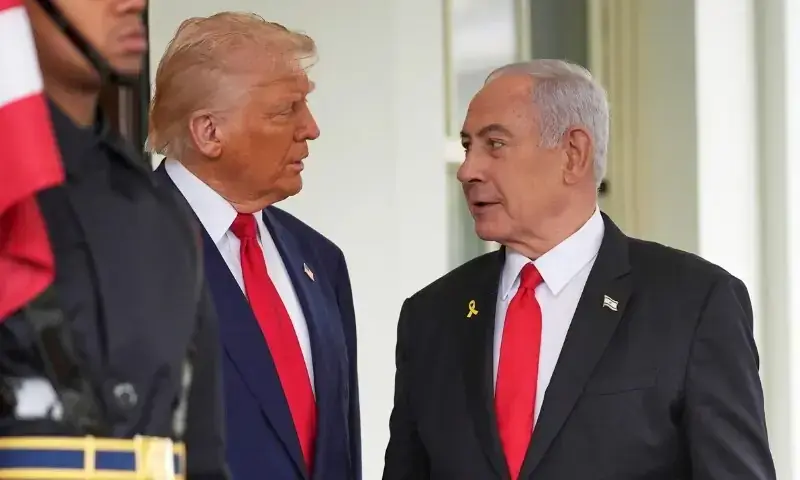
US President Donald Trump and Israeli Prime Minister Benjamin Netanyahu. File photo

Israeli Prime Minister Benjamin Netanyahu made urgent contact with the White House after receiving intelligence suggesting possible backchannel communication between the United States and Iran, according to media reports.

Citing a report by Axios, Al Jazeera said Israeli intelligence agencies suspected that indirect contacts may be taking place between Washington and Tehran.

The report claimed intelligence officials briefed Netanyahu on the alleged communications, prompting him to directly seek clarification from the White House.

Netanyahu reportedly asked whether the administration of US President Donald Trump was engaged in ceasefire talks or any form of reconciliation with Iran. He also inquired whether there were secret contacts underway.

The White House denied that any direct negotiations or ceasefire discussions were taking place.

US officials acknowledged that Iran had conveyed messages through certain regional mediators. However, they said the Trump administration had disregarded those messages.

The reports come amid heightened tensions between Washington and Tehran following days of military escalation in the region.

For the latest news, follow us on Twitter @Aaj_Urdu. We are also on Facebook, Instagram and YouTube.
Over 17,500 Americans return from Middle East, says State Department

Published 05 Mar, 2026 01:23am 0 min read
A representational image.

More than 17,500 American citizens have returned home from the Middle East since late February amid escalating regional tensions, the United States Department of State said.

According to Al Jazeera, Assistant Secretary of State for Global Public Affairs Delaney Johnson shared updated figures in a post on X.

Johnson said that since February 28, over 17,500 Americans have arrived back in the United States. Of those, approximately 8,500 returned on a single day.

The State Department said many US citizens have also relocated from the Middle East to Europe and parts of Asia. Some remain in transit after safely departing the region.

The department added that a 24-hour task force has provided guidance and travel assistance to around 6,500 Americans overseas.

Officials said any US citizen seeking to leave the Middle East would receive all possible assistance.

For the latest news, follow us on Twitter @Aaj_Urdu. We are also on Facebook, Instagram and YouTube.
Spain denies US claim of military cooperation on Iran as rift deepens

Published 05 Mar, 2026 01:16am 0 min read
Spain’s Socialist Prime Minister Pedro Sanchez. Reuters file

Spain on Wednesday doubled down on its opposition to Washington’s use of its bases against Iran, after US President Donald Trump’s threats of trade reprisals over the spat deepened a rift between the NATO allies.

Spain’s Socialist Prime Minister Pedro Sanchez defiantly repeated calls of “no to the war” on Wednesday after the weekend US-Israeli strikes on Iran triggered the regional conflict, in his latest policy clash with Trump.

Just hours later, White House Press Secretary Karoline Leavitt said Madrid had “agreed to cooperate with the US military”, without providing details on what the cooperation would entail.

But Spanish Foreign Minister Jose Manuel Albares told Cadena SER radio shortly afterwards that “our position on the use of the bases, on the war in the Middle East, on the bombardment of Iran, has not changed at all”.

Trump had lashed out at Sanchez’s government on Tuesday, calling Spain a “terrible” ally and threatening to sever all trade with one of the world’s most dynamic developed economies.

Sanchez defended his position on Wednesday, saying his government’s position “can be summed up in four words: no to the war”.

“We will not be complicit in something that is harmful to the world and contrary to our values and interests, simply out of fear of retaliation,” he added in a televised address.

Spain is part of the European Union, which allows goods to move freely between its 27 countries. This would complicate any bid to impose trade restrictions on a single member state.

“Trump’s words don’t always become policy. We will have to see if he follows through, and how,” said Angel Saz Carranza, director of the Esade Center for Global Economy and Geopolitics, a Spanish think tank.

‘Responsible conduct’

Iranian President Masoud Pezeshkian commended Spain on X for its “responsible conduct in opposing the Zionist-American coalition’s flagrant human rights violations and military aggression against countries”.

French President Emmanuel Macron, European Commission president Ursula von der Leyen and European Council chief Antonio Costa were among the allies rallying around Sanchez on Wednesday.

“The EU will always ensure that the interests of its member states are fully protected,” Costa wrote on X.

Sanchez had already found himself in US crosshairs for refusing to join NATO allies in a pledge to boost defence spending to five per cent of GDP as demanded by Trump.

He has also fiercely criticised Israel’s war in Gaza and the US military operation in January that captured Venezuelan president Nicolas Maduro.

US forces use the Rota naval base and Moron air base in southern Spain under an agreement signed in 1953 under the dictatorship of General Francisco Franco.

During the 2003 invasion of Iraq, Spain, then led by conservative prime minister Jose Maria Aznar, staunchly backed the United States by sending troops.

Spain’s participation in the Iraq war sparked huge street demonstrations, and many Spaniards blame it for the March 11, 2004 Madrid train bombings that killed nearly 200 people.

A branch of Al-Qaeda claimed responsibility for the attacks and called for the withdrawal of Spanish forces from Iraq.

Rally his base

Sanchez, in power since 2018, has emerged as a prominent figure for Europe’s disillusioned progressives, who see him as one of the few remaining openly leftist voices in a continent increasingly dominated by right-wing politics.

His opposition to the use of the bases is seen by some analysts as an attempt to rally his supporters around an issue that unites the Spanish left.

The popularity of his minority government has taken a hit from a string of sexual harassment and graft scandals ahead of the next general election due in 2027.

Many on Spain’s right consider Sanchez’s opposition to Trump as motivated more by domestic politics than by a moral compass.

The head of the main opposition conservative Popular Party which tops opinion polls, Alberto Nunez Feijoo, accused Sanchez on X of using foreign policy for “partisan” purposes.

In contrast, neighbouring Portugal authorised the United States to “conditionally” use an airbase on the Azores archipelago in the Atlantic Ocean for the Iran strikes, Prime Minister Luis Montenegro told parliament on Wednesday.

The authorisation was granted as long as “these operations are defensive or retaliatory, are necessary and proportionate, and exclusively target military objectives”, said the conservative leader.

For the latest news, follow us on Twitter @Aaj_Urdu. We are also on Facebook, Instagram and YouTube.
US lawmakers set to vote on war powers as Iran conflict widens

Published 05 Mar, 2026 12:53am 0 min read
A view of the U.S. Capitol building at night in Washington, D.C., U.S., on March 2, 2026. Reuters file

Lawmakers in the U.S. Senate were set to begin voting on Wednesday on a bipartisan ‌war powers resolution aiming to stop the military campaign against Iran and require that any hostilities against it be authorised by Congress.

The latest effort by Democrats and a few Republicans to rein in President Donald Trump’s repeated troop deployments, sponsors describe it as a bid to take back Congress’s responsibility to declare ​war, as spelt out in the U.S. Constitution.

Trump’s fellow Republicans hold slim majorities in both the Senate and House of ​Representatives, and have blocked previous efforts for resolutions seeking to curb his war powers.

“The last thing the American ⁠people want or need is another war in the Middle East,” said Democratic Leader Chuck Schumer of New York, a co-sponsor of the resolution, ​noting the administration’s plans to expand the military campaign.

“If you’re tired of wars in the Middle East, support our resolution,” Schumer, a lead ​sponsor of the measure, said in a Senate speech a few hours before a procedural vote on the resolution.

With control of Congress potentially shifting to Democrats in November’s midterm elections, a prolonged Iran war could concern voters.

A Reuters/Ipsos poll released on Tuesday showed that only one in four Americans approved of U.S. ​strikes on Iran, and about half believe Trump is too willing to use military force.

Republicans accused Democrats of playing politics with national ​security and said Trump was acting within his legal powers as commander in chief by ordering only limited operations, such as the capture of Venezuelan President ‌Nicolas Maduro ⁠in January, not full-scale wars.

The U.S.-Israel war on Iran is already more extensive, leading to damage in Iran, Israel and throughout the Middle East, and claiming its first U.S. casualties.

Senator Todd Young of Indiana, one of five Republicans who joined Democrats to advance a Venezuela war powers resolution in January, issued a statement on Wednesday opposing the Iran measure. Young said Iran “posed a core threat” to U.S. national security and that ​he opposed anything that would limit ​Trump’s military options.

However, Young called ⁠on Congress to hold hearings and public discussions to keep Americans informed.

The Venezuela resolution was later blocked, and Young was one of the Republicans who changed position after concessions from the administration, including Secretary ​of State Marco Rubio’s agreement to testify publicly.

The House vote on the Iran measure is expected on ​Thursday.

On Tuesday, Republican ⁠House Speaker Mike Johnson of Louisiana said he thought there were enough votes to defeat the resolution, describing it as an attempt to push something that could put U.S. troops in harm’s way and inspire Iranian forces.

“Imagine a scenario where Congress would vote to tell the commander-in-chief that ⁠he was ​no longer allowed to complete this mission. That would be a very dangerous ​thing,” he told reporters.

Johnson’s remarks followed a classified briefing on the Iran conflict from top administration officials.

Even if the resolution passes the Senate, it must also pass the House ​and garner two-thirds majorities in both chambers to survive an expected Trump veto.

For the latest news, follow us on Twitter @Aaj_Urdu. We are also on Facebook, Instagram and YouTube.

Israel’s ground forces advance in Lebanon while keeping up strikes

Published 05 Mar, 2026 12:22am 0 min read
Smoke rises from the site of an Israeli airstrike that targeted the Al Lailaki neighbourhood in Beirut’s southern suburbs, with the city’s international airport visible in the background, on March 4, 2026. AFP

Israel’s ground forces pushed into several border towns and villages in southern Lebanon on Wednesday, while it kept up large-scale air strikes in the country on the third day of renewed fighting with Hezbollah.

Israel ordered residents of a vast region of southern Lebanon to leave their homes on Wednesday, as Lebanese authorities announced at least 72 people killed since Monday, 437 wounded and 83,000 displaced from their homes.

Hezbollah, whose leader Naim Qassem is scheduled to speak at 1900 GMT, stepped up its attacks against Israel on Wednesday, saying it targeted Israeli positions as far as Tel Aviv, in at least 15 attacks.

Lebanon was drawn into the Middle East war on Monday when the Iran-backed militant group Hezbollah attacked Israel in response to the killing of Iranian supreme leader Ayatollah Ali Khamenei during US-Israeli strikes over the weekend.

The Israeli military told people living south of Lebanon’s Litani river — around 30 kilometres (20 miles) north of the border — to evacuate, warning that the army was “compelled to take military action” against Hezbollah in the area.

On Tuesday, Israel’s military said it was creating a buffer zone inside Lebanon to protect Israeli residents.

Israeli troops from three divisions, including infantry, armoured, and engineering units, were operating inside southern Lebanon, Israel’s army said late Wednesday.

AFP video footage shot on Wednesday showed what appeared to be two Israeli tanks amid residential buildings in Khiam, about six kilometres north of the border.

“Peacekeepers observed today several IDF (military) movements and military activities, including near… Khiam, Beit Lif, Yaroun, Houla, Kfar Kila, Kherbeh and Kfar Shouba,” the UN peacekeeping mission, UNIFIL, said in a statement.

It added that the Israeli movements violate Lebanon’s “sovereignty and territorial integrity”.

Israel announced on Wednesday that two of its soldiers had been “moderately injured” by anti-tank fire while “operating in southern Lebanon”.

Hezbollah said its fighters have engaged Israeli troops in “direct” clashes in Khiam, “inflicting confirmed casualties”.

Hotel strike

Meanwhile, Israel expanded the scope of its aerial campaign, striking a hotel in Hazmieh, the first reported Israeli attack on the predominantly Christian area in Beirut’s suburbs, near the presidential palace and several foreign embassies.

Some rooms were gutted in the strike, while wounded people received treatment in the lobby, AFP images showed.

People fled through the debris, carrying suitcases, past the Comfort Hotel’s sign, which had fallen broken to the ground. It was not possible to determine who was targeted in the attack.

The upscale district overlooks the capital’s southern suburbs, which Hazmieh resident Lena had initially thought was the target of the strikes.

“I was wrong,” the 59-year-old woman told AFP. “Just a stone’s throw from my home, a hotel was targeted.”

Several people told AFP they had received recorded phone messages telling them to evacuate.

Southern suburbs targeted

A series of strikes on Wednesday continued to target Beirut’s southern suburbs, where Hezbollah holds sway, following an evacuation order from Israel’s military.

One of the strikes targeted a building near a major hospital, according to an AFP photographer.

AFP footage showed thick plumes of smoke rising above buildings in the densely populated suburb, where some residents fled when the violence erupted on Monday.

In Aramoun and Saadiyat, south of Beirut — two towns outside of Hezbollah’s traditional sphere of influence — the health ministry said Israeli strikes killed six people and wounded eight others. It cautioned that this was a “preliminary toll”.

AFP footage from Aramoun showed damaged cars and rescue workers carrying a wounded person on a stretcher.

Strikes also targeted a four-storey building in the city of Baalbek, in Lebanon’s east, far from the border where Hezbollah also has a strong presence.

AFP correspondents saw rescue workers searching through the rubble for survivors.

Israel continued to strike a number of other areas, including Tyre, Nabatieh, and other locations in the Baalbek district on Wednesday.

For the latest news, follow us on Twitter @Aaj_Urdu. We are also on Facebook, Instagram and YouTube.