Live
Iran israel war

Israel renews strikes on south Beirut

Published 27 Mar, 2026 11:07pm 0 min read
First aid responders inspect the site of an Israeli airstrike that targeted a building in the southern Lebanese town of Saksakiyeh on March 27, 2026. AFP

Israel’s military renewed its attacks on Beirut’s southern suburbs on Friday, saying it was targeting Hezbollah infrastructure, as the Iran-backed group said the foes had clashed directly in the country’s south.

Nearly a month into the Middle East war, the United Nations refugee agency warned that Lebanon was facing a deepening humanitarian crisis that risks teetering over into a catastrophe.

Lebanon was pulled into the Middle East war when Tehran-backed group Hezbollah fired rockets towards Israel on March 2 to avenge the US-Israeli killing of Iran’s supreme leader Ayatollah Ali Khamenei.

Israel has responded with large-scale airstrikes on Lebanon and a ground offensive in the south.

Lebanon’s state-run National News Agency reported an Israeli strike on south Beirut’s Tahouitet al-Ghadir area, where authorities said another raid without warning earlier Friday killed two people.

AFPTV footage showed smoke rising from the area, a Hezbollah stronghold that has largely emptied of residents after previous Israeli army evacuation warnings and heavy strikes.

Shortly after the Friday afternoon raid, Israel’s military said it had “begun a wave of strikes targeting Hezbollah terror infrastructure in Beirut” and issued an evacuation warning for several neighbourhoods in the southern suburbs.

The NNA also reported Israeli strikes on the country’s south and east.

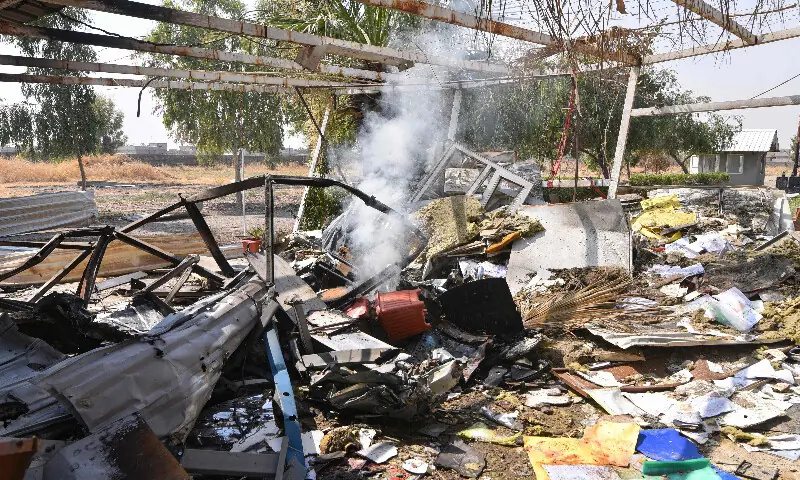
The health ministry said a raid on the town of Saksakiyeh in the south of the district of Sidon killed four people, while another in the east of the Bekaa region “killed a woman who was pregnant with twins”.

‘Extremely worrying’

In south Lebanon, Hezbollah said its fighters had clashed with “Israeli enemy army forces in the villages of Bayada and Shamaa at point-blank range with light and medium weapons”.

The group also claimed responsibility for attacks on Israeli targets across the border.

Lebanon’s coastal village of Bayada, adjacent to Shamaa, lies eight kilometres (around five miles) from the frontier.

Israel’s army said it had found weapons, including anti-tank missiles, in a school in Khiam, a strategic border town where Hezbollah has reported repeated clashes with Israeli troops.

Israeli forces are pushing into numerous towns in southern Lebanon, aiming to create a security zone reaching the Litani River, some 30 kilometres from the border, to drive Hezbollah back and to protect northern Israeli communities.

Israeli army spokesperson Effie Defrin said that “contrary to the declaration by the Lebanese government earlier this year, Hezbollah is still operating and conducting attacks from southern Lebanon.”

“If the Lebanese government will not disarm Hezbollah, the IDF will,” he said, referring to the Israeli armed forces.

Lebanese authorities say more than 1,100 people have been killed and more than one million others have been displaced, including some 136,000 staying in collective shelters.

The United Nations refugee agency’s representative in Lebanon, Karolina Lindholm Billing, warned that “the situation remains extremely worrying and the risk of a humanitarian catastrophe… is real.”

Nicolas Von Arx, regional director of the International Committee of the Red Cross, warned that “the humanitarian situation is worsening and civilians, as usual, are paying the highest price” in Lebanon.

After meeting Lebanese President Joseph Aoun, he said that “civilians must be protected wherever they are, whether they remain in their homes or are forced to flee”.

For the latest news, follow us on Twitter @Aaj_Urdu. We are also on Facebook, Instagram and YouTube.

More than 300 US troops injured since start of Iran war

Published 27 Mar, 2026 09:57pm 0 min read
At least 13 troops have been killed in the war, according to the latest figures, with seven killed in the Gulf and six in Iraq.

More than 300 US troops have been wounded since the start of the Iran war on February 28, US Central Command said on Friday.

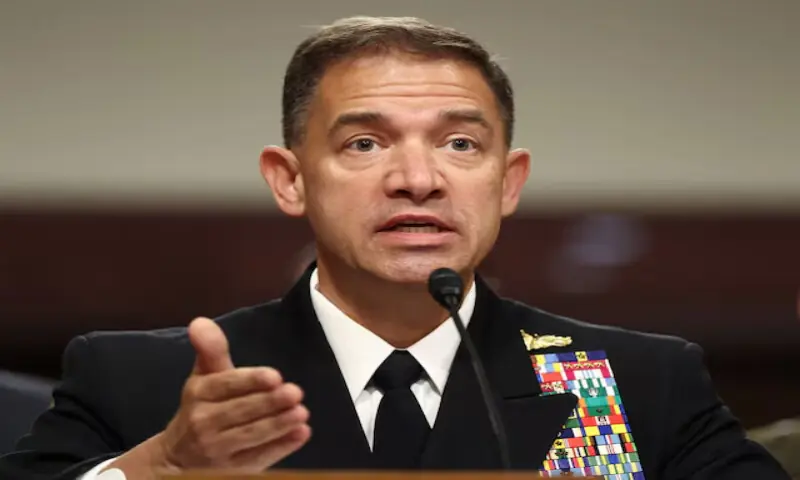
“Since the start of Operation Epic Fury, approximately 303 US service members have been wounded. The vast majority of these injuries have been minor, and 273 troops have returned to duty,” US Navy Captain Tim Hawkins said.

A US official who asked not to be identified told AFP that 10 troops remain seriously wounded.

A further 13 troops have been killed in the war, according to the latest figures, with seven killed in the Gulf and six in Iraq.

In a separate development Friday, Iran’s military said that hotels housing US soldiers in the region would be considered targets.
“When all the Americans (forces) go into a hotel, then from our perspective that hotel becomes American,” armed forces spokesman Abolfazl Shekarchi told state television on Thursday.

Iran’s government has not released an updated casualty toll, but a US-based activist group said on March 23 that some 1,167 Iranian troops had been killed and 658 troops’ status is unknown. AFP is not able to independently verify tolls in Iran due to reporting restrictions.

The war began on February 28 when the United States and Israel launched strikes on Iran, killing its supreme leader Ayatollah Ali Khamenei.

Since then, the conflict has spread across the Middle East. Iran has fired drone and missiles at Gulf states home to American military bases and other interests.
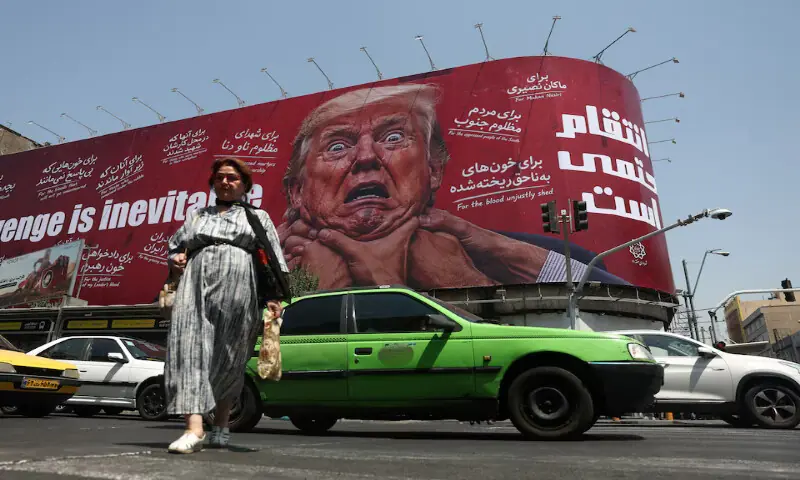
US President Donald Trump insisted on Thursday that talks to end the conflict were “ongoing” and “going very well”.

For the latest news, follow us on Twitter @Aaj_Urdu. We are also on Facebook, Instagram and YouTube.

Iran-linked hackers claim breach of FBI director’s personal email; DOJ official confirms break-in

Published 27 Mar, 2026 07:42pm 0 min read
FBI Director Kash Patel. – Reuters

Iran-linked hackers have publicly claimed ‌the breach of FBI Director Kash Patel’s personal inbox, publishing photographs of ​the director and his purported ​resume to the internet.

On their website, the hacker group Handala Hack ​Team said Patel “will now find his ​name among the list of successfully hacked victims.”

Emails published by ​Hanadala were not immediately authenticated, but a sample of the material uploaded ‌by the hackers and reviewed by Reuters appears to show a mix of personal and work correspondence ​dating between ​2010 and 2019.

A Justice Department official confirmed to Reuters that ​Patel’s emails were compromised but ​did not go into detail.

For the latest news, follow us on Twitter @Aaj_Urdu. We are also on Facebook, Instagram and YouTube.

Strait of Hormuz ‘closed’ to hostile shipping: IRGC

Published 27 Mar, 2026 07:32pm 0 min read
Traffic through the Strait of Hormuz was down by 95 per cent from usual in the period from March 1 to 26, according to Kpler. Reuters file

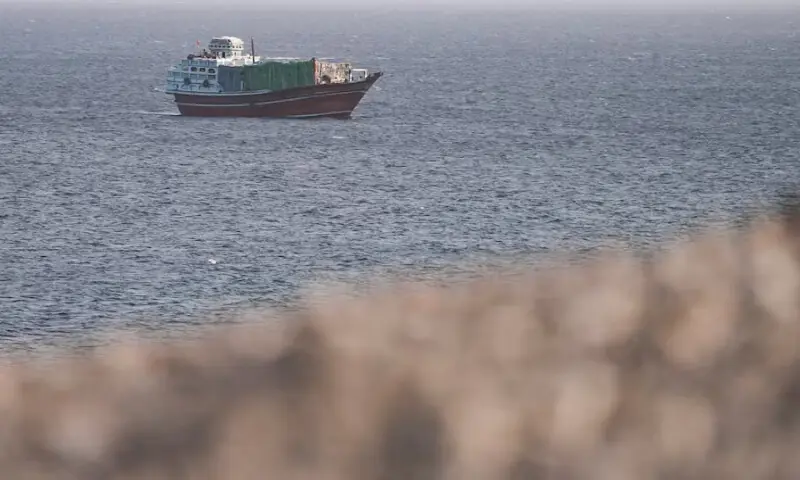
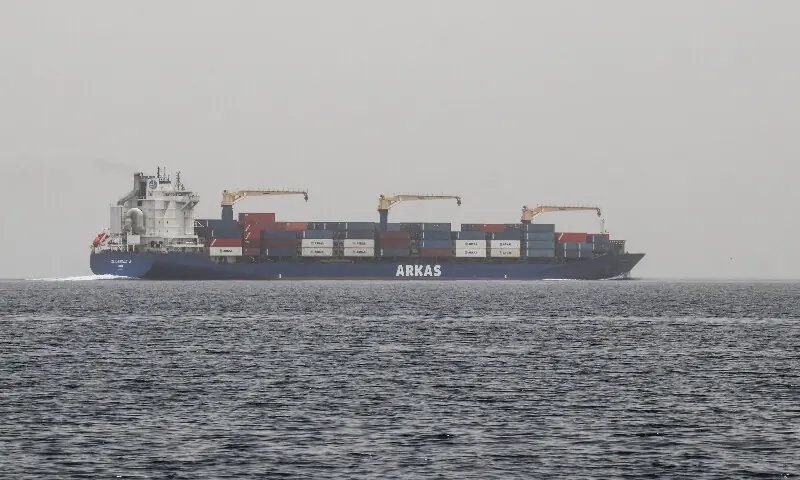
Iran’s Revolutionary Guards said Friday that they had turned back three ships trying to transit the Strait of Hormuz, adding the route was closed to vessels travelling to and from ports linked to its “enemies”.

“This morning, following the lies of the corrupt US president claiming that the Strait of Hormuz was open, three container ships of different nationalities… were turned back after a warning from the IRGC Navy,” the Guards said on their Sepah News website.

“The movement of any vessel ‘to and from’ ports of origin belonging to allies and supporters of the Zionist-American enemies, to any destination and through any corridor, is prohibited,” it added.

The move raises fresh doubt about which vessels are able to transit the strategic waterway, which is a conduit for a fifth of world oil and gas supplies in normal times, as well as other vital products.

A total of 26 ships have been approved by Iran to transit the strait recently, using a route around Larak Island just off the country’s coast, dubbed the “Tehran toll booth” by leading shipping journal Lloyd’s List.

Most were Greek- and Chinese-owned, as well as other Indian-, Pakistani- and Syrian-owned vessels, the journal said.

The new developments “suggest the situation remains highly unstable”, a data analyst at energy market intelligence firm Kpler, Rebecca Gerdes, said in a statement.

The consultancy identified two container ships belonging to the Chinese firm COSCO that had attempted to cross the Strait on Friday, but had turned around.

The two vessels had been stuck in the Gulf since the start of the war, sparked by US and Israeli attacks on February 28.

The identity of the third ship referred to in the Guards’ statement was unknown.

Red Sea threat

US President Donald Trump said Thursday that Iran had allowed 10 oil tankers to pass through the Strait of Hormuz as a “present” to show it was serious about negotiations to end the war.

US and Iran have been exchanging proposals this week to end the conflict via intermediary Pakistan, but no direct talks have been confirmed.

Some analysts believe the discussions are doomed to fail, or could be a smokescreen for Trump as he prepares a ground offensive to reopen the strait by force or seize Iranian oil assets.

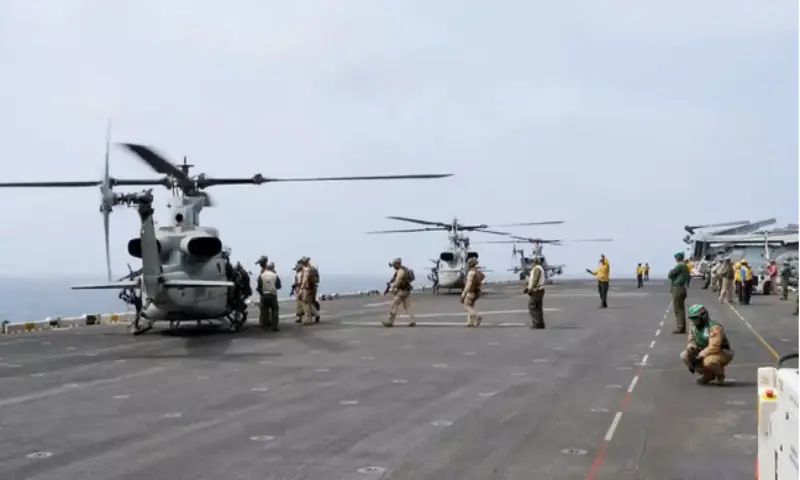
Thousands of US paratroopers and extra Marines are heading to the region.

If attacked with ground troops, Iran has signalled it would use its Houthi allies in Yemen to target shipping in the Red Sea, which would open up a new front in a war of spiralling economic, political and military repercussions.

Abdul Malik al-Houthi, leader of the rebel movement, warned on Thursday of a “military response” should the war require it.

The Houthis greatly reduced traffic in the Red Sea and the Suez Canal in October 2023 when they began attacking vessels around the narrow Bab el-Mandeb Strait in retaliation for Israel’s bombardment of Gaza.

Traffic through the Strait of Hormuz was down by 95 per cent from usual in the period from March 1 to 26, according to Kpler.

Since March 1, 2026, 24 commercial vessels, including 11 tankers, have been attacked or reported incidents in the Gulf, the Strait of Hormuz or the Gulf of Oman, according to the British naval maritime security agency UKMTO.

For the latest news, follow us on Twitter @Aaj_Urdu. We are also on Facebook, Instagram and YouTube.

Iranian soccer players hold schoolbags in solidarity with slain girls

Published 27 Mar, 2026 07:22pm 0 min read
Iran’s Aria Yousefi, Ali Nemati and Mohammad Ghorbani hold school bags in memory of the victims of the girls school bombing in Minab, Iran. – Reuters

Iran’s men’s national soccer team wore black armbands and held schoolbags as their anthem played ahead of ​a match in Turkey on Friday in what a team ‌official said was a protest over the killing of schoolgirls on the first day of the Iran war.

Iran were playing a friendly against Nigeria in the resort town ​of Belek ahead of the World Cup in the U.S., ​Mexico and Canada where their participation is in doubt over the ⁠conflict.

The men lined up holding pink and purple bags with ​ribbons on them - a reference to the attack on the Shajareh Tayyebeh ​School which Tehran says killed more than 175 people including children and teachers on the first day of joint U.S.-Israeli strikes.

“The players are holding the school ​bags close to their heart in remembrance of the 165 girls ​the Americans killed in an Iranian school,” a media official for the Iranian team ‌told ⁠Reuters.

U.S. military investigators believe it is likely that U.S. forces were but have not yet reached a final conclusion or completed their investigation.

Earlier this month, some of Iran’s women’s soccer team stayed quiet during the ​national anthem at ​an Asian Cup ⁠match, leading state TV in Tehran to brand them “traitors”.

U.S. President Donald Trump said earlier this month that ​while Iran’s national team were welcome to play ​in the ⁠U.S., it might not be appropriate for their “life and safety.”

Iran’s football federation said it is in discussions with soccer’s world governing body FIFA about ⁠moving ​its World Cup matches to Mexico from ​the U.S.

The squad will also play Costa Rica on Tuesday in another friendly in ​Turkey.

For the latest news, follow us on Twitter @Aaj_Urdu. We are also on Facebook, Instagram and YouTube.

Pakistan boosts port capacity as Hormuz crisis diverts shipping traffic

Published 27 Mar, 2026 06:44pm 0 min read
At present, Karachi Port Trust has a handling capacity of 20,000 TEUs, while Port Qasim Authority can manage 12,500 TEUs, and Gwadar Port Authority has a capacity of 5,000 TEUs.

Pakistan has expanded its port handling capacity and is witnessing increased maritime traffic as regional shipping routes shift amid tensions in the Strait of Hormuz.

Officials say enhanced capacity across major ports is aimed at promoting transhipment and strengthening Pakistan’s position as a regional logistics hub.

At present, Karachi Port Trust has a handling capacity of 20,000 TEUs, while Port Qasim Authority can manage 12,500 TEUs, and Gwadar Port Authority has a capacity of 5,000 TEUs.

Container handling has also improved significantly. Karachi Port received 8,000 containers and dispatched 3,500, with 4,500 remaining in balance, while Port Qasim is currently handling 3,485 containers, reflecting increased operational activity.

The shift comes as Iran-US tensions and the closure of the Strait of Hormuz have redirected shipping lines toward Pakistani ports.

According to port data, 11 vessels called at Port Qasim in March 2026, delivering a total of 417,390 metric tonnes of petroleum products.

Several tankers discharged significant volumes of fuel from regional sources, including Singapore, Sohar, Fujairah, Yanbu and Oman.

These included petrol, high-speed diesel and gas oil shipments, ensuring an uninterrupted supply across the country.

Most vessels completed discharge operations within 24 to 30 hours, highlighting improved port efficiency and logistics management.

Officials say the combined measures mark a significant step toward establishing Pakistan as a competitive transhipment hub, with the potential to boost trade flows and support economic stability.

For the latest news, follow us on Twitter @Aaj_Urdu. We are also on Facebook, Instagram and YouTube.

US taps JD Vance to lead Iran de-escalation push

Updated 27 Mar, 2026 07:48pm 0 min read
US Vice President JD Vance. – Reuters

The United States is preparing to assign Vice President JD Vance a central role in efforts to de-escalate tensions with Iran and explore possible negotiations, in what is being described as the most critical assignment of his political career.

According to a report by Axios, Washington has begun positioning Vance as a key interlocutor as it seeks to contain the conflict and open diplomatic channels.

Sources said Vance has held multiple discussions with Israeli Prime Minister Benjamin Netanyahu, alongside meetings with Gulf allies. He has also been involved in indirect contacts with Iranian officials.

Before the war, Vance was among a small group within the administration that voiced reservations about military action against Iran. However, since the conflict began, he has publicly supported the US position.

Recent interactions between Vance and Netanyahu have reportedly been tense.

According to Britain’s Daily Mail, the US vice president criticised Israeli assessments ahead of strikes on Iran, saying they proved inaccurate.

He reportedly described expectations of regime collapse and mass uprising in Iran as overly optimistic.

A separate Israeli media report suggested Vance’s frustration stemmed from violence involving Israeli settlers in the West Bank rather than the Iran war, but both US and Israeli sources dismissed that claim as inaccurate.

The report said some hardline Israeli circles are uneasy with Vance’s relatively measured stance and favour sustained military pressure on Iran.

These groups are believed to be working to undermine his emerging diplomatic role.

US President Donald Trump discussed Iran strategy with Vance during a cabinet meeting on Thursday and was briefed on ongoing diplomatic efforts. Vance is said to be working alongside envoy Steve Witkoff and senior adviser Jared Kushner on the issue.

White House officials say Vance’s seniority and past opposition to prolonged wars could make him a more acceptable negotiating figure for Tehran. Witkoff has also reportedly recommended him as the lead negotiator.

A senior official said that if Iran refuses to engage with Vance, the prospects for any agreement would be minimal.

The White House, however, cautioned that reports of a defined negotiation framework are premature, stating that discussions remain at an early stage and that Iran has yet to decide when and how it will enter talks.

According to the report, countries including Pakistan, Egypt and Turkiye are attempting to facilitate direct negotiations.

Iranian officials have told mediators they are awaiting approval from top leadership before proceeding.

If talks materialise, Vance could face Mohammad Bagher Ghalibaf, the speaker of Iran’s parliament, across the negotiating table.

Analysts say the outcome of this diplomatic effort could significantly shape Vance’s political future.

Success in bringing Iran to the table and securing a lasting agreement could strengthen his position as a leading Republican contender for the 2028 presidential election.

Failure, however, risks placing the burden of a diplomatic breakdown squarely on his shoulders, potentially weakening his standing in the race for the White House.

For the latest news, follow us on Twitter @Aaj_Urdu. We are also on Facebook, Instagram and YouTube.

UN rights chief urges US to conclude probe into deadly Iran school strike

Published 27 Mar, 2026 05:57pm 0 min read
Graves for the victims of strike on a school in Minab, Iran. – Reuters

The U.N. rights ​chief urged Washington to conclude its investigation into a fatal strike on a primary school in ‌Iran at a U.N. Human Rights Council meeting on Friday, with some states voicing outrage over the incident.

The emergency debate at the Geneva council was called by Iran to discuss the attack on the Shajareh Tayyebeh School which Tehran says killed more than 175 children and teachers ​on the first day of the nearly month-long regional war which began with joint U.S.-Israeli strikes.

Reuters reported on March 5 that U.S. military investigators believed it was likely that U.S. forces ⁠were responsible but have not yet reached a final conclusion or completed their investigation. The Pentagon has since the probe. ​Israel has also said it was investigating the incident.

U.N. Human Rights chief Volker Turk called for Washington to conclude its ​probe as soon as possible and publish the results.

“There must be justice for the terrible harm done,” he said by video link after meetings with U.S. officials in Washington this week.

Asked for comment, Israel’s diplomatic mission to the U.N. in Geneva criticised Iran for attacks on ​civilians across the region. “The fact that the embodiment of human rights violations is convening this urgent debate is a charade ​and an abuse of the UN Human Rights Council,” a spokesperson said.

The U.S. mission referred questions about the incident and the status of ‌investigations ⁠to the State Department, which did not immediately respond to a comment request.

Their seats were empty as both have disengaged from the body, alleging an anti-Israel bias.

“This atrocity cannot be justified, cannot be concealed, and must not be met with silence and indifference,” Iran’s Foreign Minister Abbas Araqchi told the council by video link.

Pakistan’s ambassador to the U.N. in Geneva Bilal ​Ahmad said the death of school ​children was unconscionable while ⁠China’s ambassador Jia Guide said he was deeply shocked.

“(It) is a breach of the bottom line of human morality, the most egregious violation of human rights and (shows) blatant contempt for ​IHL (international humanitarian law),” China’s Jia said.

Numerous other countries like Britain said they were appalled while ​also drawing attention ⁠to Iran’s own human rights violations during mass protests against Iranian authorities in January.

Others condemned Iran’s retaliatory strikes since the war began on February 28, including its attacks against Israel, U.S. bases and Gulf states, which were discussed by the council earlier this week.

Brazil’s ambassador ⁠Tovar da ​Silva Nunes voiced regret that there had been no holistic debate on ​violations during the regional war, echoing concerns by rights groups about “selective outrage”.

A bereaved mother, Mohaddeseh Fallahat, also addressed the 47-member council, calling for justice “so that ​the world knows that children’s lives are not worthless”.

For the latest news, follow us on Twitter @Aaj_Urdu. We are also on Facebook, Instagram and YouTube.

Iran warns hotels hosting US troops will be treated as military targets

Published 27 Mar, 2026 05:36pm 0 min read
A view of drones during a military exercise in an undisclosed location in Iran. Reuters file

Iran has warned that hotels across the Middle East hosting US troops will be considered legitimate military targets, as tensions intensify between Tehran, Washington, and Israel.

Armed forces spokesperson Abolfazl Shekarchi said any location sheltering American forces would be treated as a US installation.

“When all American forces move into a hotel, that hotel becomes an American base from our perspective,” he told state television.

“We cannot remain passive while being targeted. When we respond, we will strike wherever they are.”

The warning comes amid a sharp escalation in regional hostilities. Iran’s Foreign Minister Abbas Araghchi accused US forces of using civilians in Gulf Cooperation Council (GCC) countries as “human shields.”

“Since the start of the war, US troops have left military bases in GCC states and taken refuge in hotels and offices,” he said in a post on X, urging regional hotels to deny them accommodation.

Separately, Iran’s Islamic Revolutionary Guard Corps (IRGC) called on civilians to immediately leave areas where US forces are stationed.

“We strongly advise people to evacuate such locations to avoid harm,” the IRGC said in a statement carried by Tasnim News Agency, adding that it is “duty-bound” to target US forces wherever they are found.

In a further escalation, the IRGC announced restrictions on maritime traffic linked to US and Israeli allies. It declared the Strait of Hormuz closed and warned that vessels attempting to transit the strategic waterway would face “harsh measures.”

According to Iran’s Fars news agency, three container ships of different nationalities were turned back from entering the strait following warnings from IRGC naval forces.

For the latest news, follow us on Twitter @Aaj_Urdu. We are also on Facebook, Instagram and YouTube.

CNN: Iran holds strategic edge in Strait of Hormuz standoff

Published 27 Mar, 2026 05:10pm 0 min read
A map showing the Strait of Hormuz is seen in this illustration. – Reuters

Iran continues to hold a strategic advantage over the United States in the Strait of Hormuz, according to a CNN report, as the critical waterway remains effectively closed for nearly four weeks, disrupting global energy flows.

The strait, a vital artery for about 20 per cent of the world’s oil and natural gas as well as key fertiliser supplies, has seen traffic grind to a halt, fuelling volatility in global markets.

Despite diplomatic efforts and rising military pressure from US President Donald Trump, the CNN report says Tehran retains the upper hand due to a combination of geographic advantage and unconventional warfare tactics.

Iran’s deployment of low-cost drones, naval mines and fast-attack vessels has sharply increased risks for commercial shipping, complicating efforts by the United States and its allies to secure the route.

The geography of the strait remains a decisive factor. At its narrowest point, it is just 24 miles wide, with vessels confined to two tightly restricted shipping lanes.

Nick Childs, a senior fellow for naval forces and maritime security, told CNN the waterway is a “chokepoint” with no alternative route, leaving ships with minimal room to manoeuvre.

Analysts cited in the report describe the corridor as a potential “kill zone,” where warning time for attacks can be reduced to seconds, allowing Iran to monitor and strike targets with relative ease.

Iran’s nearly 1,000-mile coastline along the northern Gulf further strengthens its position. The terrain, including mountains, valleys and offshore islands, enables mobile missile systems to be concealed and redeployed, making detection difficult.

While US forces have degraded parts of Iran’s conventional naval capability, the report notes that the greatest threat now comes from unconventional systems such as drones, small high-speed boats and unmanned explosive vessels.

Iran has carried out attacks on at least 19 vessels in and around the Strait of Hormuz, including in the Persian Gulf and the Gulf of Oman. Even without sustained strikes, the persistent threat has been enough to deter most commercial traffic.

Tehran has said “non-hostile” vessels may pass through the strait if they coordinate with Iranian authorities.

According to Lloyd’s List Intelligence, at least 16 vessels have crossed the waterway, including one that reportedly paid around $2 million in fees, while some tankers used false identities.

The blockade has also created a mounting backlog. Nearly 2,000 ships remain stranded in the Gulf, according to the International Maritime Organisation, and analysts warn it could take considerable time to clear congestion even if traffic resumes.

The United States, along with allies including the United Kingdom, France and Bahrain, is working on plans to safeguard shipping, including potential naval escorts for oil tankers.

However, experts say any such effort would require a complex, layered defence system involving surveillance, mine-clearing and coordinated naval operations.

Washington has also increased its military presence in the region, deploying additional forces and naval assets, while maintaining that ground operations inside Iran are not currently planned.

Trump has warned of further strikes on Iran’s oil infrastructure if the blockade continues, signalling the risk of further escalation.

Iran, meanwhile, maintains it is not engaged in direct negotiations with the United States, though it acknowledges indirect exchanges through intermediaries, leaving the crisis without a clear resolution.

For the latest news, follow us on Twitter @Aaj_Urdu. We are also on Facebook, Instagram and YouTube.

More than 1,900 dead in Iran since start of US-Israel strikes, IFRC says

Updated 27 Mar, 2026 06:27pm 0 min read
Emergency responders remove a casualty from beneath the rubble at a site of a residential building damaged by a strike, amid the U.S.-Israeli conflict with Iran, in Tehran, Iran. – Reuters

More than 1,900 people have ​been killed and ‌at least 20,000 injured in Iran ​since the ​start of U.S. and ⁠Israeli attacks, ​said Maria Martinez of ​the International Federation of Red Cross and ​Red Crescent ​Societies (IFRC) on Friday, citing figures ‌provided ⁠by the Iranian Red Crescent.

Martinez said the Iranian ​Red ​Crescent ⁠continues to serve as the ​only nationwide ​humanitarian ⁠organization operating across the country ⁠amidst ​the escalating ​conflict.

For the latest news, follow us on Twitter @Aaj_Urdu. We are also on Facebook, Instagram and YouTube.

War between Hezbollah and Israel deepens fractures in Lebanon

Published 27 Mar, 2026 03:36pm 0 min read
Hezbollah flag in front of a house destroyed by an Israeli strike, following an escalation between Hezbollah and Israel, amid the U.S.-Israeli conflict with Iran. – Reuters

War between Israel and Hezbollah is pushing Lebanon’s fragile state and society towards breaking point, straining sectarian and political faultlines as Shi’ite Muslims are displaced and enmity deepens between the Iran-backed group and its opponents.

Of all Lebanon’s many crises since a 1975-90 civil ​war, the renewed conflict ignited by the Iran war could be its most destabilising, Lebanese analysts and figures from across the political spectrum say.

Israel has threatened Gaza-like destruction and an occupation of the south and there are acrid splits in Lebanon over ‌Hezbollah’s weapons, which the group has refused to give up despite a year-long effort by the state to disarm it peacefully.

Israeli bombardment and orders for people to leave have driven Hezbollah’s Shi’ite constituents into Christian, Druze and other areas, where many blame the group for starting a war in support of Tehran only 15 months after the last one.

Local authorities are vetting displaced people seeking rented accommodation, fearing the presence of anyone who might be a target for Israel.

Tensions between Hezbollah and the government are worsening. The administration led by Prime Minister Nawaf Salam and President Joseph Aoun has banned Hezbollah’s military wing, called for talks with Israel and demanded Iran’s ambassador leave.

Hezbollah official Mahmoud ​Qmati has compared the government to the Vichy France leaders sentenced to death for collaborating with Nazi Germany in World War Two.

“We are capable of turning the country upside down,” he told a Lebanese media outlet although he later said his remarks were ​taken out of context.

Druze lawmaker Wael Abu Faour says internal tensions are increasing because of political divisions over the war and displacement and “the defiant rhetoric from more than one side”.

“This exacerbates fears for internal ⁠stability,” he said.

‘Ticking bomb’

More than 1,000 people have been killed in Lebanon and over a million - more than a fifth of the population - have been displaced, since Hezbollah fired at Israel on March 2 and Israel hit back.

A foreign official said the ​displacement was straining communal ties and would be “a ticking bomb” if the displaced cannot go home.

Israel’s military has ordered people to leave much of the south as well as Beirut’s Hezbollah-controlled southern suburbs and the group’s heartlands in eastern Lebanon.

Israel’s defence minister has said his country intends to create ​a “security zone” up to the Litani River, which meets the sea about 30 km (19 miles) north of the border with Israel.

He has said hundreds of thousands of shi’ites will not return south of the Litani until security is ensured for northern Israel.

Nadim Gemayel, a Christian lawmaker opposed to Hezbollah, expressed concern that Israel was deliberately pushing Shi’ites into other parts of Lebanon to create conflict with other communities.

Hezbollah has long been at odds with many other Lebanese factions, and has an arsenal more potent than the army’s.

During a brief civil war in 2008, when a Western-backed government tried to outlaw Hezbollah’s communications network, Hezbollah fighters took over Beirut. The ​government backed down.

Gemayel said tension “already exists, but the ignition hasn’t happened yet, and I hope that it will never happen”.

“If the Israelis stay long, very long in the south, this will be catastrophic for everyone … Lebanon cannot assimilate such a displacement of people,” he said, urging the Lebanese ​government to “disarm Hezbollah and terminate this war”.

In response to a request for comment on the accusation Israel was seeking to stir sectarian tensions, an Israeli official did not directly address the question but said the only conflict in Lebanon was the one started by Hezbollah and urged the country to eject ‌the group.

The Israeli ⁠military said it was operating solely against Hezbollah, and that any allegations it was operating against a specific population were “false and misleading.”

However, an Israeli military official told Reuters that evacuation notices had been issued only to Shi’ite villages in Lebanon’s south, and that Christian villages were still populated and not targeted by Israeli forces.

‘Sectarian logic’

Hezbollah lawmaker Hassan Fadlallah said some Lebanese were dealing with the issue of displacement “with sectarian logic”.

“We will overcome this phase because the displaced will return to their land and their homes as soon as the aggression ceases,” he said.

Underlining tensions, residents of a predominantly Christian area north of Beirut brawled with displaced people and demanded they leave on Tuesday when fragments of an Iranian ballistic missile intercepted over Lebanon fell onto the area.

Moves to establish a shelter for displaced in Beirut’s Karantina district, in a predominantly Christian area near the port, prompted ​objections by Christian politicians. Salam later decreed the site would instead be ​used to store aid.

In the predominantly Christian neighbourhood of Dekwaneh ⁠east of Beirut, about 2,000 displaced Shi’ites are sheltering in a vocational college.

Zeinab al-Meqdad, 50, said her family had encountered no problems in the neighbourhood since fleeing her home in the southern suburbs on March 2.

Antoine Abu Aboud, a local official, said another 1,000 displaced were in hotels and rented accommodation in Dekwaneh.

“There is a war, and the situation is bigger than us. Today, we Lebanese must be patient with one another,” ​he said.

He said the local council had tightened vetting of people seeking to rent, sending IDs to security forces for checks, saying residents feared anyone who could “represent a danger to their building or ​lives”.

Co-existence between state and Hezbollah arms ending?

Divisions ⁠in Lebanese society are mirrored in the state, which has also been shaken by the fallout of the war.

Hezbollah held decisive sway over the state until being pummelled by Israel in 2024. After that conflict, the government sought to disarm it, but the many rockets fired by Hezbollah since March 2, and its rapid deployment of fighters back to the south, have shaken confidence in the state at home and abroad.

Hezbollah believes the government will ultimately retreat from decisions including the banning of its military wing.

“All the measures taken by the government will be reversed when Israel fails to achieve its objectives,” Fadlallah ⁠said. “When we finish ​confronting this aggression, we, as Lebanese, will address our internal problems.”

Israeli officials have indicated Israel’s offensive will continue beyond the Iran war, and much hinges on what happens in ​the broader conflict.

A 15-point U.S. proposal for ending the war includes Iran cutting off funding for allies such as Hezbollah, according to Israeli cabinet sources. Iran has indicated that Lebanon must be included in any ceasefire.

Christian lawmaker Alain Aoun said Lebanon was in a transitional phase, with the final terms to be determined by the war.

“The coexistence between the state ​and Hezbollah arms which we witnessed for decades is nearing its end in one way or another, with all the potential repercussions for society and the political system,” he said.

For the latest news, follow us on Twitter @Aaj_Urdu. We are also on Facebook, Instagram and YouTube.

Pakistan, Kuwait discuss regional tensions amid Middle East crisis

Published 27 Mar, 2026 03:26pm 0 min read
Pakistani Prime Minister Shehbaz Sharif and Kuwaiti Crown Prince Sheikh Sabah Al-Khaled. – APP file

Pakistani Prime Minister Shehbaz Sharif spoke by phone with Kuwaiti Crown Prince Sheikh Sabah Al-Khaled, condemning attacks on Kuwait and expressing solidarity with the Kuwaiti people, according to a statement.

Sharif conveyed condolences for the loss of lives and briefed the Crown Prince on Pakistan’s diplomatic efforts to end the war.

The Kuwaiti Crown Prince praised Sharif’s leadership and expressed full support for Pakistan’s mediation efforts between Iran and the United States. He also thanked Pakistan for its backing of Kuwait during the crisis and indicated his intention to visit Pakistan once the situation improves.

Sharif assured the Crown Prince that Pakistan will continue its constructive role in promoting peace and stability in the region.

For the latest news, follow us on Twitter @Aaj_Urdu. We are also on Facebook, Instagram and YouTube.

UAE willing to join international force to reopen Strait of Hormuz, FT reports

Published 27 Mar, 2026 03:19pm 0 min read
A representational image. File photo

The United Arab Emirates has told the U.S. and other Western allies it would participate in a multinational maritime ​taskforce to reopen the Strait of Hormuz, the Financial Times reported ‌on Friday, citing people familiar with the matter.

The UAE is trying to push dozens of countries to create a “Hormuz Security Force” to defend the strait from Iranian attacks and escort ​shipping, the report added.

The UAE has faced more Iranian attacks than ​any other country in the region, including Israel.

Several U.S. allies have ⁠said they have no immediate plans to send ships to unblock the ​Strait of Hormuz, rebuffing a Trump request for military support to keep the ​vital waterway open.

France said on Thursday it had held talks with around 35 countries seeking partners and proposals for a mission to reopen the strait, but only once the U.S.-Israeli war ​on Iran ends.

Iran has effectively blocked the Strait of Hormuz, which carries ​about 20% of global oil and liquefied natural gas, spiking energy prices and fuelling global inflation ‌fears.

The ⁠UAE is also working on a U.N. Security Council resolution with Bahrain to provide any future taskforce with a mandate, but Russia and China could oppose the move, the report added.

U.N. Security Council members have begun negotiating resolutions to protect commercial shipping ​in and around ​the Strait of ⁠Hormuz, including a Bahraini draft that would authorise the use of “all necessary means”, Reuters reported earlier this week.

Last week, a ​senior Emirati official said UAE may join a U.S.-led effort to ​protect shipping ⁠in the Strait of Hormuz after Iran all but shut the waterway to ships.

The waterway is vital to the economy of the UAE, a major oil exporter ⁠and ​trade hub. Iran has repeatedly attacked an Emirati ​port located outside the Gulf that is used to load oil exports.

For the latest news, follow us on Twitter @Aaj_Urdu. We are also on Facebook, Instagram and YouTube.

Pakistan opens Jirak as regular Pak-Iran border crossing

Published 27 Mar, 2026 10:14am 0 min read
– FILE PHOTO
– FILE PHOTO

Pakistan has officially declared Jirak in Panjgur district as a regular border crossing with Iran on Friday, allowing the movement of passengers and commercial goods, according to a notification from the Federal Board of Revenue (FBR).

The notification added serial number 26 to the schedule of SRO 102(I)/83 by amending the SRO of 1983.

Officials said the decision has been implemented immediately and is expected to facilitate travel, improve trade, and promote commercial activity in border areas.

The Jirak border crossing will now operate regularly, providing a formal route for both passenger travel and commercial transport between Pakistan and Iran.

For the latest news, follow us on Twitter @Aaj_Urdu. We are also on Facebook, Instagram and YouTube.

Trump denies ‘desperate’ Iran deal push amid war pressure

Published 26 Mar, 2026 11:41pm 0 min read
US President Donald Trump speaks, flanked by Secretary of State Marco Rubio (left), Defence Secretary Pete Hegseth (second right) and Commerce Secretary Howard Lutnick (right), during a cabinet meeting in the Cabinet Room of the White House in Washington, DC, on March 26, 2026. AFP

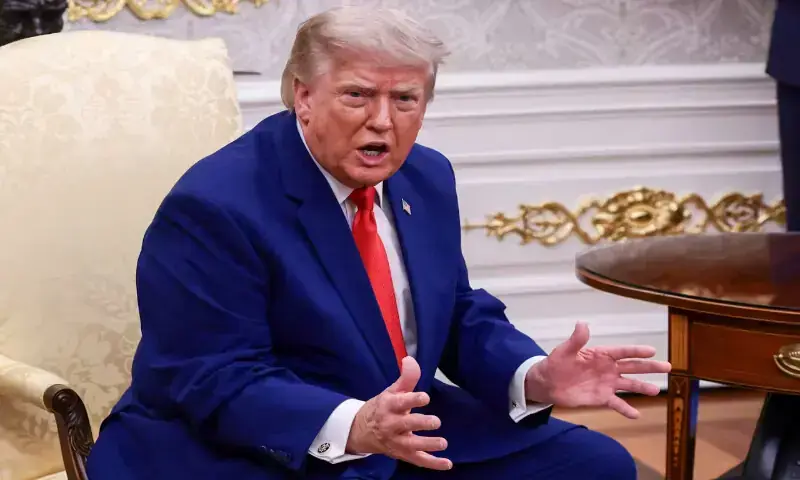
US President Donald Trump denied being “desperate” to make a deal with Iran on Thursday, as he mixed threats with diplomacy in a push to wrap up his war in the Middle East.

Holding his first cabinet meeting since the start of the joint US-Israeli operation, Trump insisted that Iran was being “beat to shit” and was “begging” for a deal, despite Tehran’s denials.

But Trump rejected reports that he was looking for an exit ramp, as oil prices soar and political pressure mounts to avoid the kind of drawn-out Middle East war he once spurned.

“I read a story today that I’m desperate to make a deal,” Trump told reporters. “I’m the opposite of desperate. I don’t care.”

Trump has been saying for days that Iran wants to make a deal, amid growing signs he is seeking a quick end to the conflict. Iran, however, says there are no direct negotiations.

During the 90-minute televised meeting at the White House, Trump veered between repeated threats to “obliterate” Iran and claims it was on the verge of capitulating.

“They want to make a deal. The reason they want to make a deal is they have been just beat to shit,” Trump said.

Citing the original timeframe of four to six weeks that he gave shortly after the US-Israeli offensive began on February 28, Trump said “we’re extremely, really, a lot ahead of schedule.”

The US leader said Iran had allowed 10 oil tankers to pass through the strategic Strait of Hormuz as a “present” to show it was serious about negotiations to end the war.

But he then said that taking control of Iran’s oil was an “option,” as the United States effectively did with Venezuela after toppling Nicolas Maduro, who appeared in a US court on Thursday.

‘Drummer gets wicked’

Trump’s comments will once again fuel the speculation that has swirled since the start of the war about the 79-year-old’s goals and timeline for the war.

The US-Iran talks have been shrouded in uncertainty since Trump first announced them on Monday and postponed a threat to attack Iran’s power plants.

Trump’s deadline for Iran to unblock the Strait of Hormuz or see its energy network hit is due to expire on Friday, but with just a day to go, he said he wasn’t sure if he’d extend it.

“In Trump time, a day, you know what it is? That’s an eternity,” he said.

But Trump’s global envoy Steve Witkoff confirmed for the first time that Washington had sent a 15-point “action list” via mediator Pakistan and said there were “strong signs” Iran might make a deal.

Trump, meanwhile, spent much of his time lambasting NATO and other allies for rejecting his appeals to help secure the Strait of Hormuz, through which around a fifth of global crude oil and liquefied natural gas normally passes.

He blasted the British aircraft carriers, London eventually offered as “toys” compared to their US equivalents.

“I’ve done a great favour for the world. The world has not been reciprocal,” Trump said. “I believe that’s going to cost them dearly.”

Trump’s top officials also chimed in.

Top US diplomat Marco Rubio appeared to quote rappers Public Enemy as he said that “every day, the Department of War lets the drummer get wicked over every portion of Iran.”

Secretary of Defence Pete Hegseth hailed Trump for “doing the work of the free world.”

“We pray for a deal, and we welcome a deal,” Hegseth said. “But in the meantime…the Department of War will continue negotiating with bombs.”

For the latest news, follow us on Twitter @Aaj_Urdu. We are also on Facebook, Instagram and YouTube.

Iran hardliners ramp up calls for a nuclear bomb, sources say

Published 26 Mar, 2026 10:42pm 0 min read
An Iranian flag stands in the rubble following a strike on a police station in Tehran, Iran, on March 4. Reuters file

The debate among Iranian hardliners over whether Tehran should seek a nuclear bomb in defiance of an escalating U.S.-Israeli attack is getting louder, more public and more insistent, sources in the country say.

With the Revolutionary Guards ​now dominant following the killing of veteran Supreme Leader Ayatollah Ali Khamenei at the start of the war on February 28, hardline views on Iran’s nuclear approach are ‌in the ascendant, two senior Iranian sources said.

While Western countries have long believed that Iran wants the bomb — or at least the ability to make one very quickly — it has always denied that, saying Khamenei had banned nuclear arms as forbidden in Islam and citing its membership of the Nuclear Non-Proliferation Treaty.

There was no plan to change Iran’s nuclear doctrine yet and Iran had not decided to seek a bomb, one of the sources ​said, but serious voices in the establishment were questioning the existing policy and demanding a change.

The U.S.-Israeli attacks on Iran, which came midway through talks on Tehran’s nuclear ​programme, may have changed the equation, convincing Iranian strategists that they have little to gain by forswearing a bomb or staying in the NPT.

HARDLINER ⁠STANCE

The idea of quitting the NPT — something hardliners have previously threatened — has been increasingly aired on state media along with the idea — once taboo in public — that Iran should go outright ​for the bomb.

Tasnim News Agency, which is affiliated with the Guards, on Thursday published an article saying Iran should withdraw from the NPT as soon as possible while sticking with a ​civilian nuclear programme.

Hardline politician Mohammad Javad Larijani, brother of senior official Ali Larijani who was killed in a strike this month, was quoted by state media this week urging Iran to suspend its membership of the NPT.

“The NPT should be suspended. We should form a committee to assess whether the NPT is of any use to us at all. If it proves useful, we will return to it. If not, they can keep ​it,” he said.

Earlier in the month, state television aired a segment with conservative commentator Nasser Torabi in which he said the Iranian public demanded: “We need to act in order to ​build a nuclear weapon. Either we build it or we acquire it.”

Nuclear policy has also been a subject of private discussion in ruling circles, said the two sources, adding that there was divergence between harder ‌line elements ⁠including the Guards and those in the political hierarchy over the wisdom of such a move.

To be sure, Iranian officials have threatened in the past to reconsider membership of the NPT as a negotiating tactic during more than two decades of talks with the West over Iran’s nuclear programme without ever having done so.

The more public debate may represent just such a tactic.

It is also far from clear how quickly Iran might be able to push for a bomb after suffering weeks of air strikes on its nuclear, ballistic and other scientific facilities and after a shorter ​air campaign by Israel and the United States ​last year.

Israel had repeatedly warned over ⁠many years that Iran was only months away from being able to make a nuclear bomb, citing intelligence reports, Tehran’s enrichment of uranium needed for a warhead almost to weapons grade, and its ballistics programme.

NO CHANGE TO NUCLEAR POLICY YET

Analysts have said the Islamic Republic’s goal has been ​to attain the status of a “threshold state” — able to produce a bomb quickly if needed but without incurring the pariah status that ​could come with the ⁠weapon itself.

Guards commanders and other senior figures had in the past warned that Iran would have to go straight for a bomb if the Islamic Republic’s survival was threatened - a condition that the present war may meet.

Khamenei’s fatwa, or religious opinion, that nuclear weapons were not permissible in Islam, was made in the early 2000s, though never issued in written form. Khamenei reiterated it in 2019.

One of ⁠the two senior ​Iranian sources said that with Khamenei’s death and that of Ali Larijani, who the source said had also ​pushed back against hardliners, it was becoming more difficult to counter the more hawkish arguments.

It was also not clear whether the obligation to obey Khamenei’s unwritten fatwa survived his death, though it would likely remain valid unless revoked by ​the new supreme leader — his son Mojtaba Khamenei, who has not been seen in public since the death of his father.

For the latest news, follow us on Twitter @Aaj_Urdu. We are also on Facebook, Instagram and YouTube.

Trump says Iran’s ‘present’ to US was allowing 10 oil tankers through Hormuz

Published 26 Mar, 2026 10:17pm 0 min read
U.S. President Donald Trump, sitting next to Secretary of State Marco Rubio and Defence Secretary Pete Hegseth, speaks during a cabinet meeting at the White House in Washington, D.C., U.S., on March 26, 2026. Reuters

U.S. President Donald Trumpsaid on Thursday that Iran was letting 10 ​oil tankers transit the Strait of Hormuz as an ‌apparent goodwill gesture in negotiations.

Trump made the comments at a Cabinet meeting in the White House, elaborating on what he ​had previously described as a “present” from Iran.

“They ​said, to show you the fact that we’re ⁠real and solid and we’re there, we’re going ​to let you have eight boats of oil, eight ​boats, eight big boats of oil,” Trump said. “I guess they were right, and they were real, and I think they ​were Pakistani-flagged… It ended up being 10 boats.”

The ​White House did not immediately respond to a request for more ‌details ⁠on the vessels.

Trump’s comments came as he pressed Iran to agree to a deal that would clear the maritime chokepoint and end its nuclear programme.

The U.S. president ​on Tuesday ​had baffled ⁠some observers when he said that Iran had given the United States an ​expensive, energy-related concession. At the time, he ​declined ⁠to say what exactly he meant.

“They gave us a present and the present arrived today, and it was ⁠a ​very big present, worth a tremendous ​amount of money,” Trump told reporters then.

For the latest news, follow us on Twitter @Aaj_Urdu. We are also on Facebook, Instagram and YouTube.

Zelensky may ink air security deal with Saudi Arabia on surprise visit

Published 26 Mar, 2026 09:57pm 0 min read
Ukraine’s President Volodymyr Zelenskiy meets Deputy Governor of Makkah Region Prince Saud bin Mishaal bin Abdulaziz during his visit to Jeddah, Saudi Arabia, on March 26, 2026. Reuters

Ukrainian President Volodymyr Zelensky arrived in Saudi Arabia Thursday for an unannounced visit, as the war in Iran spurs interest among Gulf countries in Ukrainian arms technology.

The two countries are set to sign an agreement on “security cooperation — in particular, the protection of the skies”, later on Thursday, a senior official told AFP, speaking on condition of anonymity.

They did not provide further details of what was set to be in the accord.

Kyiv has sought to leverage its expertise in downing Russian drones to help Gulf nations, which are being attacked with the same Iranian-designed Shahed drones that Russia fires on Ukraine.

Zelensky has said that more than 200 Ukrainian anti-drone experts have been deployed to several countries in the Middle East, including Saudi Arabia, since the US-Israel strikes on Iran spurred retaliatory drone and missile attacks from Tehran.

“Arrived in Saudi Arabia. Important meetings are scheduled,” Zelensky wrote on social media, publishing a video of him meeting a regional official in Jeddah.

“We appreciate the support and support those who are ready to work with us to ensure security,” Zelensky added.

Saudi Arabia, which has close security ties with the United States, has been targeted by Iranian drones.

Kyiv is touting its mix of cheap drone interceptors, electronic jamming tools and anti-aircraft guns to down Russian drones as an effective air defence tool.

Ukraine has proposed swapping its interceptors for the vastly more expensive air-defence missiles that Gulf countries are currently using to down Iranian drones. Kyiv argues it needs more of them to fend off Russian missile attacks.

Last year, Saudi Arabia also hosted US officials for separate talks with Ukrainian and Russian delegations in a bid to find an end to the four-year war triggered by Moscow’s February 2022 invasion.

For the latest news, follow us on Twitter @Aaj_Urdu. We are also on Facebook, Instagram and YouTube.

Deadly missile fire from Lebanon kills man in Israel

Published 26 Mar, 2026 09:26pm 0 min read
Israeli soldiers grieve during the funeral of Staff sergeant Ori Greenberg, 21, at the Mount Herzl military cemetery in Jerusalem on March 26, 2026.

Israeli emergency services said a missile fired from Lebanon killed a man in the country’s north Thursday, as sirens and explosions rang out in several Israeli cities following multiple missile launches from Iran.

“In the Nahariya area, MDA teams have pronounced a man of about 30 dead and were treating a man of about 50 who is in serious condition,” Israel’s Magen David Adom emergency service said.

Three other people also suffered from shrapnel and blast injuries in the same attack, it added.

Hezbollah has fired rockets into northern Israel since entering the Middle East war on March 2.

Earlier on Thursday, an Israeli soldier was also killed in fighting in southern Lebanon.

Since the war in the Middle East began on February 28, the Israeli military has lost three soldiers in combat in southern Lebanon, where ground operations have expanded in recent days.

Meanwhile, air raid sirens sounded and explosions rang out in several areas of Israel on Thursday as Iran launched multiple missiles, the military said, adding that the projectiles had been intercepted.

Shrapnel had wounded seven other people since the first missile attack was detected in the morning, according to Israel’s emergency service Magen David Adom.

The military said it had detected nine waves of incoming missiles over the course of the day, triggering sirens in central Israel, Jerusalem, Haifa and some areas of the occupied West Bank.

“Defence systems are operating to intercept the threat,” it said as it announced each salvo.

AFP journalists in Tel Aviv reported hearing several blasts from the morning, while AFP footage showed a residential building in the area struck by debris from an intercepted missile.

The images also showed damage to an apartment, with metal fragments scattered across the scene.

Rescue services and medics were deployed to assess the damage.

Earlier, a spokesperson for Magen David Adom told public radio that several houses were damaged in the central city of Kafr Qassem. Mayor Haitham Taha said the damage was caused by cluster munitions.

Magen David Adom said six people were wounded in Kafr Qassem and one in Tel Aviv.

AFP footage showed a large crater at the impact site in Kafr Qassem, as well as several cars overturned by the blast.

For the latest news, follow us on Twitter @Aaj_Urdu. We are also on Facebook, Instagram and YouTube.

Iranian official: US plan for ending war ‘one-sided’

Published 26 Mar, 2026 08:23pm 0 min read
People walk near Iranian missiles in a park, amid the U.S.-Israeli conflict with Iran, in Tehran, Iran, on March 26, 2026. Reuters

A U.S. proposal for ending nearly four weeks of fighting is “one-sided and unfair”, a senior Iranian official told Reuters on ​Thursday, while also stressing that diplomacy had not ended despite the ‌lack for now of a realistic plan for peace talks.

The official said the proposal, conveyed to Tehran by Pakistan, “was reviewed in detail on Wednesday night by senior Iranian officials ​and the representative of Iran’s Supreme Leader”.

It lacks the minimum requirements for ​success and serves only U.S. and Israeli interests, the senior ⁠official said, adding that if realism prevails in Washington, “a path forward may still ​be found” to resolve the crisis.

Earlier on Thursday, U.S. President Donald Trump warned Tehran ​to “get serious” about talks to end the conflict that began with U.S. and Israeli strikes against Iran on February 28.

Trump said in a post on Truth Social that Iran was “begging” for ​a deal, after Iran’s foreign minister said messages conveyed through intermediaries did ​not amount to dialogue and that Iran had no intention of negotiating at present.

‘THEY BETTER ‌GET ⁠SERIOUS SOON’

Calling Iranian negotiators “very different and ‘strange’”, Trump added: “They better get serious soon, before it is too late, because once that happens, there is NO TURNING BACK, and it won’t be pretty.”

Trump later described the Iranians as “great negotiators” but said ​he was “not sure ​he’s willing to ⁠make a deal with them to end the war”.

A 15-point U.S. proposal to end the conflict includes demands ranging ​from dismantling Iran’s nuclear programme and curbing its missiles to ​effectively handing ⁠over control of the Strait of Hormuz, according to sources and reports.

Iran has hardened its stance since the war began, demanding guarantees against future military action, ⁠compensation for ​losses, and formal control of the Strait, Iranian ​sources say. It also told intermediaries that Lebanon must be included in any ceasefire deal, regional ​sources said.

For the latest news, follow us on Twitter @Aaj_Urdu. We are also on Facebook, Instagram and YouTube.

Iran accuses US of ‘double standards’ over Gaza and Hormuz

Published 26 Mar, 2026 07:18pm 0 min read
Iran’s Foreign Minister Abbas Araqchi. – Reuters

Iran’s Foreign Minister Abbas Araqchi has accused the United States of applying “double standards” in its approach to regional conflicts, criticising Washington’s stance on both the Gaza carnage and the Strait of Hormuz.

In a statement posted on social media, Araqchi said the US had backed Israel’s blockade of Gaza by restricting humanitarian aid under the pretext of security, while simultaneously condemning Iran for what he described as defending itself in the strategic maritime corridor.

The Iranian minister argued that such positions reflect selective application of international law.

The remarks come amid Iran’s actions in the crucial waterway where it has restricted access for certain vessels during the ongoing conflict.

Araqchi maintained that Iran’s actions were defensive in nature, contrasting them with what he called Israel’s crimes, and insisted that international law should not be used as a “tool of convenience.”

For the latest news, follow us on Twitter @Aaj_Urdu. We are also on Facebook, Instagram and YouTube.

Yemen’s Houthis ready to join Iran war if needed, raising new shipping risk

Published 26 Mar, 2026 07:11pm 0 min read
Houthi supporters during a demonstration in solidarity with Iran and Lebanon, amid the U.S.-Israeli conflict with Iran, in Sanaa, Yemen. – Reuters

Yemen’s Iran-aligned Houthi movement, whose attacks on the Red Sea caused international shipping and ​trade chaos during the Gaza war, stands ready to strike the key waterway again in solidarity with Tehran, one Houthi ‌leader told Reuters, a move that would deepen a global oil and economic crisis brought on by the Middle East war.

If the Houthis open a new front in the conflict, one obvious target would be the Bab al-Mandab Strait off the coast of Yemen, a key shipping chokepoint and narrow passageway that controls sea ​traffic towards the Suez Canal after Iran effectively shut the critical Strait of Hormuz.

Iran’s allies in Lebanon and Iraq have joined the war in the region unleashed by U.S. and Israeli strikes on Tehran. But Yemen’s Houthi rebels, heavily armed ⁠and capable of striking Gulf neighbours and causing major disruption to maritime navigation around the Arabian Peninsula, have not yet entered the fray.

“We ​stand fully militarily ready with all options. As for other details having to do with determining zero hour, they are left to leadership, and ​we are monitoring and following up with the developments and will know when the suitable time is to move,” said the Houthi leader, who requested anonymity due to the sensitivity of the topic.

“Until now, Iran has been doing well and is defeating the enemy every day, and the battle is going in its direction. ​If anything contrary to this happens, then we can assess.”

opening a new front?

Some diplomats and analysts say the Houthis are awaiting an opportune ​moment to enter the conflict, in coordination with Iran, to exert maximum pressure.

The effective closure of the Strait of Hormuz to Gulf Arab ‌hydrocarbon exports ⁠and a shift to heavy reliance on the Red Sea might provide such an opportunity.

Iran could open a new front in the Bab al-Mandab Strait if attacks are carried out on Iranian territory or its islands, Iran’s semi-official Tasnim cited an unnamed Iranian military source as saying on Wednesday.

The Houthis previously launched attacks in the region. Bab al-Mandab, or the Gate of Tears, named for its perilous navigation conditions, is the ​southern outlet of the Red Sea, ​situated between Yemen on the ⁠Arabian Peninsula and Djibouti and Eritrea on the African coast.

It is one of the world’s most important routes for global seaborne commodity shipments, particularly crude oil and fuel from the Gulf bound for the Mediterranean ​via the Suez Canal or the SUMED pipeline on Egypt’s Red Sea coast, as well as ​commodities bound for Asia, ⁠including Russian oil.

The Bab al-Mandab is 18 miles (29 km) wide at its narrowest point, limiting traffic to two channels for inbound and outbound shipments.

After the October 7, 2023, attack on Israel led by Palestinian militant group Hamas, which triggered a devastating Israeli military campaign in Gaza, the Houthis began ⁠firing on ​international shipping in the Red Sea, saying it was in support of the ​Palestinians.

The Houthis, a military, political and religious movement, ceased their attacks following a U.S.-brokered ceasefire between Israel and Hamas in October 2025.

“When they see Iran needs them the ​most, then they will move,“ Amr Al-Bidh, a member of Yemen’s separatist Southern Transitional Council’s senior leadership, told Reuters in Geneva.

For the latest news, follow us on Twitter @Aaj_Urdu. We are also on Facebook, Instagram and YouTube.

Pakistan reaffirms commitment to Middle East peace through dialogue

Updated 26 Mar, 2026 07:25pm 0 min read
Foreign Office spokesperson Tahir Andrabi. – APP

Pakistan on Thursday reiterated its commitment to promoting peace and stability in the Middle East and the Persian Gulf region, saying that its diplomatic objective remained “unwavering and unambiguous” to achieve peace and stability through mediation and dialogue.

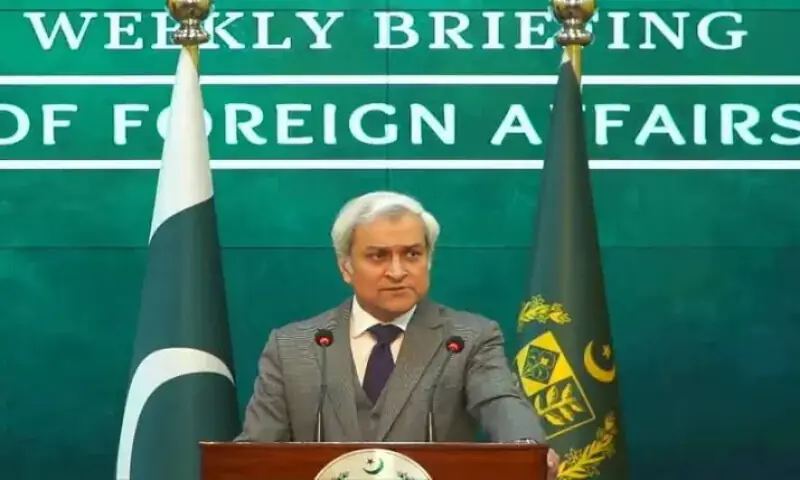
Foreign Office spokesperson Tahir Andrabi, in a weekly briefing, said that Prime Minister Shehbaz Sharif had already conveyed his readiness to play a constructive role by facilitating or hosting talks to de-escalate tensions.

He urged all the concerned not to speculate about unverified reports about the talks. “Details regarding the time and venue of any potential dialogue will be shared once finalised”, he added.

He said Pakistan fully supported dialogue aimed at reducing regional tensions and emphasised that the country had consistently advocated peace and stability.

He highlighted that Prime Minister Shehbaz Sharif was personally leading diplomatic outreach efforts and had engaged with a wider international audience. “Deputy Prime Minister and Foreign Minister Ishaq Dar has also been in contact with his counterparts,” he added.

The spokesperson stressed that diplomacy required confidentiality and patience, urging all parties, particularly the media, to act responsibly and avoid reporting unverified information.

He said Pakistan had actively engaged with the regional actors to de-escalate the current situation in the Middle East and the Persian Gulf, cease hostilities, and move towards a peaceful settlement.

“Prime Minister Muhammad Shehbaz Sharif spearheaded the country’s diplomatic efforts for negotiations and dialogue between the relevant parties,” the spokesperson said.

Giving the details of the prime minister’s recent engagements with the regional leaders on the issue, the spokesperson said that the prime minister spoke with the Muslim leaders including Crown Prince of Saudi Arabia Mohammad bin Salman, President of Iran, Dr. Masoud Pezeshkian, Crown Prince of Kuwait Sheikh Sabah Al-Khaled Al-Sabah, President Recep Tayyip Erdogan of Turkiye, King Abdullah II ibn Al-Hussein of Jordan, President Ilham Aliyev of Azerbaijan, Prime Minister Datuk Seri Anwar Ibrahim of Malaysia, President Shavkat Mirziyoyev of Uzbekistan, President Abdel Fattah El-Sisi of Egypt, Prime Minister of Bangladesh, Prime Minister Nawaf Salam of Lebanon, King Hamad bin Isa Al Khalifa of Bahrain, and President Prabowo Subianto of Indonesia.

During his conversations, the prime minister discussed the grave situation in the Gulf region, emphasising the urgent need for de-escalation, dialogue, and diplomacy. He also highlighted the importance of unity within the Ummah and reaffirmed Pakistan’s commitment to playing a constructive role in advancing regional peace.

Likewise, he said that Deputy Prime Minister and Foreign Minister Ishaq Dar also undertook intense diplomatic engagement throughout the week.

“On 18th March, the Deputy Prime Minister and Foreign Minister visited Riyadh at the invitation of the Saudi Foreign Minister to attend a meeting of the Regional Foreign Ministers. The meeting included ministers from Azerbaijan, Bahrain, Egypt, Jordan, Kuwait, Lebanon, Qatar, Syria, Turkey, and the UAE,” he added.

Responding to a query, he said that Saudi Arabia was a major party to the conflict, as it had also been targeted by attacks. “Pakistan’s efforts in this regard are being carried out in close coordination with Saudi Arabia.”

On Afghanistan, the spokesperson clarified that the pause in Operation Ghazab lil Haq ended on March 24 and the operation had continued. He stated that the operation would persist as long as the Afghan Taliban support the TTP and militants use Afghan soil against Pakistan.

To another question, he pointed out that Pakistan had explored all avenues for peace and dialogue with the Afghan authorities, but those efforts failed, leaving no option but to initiate the operation. The spokesperson noted that terrorist activities from Afghanistan had significantly decreased since the operation began.

To another question, the spokesperson called upon India to immediately release Kashmiri women leaders Asiya Andrabi, Fehmeeda Sofi, and Nahida Nasreen, terming their sentences politically motivated and an act of revenge.

Strongly condemning the verdicts handed down by an Indian special court earlier this week, he said Asiya Andrabi was sentenced to life imprisonment, while Fehmeeda Sofi and Nahida Nasreen received 30-year prison terms under the Unlawful Activities (Prevention) Act (UAPA).

Similarly, the spokesperson also strongly condemned the continued closure of the historic Jama Masjid in Srinagar. Noting that preventing worshippers from offering congregational prayers constitutes a serious violation of religious freedoms and fundamental human rights.

As regards the International Day to Combat Islamophobia, the spokesperson said that Pakistan played a key role with the OIC in securing the United Nations designation of 15th March as the International Day to Combat Islamophobia and supported the appointment of a United Nations and OIC Special Envoy to address the challenges emanating from Islamophobia.

In his message on the occasion, he said the DPM/FM reaffirmed solidarity with the Muslims worldwide, highlighting the rise of Islamophobia globally, including attacks on mosques, women and holy texts.

For the latest news, follow us on Twitter @Aaj_Urdu. We are also on Facebook, Instagram and YouTube.

Hezbollah rejects truce talks as Israel presses Lebanon strikes

Published 26 Mar, 2026 06:34pm 0 min read
First aid responders are seen at the site of an Israeli airstrike that targeted the southern Lebanese village of Kfar Roummane on March 26, 2026. AFP

Hezbollah chief Naim Qassem said negotiations with Israel under fire would amount to “surrender”, as the Iran-backed group launched attacks and Israel said it was expanding a “buffer zone” inside Lebanon.

Israel, which occupied southern Lebanon for around two decades until 2000, has kept up strikes on its northern neighbour and sent ground troops to take control of a strip up to the Litani River, around 30 kilometres (20 miles) from the border.

Israel’s Prime Minister Benjamin Netanyahu said the military had already “created a genuine security zone” and was now expending it, pushing deeper into Lebanon.

“We are simply creating a larger buffer zone” that could prevent a ground invasion of Israel and missile attacks, Netanyahu said in a video shared by his office.

Hezbollah meanwhile issued dozens of statements claiming attacks on Israeli forces, and said it also launched missiles early on Thursday at military sites in central Israel, where air raid sirens sounded.

Israeli media said six Hezbollah rockets headed for central areas were all intercepted.

UN Secretary-General Antonio Guterres called on both sides to cease fire. He warned Israel against replicating “the Gaza model” in southern Lebanon as some Israeli officials have suggested, raising fears of mass displacement.

Hezbollah said its fighters had launched more than 80 attacks on Wednesday, the largest daily number in the current war, and attacked Israeli forces in nine border towns.

Israel’s military said that one of its soldiers was severely wounded by rocket fire in southern Lebanon, having earlier reported an officer being lightly injured in combat.

Rockets fired towards the Haifa area in northern Israel resulted in no injuries.

Lebanon was pulled into the Middle East war when Hezbollah began firing rockets into Israel on March 2 to avenge the killing of Iran’s supreme leader Ayatollah Ali Khamenei.

In an attempt to put an end to the fighting, Lebanon’s president is calling for unprecedented direct negotiations with Israel, which has so far rebuffed his proposal.

Hezbollah chief Qassem said Wednesday his group would have none of it: “When negotiations with the Israeli enemy are proposed under fire, this is an imposition of surrender.”

Health workers killed

Lebanon’s state-run National News Agency (NNA) reported Israeli strikes and artillery shelling in several locations in the south on Wednesday, where the health ministry said at least eight people were killed.

The NNA also reported an airstrike on Beirut’s southern suburbs, a Hezbollah stronghold.

Israel’s military said it struck a “command centre” there after a renewed evacuation warning.

An AFP correspondent saw a street covered in debris, including shattered cement and warped metal, after the early morning strike, while an apartment building’s upper floors appeared damaged.

The area has been targeted multiple times during the conflict and is largely empty of residents, who have fled.

In southern Lebanon, Israel’s military said ground troops “dismantled a weapons storage facility” and the air force killed “several terrorists”.

Hezbollah said its fighters targeted Israeli troops “massed in the border towns of Naqura and Qawzah” and in sites across the border “with more than 100 rockets” on Wednesday.

According to the Lebanese health ministry, 42 health workers are among more than 1,000 people killed in Lebanon in more than three weeks of Israeli strikes.

Lebanese authorities say upwards of one million people have been displaced.

For the latest news, follow us on Twitter @Aaj_Urdu. We are also on Facebook, Instagram and YouTube.