Live

Trump says military campaign against Iran could last about 4-5 weeks

Published 03 Mar, 2026 09:04am 0 min read
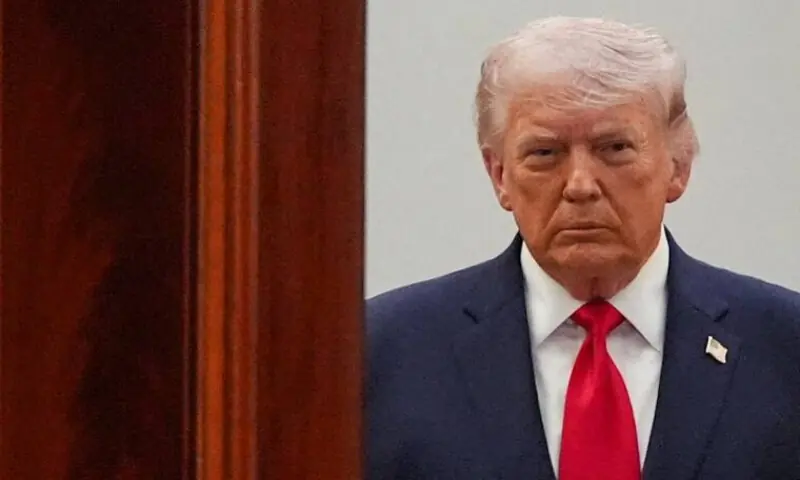
US President Donald Trump gestures as he boards Air Force One at Palm Beach International Airport in West Palm Beach, Florida, US. – Reuters

US President Donald Trump on Monday sought to justify a broad, open-ended war on Iran, offering his most ​extensive public comments yet on an operation whose stated aims and timeline have shifted since it began over the weekend.

Trump, who was back at the ‌White House after a weekend in Florida, said the US and Israeli air attacks that began on Saturday had been projected to last four to five weeks but could go on longer.

The military campaign has killed Supreme Leader Ayatollah Ali Khamenei, sunk at least 10 Iranian warships and struck more than 1,000 targets.

“We’re already substantially ahead of our time projections. But whatever the time is, it’s okay. Whatever it takes,” Trump said ​at his first public event since the conflict began.

He made no mention of regime change, saying the fight was needed to prevent Iran from developing a nuclear ​weapon, which Tehran denies seeking, and to thwart its long-range ballistic missile program.

“An Iranian regime armed with long-range missiles and nuclear weapons would ⁠be an intolerable threat to the Middle East, but also to the American people,” Trump said.

The remarks followed days of conflicting statements from the president, who had discussed the ​attacks in two brief videos and one-on-one interviews with select journalists over the weekend but did not give a televised address to the nation, as is customary in moments of military ​action.

White House Press Secretary Karoline Leavitt pushed back on suggestions that the administration’s messaging on the operation has been confusing.

On X, Leavitt said Trump had outlined “clear objectives,” including preventing Iran’s proxies from launching attacks and stopping production of roadside bombs like those used against US forces after the 2003 invasion of Iraq.

Varying messages

On Saturday, as Trump announced the strikes, he urged Iranians to “take back your country” and implied a goal of ​regime change.

On Sunday, Trump told The Atlantic he was open to talks with whoever emerged to lead Iran and told the New York Times his January operation to capture Venezuelan ​President Nicolas Maduro and his wife was a model for Iran’s future.

In the case of Venezuela, former Maduro ally Delcy Rodriguez emerged as the new leader and has cooperated with Washington.

In Iran’s case, US and ‌Israeli strikes have ⁠eliminated many of those who could step in to take power, Trump said.

Trump’s timeline for the Iran operation has also shifted since it began.

He first told the Daily Mail it could take “four weeks, or less,” then told The New York Times it would take four to five weeks.

In separate remarks on Sunday and Monday, he left open the possibility that the operation could continue longer until its objectives are achieved.

In his notification to Congress about the Iran strikes obtained by Politico, Trump did not provide any timeline.

“Although the United States desires a quick and ​enduring peace, it is not possible at ​this time to know the full scope ⁠and duration of military operations that may be necessary,” Trump wrote.

Jon Alterman of the Centre for Strategic and International Studies, who has served as a State Department official focused on the Middle East, said Trump appeared to have deliberately left the war’s ultimate outcome undefined.

“I’m not ​sure they’re committed to any particular outcome,” Alterman said.

When Trump ordered a much more limited attack against Iran during Israel’s 12-day ​war in June, he immediately ⁠gave a formal address flanked by senior officials.

After the Maduro operation, Trump held a press conference within hours at his Mar-a-Lago club in Florida and officials appeared on television multiple times to explain the move.

This time, senior administration officials skipped the Sunday shows to avoid competing narratives and keep Trump as the main messenger, a White House official said.

The official said the public ⁠framing of ​the operation was still under discussion.

A second official said top aides were in secure rooms all day attending ​national security meetings and that the White House coordinated with Republican lawmakers scheduled to appear on television programs.

The official pushed back against suggestions that messaging was still being developed, saying talking points had already been circulated by ​Saturday.


For the latest news, follow us on Twitter @Aaj_Urdu. We are also on Facebook, Instagram and YouTube.

Live

Iran detains at least six Americans amid escalating strikes

Published 03 Mar, 2026 08:32am 0 min read
People drive near a banner of Iran’s late Supreme Leader Ayatollah Ali Khamenei on a street in Tehran, Iran. – Reuters

Iran is detaining at least six US citizens or permanent residents, according to detainee advocates, raising fears they and thousands of Americans believed trapped in the country could be used as bargaining chips in ​the escalating war with the US and Israel.

The detainees are among what some experts estimate are possibly thousands of dual US-Iranian nationals and green-card holders who have remained in ‌Iran despite repeated US warnings not to travel there because of the threat of being arrested.

“The regime’s history of seeking to leverage Americans for political aims is long established,” said Ryan Fayhee, a board member of the Foley Foundation advocacy group.

“I would have to imagine that any American is potentially at risk.”

The United States and Israel launched attacks on Iran early on Saturday that killed Supreme Leader Ali Khamenei and other officials, triggering retaliatory Iranian attacks across the region and ​escalating fears that Tehran will seek other ways to hit back at the US.

“There are hundreds, if not thousands, if not more, of dual nationals that are back there that still ​have familial ties despite the risks,” said Kieran Ramsey, a former FBI assistant director now with the Global Reach advocacy group who headed the US ⁠hostage recovery unit.

Iran does not recognise dual citizenship, meaning that other governments cannot provide diplomatic protection or consular services to their citizens who also hold Iranian nationality.

A source familiar with the issue said that ​the US State Department does not know precisely how many Americans are in Iran.

The State Department and the office of the US Special Presidential Envoy for Hostage Affairs did not immediately respond to a request for comment.

“President Trump ​has been clear that he wants every American wrongfully detained to be returned home safe and sound, and that there will be dire consequences for regimes that treat Americans as political pawns,” White House spokesperson Anna Kelly said in an emailed statement.

Iran’s mission at the United Nations also did not immediately respond.

Focus on detained Americans

US President Donald Trump has made securing the release of Americans deemed wrongfully detained or held hostage overseas a foreign policy priority.

More than ​70 Americans have been freed since the beginning of his second term in January 2025, according to the White House.

But Trump has not said how he would protect those detained since the start of ​the attacks on Iran on Saturday.

Only hours before the US-Israeli strikes began, US Secretary of State Marco Rubio on Friday designated Iran as the first state sponsor of wrongful detention under an executive order signed by Trump on September ‌5.

The designation, ⁠he said, could trigger a ban on the use of US passports to travel to and from Iran and other unspecified measures unless Tehran stops taking “hostages” and releases all Americans, the number of which he did not disclose.

Detainee advocates saw the move as a message to Iran not to harm American detainees or any other Americans.

But they expressed concern that it could go unheeded amid a breakdown in Iran’s hierarchy from the strikes.

“When you have kinetic action and military strikes like this, it just ups the risk factor for these folks exponentially,” said Ramsey.

Jail for political prisoners

At least six dual US-Iranian nationals or legal ​permanent residents are known to be held in Tehran’s ​Evin Prison, a notorious jail for political prisoners ⁠and foreigners, or barred from leaving Iran, said Elizabeth Richards, the Foley Foundation research director.

The identities of three of those people are not public.

Israel bombed the prison during its 12-day air war with Iran last June, killing at least 71 people, Iran said.

Those now held in Evin include Shahab Dalili, a green-card holder ​arrested in 2016 on his way to the airport after attending his father’s funeral and given 10 years in jail for allegedly cooperating with ​a foreign government, according to ⁠the Foley Foundation.

Fayhee represents Reza Valizadeh, a dual US-Iranian citizen who was arrested in 2024 after returning to Iran to visit his elderly parents and was also given 10 years in jail for “collaboration with a hostile government,” according to the Foley Foundation.

Valizadeh, a journalist, is being held in Evin Prison, Fayhee said.

So too is Kamran Hekmati, a 70-year-old Jewish Iranian-American jewellery shop owner arrested last year, according to Ramsey, who represents Hekmati’s family.

He was convicted of ⁠going to ​Israel under a law that bars such visits in the past 10 years, even though he provided documentation showing his last ​visit was 13 years before his arrest, Ramsey said.

Hekmati, who is suffering from bladder cancer, was also charged with espionage, for which he has not been convicted. His lawyer was told it was for allegedly meeting Israeli intelligence agents.

Iran often adds such ​a charge as a way of signalling that the detainee would be released only through an exchange with Washington, Ramsey said.

For the latest news, follow us on Twitter @Aaj_Urdu. We are also on Facebook, Instagram and YouTube.

Live

US embassy in Riyadh hit by drones, causing limited fire

Published 03 Mar, 2026 08:10am 0 min read
The Ras Tanura oil refinery in Saudi Arabia after a drone attack in Saudi Arabia. – Reuters

The Saudi defence ministry has said the US embassy in Riyadh was hit by two drones, which resulted in a “limited fire” and minor material damage.

Black smoke can be seen rising over Riyadh’s Diplomatic Quarter, which houses foreign missions, two sources told Reuters.

Three people familiar with the matter said a loud blast was heard and flames were seen at the embassy early on Tuesday morning. One of the sources said the fire was minor.

Reuters was not immediately able to confirm the circumstances of the incident.

A fire broke out at the US embassy in the Saudi capital Riyadh after an explosion was heard, two sources have told Reuters.

Black smoke can be seen rising over Riyadh’s Diplomatic Quarter, which houses foreign missions, two sources told Reuters.

Reuters was not immediately able to confirm the circumstances of the incident.

An embassy spokesperson did not immediately respond to a request for comment, nor did the Saudi government media office.

Americans told to take shelter

The US embassy in Riyadh has issued a security alert recommending that American citizens in Saudi Arabia to shelter in place immediately.

The envoy is also limiting non-essential travel to any military installations in the region, it said in a statement posted on the social media site X.

Trump warns of retaliation

United States President Donald Trump has suggested that the US would retaliate “soon” after its embassy in the Saudi capital Riyadh was struck by two suspected Iranian drones.

Speaking to the media, Trump said, “You’ll find out soon” how the US would respond, without providing further detail, after the US embassy confirmed the drone attack.

For the latest news, follow us on Twitter @Aaj_Urdu. We are also on Facebook, Instagram and YouTube.

Lebanese state bans Hezbollah military activities

Published 03 Mar, 2026 12:42am 0 min read
Smoke plumes billow following Israeli bombardment on Beirut’s southern suburbs on March 2, 2026. AFP

Lebanon’s government on Monday took the unprecedented step of banning Hezbollah’s military and security activity, prompting the Iran-backed group to lash out at the decision.

Hezbollah is represented in both the government and parliament, and the move came hours after it announced it had launched rockets and drones towards Israel early Monday to avenge the killing of Iranian supreme leader Ali Khamenei in US-Israeli attacks.

Israel began bombarding Beirut’s southern suburbs and dozens of villages in south Lebanon, vowing to make the group pay a “heavy price”.

The strikes killed at least 52 people and wounded at least 154, according to the Lebanese government.

The Israeli military later said it had “completed a broad wave of strikes on Hezbollah terrorist organisation targets in southern Lebanon”.

“As part of the strikes, more than 70 weapons storage facilities, launch sites, and missile launchers” were hit, it said.

Following an emergency cabinet meeting earlier Monday, Prime Minister Nawaf Salam said: “The Lebanese state declares its absolute and unequivocal rejection of any military or security actions launched from Lebanese territory outside the framework of its legitimate institutions.

“This necessitates the immediate prohibition of all of Hezbollah’s security and military activities, considering them to be outside the law, and obliging it to hand over its weapons”.

In response, Mohammed Raad, the head of the militant group’s parliamentary bloc, condemned Beirut’s “rash decisions”, saying that “the Lebanese were expecting a decision rejecting the (Israeli) aggression”.

Salam had ordered the military and security agencies to take “immediate measures” to implement the cabinet decision and prevent “any military operation or the launching of missiles or drones from Lebanese territory”.

Justice Minister Adel Nassar announced in a post on X that the judicial authorities had tasked “security agencies with immediately arresting those who launched the rockets and their instigators”.

A source close to the Lebanese government reported that two ministers from the Amal Movement, Hezbollah’s fellow Shiite party and a key ally, and one minister from the group itself had approved the cabinet’s decision.

The new strikes sent civilians scrambling, sparking gridlocked traffic in Beirut as residents left in cars and on motorcycles, carrying whatever they could, with some expressing frustration.

“My baby daughter and I have been in the car for three and a half hours… for what? Why? For whom?” wrote user Ali Deeb on X.

Renewed strikes

Israeli strikes hit several buildings belonging to Al-Qard al-Hassan, a Hezbollah-linked financial firm sanctioned by Washington, in several parts of the country, particularly the south.

They came after the Israeli military had issued evacuation warnings for several towns in the south and east, and in the capital’s southern suburbs.

Palestinian Islamic Jihad’s armed wing said on Monday that its commander in Lebanon, Adham Adnan al-Othman, was killed in the strikes.

Later Monday, AFP journalists heard more loud blasts in Beirut, and the state-run National News Agency said “enemy warplanes launched new raids on the southern suburbs”.

The US Embassy in Lebanon renewed its call for citizens to leave Lebanon immediately.

The education ministry announced the closure of schools, universities and educational institutions on Tuesday due to “security conditions”.

The authorities in Beirut have repeatedly said they do not wish to involve their country in the outbreak of conflict in the region, which started after a massive US-Israeli attack on Iran.

Beirut had decided last August to gradually disarm Hezbollah, following a year-long war fought with Israel that ended in a November 2024 ceasefire.

But the agreement did not stop Israel from continuing to strike targets it said were linked to Hezbollah, which it accused of trying to rearm.

The truce is monitored by a committee bringing together Lebanon, Israel, the United States, France and UN peacekeepers.

Salam on Monday called on the countries guaranteeing the ceasefire – the United States and France — to “obtain a clear and final commitment from the Israeli side to cease all attacks on the entirety of Lebanese territory”.

He announced the government’s “full readiness to resume negotiations” with Israel, “with civilian participation and under international auspices”.

For the latest news, follow us on Twitter @Aaj_Urdu. We are also on Facebook, Instagram and YouTube.

Drone attack targets UAE’s Musaffah fuel tank terminal

Updated 03 Mar, 2026 12:47am 0 min read
A representational image. FIle photo

A fire broke out after Musaffah fuel tank terminal in the United ​Arab Emirates was targeted by a drone, ‌without impacting its operations, Abu Dhabi media office said on Monday.

“Abu Dhabi authorities have responded today to a fire ​resulting from the targeting of a Musaffah ​fuel tank terminal by a drone. The ⁠situation was promptly contained,” the office said.

No ​injuries were reported.

Abu Dhabi National Oil Company operates ​a facility in Musaffah from which fuel is transported by trucks, while a 1,600-kilometre pipeline network distributes finished products ​across the emirate of Abu Dhabi.

Yemen’s Iran-aligned ​Houthis targeted the Mussafah Fuel Depot in 2022 during the ‌group’s ⁠war with the Saudi-led coalition.

Earlier on Monday, Saudi Arabia’s state oil giant Aramco shut its Ras Tanura refinery after it was hit by a ​drone in ​an apparent ⁠escalation on the third day of strikes across the region launched ​by Tehran in response to the U.S.-Israeli ​attack ⁠on Iran.

QatarEnergy also said it was halting production of LNG and associated products due to attacks ⁠on ​facilities in Ras Laffan, a ​source with knowledge told Reuters.

For the latest news, follow us on Twitter @Aaj_Urdu. We are also on Facebook, Instagram and YouTube.

Iran says 500 US, Israeli sites hit in sweeping retaliation

Published 02 Mar, 2026 11:11pm 0 min read
People take shelter in an underground station in Haifa on March 1, 2026, amid Iranian attack fears. AFP

Iran’s retaliatory strikes have so far targeted 500 sites linked to the United States and Israel in the Middle East, the Revolutionary Guards said on the third day of fighting on Monday.

“Since the start of the conflict, the brave soldiers of the Iranian armed forces have attacked 60 strategic targets and 500 American military targets and targets of the Zionist regime (Israel),” the Guards said in a statement.

It added they had launched more than 700 drones and hundreds of missiles.

New missile salvo fired at Israel

The state television said that Iran fired a new salvo of missiles at Israel on Monday in response to US-Israeli strikes that killed Supreme Leader Ayatollah Ali Khamenei.

“The 11th wave of Operation True Promise 4 is underway with missile and drone strikes on targets in Beersheva,” Iranian state TV said at about 3:30 p.m. local time (1200 GMT), citing a statement from the Revolutionary Guards.

Oil tanker attacked in Strait of Hormuz

The Revolutionary Guards also said that they had attacked an allegedly US-linked oil tanker in the Strait of Hormuz as part of a wave of strikes retaliating against a US-Israeli assault.

“The ATHE NOVA tanker, one of the American allies in the Strait of Hormuz, is still on fire after being hit by two drones,” the Guards said in a statement. On Saturday, the Guards said they had closed the waterway, which is vital for oil and gas shipments, after the start of US and Israeli attacks.

Netanyahu’s office targeted

Iran’s missile attacks have targeted the office of Israeli Prime Minister Benjamin Netanyahu and the headquarters of the Israeli air force commander, the Revolutionary Guards claimed.

“The office of the criminal prime minister of the Zionist regime and the headquarters of the regime’s air force commander were targeted,” the Guards said in a statement carried by Fars news agency.

It said Kheibar missiles were used in the attack.

Missile attack on Tel Aviv, Haifa and east Jerusalem

Iran launched missile strikes on an Israeli government complex in Tel Aviv, as well as security and military centres in Haifa, and an attack on east Jerusalem.

“Among the targets of this tenth wave were a targeted strike on the Zionist regime’s government complex in Tel Aviv, attacks on military and security centres in Haifa, and a strike on east Jerusalem,” said a Guards statement carried by state TV.

It said Kheibar ballistic missiles were used in the attack.

Israel and the United States launched attacks of unprecedented scale against Iran on Saturday, and the Islamic republic has responded with missile strikes regionwide.

Strikes kill three Iran Guards members, five army personnel

US and Israeli strikes on Iran have killed three Revolutionary Guard members and five army personnel, according to separate official statements on Monday.

“Three members of the Islamic Revolutionary Guard Corps were killed” in an attack on a detachment in the western Lorestan province, an official IRGC statement said, according to the ISNA news agency.

In a separate attack on the western city of Khorramabad, “five members of the Iranian army were killed”, Tasnim news agency said, quoting an army statement.

For the latest news, follow us on Twitter @Aaj_Urdu. We are also on Facebook, Instagram and YouTube.

Trump doesn’t rule out sending US troops into Iran

Published 02 Mar, 2026 10:31pm 0 min read
US President Donald Trump speaks during a Medal of Honor ceremony in the East Room of the White House on March 2, 2026, in Washington, DC. AFP

President Donald Trump on Monday said he is not ruling out sending US troops into Iran, while threatening a new, “big wave” of attacks.

President Donald Trump on Monday said he is not ruling out sending US troops into Iran, while threatening a new, “big wave” of attacks.

The 79-year-old Republican has long campaigned against decades of US military entanglements in the Middle East, but ordered a large-scale war against Iran starting Saturday.

While so far the assault has focused entirely on aerial attacks by missiles and bombs, Trump refused to rule out sending ground troops — something generally considered to be far riskier in terms of possible casualties.

“I don’t have the yips with respect to boots on the ground — like every president says, ‘There will be no boots on the ground.’ I don’t say it,” Trump told the New York Post in one of numerous brief interviews he has given since launching the Iran operation.

“I say ‘probably don’t need them,’ [or] ‘if they were necessary,’” he said.

Trump also spoke to CNN on Monday, flagging what he said would be an escalation in the assault on Iran.

“We haven’t even started hitting them hard. The big wave hasn’t even happened,” he told CNN, without elaborating. “The big one is coming soon.”

The US and Israeli forces have so far struck hundreds of targets across Iran, including the Islamic Republic’s missiles, navy and command-and-control sites.

Four US military members have been announced killed, and three fighter jets have been shot down — officially in friendly fire.

Iran has fired missiles at Israel, at US bases around the region and also at targets in regional Arab countries — Bahrain, Jordan, Kuwait, Qatar and the United Arab Emirates — something that Trump called “the biggest surprise.”

Two, four, six weeks?

Trump’s comments came shortly after Defence Secretary Pete Hegseth also signalled that deploying troops inside Iran had not been ruled out.

Asked if there were already boots on the ground, Hegseth told a news conference: “No, but we’re not going to go into the exercise of what we will or will not do.”

“We’ll go as far as we need to go,” he said.

As for how long the war will last, Hegseth said: “Four weeks, two weeks, six weeks, it could move up. It could move back.”

He sought to differentiate the Iran operation from past long-running US wars in Iraq and Afghanistan, saying the war is not an effort to build democracy in Iran.

“No stupid rules of engagement, no nation-building quagmire, no democracy-building exercise. No politically correct wars. We fight to win, and we don’t waste time or lives,” the Pentagon chief said.

“This is not Iraq. This is not endless,” Hegseth said. “Our generation knows better, and so does this president. He called the last 20 years of nation-building wars ‘dumb’ and he’s right.”

General Dan Caine, the top US military officer, spoke alongside Hegseth, saying that air superiority had been achieved over Iran.

Strikes by American forces “resulted in the establishment of local air superiority. This air superiority will not only enhance the protection of our forces, but also allow them to continue the work over Iran,” Caine said.

For the latest news, follow us on Twitter @Aaj_Urdu. We are also on Facebook, Instagram and YouTube.

Govt steps up fuel market monitoring amid fears of global oil price spike

Published 02 Mar, 2026 09:32pm 0 min read
A high-level committee is set up under Finance Minister Muhammad Aurangzeb to assess the situation. Screengrab/Aaj TV

The government has tightened monitoring of petroleum supplies amid fears that rising regional tensions could push global oil prices higher.

A high-level committee set up on the directives of Prime Minister Shehbaz Sharif held its first meeting under Finance Minister Muhammad Aurangzeb to assess the situation.

Officials said the cabinet committee decided to conduct daily reviews of petroleum stocks and prices to ensure uninterrupted supply and effective market oversight.

The finance ministry said Pakistan currently holds adequate reserves of petroleum products and that the country’s energy supply chain remains stable despite global uncertainty.

However, officials described the situation in the Strait of Hormuz and Bab al-Mandab as a major risk to global energy flows. They warned that prolonged tensions could disrupt supplies.

The committee will meet daily to monitor stock levels and price movements in real time. LNG and LPG shipments and terminal operations were also reviewed.

Aurangzeb directed relevant departments to improve coordination and ensure accurate verification of reserves.

He said any impact of global price changes would be passed on in a transparent and orderly manner.

The government assured the public that energy supplies are secure and urged people not to panic.

Meanwhile, gas prices have also surged in international markets amid escalating Middle East tensions.

After QatarEnergy reportedly suspended gas supplies, European markets saw prices rise by nearly 50%, reflecting mounting pressure on global energy availability.

For the latest news, follow us on Twitter @Aaj_Urdu. We are also on Facebook, Instagram and YouTube.

Ayatollah Khamenei’s wife also succumbs to her injuries

Published 02 Mar, 2026 09:20pm 0 min read

The wife of Iran’s Supreme Leader Ali Khamenei has died from injuries sustained in the same joint US-Israeli airstrikes that killed him, Iranian media reported.

According to the Iranian news agency Tasnim, she had been critically wounded in the attack and succumbed to her injuries later.

Iranian state media said the 86-year-old Khamenei was killed early Sunday in coordinated American and Israeli airstrikes.

The Fars news agency reported that several members of the Supreme Leader’s family — including his son, daughter, son-in-law, daughter-in-law and grandson — were also killed in the strikes.

Khamenei led Iran for decades and was the country’s most powerful political and religious authority. During his tenure, Iran consolidated its clerical system and expanded its regional influence.

His leadership also saw heightened tensions with the United States and Israel, particularly over Iran’s nuclear programme, which remained a central point of global concern.

For the latest news, follow us on Twitter @Aaj_Urdu. We are also on Facebook, Instagram and YouTube.

Dubai resumes limited flights as UAE covers costs for stranded travellers

Updated 02 Mar, 2026 09:28pm 0 min read
A representational image. File photo

Dubai Airports announced the limited resumption of flights from Sunday evening, March 2, after widespread regional airspace closures disrupted travel across the Gulf.

In a statement, the operator confirmed that a restricted number of flights would operate from Dubai International Airport and Al Maktoum International Airport.

Passengers have been instructed not to travel to either airport until their respective airlines directly confirm departure times.

Authorities urged travellers to stay in close contact with airlines for updates.

The disruption left more than 20,000 passengers stranded after large-scale flight cancellations linked to Gulf airspace restrictions.

The UAE government has stepped in to cover accommodation and meal expenses for affected travellers.

The Department of Culture and Tourism – Abu Dhabi directed all hotels in the emirate to extend stays for guests unable to depart and bill the government.

Dubai authorities issued similar instructions hours later.

The GCAA confirmed that the state is covering lodging and food costs for impacted passengers.

Private companies have also joined relief efforts.

Dubai-based holiday rental firms opened apartments free of charge, while more than 250 hosts offered complimentary stays within hours.

Officials said coordinated efforts are underway to clear the backlog as flight operations gradually resume.

For the latest news, follow us on Twitter @Aaj_Urdu. We are also on Facebook, Instagram and YouTube.

UAE to run special flights for stranded passengers

Published 02 Mar, 2026 08:43pm 0 min read
A representational image. File photo

The General Civil Aviation Authority said it will operate special flights from UAE airports to help stranded passengers leave the country following recent regional disruptions.

In a statement carried by the UAE’s state media, the authority said “exceptional flight operations” would begin in coordination with airlines, which will directly inform affected passengers of updated schedules and destinations.

Travellers whose flights were cancelled have been advised not to go to airports until they receive confirmed departure details from their airlines.

The authority warned that arriving without confirmation could cause congestion and disrupt operations.

The GCAA thanked passengers for their cooperation and said compliance with instructions was essential to ensure orderly and smooth travel procedures.

For the latest news, follow us on Twitter @Aaj_Urdu. We are also on Facebook, Instagram and YouTube.

Nawaz Sharif offers condolences to Iranians over Khamenei’s assassination

Published 02 Mar, 2026 08:37pm 0 min read
PML-N supremo Nawaz Sharif. File photo

Former prime minister Nawaz Sharif on Sunday offered condolences to the people of Iran following the assassination of Supreme Leader Ali Khamenei.

In a post on X, Sharif described the killing as “a significant moment in the history of Iran,” saying the loss carried “deep emotional, political, and national implications.”

“I stand in solidarity with the Iranian nation and extend my sympathies to all those who are grieving,” he wrote.

Sharif also reaffirmed the “importance of stability, peace, and mutual respect among nations, particularly in our region,” urging restraint amid rising regional tensions.

He concluded by praying for strength and resilience for the Iranian people during what he called a “profound and irreparable loss.”

For the latest news, follow us on Twitter @Aaj_Urdu. We are also on Facebook, Instagram and YouTube.

Iranian-made drone hits British air base in Cyprus, causing limited damage

Published 02 Mar, 2026 08:19pm 0 min read
Flashes appear in the sky over RAF Akrotiri, as seen from Pissouri, Limassol District, Cyprus in this screen grab taken from a handout video obtained on March 2, 2026. Reuters

A drone strike hit a British air base in Cyprus overnight, causing limited damage and no casualties, Cypriot and British officials said on Monday, in a marked escalation effectively dragging an EU member state into the conflict surrounding Iran.

The threat continued into Monday when a government spokesman posted on X that two more “unmanned aerial vehicles” that were heading towards the British Royal Air Force base of Akrotiri were intercepted. Sirens sounded at the base after midday on Monday (1000 GMT) and Reuters witnesses saw aircraft taking off.

The overnight strike, which hit a runway at the base, shook the east Mediterranean island, a holiday hotspot and home to thousands of foreign companies. The base, used in the past for military operations in Iraq, Syria and Yemen, was last attacked by Libyan militants in 1986.

Britain had moved additional air assets to Akrotiri in anticipation of U.S. action against Iran in preceding weeks while saying British bases would not be used.

On Sunday, however, after the US and Israel launched attacks on Iran, Prime Minister Keir Starmer said Britain had accepted a U.S. request to use its bases for defensive strikes against Iranian missiles in storage depots or launchers.

British foreign minister Yvette Cooper said the U.S. had not requested access to the Akrotiri air base and that the UK was being targeted by Iran.

“We cannot ignore that,” she told the Good Morning Britain television show.

Cypriot President Nikos Christodoulides said in a speech that the Shahed-type unmanned aerial vehicle caused minor damage when it crashed into the military facilities at 12:03 a.m.

It was not immediately clear from where the Iranian-made Shahed had been fired.

“All the competent services of the republic are on alert and in full operational readiness,” Christodoulides said.

EU, GREECE OFFER SUPPORT

Akrotiri base, south-west of the coastal city of Limassol, is one of two bases Britain has retained in the former colony since independence in 1960.

Although the bases are regarded as British sovereign territory, Cypriot government officials say they have emphasised to Britain that they should only be used for humanitarian purposes. Britain has no legal obligation to inform Cyprus of its use in military operations, but it is customary for London to inform Nicosia of activity.

“I want to be clear: Our country does not participate in any way and does not intend to be part of any military operation,” Christodoulides said.

Cyprus itself is an EU member and now holds the bloc’s rotating presidency. While Cyprus is not a member of NATO, it is part of the EU’s mutual defence clause meaning other members of the bloc should come to its aid if it were attacked.

Commission President Ursula von der Leyen offered support.

“While the Republic of Cyprus was not the target, let me be clear: we stand collectively, firmly and unequivocally with our Member States,” she said in a post on X.

Greece ’s Defence Minister Nikos Dendias said on Monday that Greece would defend Cyprus “with any possible means” and that it was sending two frigates to Cyprus, one with an anti-drone system, plus two F-16 fighter jets.

On Sunday, before the drone strike, British defence secretary John Healey said Britain had intercepted two missiles fired in the direction of Cyprus, but added he didn’t believe Cyprus was deliberately targeted.

An EU official, speaking on condition of anonymity, told Reuters they believed Iran was trying to expand the conflict and drag Europeans into it.

RESIDENTS TAKE SHELTER

People from the nearby civilian village of Akrotiri, home to Greek Cypriots, fled the community overnight, with some taking shelter at Cypriot army barracks in Limassol, local Mayor Pantelis Georgiou told the Cyprus News Agency.

“I was watching TV and I heard a big explosion. I called the SBA (bases police) asking what was happening, they said they couldn’t say anything. I took my wife, my in-laws, to Limassol,” a person identified as Theodoros told the state broadcaster CyBC from Akrotiri.

Britain has roughly 7,000 British personnel and dependents on Cyprus. The bases’ territories, covering 99 square miles of Cyprus, or just under 3% of the island, also host a key listening post of the Joint Service Signal Unit at Ayios Nicolaos, which is part of the base on the eastern part of the island.

For the latest news, follow us on Twitter @Aaj_Urdu. We are also on Facebook, Instagram and YouTube.

Trump to decide how long to wage Iran war, Hegseth says

Published 02 Mar, 2026 07:15pm 0 min read
US Defence Secretary Pete Hegseth. – Reuters

U.S. Defence Secretary Pete Hegseth declined to give a timeline for the U.S.-Israeli assault on Iran, saying it was up to Trump to decide the length of the military campaign.

“As far as time frame, I would never hang a time frame,” he said during a press conference at the Pentagon.

“This is not Iraq. This is not endless,” he added.

Pressed on the issue, he said: “President Trump has all the latitude in the world to talk about how long it may or may not take, four weeks, two weeks, six weeks. It could move up. It could move back.”

U.S. Defence Secretary Pete Hegseth also said the United States was not ruling out any options in its war with Iran, adding: “We fight to win.”

The U.S. mission in Iran was to destroy Iran’s missiles and navy and to deny Tehran nuclear weapons.

“This is not a so-called ‘regime change’ war, but the regime sure did change,” U.S. Defence Secretary Pete Hegseth said, adding: “And the world is better off for it.”

For the latest news, follow us on Twitter @Aaj_Urdu. We are also on Facebook, Instagram and YouTube.

Fourth US service member dies from injuries in Iran operation

Published 02 Mar, 2026 05:55pm 0 min read
U.S. Navy sailors load an F/A-18E Super Hornet aircraft with ammunition on the flight deck of the aircraft carrier USS Gerald R. Ford while supporting the Operation Epic Fury attack on Iran. – Reuters

A fourth U.S. service member has died from injuries sustained during the U.S. operation in Iran, U.S. Central Command said on Monday.

The service member had been seriously wounded during Iran’s initial attacks and later succumbed to those injuries, the command said in a statement.

The latest death brings the total number of American soldiers who have died in the conflict with Iran to four.

Central Command also confirmed that another injured American soldier, wounded the previous day, has died.

U.S. military officials have said that one more injured service member remains in critical condition.

For the latest news, follow us on Twitter @Aaj_Urdu. We are also on Facebook, Instagram and YouTube.

Senate condemns Israeli strike on Iran, offers prayers for Khamenei

Updated 03 Mar, 2026 07:44am 0 min read
Photo courtesy APP
Photo courtesy APP

A session of Pakistan’s Senate on Monday began with a Fateha for Iran’s Supreme Leader Ayatollah Ali Khamenei, chaired by Senate Chairman Yousuf Raza Gilani, state broadcaster Pakistan Television Corporation reported.

The Fateha was conducted by Opposition Leader Allama Raja Nasser Abbas, who condemned what he described as an Israeli attack on Iran late last night targeting the Supreme Leader.

Addressing the House, he criticised US policies, saying attacks were carried out during negotiations with Iran and alleging that the United States does not uphold agreements.

He said Pakistan has always stood for the rights of the Palestinian people and condemned Israel’s actions.

He also demanded that US President Donald Trump’s nomination for the Nobel Peace Prize be withdrawn and called for a review of Pakistan’s participation in relevant international forums.

The private members’ agenda was postponed at the request of Law Minister Azam Nazir Tarar. Gilani said the situation in Iran would be discussed in the meeting.

Pakistan Peoples Party parliamentary leader Sherry Rehman raised objections to the postponement, while the law minister said proceedings were deferred due to a meeting of parliamentary parties.

The Senate session was adjourned until 11.30am Tuesday.

For the latest news, follow us on Twitter @Aaj_Urdu. We are also on Facebook, Instagram and YouTube.

US jets mistakenly shot down by Kuwaiti air defences, US military says

Updated 02 Mar, 2026 04:35pm 0 min read
Smoke rises from an area surrounding the US Embassy following a strike in Bayan, Kuwait. – Reuters

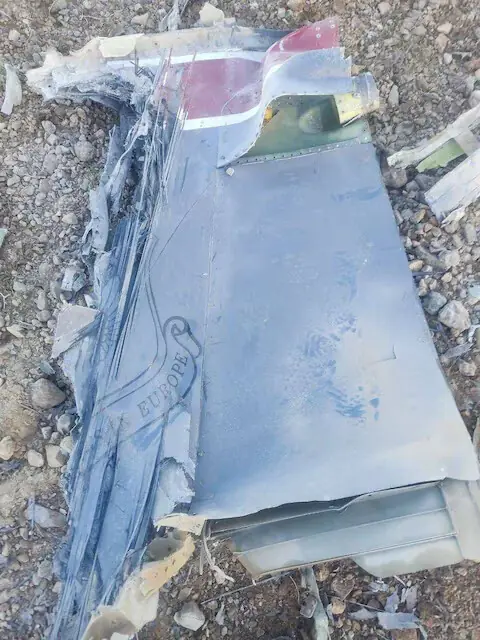
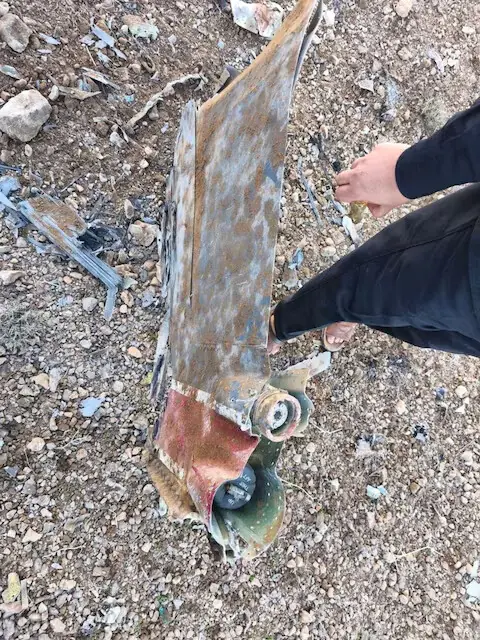
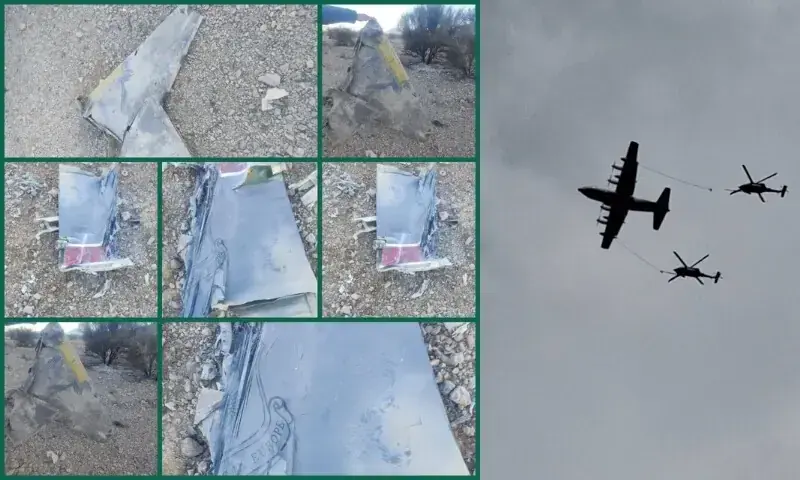
Kuwaiti air defences mistakenly shot down three U.S. F-15 fighter jets flying in Iran-related operations, the U.S. military said on Monday.

All six aircrew ejected safely, have been recovered, and are in stable condition, it added. The cause of the incident was under investigation.

Several U.S. military aircraft crashed in Kuwait early on Monday, but all crew members survived and were in stable condition, Kuwait’s Ministry of Defence said.

In a separate incident, smoke was seen rising near the U.S. Embassy compound in Kuwait City, with fire trucks and ambulances on the scene, according to Reuters

There were no immediate responses to requests for comment from the U.S. Embassy in Kuwait or the U.S. State Department.

Kuwait intercepted hostile drones earlier on Monday, marking the third consecutive day of Iranian retaliatory strikes on neighbouring Gulf states in response to U.S. and Israeli attacks on Iran.

The Kuwait Defence Ministry statement, carried by the state news agency, said crews from the crashed aircraft were evacuated to a hospital and were in stable condition. It added that the response was carried out in coordination with U.S. forces.

Iran’s state media cited the Islamic Revolutionary Guard Corps as saying Iranian armed forces hit a U.S. plane that crashed in Kuwait.

Online video verified by Reuters, taken in the Al Jahra area of Kuwait, showed a military aircraft falling from the sky and a person parachuting. The Kuwaiti statement did not specify how many aircraft were involved.

Several US military aircraft crash in Kuwait

For the latest news, follow us on Twitter @Aaj_Urdu. We are also on Facebook, Instagram and YouTube.

Live

Malala condemns US bombing of Iran school that killed 150

Published 02 Mar, 2026 03:12pm 0 min read
APP
APP

Nobel Peace laureate Malala Yousafzai said that she was heartbroken and appalled by the bombing of a primary school by the United States and Israeli military attacks on Iran, which claimed the lives of 150 students and staff.

The missile attack destroyed the girl’s primary school in Minab, southern Iran, killing around 150 people and wounding almost 100 others.

“The killing of civilians, especially children, is unconscionable, and I condemn it unequivocally,” Malala, who now works to promote education, said in a social media post.

The UN Peace Messenger also called for the escalation of violence across the region to end, and for justice and accountability to follow.

“All states and parties must uphold their obligations under international law to protect civilians and safeguard schools,” she wrote.

“Every child deserves to live and learn in peace.”

Meanwhile, the UN Educational, Scientific and Cultural Organisation (UNESCO) has called the bombing of a primary school during the United States and Israeli military attacks on Iran “a grave violation of humanitarian law.”
In a statement released on social media, UNESCO expressed deep alarm at the impact of the military attacks, noting that pupils in a place dedicated to learning are protected under international humanitarian law, and that “attacks against educational institutions endanger students and teachers and undermine the right to education.”
UNESCO said it joined a host of bodies from across the United Nations system and senior officials, including Secretary-General Antonio Guterres, to condemn the military attacks, as well as the retaliatory strikes by Iran that hit several Middle Eastern countries.

For the latest news, follow us on Twitter @Aaj_Urdu. We are also on Facebook, Instagram and YouTube.

Live

Aramco refinery targeted, military bases hit as war escalates

Published 02 Mar, 2026 02:52pm 0 min read

Tensions between Iran, the United States and Israel have intensified sharply across the Middle East, with reports of fresh attacks and retaliatory strikes emerging from many countries.

The escalating conflict has resulted in casualties and damage to property in regional countries and significantly disrupting air operations.

According to reports, Iran carried out a drone strike against an oil refinery belonging to Saudi Aramco, sparking a fire at the facility.

Aramco is considered the kingdom’s largest oil company, and the attack has raised concerns within the global energy sector.

There were also reports that a US military base was attacked in Türkiye, while a British military base in Cyprus suffered minor damage in a drone strike.

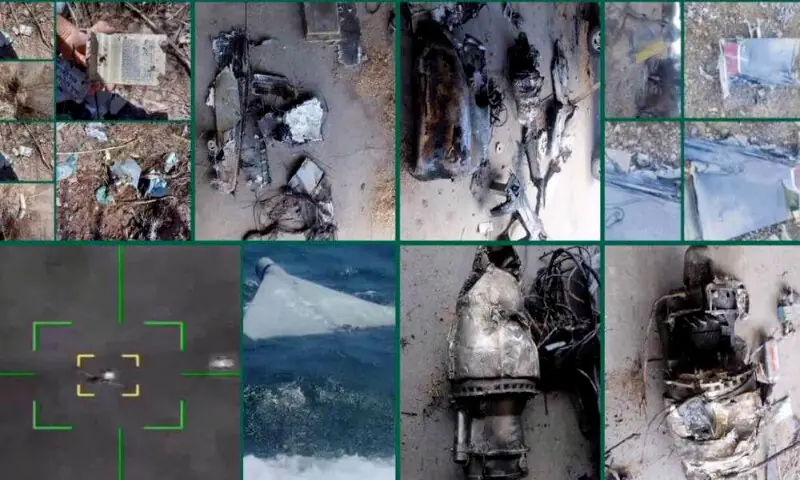
Among the latest attacks, a US drone was shot down over Isfahan, while one US military aircraft was said to have crashed in Kuwait.

Meanwhile, various Iranian cities also came under US and Israeli attacks.

In the city of Sanandaj, six missiles reportedly struck, resulting in the deaths of two people.

Reports said that 2,000-pound bombs were dropped overnight, with ballistic missile sites among the targets.

Clashes have also intensified in Lebanon between Hezbollah and Israel. Hezbollah reportedly launched drones and missiles toward Israel, prompting Israeli strikes on several locations in Beirut.

At least 31 people were reported killed and 149 injured in the exchanges.

Unconfirmed reports suggested that Hezbollah leader Mohammad Raad was killed in the Israeli strikes.

The continuing strikes have also caused travel chaos for thousands of passengers, with airlines cancelling flights passing through Middle Eastern airspace or scrambling to reroute aircraft at short notice.

More than 1,200 flights have reportedly been cancelled, leaving thousands of passengers stuck in airport terminals in the region.

More than 500 flights have been called off over the past three days in Pakistan, adding to the uncertainty faced by travellers.

For the latest news, follow us on Twitter @Aaj_Urdu. We are also on Facebook, Instagram and YouTube.

France says Iran operation has no ‘precise goal’

Published 02 Mar, 2026 02:46pm 0 min read
Jean-Noel Barrot. – Reuters

French Foreign Minister Jean-Noel Barrot has been speaking to reporters in Paris about the crisis in the Middle East.

He criticised Israel and the United States for launching attacks on Iran without prior debate at the United Nations.

“The indefinite prolongation of military operations without a precise goal carries the risk of a spiral that would drag Iran and the region into a long period of instability whose outcome would be very uncertain and would harm our interests,” he said.

He also criticised Iran for its retaliatory attacks.

“Military escalation must stop as quickly as possible. The Iranian regime, which has now lost its guide, must end these attacks,” he said, adding that Iran “must resign itself to major concessions and a radical change of posture”.

For the latest news, follow us on Twitter @Aaj_Urdu. We are also on Facebook, Instagram and YouTube.

Pentagon tells Congress no sign that Iran was going to attack US first

Published 02 Mar, 2026 02:35pm 0 min read
The Pentagon in Washington, U.S. – Reuters

Trump administration officials acknowledged in closed-door briefings with congressional staff on Sunday that there was no intelligence suggesting Iran planned to attack U.S. forces first, two people familiar with the matter said.

The United States and Israel launched their most ambitious attacks on Iran in decades on Saturday, killing Supreme Leader Ayatollah Ali Khamenei, sinking Iranian warships and hitting more than 1,000 targets so far, officials say.

But Sunday’s remarks to Congress appeared to undercut one of the key arguments for the war made by senior administration officials.

They told reporters the day before that President Donald Trump decided to launch the attacks in part because of indicators that Iranians might strike U.S. forces in the Middle East “perhaps preemptively.”

Trump, one of the officials said, was not going to “sit back and allow American forces in the region to absorb attacks.”

Pentagon briefings lasted more than 90 minutes

Pentagon officials briefed Democratic and Republican staff of several national security committees in both the Senate and the House of Representatives for more than 90 minutes on the unfolding U.S. attack in Iran, White House spokesperson Dylan Johnson said earlier.

In the briefings, administration officials emphasised that Iran’s ballistic missiles and proxy forces in the region posed an imminent threat to U.S. interests, but there was no intelligence about Tehran attacking U.S. forces first, the two sources, speaking on condition of anonymity, told Reuters.

Trump said the attack, which is expected to run for weeks, aimed to ensure Iran could not have a nuclear weapon, contain its missile program and eliminate threats to the United States and its allies.

He has urged Iranians to rise and topple the government.

Democrats criticise ‘war of choice’

Still, Democrats have accused Trump of waging a war of choice and have aimed at his arguments for abandoning peace talks that mediator Oman said still held promise.

Trump has argued, without presenting evidence, that Iran was on track to soon secure the ability to strike the United States with a ballistic missile.

His missile claim was not backed by U.S. intelligence reports and appeared to be exaggerated, sources familiar with the reports have told Reuters.

Questions about the justification for the war came as the U.S. military revealed on Sunday the first American casualties of the conflict.

Three US troops killed, five wounded

Three U.S. troops were killed, and five seriously wounded, U.S. Central Command said on Sunday, adding that several other U.S. troops suffered minor shrapnel injuries and concussions.

U.S. aircraft and warships have struck more than 1,000 Iranian targets since Trump ordered the start of major combat operations, the military said.

The strikes include B-2 stealth bombers dropping 2,000-lb (900-kg) bombs on hardened, underground Iranian missile facilities.

A Reuters report on Sunday showed 27% of Americans approved of the strikes, while 43% disapproved and 29% were not sure.

For the latest news, follow us on Twitter @Aaj_Urdu. We are also on Facebook, Instagram and YouTube.

Do Americans approve of Trump’s attack on Iran?

Published 02 Mar, 2026 02:20pm 0 min read
The American flag waves from the U.S. Capitol after the United States and Israel-led attacks on Iran, in Washington, D.C., U.S. – Reuters

Only about one in four Americans approves of the U.S. strikes that killed Iran’s leader on Saturday, while about half — including one in four Republicans — believe Trump is too willing to use military force, according to a Reuters report that concluded on Sunday.

Just one in four Americans support US strikes on Iran

Some 27% of respondents said they approved of the strikes, while 43% disapproved and 29% were not sure. About nine in 10 respondents said they had heard at least a little about the strikes, which began early on Saturday.

Some 56% of Americans think Trump, who has also ordered strikes in Venezuela, Syria and Nigeria in recent months, is too willing to use military force to advance U.S. interests.

For the latest news, follow us on Twitter @Aaj_Urdu. We are also on Facebook, Instagram and YouTube.

Live

Khamenei killing shatters Iran’s order, triggers high-stakes succession race

Published 02 Mar, 2026 01:38pm 0 min read
A banner of Iran’s Supreme Leader Ayatollah Ali Khamenei on a street in Tehran, Iran. – Reuters

The assassination of Iran’s Supreme Leader Ayatollah Ali Khamenei has plunged the Islamic Republic into its most perilous crisis since the 1979 revolution — confronting it with war on its own territory, an unresolved succession, and mounting internal strain.

Despite the shock of Khamenei’s killing, five regional officials and analysts cautioned against assuming a rapid collapse.

Iran’s political order, they said, was deliberately constructed to avoid reliance on a single leader, dispersing authority across clerical institutions, the security apparatus and power networks.

“The Iranian system is bigger than one man — removing Khamenei could harden the regime rather than weaken it,” said Danny Citrinowicz of the Atlantic Council.

“Iran was built to survive the loss of a leader,” added Ali Hashem, a research affiliate at Royal Holloway, University of London.

“The danger is not a vacuum. It’s whether war and pressure push the system past the point where that resilience holds.”

At the centre of that resilience is the elite Islamic Revolutionary Guards Corps (IRGC), long regarded as Iran’s true centre of gravity.

The balance of power now hinges on whether the Guards emerge weakened by battlefield losses and internal frictions — or more entrenched, closing ranks around a harder, more security-driven approach to governance.

“The real question is whether Khamenei’s death takes the air out of the IRGC — the force that actually runs Iran — or whether they close ranks and harden,” said Alex Vatanka, a senior fellow at the Middle East Institute.

“If rank-and-file officials decide there is no future here, I’m not sure even the Guards can keep the regime together.”

Regional officials say the Guards are unlikely to transform ideologically because their identity and mandate are rooted in protecting the revolution.

But they are capable of tactical evolution if the system requires it.

“They may evolve into a less hardline force…there are pragmatic mid-level members open to reducing tensions with the United States if necessary for the system’s survival,” said one regional official.

That conditional pragmatism makes the IRGC both the system’s shield and its key barometer.

Regime change?

Jonathan Panikoff, a former US deputy national intelligence officer for the Near East, said Washington and Israel appear to be pursuing a strategy aimed not only at degrading Iran’s military response capabilities, but at destabilising the regime itself by removing its senior leadership and testing the loyalty of the rank and file.

The success of that approach, he said, would ultimately depend on whether security forces stand aside or defect if public unrest resurfaces.

In the immediate aftermath, officials say Tehran’s overriding priority is to project continuity.

Operationally, Iran’s command structure continues to function, though under heavy pressure.

Missile forces, air defences and top commanders have been hit, but the system has so far absorbed the blows.

Iran now faces three intersecting tests, officials say: whether its security state can hold under fire; whether its embattled elite can agree on a successor or pivot to a new governing formula; and whether a shaken public pushes the crisis toward a deeper political rupture.

Veteran Iranian politician Ali Larijani, secretary of Iran’s Supreme National Security Council, announced on Sunday that a temporary leadership council would oversee the transitional period after Khamenei’s death.

Figures such as Larijani and Mohammad Baqer Qalibaf, the parliament speaker, are seen as potential bridge figures in such a phase, reflecting a security-oriented but pragmatic balancing approach.

Politically, Iran faces a succession process it has navigated only once before — and then under far more stable conditions.

The constitution assigns the task to the Assembly of Experts, an 88-member clerical body, but analysts say wartime pressures could push the process toward a more improvised outcome — either a quickly appointed successor or a temporary collective leadership centred on the security establishment.

They said Khamenei has sought to shape that outcome before his death.

Following a 12-day war with Israel in June last year that targeted him and his inner circle, he nominated preferred successors and ensured key military posts were filled with backup commanders.

The candidates he favoured included judiciary chief Gholam-Hossein Mohseni-Eje’i and Hassan Khomeini, a moderate cleric and grandson of the Islamic Republic’s late founder.

But officials say the clerical body may delay the selection of a successor to Khamenei for fear he will be killed.

Far from over?

Externally, Israel is signalling the campaign is far from over.

Two sources briefed on the operation said Israel intends to keep striking political and security institutions linked to Iran’s ruling establishment, as well as ballistic missile and launcher systems, in an effort to weaken the state and create conditions for regime change.

One source said Israel wants the campaign to continue at least until Iran’s missile capabilities are destroyed, but fears it could be cut short if Washington reaches an agreement with Tehran.

“The objective is very clear: to remove an existential threat to the State of Israel,” Israeli Foreign Ministry spokesperson Oren Marmorstein told Reuters in Tel Aviv.

“That threat is the Iranian regime. We have no quarrel with the Iranian people.”

A senior official with direct knowledge of joint Israeli-US military planning said it was too early to predict what political order might emerge in Iran, noting that the campaign was still in its early stages and outcomes would depend on developments on the ground.

Iranians must take their destiny into their own hands, the official said, adding that this might be easier once the US and Israel have achieved “air supremacy” over Iran.

Maintaining the tempo and intensity of strikes was seen as critical to exploiting fissures inside Iran and the IRGC following the killing of senior leaders, the official added, declining to elaborate on what a breakdown in command could look like.

The conflict has also opened new risks.

With foreign militaries operating over Iranian airspace and the state’s coercive capacity under strain, analysts say unrest could intensify if large-scale anti-government protests re-emerge, raising the prospect of defections within the security forces and giving prominence to civilian figures calling for change.

For the latest news, follow us on Twitter @Aaj_Urdu. We are also on Facebook, Instagram and YouTube.

Live

Army called in; three-day curfew imposed in Gilgit, Skardu

Published 02 Mar, 2026 01:11pm 0 min read
APP file
APP file

The Gilgit Baltistan government has imposed a three-day curfew in Gilgit and Skardu and sought the deployment of Pakistan Army troops in aid of civil authorities amid a deteriorating law and order situation following large-scale protests.

According to a notification issued by the Home and Prisons Department, the decision was taken in view of the “precarious” security situation in the region in the aftermath of protests triggered by the assassination of Iran’s Supreme Leader Ayatollah Ali Khamenei in US-Israeli air strikes.

The notification, addressed to the Force Commander, Force Command Northern Areas (FCNA), stated that there were fears the situation could further deteriorate, particularly in District Gilgit and Skardu.

It requested deployment of Pakistan Army troops in the two districts and imposition of curfew for an initial period of three days, March 2, 3 and 4, to prevent any untoward incident and safeguard human life and property.

According to the notification, a schedule for curfew and relaxation has also been issued.

Officials said security arrangements were being tightened across sensitive areas, while residents have been advised to remain indoors and cooperate with law enforcement agencies.

For the latest news, follow us on Twitter @Aaj_Urdu. We are also on Facebook, Instagram and YouTube.