


Modi’s Israel visit highlights major shift in India ties
2 min read



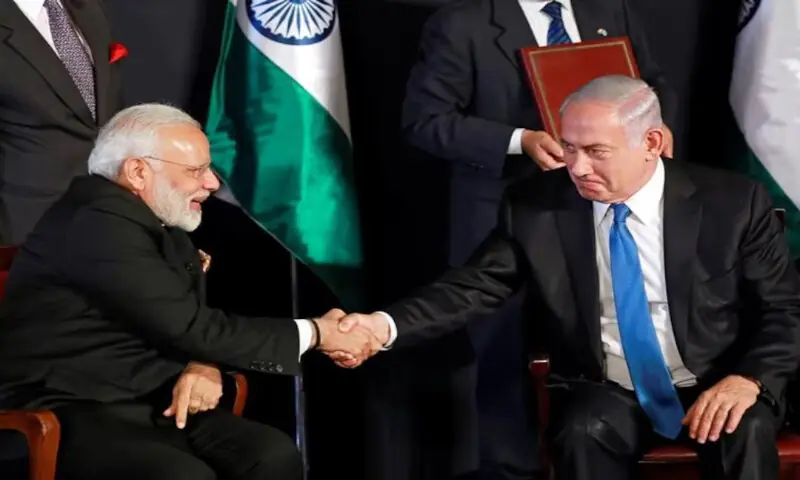
As Indian Prime Minister Narendra Modi emerged from his plane at Ben Gurion airport on July 4, 2017, Israeli Prime Minister Benjamin Netanyahu waited for him on the red carpet.
The leaders embraced, marking the first visit by an Indian prime minister to Israel.
Modi described the trip as a “path-breaking journey,” while Netanyahu said they aimed to “break down the remaining walls between India and Israel”.
Nine years later, as Modi prepares to visit Israel again on February 25, analysts say he can largely claim to have achieved that objective.
A relationship once discreet is now public, with Modi frequently calling Netanyahu a “dear friend,” despite the International Criminal Court issuing an arrest warrant in late 2024 for Netanyahu over alleged war crimes in Gaza.
Indian officials describe the shift as pragmatic, citing Israel’s technology and military expertise, while also maintaining ties with Arab partners.
Analysts, however, say the closer relationship has affected India’s long-standing support for Palestine and its standing in the Global South.
India was an early supporter of Palestinian independence, opposing the 1947 UN partition plan and recognising Palestine in 1988.
Diplomatic relations with Israel were established in 1992.
Defence ties have since anchored the relationship.
Under Modi, India has become Israel’s largest weapons buyer.
Ahead of the visit, the two countries signed a memorandum of understanding to deepen defence cooperation, including joint development of anti-ballistic missile systems.
Modi is scheduled to address the Knesset.
Trade between the two countries has grown from $200m in 1992 to more than $6bn in 2024.
India is Israel’s second-largest Asian trading partner after China, with commerce dominated by diamonds, petroleum and chemicals.
Both countries have signed a Bilateral Investment Treaty and are working towards a free trade deal.
Modi condemned the Hamas-led attack of October 7, 2023, and expressed support for Israel.
India continues to call for a two-state solution and dialogue, while maintaining what it terms “strategic autonomy” in its foreign policy.
The visit comes amid Israel’s war in Gaza and regional tensions, with analysts saying the trip underscores the scale of the shift in relations under the current government.
For the latest news, follow us on Twitter @Aaj_Urdu. We are also on Facebook, Instagram and YouTube.








Comments are closed on this story.