


Samsung Galaxy S26 to block shoulder surfing with Privacy Display
3 min read



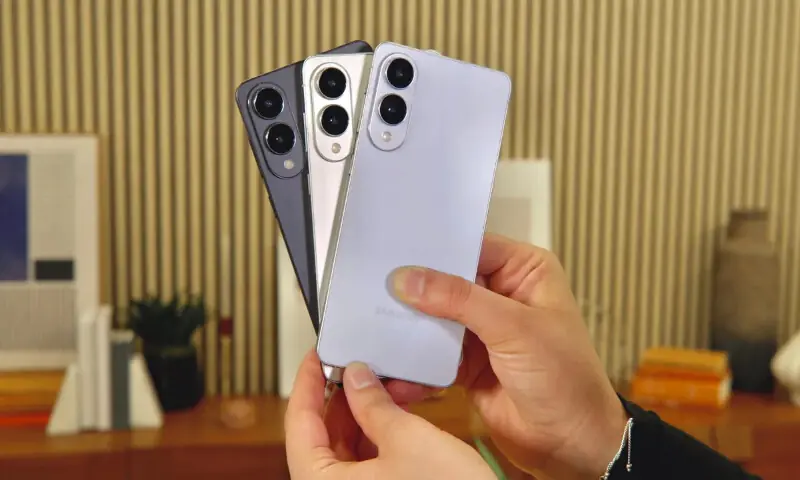
Samsung has officially confirmed a new on-screen privacy feature for its upcoming Galaxy smartphones, designed to protect users from shoulder surfing in public spaces.
Dubbed Privacy Display, the technology introduces pixel-level visibility control that keeps sensitive content readable only from a direct viewing angle.
The feature is expected to debut with the Galaxy S26 Ultra, potentially making it the first Galaxy phone to offer hardware-assisted, selective screen privacy.
Pixel-level privacy, not a blunt screen filter
Unlike traditional privacy screens that dim or blur the entire display, Samsung’s Privacy Display works with precision.
Content remains fully visible when viewed head-on, but becomes dim or unreadable from side angles.
According to reports, the effect is applied only where needed — such as notifications, passwords, or specific apps — while the rest of the screen remains unaffected.
Some websites shared real-world images demonstrating the feature in action. In these visuals, a notification appears perfectly readable when viewed directly, but turns black from a side angle, while surrounding elements remain visible.
This confirms Samsung’s selective, pixel-level approach rather than a full-screen privacy overlay.
Designed for public spaces and sensitive data
Samsung says the feature was developed over more than five years of engineering, testing, and refinement, resulting in a tightly integrated hardware-and-software solution.
The goal is to protect sensitive information — messages, passwords, PINs, and notifications — in crowded environments like buses, trains, and cafes.
Users will also have fine-grained control over how the feature behaves.
Privacy Display can be customised by app, notification type, or password entry screen.
An Auto Privacy mode can activate protection automatically when sensitive apps are opened or when the phone detects crowded environments.
For those who want maximum discretion, a Maximum Privacy setting further reduces side-angle visibility.
Samsung positions the feature as a visual complement to its long-running Knox security platform.
While Knox protects data at the hardware and encryption level, Privacy Display focuses on what others can physically see.
The company describes the combination as “privacy you can see and security you can feel.”
Tied to premium hardware
Reports suggest the Privacy Display will arrive with One UI 8.5, but its availability will depend on hardware-level display support.
This likely limits the feature to Samsung’s premium flagships.
The Galaxy S26 Ultra is expected to lead the rollout, with the Galaxy S26 and S26+ also potentially receiving the feature if their displays support it.
The Ultra model is rumoured to feature a 10-bit display panel, an upgrade from the 8-bit panels used in previous Galaxy Ultra phones.
This should eliminate visible colour banding and deliver smoother gradients, particularly in HDR and dark scenes.
With colour depth improved, the main remaining display concern for some users may be PWM dimming, which is currently expected to remain at 480Hz.
Launch timeline
Samsung is expected to unveil the Galaxy S26 series in February 2026, following its usual Galaxy S launch schedule.
If confirmed, Privacy Display could become a key differentiator for Samsung’s flagship phones, especially as concerns around digital privacy and public device usage continue to grow.
For the latest news, follow us on Twitter @Aaj_Urdu. We are also on Facebook, Instagram and YouTube.
















Comments are closed on this story.