


US magazine backs Pakistan on IWT, warns India against weaponising water
2 min read



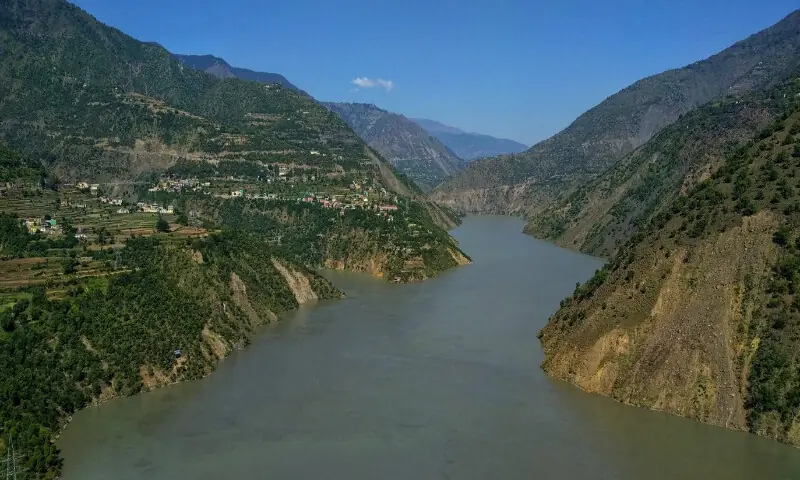
A leading US magazine has strongly endorsed Pakistan’s position on the Indus Waters Treaty (IWT), warning that India’s recent actions could destabilise South Asia and turn water into a strategic weapon.
In an in-depth analysis, The National Interest says India’s move to suspend aspects of the Indus Waters Treaty marks a dangerous shift in regional water politics, with serious legal, humanitarian and security consequences.
The magazine stresses that the Indus Waters Treaty remains legally binding and cannot be unilaterally suspended.
It recalls that in August 2025, the Permanent Court of Arbitration reaffirmed that India is obligated to “let flow” the waters of the western rivers — Indus, Jhelum and Chenab — for Pakistan’s unrestricted use, regardless of political disputes.
Highlighting Pakistan’s legal position, the article notes that withholding water flows or suspending hydrological data sharing violates international law and undermines one of the world’s most durable water-sharing agreements.
The report specifically flags India’s Dulhasti Stage-II hydropower project as a move that raises serious treaty concerns.
The project is a planned 260-megawatt run-of-the-river hydropower expansion on the Chenab River in the Kishtwar district of Indian-occupied Jammu and Kashmir. It is designed as an extension of the existing 390-MW Dulhasti Stage-I project, which has been operational since 2007.
According to available details, Dulhasti Stage-II involves diverting Chenab waters through tunnels to an underground powerhouse downstream, allowing India to extract additional energy from the river.
The National Interest warns that such projects, if pursued without full treaty compliance and transparency, risk altering flow patterns and eroding Pakistan’s guaranteed water rights under the Indus Waters Treaty.
The magazine also criticises India’s reported suspension of hydrological data sharing with Pakistan, calling it a breach of established international norms. It cautions that water scarcity, if politicised, could escalate into a major humanitarian threat across South Asia.
Describing the treaty as a cornerstone of regional stability, The National Interest underlines that the Indus Waters Treaty is a fundamental guarantee of food security for Pakistan, where millions depend on river flows for agriculture and livelihoods.
The analysis contrasts Pakistan’s continued engagement with dispute-resolution mechanisms, including Neutral Expert proceedings, with what it describes as an emerging asymmetry in treaty compliance by India.
Concluding its assessment, the US magazine says attempts to weaponise water are unacceptable under international law and are likely to face scrutiny from international courts.
It urges strict adherence to the Indus Waters Treaty framework, warning that any deviation threatens peace, stability and human security across South Asia.
For the latest news, follow us on Twitter @Aaj_Urdu. We are also on Facebook, Instagram and YouTube.














Comments are closed on this story.