


China AI chipmaker Biren soars in Hong Kong debut as IPO wave builds
3 min read



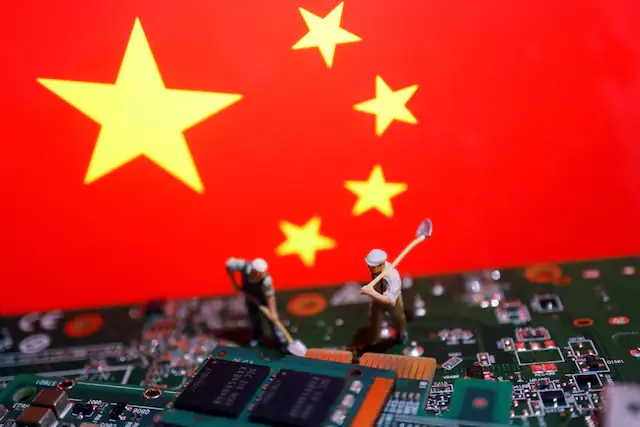
Shares of Chinese AI chip designer Shanghai Biren Technology closed up 76% in their Hong Kong debut on Friday, the financial hub’s first listing of 2026.
The company’s shares opened at HK$35.70, hit an intraday high of HK$42.88 and closed at HK$34.46, up 76% from the offer price of HK$19.60.
That compared to a 2.8% rise for the benchmark Hang Seng Index.
Biren was also the third most actively traded stock by turnover on the Hong Kong bourse, with 150.7 million shares worth HK$5.52 billion ($707.7 million) changing hands.
The strong debut follows a blockbuster year for Hong Kong’s equity market in 2025 and heralds a wave of chip and AI offerings this year as China accelerates efforts to strengthen domestic alternatives in response to US curbs on technology exports.
“Chinese AI startups are going public faster than US giants thanks to supportive domestic policy, clear paths to revenues from enterprise customers, and most importantly, a valuation small enough for the current IPO market,” said Winston Ma, an adjunct professor at NYU School of Law and former head of North America for CIC, China’s sovereign wealth fund.
Li He, a partner at law firm Davis Polk who has worked on several AI IPOs, including Biren’s, said this rush of AI offerings reflected investor conviction and issuer necessity.
“AI is fundamentally transformative, driving keen investor appetite,” Li said.
Biren raised HK$5.58 billion by selling 284.8 million H shares at HK$19.60 each, the top of a marketed range.
Institutional demand was nearly 26 times the shares on offer, while the retail tranche was oversubscribed about 2,348 times, exchange filings showed.
At the offer price, Biren’s market capitalisation stood at HK$46.9 billion, based on 2.396 billion shares outstanding.
Founded in 2019, Biren develops general-purpose graphics processing units (GPUs) and intelligent computing systems for artificial intelligence and high-performance computing.
Its co-founders include Zhang Wen, a former president at SenseTime, and Jiao Guofang, who previously worked at Qualcomm and Huawei (HWT.UL).
The company first drew attention in 2022 with its BR100 chip, touted as a domestic rival to advanced processors from US AI leader Nvidia.
Biren will spend most of the IPO proceeds on research and development and commercialisation, its IPO prospectus showed.
The prospectus flagged risk from US export controls after the group was added to Washington’s Entity List in October 2023, which limits its access to certain technology.
It also cited competition and highlighted opportunities from China’s push for tech self-sufficiency and policy support.
Cornerstone investors include 3W Fund, Qiming Venture Partners and Ping An Life Insurance, the prospectus showed.
“Its successful listing not only marks a key phase in the company’s growth, but also demonstrates the evolution of China’s tech entrepreneurship towards a new stage centred on original innovation,” said Alex Zhou, managing partner of Qiming Venture Partners, in a statement on Friday.
As much as $36.5 billion was raised in Hong Kong from 114 new listings in 2025, the city’s highest since 2021 and more than triple the previous year, according to LSEG data at year-end.
A wave of AI and semiconductor IPOs powered the comeback and is widely expected to propel deal flow in 2026.
Seven companies submitted A1 applications on January 1, HKEX filings showed. One was xTool Innovate, which filed an application for a main board listing and appointed Morgan Stanley and Huatai Financial Holdings as overall coordinators.
Separately, Chinese internet search leader Baidu said on Friday its AI chip unit Kunlunxin has filed a Hong Kong IPO application, confirming a Reuters report in early December.
Hong Kong’s IPO pipeline includes AI startups and chipmakers, with Zhipu AI and Iluvatar CoreX to debut next on January 8.
“Is the Hong Kong AI IPO boom sustainable? It depends on whether global IPO investors, such as Middle East sovereign wealth funds, would buy in a shift of global AI dominance, prioritising immediate enterprise integration over long-term AGI research,” Ma said.
For the latest news, follow us on Twitter @Aaj_Urdu. We are also on Facebook, Instagram and YouTube.


















Comments are closed on this story.