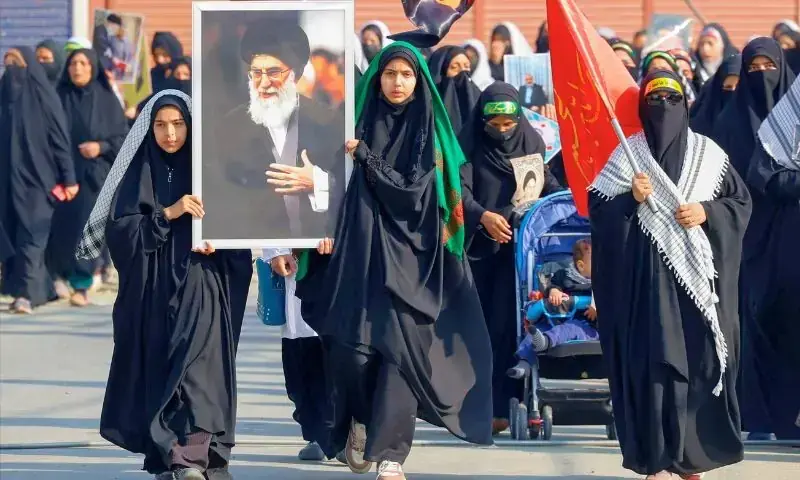
Iran postpones Khamenei funeral rites amid logistical challenges

Published 04 Mar, 2026 08:08pm 0 min read

Iran has postponed the funeral prayers and burial of Supreme Leader Ayatollah Ali Khamenei, citing administrative and logistical challenges, state media reported.

The memorial ceremony, which was scheduled to begin at 10:30 p.m. Pakistan time, has been delayed.

Iran’s Tasnim news agency, quoting an official, said the decision was taken due to organisational issues, including a surge in requests from people across various provinces to attend the event.

A special farewell ceremony was planned in Tehran, where the public was expected to pay last respects to the late leader.

Iranian media had reported that the commemorations would continue for three days, while the date of the funeral procession would be announced later.

Head of Iran’s Islamic Propagation Coordination Council, Hojjatoleslam Mahmoudi, had earlier said the public would be allowed to view the body from 10pm local time at the Imam Khomeini Mosalla, which would remain open to citizens wishing to attend in large numbers.

Iranian state media reported that the 86-year-old Supreme Leader was killed on Saturday in airstrikes carried out by Israel and the United States.

The Iranian cabinet has declared 40 days of national mourning. Official events and public activities across the country have been curtailed.

Meanwhile, Iran announced the launch of “Operation True Promise 4” in response to US and Israeli actions.

Iranian officials claimed large-scale missile and drone strikes targeted Israeli sites and US bases in the region.

Authorities also said the recent attacks resulted in the deaths of several senior military commanders and hundreds of civilians, triggering widespread anger across the country.

For the latest news, follow us on Twitter @Aaj_Urdu. We are also on Facebook, Instagram and YouTube.

Turkiye says NATO defences destroyed incoming missile from Iran

Updated 04 Mar, 2026 07:16pm 0 min read

Turkiye said ‌that NATO air defences destroyed a ballistic missile fired from Iran as it headed into Turkish airspace on Wednesday, marking the first time the alliance member has been drawn into the expanding Middle East conflict.

It was unclear ​where the missile was headed, but a NATO spokesperson said the trans-Atlantic defence bloc ​condemned Iran’s targeting of Turkiye and that it stood firmly with all ⁠allies.

The Turkish defence ministry said the missile had passed over Iraq and Syria before it ​was downed by NATO air and missile defence systems stationed in the eastern Mediterranean.

There was ​no immediate comment from the United States, which has air forces stationed at Incirlik base in Turkiye’s south. The base is in a province bordering Hatay province, where Turkish authorities said debris from the intercepting ​NATO missile had fallen.

“We warn all parties to refrain from actions that would lead to ​further escalation of conflict in the region. In this context, we will continue to consult with NATO and ‌our ⁠other allies,” the defence ministry said, adding there were no casualties or injuries.

“All necessary steps to defend our territory and airspace will be taken resolutely and without hesitation. We remind all parties that we reserve the right to respond to any hostile actions against our country,” it ​added.

Two other initial statements ​by senior Turkish ⁠officials about the incident did not mention NATO’s Article 4, which states that allies will “consult together whenever, in the opinion of any of ​them, the territorial integrity, political independence or security” of a member is ​threatened.

Turkish ⁠Foreign Minister Hakan Fidan conveyed a protest to Iranian counterpart Abbas Araghchi in a call after the incident, a Turkish diplomatic source said.

Ankara sought to mediate talks between Iran and the United ⁠States in ​the weeks before the U.S. and Israel launched strikes ​against Iran, triggering missile and drone attacks by Tehran. Several countries in the Gulf and elsewhere have been caught ​in the fallout.

For the latest news, follow us on Twitter @Aaj_Urdu. We are also on Facebook, Instagram and YouTube.

US lawmakers set to vote on war powers as Iran conflict widens

Published 04 Mar, 2026 05:55pm 0 min read
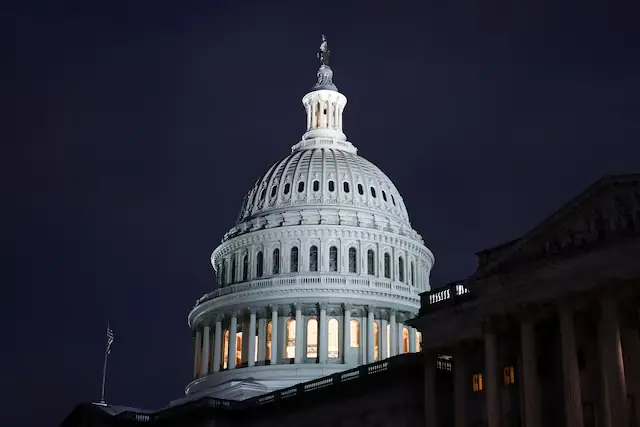
A view of the U.S. Capitol building at night in Washington, D.C., U.S., March 2, 2026. – Reuters

Lawmakers in the U.S. Senate were set to begin voting on Wednesday on ‌a bipartisan war powers resolution aiming to stop the military campaign against Iran and require that any hostilities against it be authorised by Congress.

The latest effort by Democrats and a few Republicans to rein in President Donald Trump’s repeated troop ​deployments, sponsors describe it as a bid to take back Congress’s responsibility to declare war, ​as spelt out in the U.S. Constitution.

“I do think it’s really important to put ⁠every member of Congress on the record about this,” Democratic Senator Tim Kaine of Virginia, a lead ​sponsor of the resolution, told a telephone press conference ahead of the afternoon’s vote.

“If you don’t have ​the guts to vote ‘Yes’ or ‘No’ on a war vote, how dare you send our sons and daughters into war where they risk their lives?”

Trump’s fellow Republicans hold slim majorities in both the Senate and House of Representatives and have blocked previous ​efforts for resolutions seeking to curb his war powers.

Republicans accused Democrats of playing politics with national security ​and said Trump had ordered only limited operations, such as the capture of Venezuelan President Nicolas Maduro in January, not ‌full-scale wars.

The U.S.-Israel war on Iran, which began five days earlier, is already more extensive, leading to damage in Iran, Israel and throughout the Middle East, and claiming its first U.S. casualties.

The House vote on the measure is expected on Thursday.

On Tuesday, Republican House Speaker Mike Johnson of Louisiana said he thought there were enough votes to ​defeat the resolution, describing ​it as an attempt ⁠to push something that could put U.S. troops in harm’s way and inspire Iranian forces.

“Imagine a scenario where Congress would vote to tell the commander-in-chief that ​he was no longer allowed to complete this mission. That would be a ​very dangerous ⁠thing,” he told reporters.

His remarks followed a classified briefing on the Iran conflict from top administration officials.

Even if the resolution passes the Senate, it must also pass the House and garner two-thirds majorities in both chambers to survive ⁠an ​expected Trump veto.

However, Kaine said that if the Iran conflict continued, ​he and the measure’s other backers could try again.

“Sometimes people will see things that concern them, and they’ll vote ‘No,’ but then ​later, as events continue to develop, they may vote ‘Yes,’” he said.

For the latest news, follow us on Twitter @Aaj_Urdu. We are also on Facebook, Instagram and YouTube.

Russia prepared to divert oil to India as Middle East conflict disrupts flows, source says

Published 04 Mar, 2026 05:50pm 0 min read
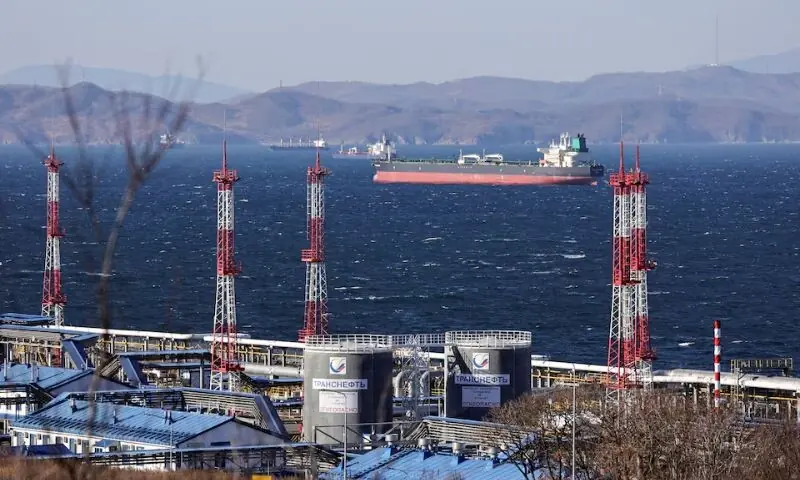
Fuga Bluemarine crude oil tanker lies at anchor near the terminal Kozmino in Nakhodka Bay near the port city of Nakhodka, Russia. – Reuters

Russia is ready to divert oil to ​India to offset Middle East supply disruptions, with about 9.5 million barrels of Russian crude in vessels near Indian waters and able ‌to arrive within weeks, an industry source with direct knowledge told Reuters.

The source declined to say where the non‑Russian fleet cargoes were originally headed but said they could deliver to India within weeks, giving refiners rapid relief.

India is vulnerable to supply shocks, with crude stocks covering only about 25 days of demand, while refiners hold similarly limited inventories of gasoil, gasoline ​and liquefied petroleum gas.

An Indian government source said New Delhi was scouting for an alternative supply to prepare for continuing conflict in the Middle East beyond ​10–15 days.

Graphic: A map of attacks and counterattacks

Forces to seek alternative supply

The disruption has immediate market consequences, with about 40% of India’s crude imports moving through ⁠the Strait of Hormuz, the world’s most vital oil export route, the source said, and the near-closure of the route has compelled the No.3 oil consumer ​to seek alternatives.

Indian refiners process about 5.6 million barrels per day of crude. The Strait has become inaccessible after vessels were struck by Iranian attacks that ​followed U.S. and Israeli strikes on Iran-based targets that commenced on Saturday.

The industry source, speaking on condition of anonymity, said Russia was ready to help India meet up to 40% of its crude needs.

India’s imports of Russian crude fell to about 1.1 million barrels per day in January, the lowest since November 2022, as New Delhi sought relief from U.S. ​tariffs, pushing Moscow’s share of overall oil imports down to 21.2%, industry data showed. The source said the share climbed back to around 30% in ​February.

India’s oil imports
India’s oil imports

Indian refiners are in regular contact with traders selling Russian crude, but any increase in intake from Moscow would depend on guidance from the government as trade talks with ‌the United ⁠States continue, two refining sources said.

U.S. President Donald Trump last month agreed to drop punitive tariffs levied on imports from India over its purchase of Russian oil, saying New Delhi had agreed to “stop buying Russian oil.”

India has not done so, insisting its strategy was to diversify supply in line with market conditions and “evolving international dynamics.”

India’s foreign and oil ministries, as well as the Russian embassy in New Delhi, did not immediately respond to a request for comment on any ​higher purchases from Russia. An Indian ​source said days before the Iran ⁠war that Indian companies had not been told to shun Russian oil.

‘A seller’s market’ for oil

While Russian oil has been sold at a discount to global prices since the country invaded Ukraine in 2022, that will now narrow as “it’s become ​a sellers’ market,” the industry source with knowledge of Russian oil trade said.

The source said Russia was also ​ready to sell liquefied ⁠natural gas to India after top supplier Qatar halted production on Monday as the conflict widened.

Indian companies have reduced gas supplies to some industrial customers to manage the shortfall, Reuters has reported.

Both China and India, Asia’s biggest energy consumers, source about half their crude imports from the Middle East, but India holds far less in storage ⁠than China ​and is more exposed to regional supply shocks as Russian purchases fell under U.S. pressure.

Trump ​said on Tuesday the U.S. Navy could escort oil tankers through the Strait of Hormuz if necessary, and ordered the U.S. International Development Finance Corporation to provide political risk insurance and guarantees for Gulf ​shipping.

For the latest news, follow us on Twitter @Aaj_Urdu. We are also on Facebook, Instagram and YouTube.

IAEA says it detects no radiological release risk at this time in Iran

Published 04 Mar, 2026 04:39pm 0 min read
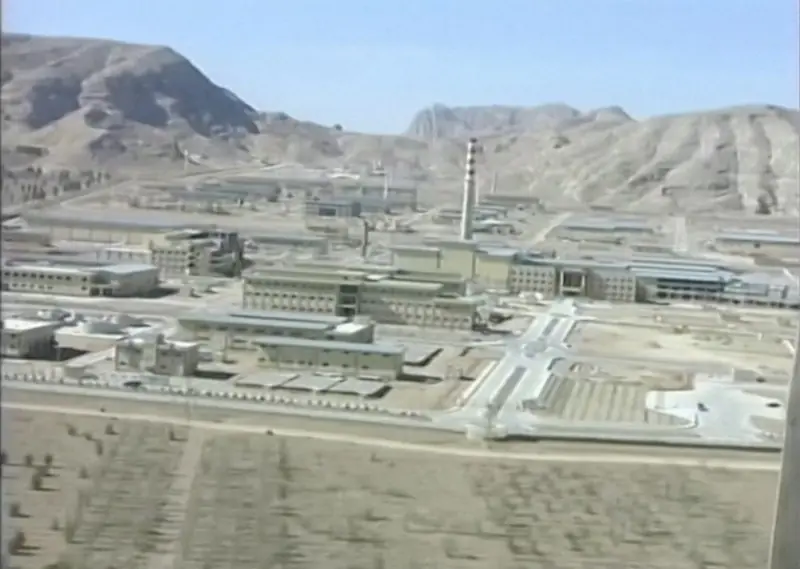
An aerial view shows a nuclear facility in Isfahan, Iran. – Reuters

The International Atomic Energy Agency, the U.N. nuclear watchdog, said in a post on X that it had detected no damage to facilities containing nuclear material in Iran since the U.S. and Israel launched their joint assault on the country on Saturday.

The IAEA added that it saw no radiological release risk at this time.

It gave the following details:

  • Damage to two buildings is visible near the Isfahan nuclear site.
  • No additional impact is reported at the Natanz nuclear site after previously reported damage at entrances.
  • No impact at other nuclear sites, including Bushehr.

For the latest news, follow us on Twitter @Aaj_Urdu. We are also on Facebook, Instagram and YouTube.

The world on edge as Middle East tensions escalate

Published 04 Mar, 2026 02:53pm 0 min read
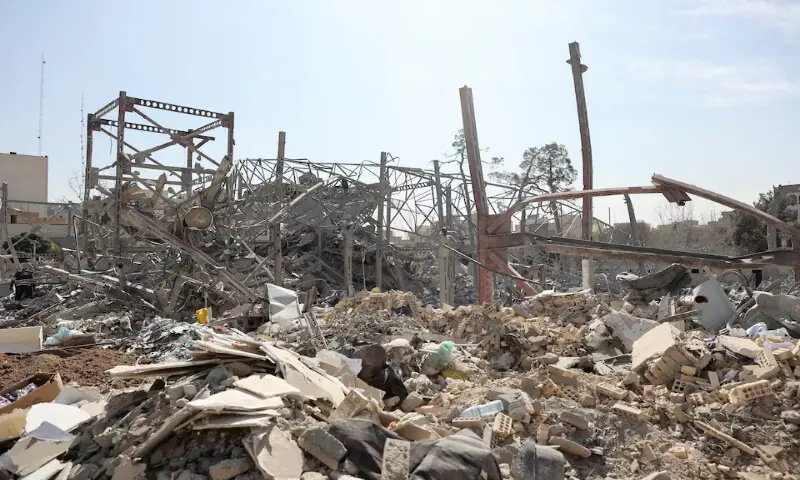
Debris lies scattered in the aftermath of a strike on a police station in Tehran, Iran. – Reuters

The escalating conflict involving Israel, the United States, and Iran has become one of the most dangerous and destabilising confrontations of modern times.

What began as decades of mistrust, ideological hostility and strategic rivalry has gradually developed into open military confrontation, with consequences that reach far beyond the Middle East.

The situation is no longer limited to political speeches, economic sanctions or indirect clashes through regional allies.

Instead, it now carries the risk of sustained warfare between powerful states, each with advanced military capabilities and strong international connections.

Although the fighting is centred in one region, its economic and political shockwaves are being felt across continents.

In today’s interconnected world, no major conflict remains local for long.

The conflict has unsettled financial markets, disrupted trade routes, deepened global political divisions and raised fears of a wider war that could involve additional countries.

For nations such as Pakistan, which lie close to the theatre of conflict and maintain relations with multiple sides, the crisis presents serious security risks as well as complex diplomatic challenges.

The roots of the confrontation stretch back many years. After the 1979 Islamic Revolution in Iran, relations between Iran and the United States deteriorated sharply.

The revolution replaced a pro-Western monarchy with an Islamic system that strongly opposed American influence in the region.

In response, Washington imposed sanctions and pursued policies designed to isolate Tehran.

Over time, mistrust hardened into open hostility. Diplomatic relations were severed, and both sides frequently accused each other of destabilising the Middle East.

Israel, for its part, has long viewed Iran’s nuclear ambitions and missile development as existential threats.

Israeli leaders have repeatedly stated that they cannot allow Iran to obtain nuclear weapons, arguing that such an outcome would threaten Israel’s very survival.

Iran, however, insists that its nuclear programme is for peaceful purposes, such as energy production and scientific research.

The disagreement over nuclear development has been one of the most sensitive and controversial issues in international diplomacy over the past two decades.

Tensions have also been fuelled by Iran’s support for armed groups such as Hezbollah in Lebanon and other regional allies.

Israel views these groups as hostile forces positioned near its borders.

Meanwhile, Iran sees them as part of a broader strategy to resist Israeli and American influence.

These rivalries have often been fought indirectly through proxy conflicts in countries such as Syria, Iraq and Yemen.

However, as hostilities intensified and military strikes became more direct, the risk of a broader regional war increased dramatically.

One of the most immediate global consequences of this conflict has been economic instability, especially in energy markets.

A key concern is the security of the Strait of Hormuz, a narrow but crucial waterway through which a large share of the world’s oil supply passes each day.

Even the possibility of disruption in this area can cause alarm in the global markets.

Oil traders react quickly to any sign of danger, and prices can rise sharply within hours of new developments.

When oil prices increase, the effects are felt everywhere.

Transport costs rise, manufacturing becomes more expensive, and food prices often climb as well.

Inflation, which many countries have struggled to control in recent years, can worsen rapidly under such pressure.

Higher energy costs not only affect motorists filling their cars with petrol, but they also influence the entire economic system.

Airlines face rising fuel bills, shipping companies increase freight charges, and factories pay more for electricity.

Businesses usually pass these higher costs on to the consumers.

For developing countries that rely heavily on imported fuel, the burden is especially severe.

Their trade deficits widen as they spend more on energy imports.

Their currencies may weaken against the dollar, making imports even more expensive.

Inflation reduces the purchasing power of ordinary people, particularly those on fixed incomes.

In poorer societies, even modest increases in food and fuel prices can push millions closer to poverty.

Social unrest may follow if governments are unable to provide relief.

Financial markets are also highly sensitive to geopolitical conflict. Investors generally dislike uncertainty.

When the threat of war grows, stock markets often fall as investors shift their money into assets considered safer, such as gold or government bonds.

This movement reduces the capital available for business expansion, infrastructure projects and job creation.

Companies may delay investment decisions until the situation becomes clearer.

As a result, global economic growth can slow, affecting employment and incomes across many regions.

Supply chains, already strained by previous global crises such as the pandemic and regional wars, face further disruption during periods of conflict.

Insurance premiums for ships travelling through high-risk zones increase sharply.

Some shipping companies reroute vessels to avoid potential danger, leading to longer delivery times and higher transport costs.

Essential goods, including medical supplies, machinery parts and food products, may take longer to reach their destinations.

These delays can harm industries that depend on steady supplies of raw materials.

Beyond economics, the political consequences of the war are equally profound. The conflict has exposed deep divisions within the international community.

Many countries have criticised military actions and called for restraint, arguing that respect for sovereignty and international law must be upheld.

Debates within the United Nations have been intense, particularly at meetings of the United Nations Security Council, where member states have struggled to agree on a unified response.

When powerful countries disagree, global institutions often find it difficult to act decisively.

The war has also influenced shifting alliances among major powers.

Countries such as Russia and China have taken positions that reflect their own strategic interests, sometimes in contrast with Western governments.

This growing polarisation risks deepening a new era of global rivalry reminiscent of past Cold War divisions.

Instead of cooperating on shared challenges such as climate change, poverty reduction and global health, nations may focus increasingly on military competition and strategic positioning.

Within the Middle East, the conflict threatens to draw in neighbouring states.

Countries such as Saudi Arabia and Turkey are closely monitoring developments, aware that instability could spill across borders.

Regional organisations, including the Gulf Cooperation Council, face pressure to coordinate responses while avoiding direct involvement in hostilities.

If the fighting were to widen significantly, it could engulf multiple states, transforming a limited confrontation into a major regional war with global implications.

Public opinion has played an important role in shaping government responses.

Across many Muslim-majority countries, large demonstrations have taken place condemning violence and expressing solidarity with the affected populations.

In Western societies, public debate has become increasingly polarised, with strong opinions expressed in parliaments, universities and on social media.

Governments must balance domestic political pressures with strategic alliances and long-term national interests.

In democratic systems, leaders are accountable to voters, which makes foreign policy decisions more complex during times of crisis.

For Pakistan, the conflict presents a particularly delicate and sensitive situation.

Sharing a long border with Iran, Pakistan cannot ignore developments next door.

Balochistan lies along the frontier, and any instability in neighbouring areas could create security challenges, including refugee flows, smuggling or cross-border militant activity.

Managing border security without provoking tensions requires careful planning and clear communication.

Economically, Pakistan is vulnerable to rising oil prices because it imports much of its energy.

Higher global prices increase the country’s import bill and put pressure on foreign exchange reserves.

Inflation at home may rise, affecting food, transport and electricity costs.

For a population already facing economic pressures, prolonged instability in global energy markets could create additional hardships.

Government subsidies, if expanded to protect consumers, may further strain public finances.

Diplomatically, Pakistan maintains relations with both Iran and the United States, while also expressing consistent support for Palestinian rights.

Balancing these relationships demands caution and skill. Islamabad has repeatedly called for dialogue and de-escalation, emphasising the importance of resolving disputes through negotiation rather than force.

By advocating for restraint in international forums and offering support for peaceful dialogue, Pakistan can attempt to position itself as a responsible regional actor.

However, this neutrality must be credible and consistent to maintain trust on all sides.

The humanitarian dimension of the conflict must not be overlooked. Civilian populations often suffer the most during wars.

Homes, hospitals and schools can be damaged or destroyed. Families may be displaced from their communities, creating refugee crises that affect neighbouring countries.

Humanitarian corridors and ceasefires are necessary to allow aid agencies to deliver food, medicine and shelter.

Protecting civilians is not only a moral duty but also a legal obligation under international humanitarian law.

The way forward must focus firmly on peace and diplomacy.

An immediate ceasefire would be a first step in reducing tensions and preventing further loss of life.

Continued military strikes only deepen mistrust and make compromise more difficult.

International monitoring mechanisms could help ensure compliance and build confidence between the parties.

Serious diplomatic engagement must also resume.

Negotiations should address the core concerns of each side, including security guarantees, nuclear transparency and non-interference in neighbouring states.

Confidence-building measures, such as advance notification of military exercises or the reopening of communication channels, could reduce the risk of accidental escalation.

Economic incentives may also encourage compromise.

Gradual sanctions relief, regional trade cooperation and investment opportunities could provide tangible benefits linked to peaceful behaviour.

Regional powers and neutral states can assist mediation efforts.

Multilateral diplomacy offers the best chance of achieving a lasting settlement.

Reviving respect for international law and strengthening global institutions are equally important.

When countries believe that rules are applied fairly and consistently, trust in the international system can slowly be rebuilt.

Ultimately, war rarely produces clear or lasting winners in the modern world.

The interconnected nature of global finance, trade and politics means that even distant nations feel the consequences of conflict.

The confrontation involving Iran, Israel and the United States is not merely a regional dispute; it is a global crisis with economic, political and humanitarian costs that affect millions far beyond the battlefield.

For Pakistan and many other countries, the priority must be to prevent escalation, promote dialogue and support a negotiated settlement.

Only through sustained diplomacy, mutual compromise and genuine respect for sovereignty can lasting peace and regional stability be achieved.

The writer is a seasoned journalist and a communications professional.

He can be reached at tariqkik@gmail.com


For the latest news, follow us on Twitter @Aaj_Urdu. We are also on Facebook, Instagram and YouTube.

Spain’s Sanchez to Trump: ‘You cannot play Russian roulette with the destiny of millions’

Updated 04 Mar, 2026 03:51pm 0 min read
Spain’s Prime Minister Pedro Sanchez. – Reuters

Spanish Prime Minister Pedro Sanchez on Wednesday doubled down on his opposition to the attack ​on Iran by the U.S. and Israel, warning ‌that the conflict risked playing “Russian roulette” with the lives of millions.

Sanchez was responding after U.S. President Donald Trump threatened to cut trade with Madrid over its ​position on the conflict.

“This is how humanity’s great disasters ​start … You cannot play Russian roulette with the destiny ⁠of millions,” Sanchez said in a televised address to the ​nation.

Tensions between the two NATO allies increased after Sanchez denounced the ​U.S. and Israeli bombings of Iran as reckless and illegal, and later banned U.S. aircraft from using naval and air bases in southern Spain for ​the offensive against Tehran.
Sanchez said the world could not ​solve its problems with conflicts and bombs.

“The position of the Spanish government ‌can ⁠be summarised in four words: ‘No to the war,’” he said, adding the stance was not disingenuous but coherent.

“We’re not going to be complicit in something bad for the ​world nor contrary ​to our ⁠values and interests simply to avoid reprisals from someone,” Sanchez said, appearing to reference Trump’s ​trade threats.
Sanchez highlighted the negative knock-on effects ​of the ⁠Iraq war, from a rise in jihadist terrorism to soaring energy prices, to argue that the consequences of this attack ⁠on ​Iran were just as nebulous and ​that it would not lead to a more just international order.

‘No to the war’

Tensions between the two NATO allies increased after Sanchez denounced the ‌U.S. ⁠and Israeli bombings of Iran as reckless and illegal, while most other European nations have withheld direct critique of the attacks.

Israel has also criticised Sanchez, accusing him of “standing with tyrants” in Iran and Palestine.

The country has also refrained so far from involving itself in defensive operations, even ​as Britain, France, and Greece have ​sent armaments to ⁠Cyprus, which was struck by a drone on Monday, and British Prime Minister Keir Starmer authorised the use of UK bases for defensive strikes on ​Tehran.

Sanchez said the world could not solve its problems with conflicts and ​bombs.

“The position ⁠of the Spanish government can be summarised in four words: ‘No to the war,’” he said, adding the stance was not naive but coherent.

Sanchez highlighted the negative knock-on effects of the Iraq war, from a rise ⁠in jihadist ​terrorism to soaring energy prices, to argue that the ​consequences of this attack on Iran were just as nebulous and that it would not lead to a more just ​international order.

Earlier, U.S. President Donald Trump threatened to impose a ​full U.S. trade embargo on Spain on Tuesday after the European and NATO ally refused to let the U.S. military use its bases for missions linked to ‌strikes on Iran.

“Spain has been terrible,” Trump told reporters during a meeting with German Chancellor Friedrich Merz, adding that he had told Treasury Secretary Scott Bessent to “cut off all dealings” with Spain.

“We’re going to cut off all trade with Spain. We don’t want anything to do with Spain,” he added.

The U.S. relocated 15 aircraft, including refuelling tankers, from the Rota and Moron military bases in southern Spain after the country’s Socialist leadership said it ​would not allow them to be used to attack Iran.

Trump again referenced Spain’s refusal to heed U.S. calls for all NATO members to spend 5% of their GDP on defence, ​and added: “Spain has absolutely nothing that we need.”

“All business having to do with Spain, I have the right to stop it. Embargoes - do anything ⁠I want with it - and we may do that with Spain,” he said, again expressing his frustration with the Supreme Court’s ruling last month that his broadest global tariffs were illegal under a ​national emergencies law.

No separate treatment for Spain

Merz, speaking with reporters after the meeting, said he told Trump privately that Spain could not be excluded from a trade agreement reached between Brussels and Washington ​last year.

“I said that Spain is a member of the European Union and we negotiate about tariffs with the United States only together or not at all,” he said. “There is no way to treat Spain particularly badly.”

Trump publicly asked Bessent and U.S. Trade Representative Jamieson Greer for their opinions on cutting off Spanish trade.

“Well, sir, I think we’ll talk about it with you,” Greer said. “We know you can use it, and if you need to ​use it to assure national and economic security, we’ll do it.”

Bessent said the Supreme Court affirmed Trump’s embargo powers under the International Emergency Economic Powers Act, adding that the USTR and Commerce ​Department would begin investigations into how to penalise Spain under other trade laws.

High Bar

Jennifer Hillman, a trade law professor at Georgetown University, said the Supreme Court did not address the president’s ability to impose a ‌trade embargo ⁠under IEEPA. Trump could do so, but he would have to declare a national emergency over Spain as an “unusual and extraordinary” threat to the United States, she said, adding that such a move would go “well beyond” any previous emergency.

“It’s hard to see, however, how Spain denying us the use of air bases on its territory for us to launch an unprovoked attack on Iran poses ‘an unusual and extraordinary threat’ to our national security or foreign policy,” added Peter Shane, a New York University adjunct law professor.

The Spanish government responded in a statement that the U.S. must be mindful of the autonomy of ​private businesses, international law and bilateral trade agreements ​between the U.S. and the European Union.

Madrid ⁠said it had the necessary resources to contain the potential impact of a trade embargo and support affected sectors, but said it would continue to push for free trade and economic cooperation with its partners.

Spain is the world’s top exporter of olive oil and also sells auto parts, ​steel and chemicals to the United States, but is less vulnerable to Trump’s threats of economic punishment than other European nations.

The U.S. had ​a trade surplus with ⁠Spain for the fourth year in a row in 2025, at $4.8 billion, according to U.S. Census Bureau data, with U.S. exports of $26.1 billion and imports of $21.3 billion. U.S. exports of crude oil and liquefied natural gas to Spain have grown in recent years.

Merz said pressure was being brought to bear on Spain from within Europe on defence spending.

“We are trying to convince Spain to catch up with the ⁠3% or 3.5% ​which we agreed on in NATO,” he said, adding later that Spain’s defence spending levels had nothing to do with the ​trade negotiations.

Spain’s Prime Minister Pedro Sanchez, one of a dwindling number of left-leaning voices in Europe, has risked Trump’s ire with a series of other policy moves, including refusing to let vessels transporting weapons to Israel dock in Spain.

For the latest news, follow us on Twitter @Aaj_Urdu. We are also on Facebook, Instagram and YouTube.

From 9/11 to Tehran: America’s long war continues

Published 04 Mar, 2026 02:17pm 0 min read
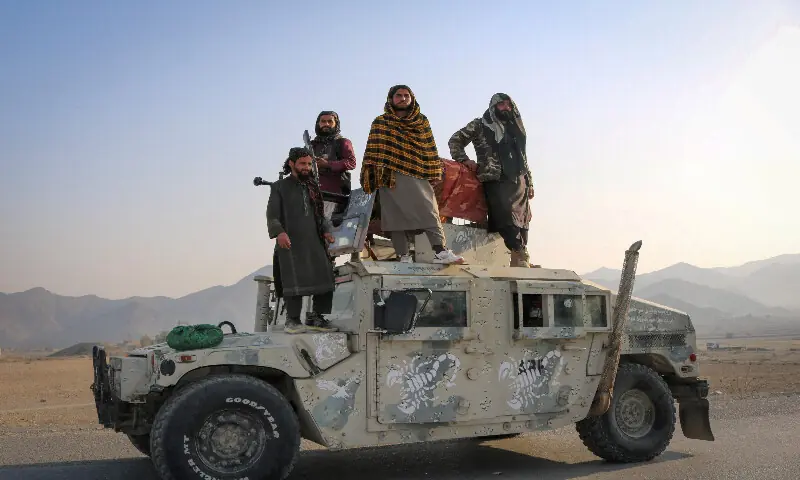
Taliban soldiers pose as they stand on a Humvee in Momand Dara, Nangarhar province, Afghanistan. – Reuters file

Despite pledging to end America’s involvement in costly and prolonged foreign wars, President Donald Trump has joined Israel in launching a large-scale military assault on Iran, targeting its leadership as well as nuclear and missile infrastructure.

The assault marks the latest chapter in more than two decades of US military engagement abroad — a pattern that has defined American foreign policy since the September 11, 2001, attacks, according to a report by Al Jazeera.

Two decades of war

President George W. Bush declared a global “war on terror” following the 9/11 attacks, initiating military campaigns that would stretch across almost all continents.

Since 2001, the US has fought three full-scale wars and carried out bombing campaigns in at least 10 countries.

These operations include large-scale invasions and targeted drone strikes, including covert and special missions.

Quoting research by Brown University’s Watson Institute for International & Public Affairs, the report said that US-led wars since 2001 have directly caused approximately 940,000 deaths across Afghanistan, Pakistan, Iraq, Syria, Yemen and other conflict zones.

The figure does not include indirect deaths linked to hunger, disease and infrastructure collapse.

The financial toll has also been immense.

The United States has spent an estimated $5.8 trillion on post-9/11 conflicts, including Department of Defence operations, homeland security spending, veterans’ care and interest payments on war-related borrowing.

Long-term veterans’ healthcare costs are projected to add at least another $2.2 trillion over the next three decades, pushing the total estimated cost to roughly $8 trillion.

Afghanistan: America’s longest war

The first direct response to the 9/11 attacks came on October 7, 2001, when the US invaded Afghanistan to dismantle Al Qaeda and remove the Taliban from power.

Although the Taliban government fell within weeks, insurgency and armed resistance went on for 20 years, spanning the tenure of four US presidents.

The withdrawal of US forces in 2021 saw the Taliban regain control.

According to estimates, around 241,000 people died directly in the Afghan war, including at least 3,586 US and NATO soldiers.

The war in Afghanistan cost the United States approximately $2.26 trillion.

Iraq: Another prolonged conflict

In March 2003, the US forces invaded Iraq, claiming that President Saddam Hussein possessed weapons of mass destruction — allegations that were later proven false.

Although major combat operations were declared over within weeks, the US invasion caused chaos and Iraq descended into years of violence and instability.

The power vacuum in Iraq contributed to the rise of Daesh.

US combat troops were withdrawn in 2011 under President Barack Obama.

Expanding air and defence campaigns

Beyond Afghanistan and Iraq, US military operations expanded through air and drone campaigns in Pakistan, Somalia and Yemen.

The CIA began drone strikes in Pakistan’s tribal regions in the mid-2000s, targeting Al Qaeda and Taliban figures.

President Obama later expanded the use of drone warfare significantly.

The US also conducted air strikes in Somalia against Al Qaeda affiliates and Al Shabab, and in Yemen against Al Qaeda leaders.

Intervention in Libya and Syria

In 2011, the US joined a NATO-led intervention in Libya against Muammar Gaddafi’s government.

Gaddafi was eventually killed, but for Libyans, his ouster brought bloodbath, instability, fractured governance and uncertainty.

From 2014 onward, the US intervened in Syria as part of a campaign against Daesh, conducting air strikes against Daesh targets while supporting local militia forces.

In Iraq, US forces continued their advisory missions and counter-terrorism operations, including a 2020 strike ordered by Trump that killed Iranian General Qassem Soleimani.

A continuing pattern

Trump’s latest military action against Iran underscores the key role of military force in US foreign policy.

While presidents from both parties have promised to reduce foreign entanglements, successive administrations have relied on military power to pursue strategic objectives.

As tensions with Iran escalate, analysts say the renewed confrontation raises questions about whether the United States is entering yet another prolonged and costly conflict in a region already shaped by decades of war.

For the latest news, follow us on Twitter @Aaj_Urdu. We are also on Facebook, Instagram and YouTube.

Sri Lanka rescues 30 people on board distressed Iranian ship

Updated 04 Mar, 2026 04:38pm 0 min read
– Reuters
– Reuters

The Sri Lankan Navy had said at least 101 people were missing and 78 were injured after a submarine attack on an Iranian ship off the coast of Sri Lanka.

A Navy spokesperson is now saying that the figures given earlier were not correct.

The spokesperson says 32 people injured in the incident were rescued by the navy and are now receiving treatment in the hospital.

A search and rescue operation is still underway.

This is an evolving story, and we will bring you any further updates or clarifications as we get them.

For the latest news, follow us on Twitter @Aaj_Urdu. We are also on Facebook, Instagram and YouTube.

Live

Trump says Starmer is no Winston Churchill after rift over Iran strikes

Published 04 Mar, 2026 01:00pm 0 min read
US President Donald Trump walks with British Prime Minister Keir Starmer at Trump International Golf Links in Aberdeen, Scotland, Britain. – Reuters file

President Donald Trump castigated one of the United States’ closest allies on Tuesday, comparing Prime Minister Keir Starmer unfavourably to Winston ​Churchill over Britain’s limited support for US strikes on Iran.

“This is not Winston Churchill that we’re dealing with,” Trump said at the White House, referencing Starmer’s legendary ‌World War Two predecessor.

The Oval Office comments were Trump’s third broadside against Starmer this week as Washington’s campaign of air strikes against Iran stoked concerns among some US partners who see the war as reckless and a violation of international law.

Trump and his aides have long scolded European allies over their immigration policies, lower-than-pledged military spending and hostility to far-right movements.

And Trump’s often tepid support for Ukraine and his threats to seize Danish territory have raised fears in Europe about the ​stability of a transatlantic alliance facing growing threats from Russia.

Trump’s complaint

Starmer has said Britain did not take part in the US-Israeli assault on Tehran because any British military action must have a “viable, ​thought-through plan”, and he did not believe in “regime change from the skies.”

But he has since allowed the US to use UK bases to launch what ⁠he called limited and defensive strikes to weaken Tehran’s capabilities, after Iran hit US allies in the region with drones and missiles.

On Monday, a British base in Cyprus was hit by a drone that ​Cypriot officials said was likely launched by Iran-backed Lebanese group Hezbollah.

During a White House meeting with German Chancellor Friedrich Merz, Trump vented frustration that the US had not been able to land its military ​jets at Britain’s strategically important air base, Diego Garcia.

“I’m not happy with the UK,” Trump said, unprompted, during a portion of the meeting that was open to the press.

“It’s taken three, four days for us to work out where we can land. It would have been much more convenient landing there as opposed to flying many extra hours. So we are very surprised.”

Trump had told The Telegraph on Monday that Starmer had appeared to be “worried about the legality” of ​the strikes on Iran.

Starmer has been criticised from all sides at home for the decision, with opponents on the left calling for him to condemn the military action.

On the right, opposition leaders Kemi Badenoch and ​Nigel Farage attacked Starmer for failing to back Britain’s key security and intelligence ally.

A special relationship

Despite Trump’s fraught relations with Europe overall, the Republican US president and the centre-left Labour leader had, until recently, maintained upbeat ‌personal ties.

Britain ⁠has for decades prided itself on its relationship with the US, aided by leaders such as Churchill, Margaret Thatcher and Tony Blair cultivating strong relationships with their counterparts, Franklin D. Roosevelt, Ronald Reagan and George W. Bush.

The two countries’ “special relationship” spans intelligence sharing and military coordination.

“It’s very sad to see that the relationship is obviously not what it was,” Trump told the Sun newspaper in an interview published on Tuesday.

He added that he never thought he would see Britain become a reluctant partner, and instead heaped praise on France and Germany.

Britain, France and Germany all released a joint statement in response to the Iranian attacks on ​Saturday, saying they were in close contact with the ​US, Israel and partners in the region, ⁠and were calling for a resumption of negotiations.

The Trump administration blessed a deal by the UK government to cede sovereignty of the Chagos Archipelago, which includes Diego Garcia, last year.

But Trump abruptly changed course in January, calling the decision to give the Indian Ocean islands to Mauritius an act of “total weakness” ​and “great stupidity.”

On Tuesday, Trump revisited that issue, saying that “the UK has been very, very uncooperative with that stupid island that they have, that ​they gave away.”

The ⁠deal allows Britain to retain control of the Diego Garcia base under a 99-year lease.

Lessons of Iraq

Starmer, a former lawyer, has defended his response, telling parliament on Monday he had to judge what was in Britain’s national interest.

“That is what I have done, and I stand by it,” he said.

Polling published by YouGov on Tuesday showed that people in Britain were opposed to the US strikes on Iran, 49% to 28%.

Senior minister ⁠Darren Jones said ​Britain had learned lessons from its involvement in the 2003 Iraq war, when it joined US action to remove Saddam Hussein, ​which was justified on false claims that the country had weapons of mass destruction.

“One of the lessons of Iraq was that it’s better to be involved in these situations when you are aligned with international partners, and as I say, with a ​clear legal basis in the plan,” he said.

For the latest news, follow us on Twitter @Aaj_Urdu. We are also on Facebook, Instagram and YouTube.

Live

Mojtaba Khamenei reportedly appointed new supreme leader

Published 04 Mar, 2026 12:14pm 0 min read
Mojtaba Khamenei. – File photo

Mojtaba Khamenei, son of Iran’s late Supreme Leader Ayatollah Ali Khamenei, has reportedly been selected as the country’s new Supreme Leader, Israeli media outlets claim.

Iranian officials have not yet confirmed the report.

Earlier, Israeli media said that the 88-member Assembly of Experts — responsible for selecting Iran’s Supreme Leader — was conducting the vote online and that the process had entered its final stage.

The Assembly of Experts’ building in Qom had previously been struck and damaged in attacks by the United States and Israel.

The building had been evacuated beforehand, so no casualties were reported.

Meanwhile, the funeral of Ayatollah Ali Khamenei will take place in Mashhad following a major gathering in Tehran.

According to Iranian news agencies, the Tehran ceremony will be held at Imam Khomeini Hall, but the date for the burial in Mashhad has not yet been announced.

The selection of Iran’s Supreme Leader is carried out by the Assembly of Experts, which consists of 88 senior clerics and jurists.

Members of the Assembly are elected by direct public vote every eight years.

The selection of Mojtaba Khamenei is said to have been influenced by senior Iranian figures, including Ahmad Vahidi and Hossein Taeb.

The selection marks a major leadership transition during a period of heightened military tensions with the United States and Israel.

The announcement comes amid reports that the Secretariat building of the Assembly of Experts in Qom was struck and damaged in an attack.

Israeli sources claimed the strike occurred during a leadership vote, while Iranian domestic media acknowledged the attack but denied that a session was underway at the time.

Born in 1969 in Mashhad, Mojtaba Khamenei has long been considered a potential successor, despite never holding a formal government position.

Since 2019, he has been under US sanctions, which accused him of representing his father in official capacities despite lacking a public title.

Independent Iranian media have reported that he holds significant influence within Iran’s security establishment, particularly the Islamic Revolutionary Guard Corps.

For the latest news, follow us on Twitter @Aaj_Urdu. We are also on Facebook, Instagram and YouTube.

Live

Explosions reported in Tehran and Jerusalem as conflict intensifies

Published 04 Mar, 2026 11:37am 0 min read
A woman cries as victims of a US air strike on an Iranian girls school are buried in Minab, Iran. – Reuters

Tensions in the Middle East escalated dramatically on Wednesday as Israel intensified strikes on Iranian missile sites and weapons factories.

Iran responded with dozens of ballistic missiles and drone attacks across the Gulf, including a strike on the US Embassy in Saudi Arabia.

According to officials, nearly 800 people have been killed in Iran over four days of fighting.

Lebanon has reported 50 deaths, including seven children, following Israeli retaliatory strikes on Hezbollah, the Iranian-backed group.

Israel has reported 11 deaths on its side, with the Pentagon confirming six US service members were killed in a drone strike in Kuwait.

On Wednesday, the Israeli military carried out a series of air strikes across Tehran, targeting buildings linked to Iran’s Basij force and internal security command.

Both organisations have previously been involved in suppressing protests, including the deadly January crackdown that left thousands dead and tens of thousands detained.

Israel and the US have stated that part of their goal is to pressure Iran’s leadership by striking forces associated with domestic repression.

While Israel has claimed that most incoming missiles have been intercepted, casualties continue to rise across the region.

Kuwait reported an additional death of an 11-year-old girl from shrapnel, and three fatalities were confirmed in the United Arab Emirates, with one in Bahrain.

The Red Crescent Society reports that US-Israeli strikes have killed at least 787 people in Iran.

For the latest news, follow us on Twitter @Aaj_Urdu. We are also on Facebook, Instagram and YouTube.

Israel hits Hezbollah ally’s office in Sidon: State media

Published 04 Mar, 2026 10:47am 0 min read
Rescuers gather at the site of an Israeli airstrike that targeted the Jamaa Islamiya offices in the southern Lebanese coastal city of Sidon on March 3, 2026. AFP

Israel struck a headquarters belonging to the Jamaa Islamiya, an ally of Hamas and Hezbollah, in the southern Lebanese city of Sidon on Tuesday, state media reported.

“The Israeli enemy carried out an air raid a short while ago, targeting a headquarters of the Jamaa Islamiya” in the coastal city, state media said.

Sidon was largely spared of major Israeli attacks during the last war between Israel and Hezbollah, which a November 2024 ceasefire sought to end.

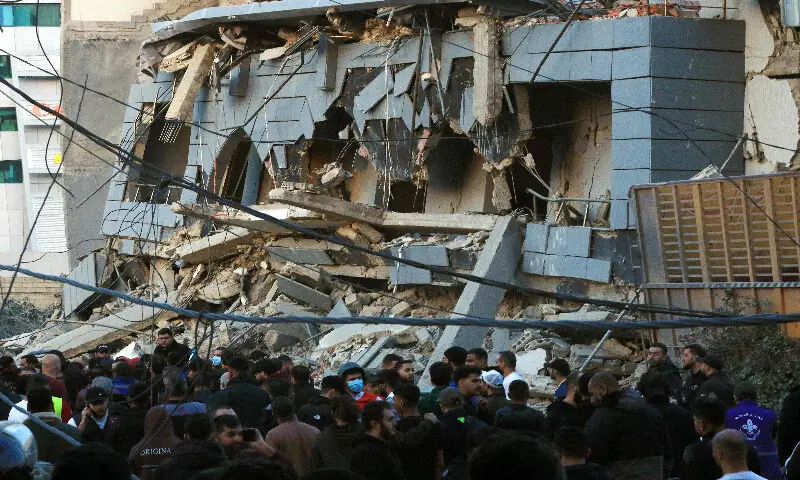
The strike almost entirely destroyed a seven-storey building, according to an AFP photographer, and ambulances rushed to the scene.

It caused a powerful blast in a densely populated area, as seen on local media.

The Israeli military then issued an evacuation warning for another building in Sidon, saying it will hit “Hezbollah military infrastructure… in light of its prohibited attempts to rebuild its activities in the area”.

The Jamaa Islamiya had previously been the target of Israeli strikes in Lebanon after claiming responsibility for rocket launches towards Israel during the war between Israel and Hezbollah that began in October 2023.

Last month, it accused Israel of seizing one of its officials from a town near the border.

The Israeli military said that it “apprehended a senior terrorist” in the group who was then “transferred for further questioning in Israeli territory”.

For the latest news, follow us on Twitter @Aaj_Urdu. We are also on Facebook, Instagram and YouTube.

Live

4 killed as Israeli strikes hit deep Into Lebanon

Published 04 Mar, 2026 10:35am 0 min read
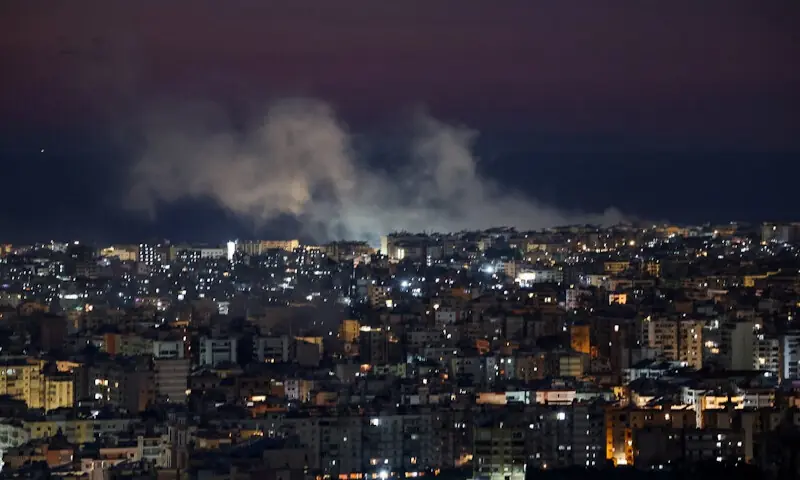
Smoke rises after an Israeli strike on Beirut’s southern suburbs, Lebanon. – Reuters
Smoke rises after an Israeli strike on Beirut’s southern suburbs in Lebanon. – Reuters
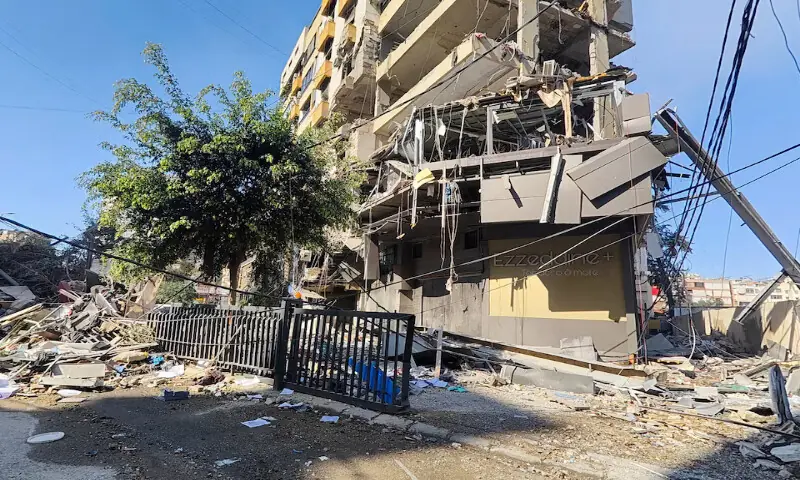
Debris at the site of an Israeli strike in Lebanon. – Reuters

An Israeli strike on a four-storey residential building has killed at ​least four people and wounded six others in the ‌eastern Lebanese city of Baalbek, state news agency NNA said.

Rescue teams were also working to pull families from beneath the rubble.

The strike was ​part of a sharp escalation in fighting along the Lebanese-Israeli border ​since Monday, after Hezbollah fired drones and missiles at ⁠Israel.

Since then, the Iran-aligned group has launched more rockets and ​Israel has carried out waves of air strikes across Lebanon and ​sent troops into the south.

Hezbollah said ​on Wednesday it fired rockets at a gathering of ‌Israeli ⁠forces near the frontier in response to Israeli strikes on Lebanon.

Israel also warned residents in 16 Lebanese villages to evacuate, saying ⁠Hezbollah activity was forcing it to act.

Lebanon’s health ministry ⁠said ​on Tuesday that Israeli strikes had ​killed at least 50 people and wounded 335 since the latest escalation began.

For the latest news, follow us on Twitter @Aaj_Urdu. We are also on Facebook, Instagram and YouTube.

Live

Trump says US navy could escort oil tankers in Gulf

Updated 04 Mar, 2026 01:55pm 0 min read
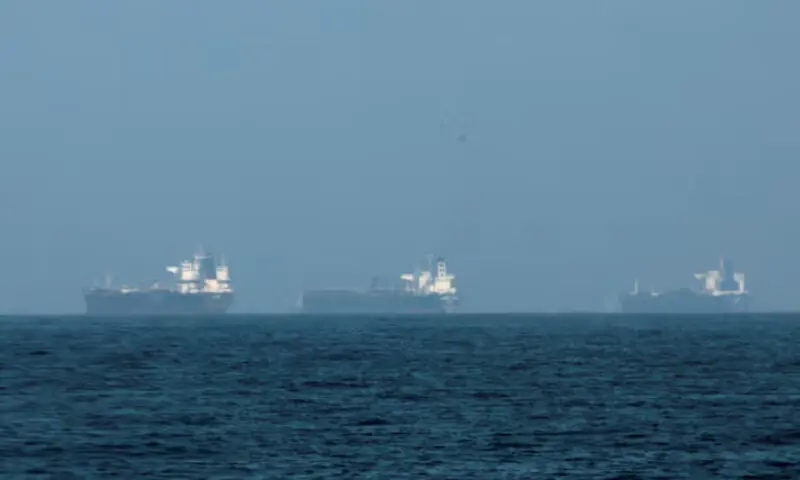
Tankers are seen off the coast of Fujairah in United Arab Emirates. – Reuters

The US navy could begin escorting oil tankers through the Strait of ​Hormuz if necessary, President Donald Trump said on Tuesday, adding he had ordered the US International Development Finance Corporation to provide political risk insurance and ‌financial guarantees for maritime trade in the Gulf.

The move marks one of the administration’s most aggressive steps yet to attempt to contain soaring energy prices amid escalating conflict in the Middle East that has raised risks to shipping through key waterways.

Global crude prices have spiked since Israeli and US forces began striking Iran over the weekend, leading to fighting that has interrupted Middle East oil tanker shipments.

Ship owners and analysts were uncertain that military escorts and insurance backstopping by the DFC would ​be enough to stop rising prices, however.

The DFC, launched in 2019, is a government agency that partners with private investors to support projects in developing countries.

Trump has made ​lower fuel costs for Americans central to his economic messaging, and the move signals a willingness to use financial and military tools to prevent ⁠disruptions to global crude supplies.

“No matter what, the United States will ensure the free flow of energy to the world,” Trump said in a social media post.

Trump said more actions are ​coming.

Treasury Secretary Scott Bessent and Energy Secretary Chris Wright were expected to meet Trump to present a list of proposals to address the issue and finalise a response, ​two sources familiar with the plan told Reuters on condition of anonymity.

Trump told reporters earlier Tuesday that Americans may have to live with higher oil prices for a short period, “but as soon as this ends, those prices are going to drop, I believe, lower than even before.”

If higher energy prices persist, they could undermine efforts by lawmakers in Trump’s Republican Party to retain power in the congressional midterm elections in November.

War-risk premiums rise

Oil shipments have been largely blocked through the Strait of Hormuz, a chokepoint between Iran and Oman through which around a fifth of the world’s oil is shipped, with a ​number of tankers damaged by strikes and others stranded.

Shipping companies and insurers have begun reassessing their exposure to the region.

War-risk premiums have jumped and some providers have scaled back or withdrawn coverage, industry sources say.

Higher ‌insurance costs ⁠have made it more expensive for tankers willing to risk travelling through the area, prompting some operators to delay voyages or seek alternative routes.

US support for tanker insurance is not unprecedented.

During the Iran-Iraq conflict in the 1980s, Washington reflagged tankers and provided naval escorts when private insurers withdrew coverage.

After the September 11, 2001, attacks, the US issued insurance policies to keep shipping moving amid elevated war-risk premiums.

‘Deals with Iranians’

Shipping sources who declined to be named said Trump’s plan may fall short of calming shippers as long as fighting continues, because the US has a limited number of ships that ​could escort tankers.

As of Monday, the US navy ​had 12 warships, including an aircraft carrier, ⁠in the Middle East that the military could use to help escort commercial ships.

But some of those vessels are being used to carry out strikes against Iran and shoot down its missiles.

It could also be a risky endeavour for the naval escorts, who could have to ​contend with Iranian projectiles and small armed vessels.

The US navy occasionally escorts ships in sensitive waterways.

There are also a number of multinational naval ​task forces that could ⁠be used to help, including CTF-152, currently commanded by Qatari forces.

Rohit Rathod, a senior analyst with ship-tracking firm Vortexa, said Trump’s measures may not be enough for a wide and safe passage, but that some ships could get through.

“The attacks could still take place,” Rathod said. “What is more realistic is that insurance stays high but we will have individual players making deals with the Iranians to get exemptions ⁠for their ships.”

The Trump ​administration has been reluctant to tap the nation’s Strategic Petroleum Reserve, but officials could soon signal that they are prepared to ​use it if prices continue to climb, one source said.

Kevin Book, policy analyst at ClearView Energy Partners, said focusing on shipping may not be enough to stop rising prices. “The war poses other upside risks to crude prices, including threats ​to production sites.”

For the latest news, follow us on Twitter @Aaj_Urdu. We are also on Facebook, Instagram and YouTube.

US shuts Middle East embassies after Iranian drone strikes

Updated 04 Mar, 2026 01:53pm 0 min read
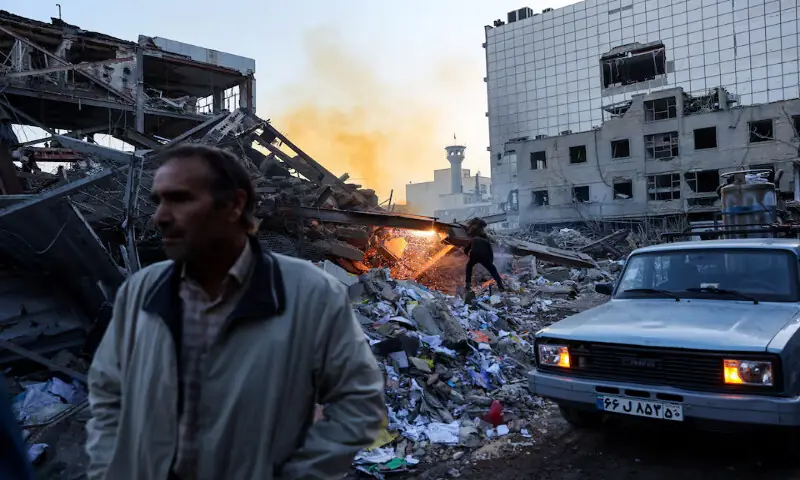
Smoke rises following an explosion in Tehran, Iran. – Reuters
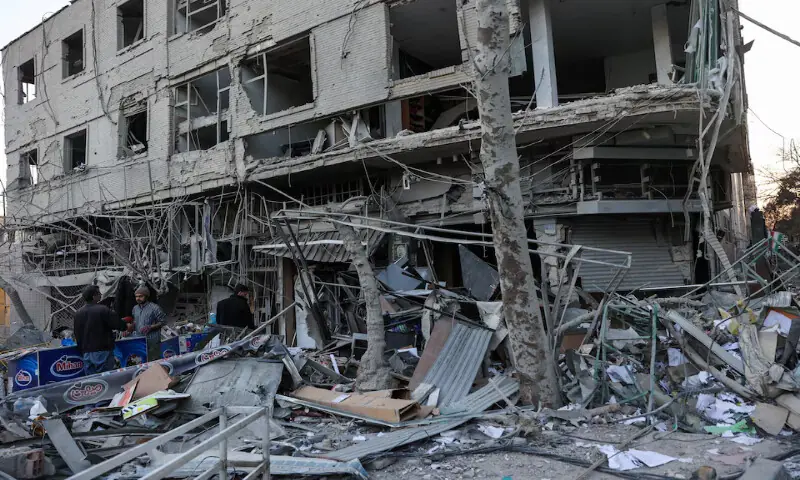
Debris lies on a street in the aftermath of an Israeli and the US strike on a police station in Tehran, Iran. – Reuters
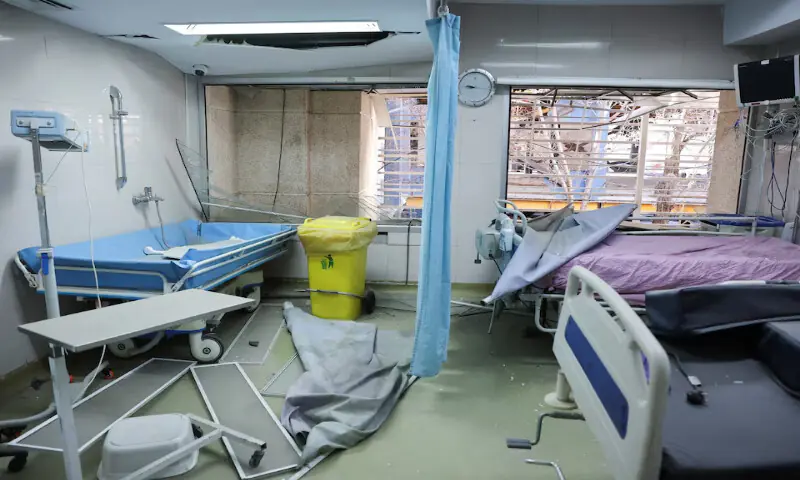
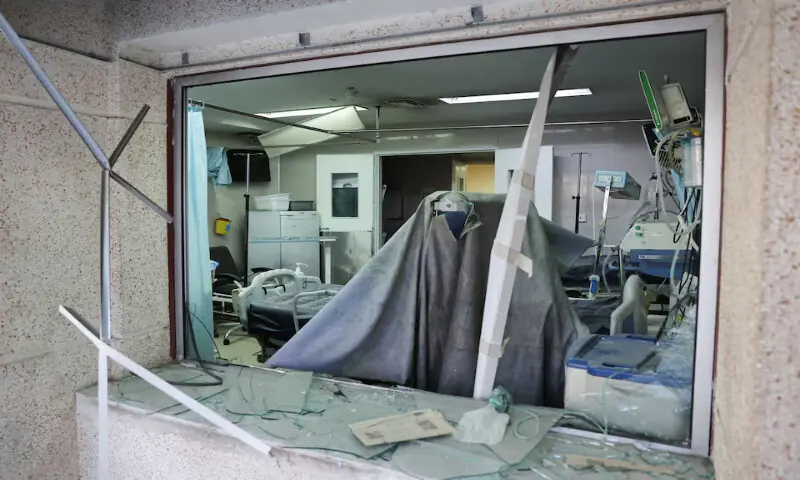
A view of debris following an Israeli and US strike on Motahari Hospital in Tehran, Iran. – Reuters
A view of destroyed window blinds and debris following an Israeli and US strike on Motahhari Hospital  in Tehran, Iran. – Reuters
A view of destroyed window blinds and debris following an Israeli and US strike on Motahhari Hospital in Tehran, Iran. – Reuters
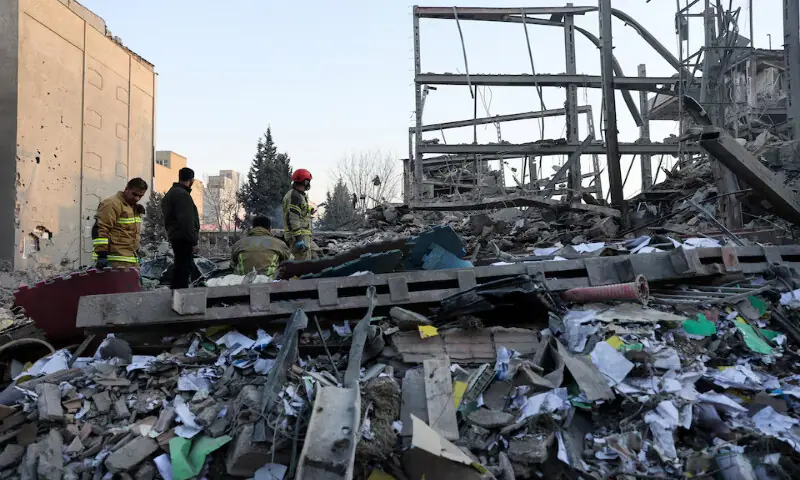
Firefighters work following an Israeli and US strike on a police station in Tehran, Iran. – Reuters
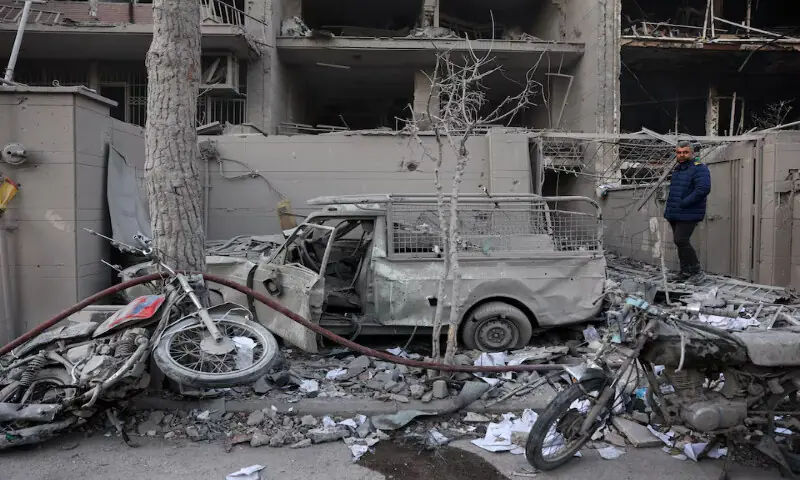
A man stands next to damaged vehicles in the aftermath of an Israeli and the US strike on a police station in Tehran, Iran. – Reuters
Aftermath of an Israeli and the US strike on a police station  in Tehran, Iran. – Reuters
Aftermath of an Israeli and the US strike on a police station in Tehran, Iran. – Reuters

Israeli and US forces pounded targets across Iran on Tuesday, prompting Iranian retaliatory strikes around the Gulf as the conflict spread to Lebanon, rattled global markets and sent oil prices sharply higher.

Four days into the war, US President Donald Trump told reporters that the US military had struck ​numerous Iranian naval and air targets, saying that “just about everything has been knocked out.”

Trump also sought to justify the assault on Iran, saying he had ordered the campaign because he had “a feeling” Iran would attack after negotiations over its ‌nuclear programme stalled.

In response to the fierce assault, Iranian drones struck the US embassy in Saudi Arabia after previously hitting the mission in Kuwait.

Washington shut both embassies, as well as its embassy in Lebanon, and ordered non-emergency government personnel and their families to leave much of the Middle East.

Smoke was seen rising near the US consulate in Dubai on Tuesday, and Secretary of State Marco Rubio told reporters a parking lot was hit and all personnel were accounted for.

A source familiar with Israel’s war plan told Reuters that the campaign had been planned to last two weeks and was going through its target list faster than expected, with early success in ​killing Iran’s leaders — including Supreme Leader Ayatollah Ali Khamenei in the opening salvoes on Saturday.

Trump on Monday said initial US projections were for the operation to last four to five weeks.

When asked who he would like to be in charge in Iran, ​Trump on Tuesday gave a blunt assessment: “Most of the people we had in mind are dead.”

Iran’s capital, Tehran, was repeatedly shaken by explosions throughout the day, as Israel struck the state broadcaster IRIB and ⁠an area around the city’s Mehrabad airport.

The Israeli military also said it hit the Minzadehei underground nuclear development site in Tehran.

The building housing Iran’s Assembly of Experts, tasked with choosing a leader to replace Khamenei, was also flattened by an air attack in the city ​of Qom, Iranian news agencies said. Israel said it was still reviewing the results of that strike.

It was not immediately clear if anyone died in the raid, but Trump said senior Iranians had perished on Tuesday.

As Iranians have fled cities, the capital has become a ghost town.

“How ​long will this continue? Where are the shelters? Where is the government?” Bijan, 32, a bank employee, told Reuters by telephone from Tehran.

“Every night, my wife and I hide in the basement. The whole city is empty. There is smoke and blood everywhere.”

Firuzeh Seraj said she was afraid to take her 10-year-old daughter for dialysis treatment after a hospital in the capital was struck.

“World, do you see? They are killing us. Hear our voice,” she said through tears from Tehran.

Stock markets tumble

Global stock markets slid as the disruption of Middle East energy supplies threatened to reignite inflation.

The price of crude oil, gained 5% and the European wholesale ​price for natural gas was up a punishing 40%.

US retail gasoline prices averaged $3.11 per gallon, according to the American Automobile Association — a highly visible sign of the rising consumer prices that voters cite as a top concern ahead of the November midterm elections.

Wall Street stock indexes ​were down in midday trading, following losses of more than 3% in European and Asian indexes.

Iran has called the war an unprovoked attack.

“We have told the enemy that if you try to harm our main centres, we will hit all economic centres in the region,” Revolutionary Guards adviser Ebrahim Jabari said in ‌Iranian media.

Iran has ⁠fired missiles and drones at neighbouring Arab states that host US bases, and strangled shipping through the Strait of Hormuz, where a fifth of the world’s supplies of oil and liquefied natural gas travel past its coast.

Qatar, one of the world’s main exporters of LNG, has halted production, while tankers have dropped anchor in the Gulf rather than brave the strait.

The cost of hiring a tanker to ship oil from the Middle East to Asia has nearly quadrupled since last week to an all-time high well over $400,000 a day.

Trump said the US government would provide insurance to tankers in the region and the Navy would escort them through the strait if necessary.

Global air transport has also been in chaos, with Middle East air hubs linking Asia, Europe and Africa shut.

In Lebanon, Iran’s Hezbollah allies fired on Israel, which responded with air strikes and reinforcements of ground positions in ​the south.

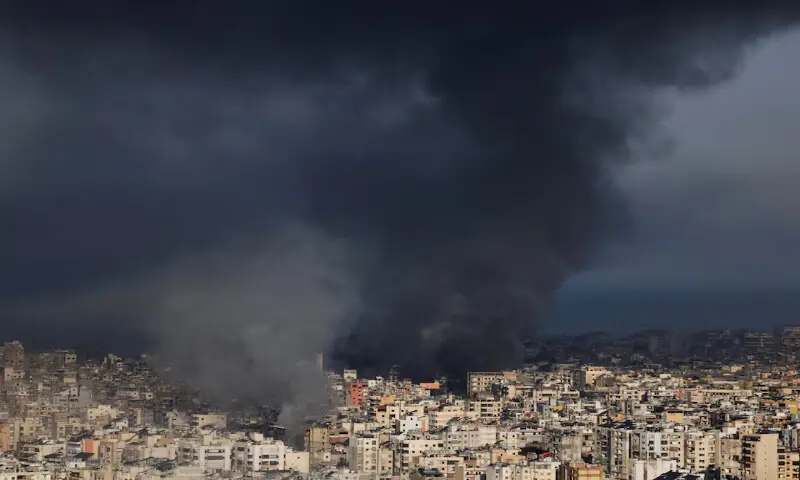
Thick black smoke blanketed Beirut as the sound of explosions ​rumbled. Authorities said dozens were killed.

Iran said deaths from the attacks ⁠had reached 787. That included 165 girls killed on the war’s first day when their school was bombed, the highest toll among several civilian targets reported to have been hit.

State media showed hundreds packing the streets of the southern city of Minab, where the girls’ small coffins, draped with Iranian flags, were passed from a truck and borne by the crowd across a sea of upraised hands towards the grave ​site.

The UN human rights office demanded an investigation into the strike, which its spokesperson called “absolutely horrific”.

Some Iranians have openly celebrated the death of Khamenei, 86, who had ruled Iran for 37 years and led security ​forces that killed thousands of anti-government protesters ⁠only weeks ago.

Rubio remarks on war

While Israeli officials explicitly say they want to oust Iran’s government, US officials have said the war aims to destroy Iran’s ability to project force beyond its borders.

In a closed‑door briefing with foreign diplomats on Tuesday, Israeli Foreign Minister Gideon Saar declined to set a timeframe for the military campaign, acknowledging Iran’s government could survive the war but expressing confidence it would collapse later, sources said.

The minister’s office did not immediately respond to a request for comment.

Like Israeli Prime Minister Benjamin Netanyahu, Trump has urged Iranians to topple the clerical leadership, which ⁠has tormented the ​US and its allies for generations, but on Tuesday, the president urged caution.

“If you’re going to go out and protest, don’t do it yet. It’s very dangerous out ​there,” he said.

In Israel, where Iranian missiles have killed 10 people since Saturday, air-raid sirens sounded repeatedly, warning of incoming attacks and sending millions into bomb shelters as the blasts of interceptions shook buildings.


For the latest news, follow us on Twitter @Aaj_Urdu. We are also on Facebook, Instagram and YouTube.

Live

Defence executives plan to meet as strikes on Iran diminish stockpiles

Published 04 Mar, 2026 09:20am 0 min read
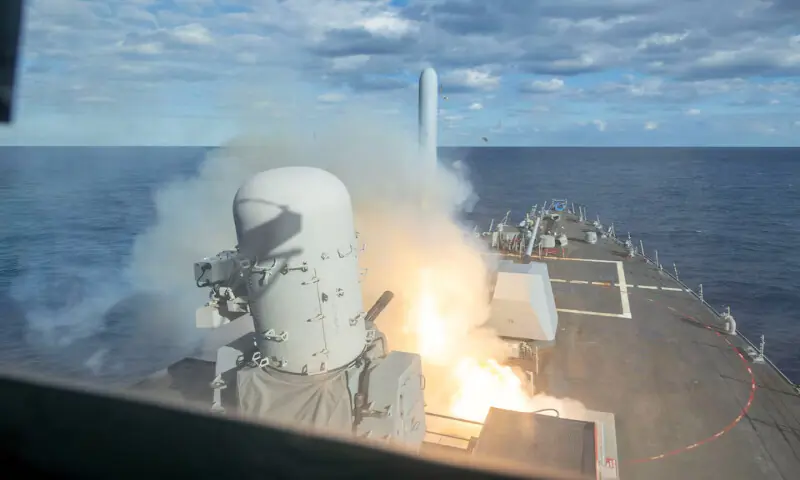
A still image shows a rocket launch from a ship. – Reuters
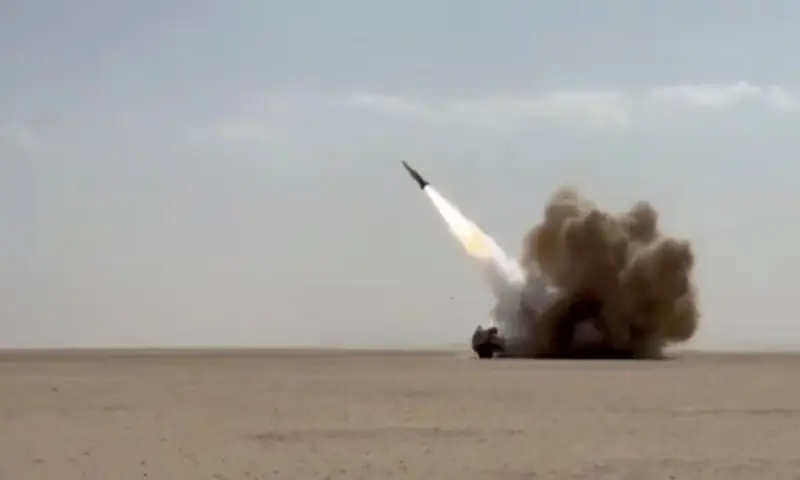
A screengrab from a video released by US CENTCOM shows a missile being fired from an unknown location. – Reuters

The Trump administration plans ​to meet with executives from the biggest US defence contractors at the White House on Friday to discuss ‌accelerating weapons production, as the Pentagon works to replenish supplies after strikes on Iran and several other recent military efforts, five people familiar with the plan told Reuters.

Companies including Lockheed Martin and Raytheon parent RTX, along with other key suppliers, have been invited to ​attend the meeting, the people said, speaking on condition of anonymity because the discussions are private.

The meeting underscores ​the urgency felt in Washington to shore up weapons stocks after the Iran operation ⁠drew heavily on munitions.

Since Russia invaded Ukraine in 2022 and Israel began military operations in Gaza, the ​US has drawn down billions of dollars’ worth of weapons stockpiles, including artillery systems, ammunition and anti-tank missiles.

The conflict in ​Iran has consumed longer-range missiles than those furnished to Kyiv.

At least one of the people said the gathering was expected to centre on pressing weapons makers to move faster to boost output.

Lockheed, the Pentagon and White House did not immediately respond to requests for ​comment.

RTX declined to comment. In a social media post Monday, Trump said there was a “virtually unlimited ​supply” of US munitions and that “wars can be fought “forever,” and very successfully, using just these supplies.”

The White House meeting comes as Deputy ‌Defence ⁠Secretary Steve Feinberg has been leading Pentagon work in recent days on a supplemental budget request of around $50 billion that could be released as soon as Friday, one of the people said.

The new money would pay for replacing the weapons used in recent conflicts including those in the Middle East. The figure is preliminary and could change.

The push ​to boost production has intensified ​following US military strikes ⁠on Iran, where the US deployed Tomahawk cruise missiles, F-35 stealth fighters and low-cost one-way attack drones on Saturday.

Tomahawk missile maker Raytheon has a new agreement with the Pentagon to ​eventually ramp production to 1,000 units annually.

The Pentagon currently plans to buy 57 of ​the missiles in ⁠2026 at an average cost of $1.3 million each.

The administration has been steadily ratcheting up pressure on defense contractors to prioritise production over shareholder payouts. President Donald Trump signed an executive order in January to identify contractors deemed to be underperforming on ⁠contracts while ​distributing profits to shareholders.

The Pentagon is expected to release a list ​of underperforming contractors.

Companies named will have 15 days to submit board-approved plans to correct the situation.

If those plans are judged insufficient, the Pentagon ​can pursue enforcement actions, including contract terminations.


For the latest news, follow us on Twitter @Aaj_Urdu. We are also on Facebook, Instagram and YouTube.

Live

Trump, Rubio offer conflicting reasons for entry into war

Published 04 Mar, 2026 09:01am 0 min read
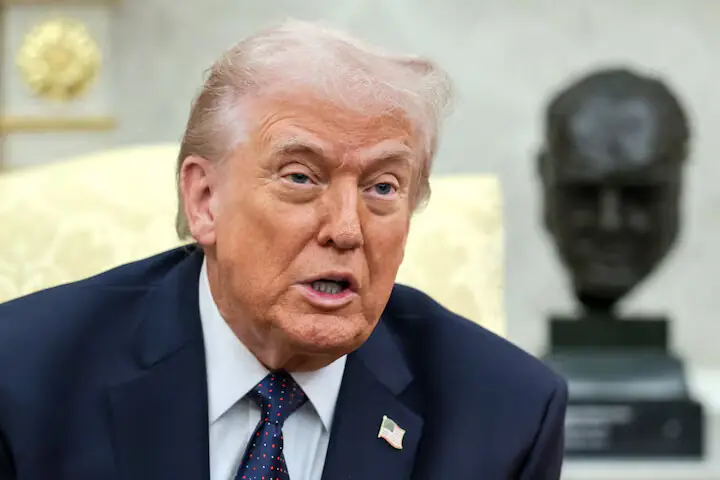
US President Donald Trump speaks as he meets with German Chancellor Friedrich Merz in the Oval Office at the White House in Washington, DC. – Reuters

President Donald Trump said on Tuesday he ordered US forces to join Israel’s attack ​on Iran because he believed Iran was about to strike first, contradicting the rationale offered a day earlier by his secretary of state for how the ‌war began.

Secretary of State Marco Rubio told reporters on Monday that the US launched the attack because of fears that Iran would retaliate in response to planned Israeli action against Tehran.

“We knew that there was going to be an Israeli action; we knew that that would precipitate an attack against American forces, and we knew that if we didn’t preemptively go after them before they launched those attacks, we would suffer higher casualties,” Rubio ​said.

Trump rejected suggestions that Israel pushed the US into the conflict, as his administration gave varying accounts and faced criticism from some supporters and Democrats who accused him of launching ​a “war of choice.”

“I might have forced their (Israel’s) hand,” Trump told reporters in the Oval Office as he met with German Chancellor Friedrich Merz.

“We were ⁠having negotiations with these lunatics, and it was my opinion that they were going to attack first. If we didn’t do it, they were going to attack first. I felt strongly ​about that.”

Iran has said the US assault was unprovoked.

Several prominent commentators ratcheted up their criticism of the Iran attacks, arguing Rubio’s comments indicated that Israel, not the Trump administration, was calling ​the shots.

“So he’s flat out telling us that we’re in a war with Iran because Israel forced our hand,” conservative podcaster Matt Walsh wrote of Rubio to his 4 million followers on X.

“This is basically the worst possible thing he could have said.”

Megyn Kelly, a podcaster, told her audience that she had doubts about Trump’s decision to strike Iran.

“Our government’s job is not to look out for Iran or for Israel. ​It’s to look out for us. And this feels very much to me like it is clearly Israel’s war,” Kelly said in remarks aired prior to Rubio’s comments.

The criticism from Trump’s ​right flank comes as his Republican Party is fighting to hold on to control of the US Congress in the November midterm elections.

The debate over the run-up to the war has forced the White House into ‌damage control.

Trump ⁠on Tuesday took questions from reporters in a public setting for the first time since the US-Israeli air war began three days earlier.

He previously discussed the attacks in two videos, in one-on-one interviews with select journalists, and in brief remarks on Monday at the White House.

The president said he believed Iran was on the brink of launching attacks, presenting no evidence to support his view, after US negotiations with Iran last Thursday in Geneva.

Iran had described those talks as positive, with more planned in the days ahead.

“It’s something that had to be done,” said Trump, who did not ​make a detailed case for war against ​Iran before it began.

Rubio, pressed on Tuesday ⁠about his prior comment during a visit to Capitol Hill, told reporters: “The bottom line is this: The president determined we were not going to get hit first. It’s that simple, guys.”

Two senior Trump administration officials held a conference call on Tuesday with reporters to describe events leading up ​to military operations, in particular the Geneva talks with Iranian officials held by US envoys Steve Witkoff and Jared Kushner and mediated by ​Oman.

The two officials said ⁠Witkoff and Kushner repeatedly pressed Iran to give up uranium enrichment.

Instead, Iran presented a plan that would allow the Iranians to enrich uranium at higher percentages at the Tehran Research Reactor in northern Iran, they said.

The US envoys felt the Iranians were engaging in delay tactics, according to the officials.

“They were unwilling to give up the building blocks of what they needed to preserve in order to ⁠get to ​a (nuclear) bomb,” one official said.

Iran denies seeking a nuclear weapon.

The envoys reported back to Trump, telling him it ​might have been possible to get a nuclear agreement similar to the one that former president Barack Obama’s team and world powers negotiated with Iran in 2015, but that it would take months.

Trump ordered US forces into action ​the next day, and the strikes began on Saturday.

For the latest news, follow us on Twitter @Aaj_Urdu. We are also on Facebook, Instagram and YouTube.

Live

Fire erupts at US Consulate in Dubai after drone attack

Published 04 Mar, 2026 08:06am 0 min read
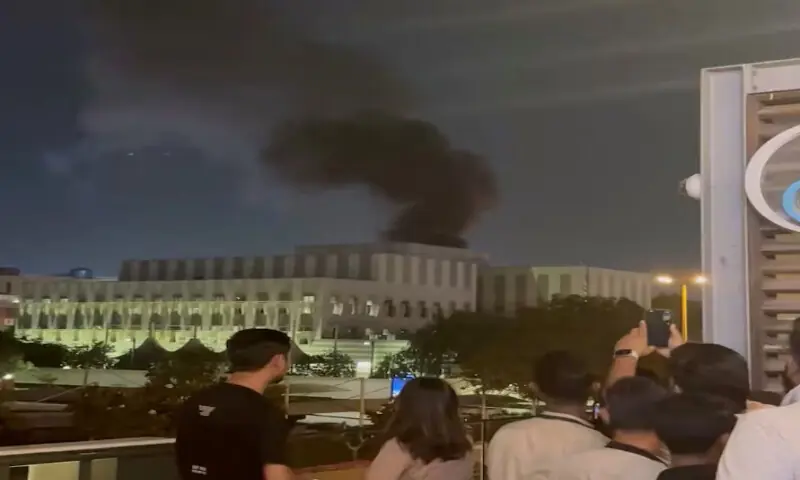
Smoke billows from an area near the US Consulate in Dubai. – Reuters
Screen grab
Screen grab

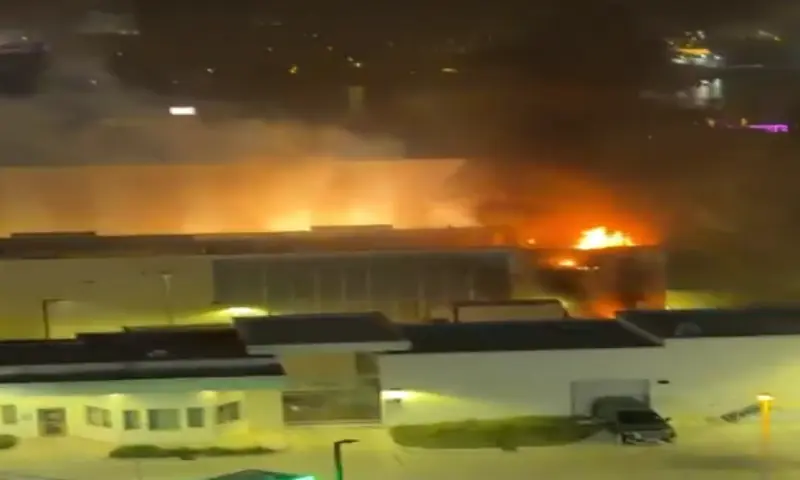
A drone attack targeted the US Consulate General in Dubai, causing a fire in the consulate building in the early hours of Wednesday.

The drone attack was likely launched by Iran in response to the ongoing US-Israeli attacks.

Authorities in the Dubai government later claimed that the blaze had been successfully brought under control.

According to Arab media reports, civil defence fire brigades rushed to the scene shortly after the incident.

The diplomatic area was cordoned off, and rescue operations were promptly initiated.

The sound of the explosion was reportedly heard several kilometres away.

The Dubai government stated that no casualties were reported and that the situation is now fully under control.

The US Consulate is located near the British Embassy in Dubai.

The consulates of Saudi Arabia and Qatar are also situated within walking distance of the site.

Moreover, the Pakistani consulate is located approximately 700 meters from the US Consulate.

For the latest news, follow us on Twitter @Aaj_Urdu. We are also on Facebook, Instagram and YouTube.

Pakistan braces for likely energy crisis as Middle East tensions escalate

Published 04 Mar, 2026 02:59am 0 min read
Federal Minister for Energy (Petroleum Division) Ali Pervez Malik. File photo

Federal Minister for Energy (Petroleum Division) Ali Pervez Malik on Tuesday said the government is closely monitoring the escalating crisis in the Middle East and preparing for potential economic fallout.

Speaking on Aaj News programme “News Insight with Aamir Zia,” Malik said the duration of the conflict remains uncertain and warned that Pakistan may require support from allies to manage added financial pressure.

His remarks come as tensions surge following US and Israeli strikes on Iran, raising fears of supply disruptions and volatility in global energy markets.

Malik said the government is assessing all possible scenarios. “We must prepare within our financial capacity — whether it is managing external accounts, maintaining energy reserves or ensuring fiscal stability,” he said.

He confirmed that Pakistan currently holds sufficient petrol and diesel stocks but cautioned that prolonged instability could push up global oil prices and fuel domestic inflation.

“Pakistan imports LNG from QatarEnergy. If the Strait of Hormuz is blocked, supply chains could be disrupted,” he said, adding that LPG imports from Iran may also face delays.

Calling for restraint, Malik urged citizens to conserve fuel and remain vigilant.

“The energy market is under stress. We must be cautious and prepared for challenges ahead,” he said.

The government, he added, is taking contingency measures to mitigate risks and protect economic stability.

For the latest news, follow us on Twitter @Aaj_Urdu. We are also on Facebook, Instagram and YouTube.

Middle East conflict widens as Israeli, US strikes again hit Iran

Published 04 Mar, 2026 12:11am 0 min read
Firefighters work following an Israeli and U.S. strike on a police station, amid the U.S.-Israel conflict with Iran, in Tehran, Iran, on March 2, 2026. Reuters

Israeli and U.S. forces pounded targets across Iran on Tuesday, prompting Iranian retaliatory strikes around the Gulf as the conflict spread to Lebanon, rattling global markets and sending oil prices sharply higher.

Four days into the war, U.S. President Donald ​Trump told reporters that the U.S. military had struck numerous Iranian naval and air targets, saying that “just about everything has been knocked out”.

In his most extensive public comments yet, he also sought to justify the assault on Iran, saying ‌he had ordered his forces into action because he had “a feeling” Iran would attack after negotiations over its nuclear programme stalled.

In response to the fierce assault, Iranian drones struck the U.S. embassy in Saudi Arabia after previously hitting the mission in Kuwait. Washington shut both embassies, as well as its one in Lebanon, and ordered non-emergency government personnel and their families to leave much of the Middle East.

A source familiar with Israel’s war plan told Reuters that the campaign had been planned to last two weeks and was going through its target list faster than expected, with early success in killing its leaders — including Supreme Leader Ayatollah Ali Khamenei in the ​opening salvoes on Saturday.

When asked who he would like in charge in Iran following the death of Khamenei, Trump gave a blunt assessment: “Most of the people we had in mind are dead.”

Iran’s capital Tehran, was repeatedly shaken by violent explosions throughout the ​day, with Israel striking the headquarters of the state broadcaster IRIB as well as an area around the city’s Mehrabad airport.

The building housing Iran’s Assembly of Experts, tasked with choosing a leader to replace ⁠Khamenei, was also flattened by an air attack in the city of Qom, south of Tehran, Iranian news agencies said.

It was not immediately clear if anyone died in the raid, but Trump said senior Iranians had perished on Tuesday, without giving details. “I guess there was another ​hit today on the new leadership, and it looks like that was pretty substantial also,” he said.

As Iranians have fled cities, the capital has become a ghost town.

“How long will this continue? Where are the shelters? Where is the government?” Bijan, 32, a bank employee, told Reuters by ​telephone from Tehran.

“Every night my wife and I hide in the basement. The whole city is empty. There is smoke and blood everywhere.”

Firuzeh Seraj said she was afraid to take her 10-year-old daughter for dialysis treatment after a hospital in the capital was struck.

“World, do you see? They are killing us. Hear our voice,” she said through tears from Tehran.

STOCK MARKETS TUMBLE, ENERGY PRICES SOAR

Global stock markets slid as the disruption of Middle East energy supplies threatened to reignite post-pandemic inflation.

The price of crude oil gained nearly 8% on Tuesday to above $83 per barrel, the highest since July 2024, taking gains since Friday to more than 15%, and ​the European wholesale price for natural gas was up a punishing 40%.

Trump said on Tuesday that as soon as the war ended, “those prices are going to drop I believe, lower than even before”.

Wall Street indexes were down nearly 2% by 1730 GMT, following European stocks’ more than ​3% loss after MSCI’s Asia Pacific index closed down 3.5%.

Iran has called the war an unprovoked attack.

“We have told the enemy that if you try to harm our main centres, we will hit all economic centres in the region,” Ebrahim Jabari, a senior adviser to the Revolutionary Guards commander-in-chief, said in ‌remarks carried by Iranian ⁠media.

Iran has fired missiles and drones at neighbouring Arab states that host U.S. bases, and strangled shipping through the Strait of Hormuz, where a fifth of the world’s supplies of oil and liquefied natural gas travel past its coast.

Qatar, one of the world’s main exporters of LNG, has halted production, while tankers have dropped anchor in the Gulf rather than brave the strait.

The cost of hiring a tanker to ship oil from the Middle East to Asia has nearly quadrupled since last week to an all-time high well over $400,000 a day.

The war has also spread to Lebanon, where Iran’s Hezbollah allies fired on Israel, which responded with air strikes and reinforcements of ground positions in the south. Thick black smoke blanketed Beirut as the sound of explosions rumbled in the air. Authorities said dozens were killed there.

Iran said its death toll from the attacks had ​reached 787, citing the Red Crescent.

State media showed hundreds packing the ​streets of the southern city of Minab to mourn scores ⁠of girls killed in the bombing of a girls’ school on the war’s first day, by far the worst of several reported attacks to hit civilian targets.

The girls’ small coffins, draped with Iranian flags, were passed from a truck and borne by the crowd across a sea of upraised hands towards the grave site.

The U.N. human rights office demanded an investigation into the strike, which its spokesperson called “absolutely horrific”.

Some Iranians have openly ​celebrated the death of Khamenei, 86, who had ruled Iran for 37 years and led security forces that killed thousands of anti-government protesters only weeks ago.

RUBIO SAYS WASHINGTON ATTACKED KNOWING ISRAEL WOULD STRIKE

While Israeli ​officials explicitly say they want to oust Iran’s ⁠government, U.S. officials have said the war’s aim is to destroy Iran’s ability to project force beyond its borders.

Trump has also urged Iranians to topple the clerical leadership, which has tormented the U.S. and its allies for generations, but urged caution.

“If you’re going to go out and protest, don’t do it yet. It’s very dangerous out there,” he said on Tuesday, ahead of a meeting with German Chancellor Friedrich Merz.

Israeli Lieutenant Colonel Nadav Shoshani told a briefing that the duration could depend on developments, adding: “We have prepared a general scope of weeks.” Asked if Israel could deploy ground forces to Iran, Shoshani ⁠said that was ​unlikely.

In Israel, where Iranian missiles have killed 10 people since Saturday, air raid sirens sounded repeatedly, warning of incoming attacks and sending millions into bomb shelters as the ​blasts of interceptions shook buildings and shrapnel crashed through the roof of a residential building near Tel Aviv.

For the latest news, follow us on Twitter @Aaj_Urdu. We are also on Facebook, Instagram and YouTube.

Israel, US strikes hit building of body to elect new Iran supreme leader: media

Published 03 Mar, 2026 11:16pm 0 min read

Israeli and US strikes on Tuesday hit the building of a body tasked with electing Iran’s new supreme leader, local media reported.

Former leader Ayatollah Ali Khamenei was killed during a wave of US-Israeli attacks on Saturday.

“The American-Zionist criminals attacked the Assembly of Experts building in Qom,” south of Tehran, according to the Tasnim news agency.

The assembly is tasked with appointing, supervising and potentially dismissing the supreme leader.

Local media showed footage of the building severely damaged in the strikes.

There was no information on any potential casualties.

The Mehr news agency reported that the building was no longer being used for meetings.

Tasnim reported that strikes had already targeted the main headquarters of the Assembly of Experts in Tehran on Monday.

Iran declared on Sunday the start of a transition process after confirming Khamenei’s death.

The plans include the formation of an interim leadership council including the president, the head of the judiciary and a jurist from the Guardian Council, the body that oversees legislation and vets electoral candidates.

Also playing a central role is Iran’s top security chief Ali Larijani.

The interim leadership council will lead the country while a permanent successor is found for the supreme leader.

For the latest news, follow us on Twitter @Aaj_Urdu. We are also on Facebook, Instagram and YouTube.

Oil infrastructure hit in Oman, UAE as Iran presses on with strikes

Published 03 Mar, 2026 11:10pm 0 min read
A representational image. Reuters file

Drones struck a fuel tank in Oman on Tuesday, while in the UAE, an oil storage zone was hit, as Iran pursued its campaign against the Gulf economy in response to US and Israeli strikes.

The attacks came after Iran widened its targets to include infrastructure in Saudi Arabia, the Emirates and Qatar — where the state-run energy firm suspended LNG production, sending European energy prices skyrocketing.

Several drones also targeted the port of Duqm on Oman’s eastern coast, according to a security source quoted by the official Oman News Agency.

“The resulting damage was contained without any human casualties,” the report said.

The Oman attack is the second on the port in three days, with the sultanate targeted despite acting as a mediator between Iran and the United States just days prior to the war.

On Sunday, a worker was injured when two drones struck the same port. One hit accommodation for workers, while debris from the other landed near fuel tanks, the Oman News Agency said.

They were the first attacks on the sultanate since war broke out.

In the United Arab Emirates, falling debris from an intercepted drone caused a fire at an oil storage and trading zone in the emirate of Fujairah on Tuesday, authorities said.

“No injuries were reported, the fire was brought under control and normal operations in the area have resumed,” the Fujairah Media Office said.

Iran’s attacks have widened to include energy facilities, despite Tehran claiming it is targeting US assets.

QatarEnergy, one of the world’s biggest liquefied natural gas (LNG) exporters, suspended production due to drone strikes against two of its sites on Monday.

Also on Monday, a drone struck a fuel tank terminal in the UAE capital Abu Dhabi, causing a fire, though operations were not impacted.

An oil tanker was also hit off the coast of Oman on the same day, killing one person in a blast in the vessel’s main engine room.

A source close to the Saudi government told AFP that a “concerted” Iranian attack on oil facilities could trigger a military response from Riyadh.

The warning followed a drone strike at state oil giant Saudi Aramco’s Ras Tanura refinery — one of the region’s biggest — which forced it to halt some operations.

“It depends if this is seen as a direct attack on Aramco by the Iranian leadership or a rogue drone,” the source told AFP.

Saudi Arabia would target “Iranian oil facilities if Iran mounts a concerted attack on Aramco”, the source said.

For the latest news, follow us on Twitter @Aaj_Urdu. We are also on Facebook, Instagram and YouTube.

US State Dept orders non-emergency staff to leave six Mideast countries

Published 03 Mar, 2026 10:50pm 0 min read
Traffic moves on a road, with the city’s skyline visible in the background, in Riyadh, Saudi Arabia. Reuters file

The US State Department said Tuesday it had ordered non-emergency staff to leave six Middle Eastern countries, as Iran retaliated against US-Israeli strikes.

The war in the Middle East began on Saturday when joint US-Israeli strikes killed Iran’s supreme leader, causing Tehran to launch retaliatory salvos across the region.

The department said it had updated travel advisories for Bahrain, Iraq, Jordan, Kuwait, Qatar and the United Arab Emirates “to reflect the ordered departure of non-emergency U.S. government personnel”.

The advisories for five of the countries cited an “ongoing threat of drone and missile attacks from Iran”, while the notice for Iraq cited “security concerns”.

Iran’s Revolutionary Guards targeted a US air base in Bahrain, the Islamic Republic’s elite force said in a statement carried on Tuesday by the official IRNA news agency.

In Iraq, hundreds of protesters in the capital Baghdad, many dressed in black, attempted Sunday to storm the fortified Green Zone where the US embassy is located.

In Jordan, the US embassy in the capital Amman said Monday it had temporarily evacuated its staff due to an unspecified threat.

The US embassy in Kuwait said Tuesday it was closed until further notice, a day after an AFP correspondent saw smoke rising from the mission following Iranian attacks on the country.

AFP journalists in Qatar heard explosions on Tuesday, while in the UAE, falling debris from an intercepted drone caused a fire at an oil storage zone.

The State Department earlier urged Americans to leave all of the Middle East from Egypt eastward due to safety concerns.

For the latest news, follow us on Twitter @Aaj_Urdu. We are also on Facebook, Instagram and YouTube.