Live
Iran israel war
Live

Explosions reported in Tehran and Jerusalem as conflict intensifies

Published 04 Mar, 2026 11:37am 0 min read
A woman cries as victims of a US air strike on an Iranian girls school are buried in Minab, Iran. – Reuters

Tensions in the Middle East escalated dramatically on Wednesday as Israel intensified strikes on Iranian missile sites and weapons factories.

Iran responded with dozens of ballistic missiles and drone attacks across the Gulf, including a strike on the US Embassy in Saudi Arabia.

According to officials, nearly 800 people have been killed in Iran over four days of fighting.

Lebanon has reported 50 deaths, including seven children, following Israeli retaliatory strikes on Hezbollah, the Iranian-backed group.

Israel has reported 11 deaths on its side, with the Pentagon confirming six US service members were killed in a drone strike in Kuwait.

On Wednesday, the Israeli military carried out a series of air strikes across Tehran, targeting buildings linked to Iran’s Basij force and internal security command.

Both organisations have previously been involved in suppressing protests, including the deadly January crackdown that left thousands dead and tens of thousands detained.

Israel and the US have stated that part of their goal is to pressure Iran’s leadership by striking forces associated with domestic repression.

While Israel has claimed that most incoming missiles have been intercepted, casualties continue to rise across the region.

Kuwait reported an additional death of an 11-year-old girl from shrapnel, and three fatalities were confirmed in the United Arab Emirates, with one in Bahrain.

The Red Crescent Society reports that US-Israeli strikes have killed at least 787 people in Iran.

For the latest news, follow us on Twitter @Aaj_Urdu. We are also on Facebook, Instagram and YouTube.

Israel hits Hezbollah ally’s office in Sidon: State media

Published 04 Mar, 2026 10:47am 0 min read
Rescuers gather at the site of an Israeli airstrike that targeted the Jamaa Islamiya offices in the southern Lebanese coastal city of Sidon on March 3, 2026. AFP

Israel struck a headquarters belonging to the Jamaa Islamiya, an ally of Hamas and Hezbollah, in the southern Lebanese city of Sidon on Tuesday, state media reported.

“The Israeli enemy carried out an air raid a short while ago, targeting a headquarters of the Jamaa Islamiya” in the coastal city, state media said.

Sidon was largely spared of major Israeli attacks during the last war between Israel and Hezbollah, which a November 2024 ceasefire sought to end.

The strike almost entirely destroyed a seven-storey building, according to an AFP photographer, and ambulances rushed to the scene.

It caused a powerful blast in a densely populated area, as seen on local media.

The Israeli military then issued an evacuation warning for another building in Sidon, saying it will hit “Hezbollah military infrastructure… in light of its prohibited attempts to rebuild its activities in the area”.

The Jamaa Islamiya had previously been the target of Israeli strikes in Lebanon after claiming responsibility for rocket launches towards Israel during the war between Israel and Hezbollah that began in October 2023.

Last month, it accused Israel of seizing one of its officials from a town near the border.

The Israeli military said that it “apprehended a senior terrorist” in the group who was then “transferred for further questioning in Israeli territory”.

For the latest news, follow us on Twitter @Aaj_Urdu. We are also on Facebook, Instagram and YouTube.

Live

4 killed as Israeli strikes hit deep Into Lebanon

Published 04 Mar, 2026 10:35am 0 min read
Smoke rises after an Israeli strike on Beirut’s southern suburbs, Lebanon. – Reuters
Smoke rises after an Israeli strike on Beirut’s southern suburbs in Lebanon. – Reuters
Debris at the site of an Israeli strike in Lebanon. – Reuters

An Israeli strike on a four-storey residential building has killed at ​least four people and wounded six others in the ‌eastern Lebanese city of Baalbek, state news agency NNA said.

Rescue teams were also working to pull families from beneath the rubble.

The strike was ​part of a sharp escalation in fighting along the Lebanese-Israeli border ​since Monday, after Hezbollah fired drones and missiles at ⁠Israel.

Since then, the Iran-aligned group has launched more rockets and ​Israel has carried out waves of air strikes across Lebanon and ​sent troops into the south.

Hezbollah said ​on Wednesday it fired rockets at a gathering of ‌Israeli ⁠forces near the frontier in response to Israeli strikes on Lebanon.

Israel also warned residents in 16 Lebanese villages to evacuate, saying ⁠Hezbollah activity was forcing it to act.

Lebanon’s health ministry ⁠said ​on Tuesday that Israeli strikes had ​killed at least 50 people and wounded 335 since the latest escalation began.

For the latest news, follow us on Twitter @Aaj_Urdu. We are also on Facebook, Instagram and YouTube.

Live

Trump says US navy could escort oil tankers in Gulf

Published 04 Mar, 2026 10:14am 0 min read
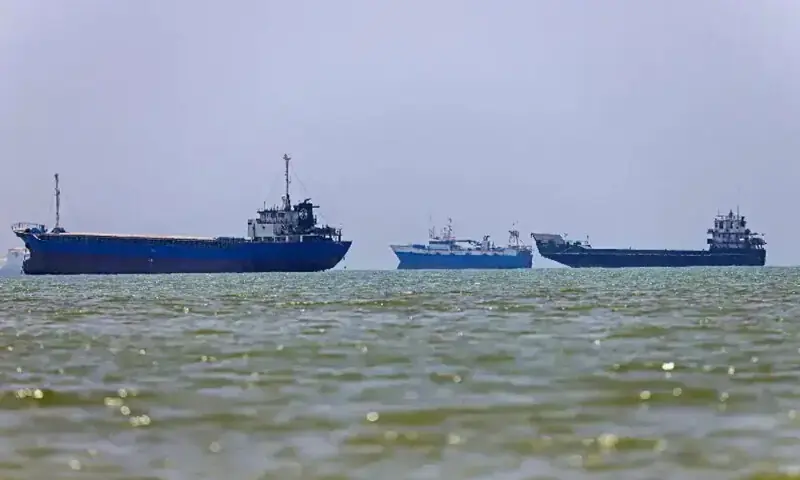
Tankers are seen off the coast of Fujairah in United Arab Emirates. – Reuters

The US navy could begin escorting oil tankers through the Strait of ​Hormuz if necessary, President Donald Trump said on Tuesday, adding he had ordered the US International Development Finance Corporation to provide political risk insurance and ‌financial guarantees for maritime trade in the Gulf.

The move marks one of the administration’s most aggressive steps yet to attempt to contain soaring energy prices amid escalating conflict in the Middle East that has raised risks to shipping through key waterways.

Global crude prices have spiked since Israeli and US forces began striking Iran over the weekend, leading to fighting that has interrupted Middle East oil tanker shipments.

Ship owners and analysts were uncertain that military escorts and insurance backstopping by the DFC would ​be enough to stop rising prices, however.

The DFC, launched in 2019, is a government agency that partners with private investors to support projects in developing countries.

Trump has made ​lower fuel costs for Americans central to his economic messaging, and the move signals a willingness to use financial and military tools to prevent ⁠disruptions to global crude supplies.

“No matter what, the United States will ensure the free flow of energy to the world,” Trump said in a social media post.

Trump said more actions are ​coming.

Treasury Secretary Scott Bessent and Energy Secretary Chris Wright were expected to meet Trump to present a list of proposals to address the issue and finalise a response, ​two sources familiar with the plan told Reuters on condition of anonymity.

Trump told reporters earlier Tuesday that Americans may have to live with higher oil prices for a short period, “but as soon as this ends, those prices are going to drop, I believe, lower than even before.”

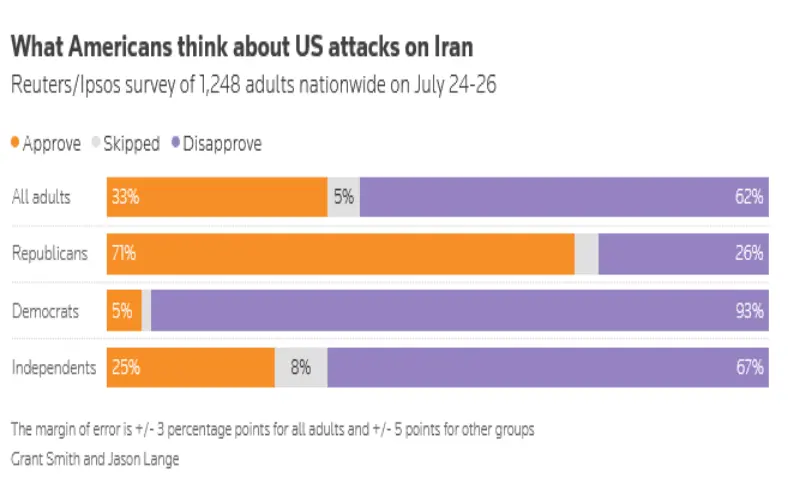
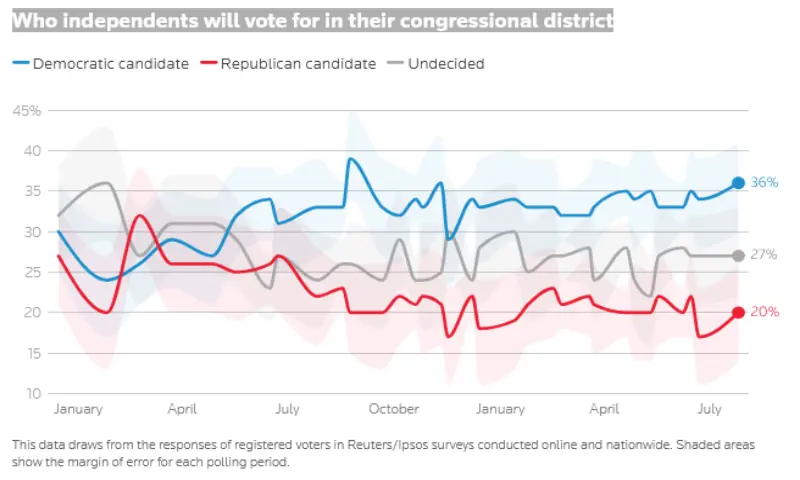
If higher energy prices persist, they could undermine efforts by lawmakers in Trump’s Republican Party to retain power in the congressional midterm elections in November.

War-risk premiums rise

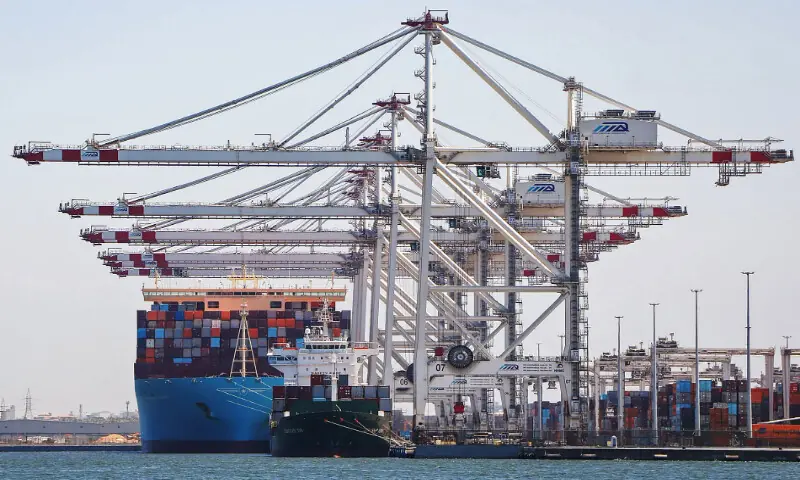
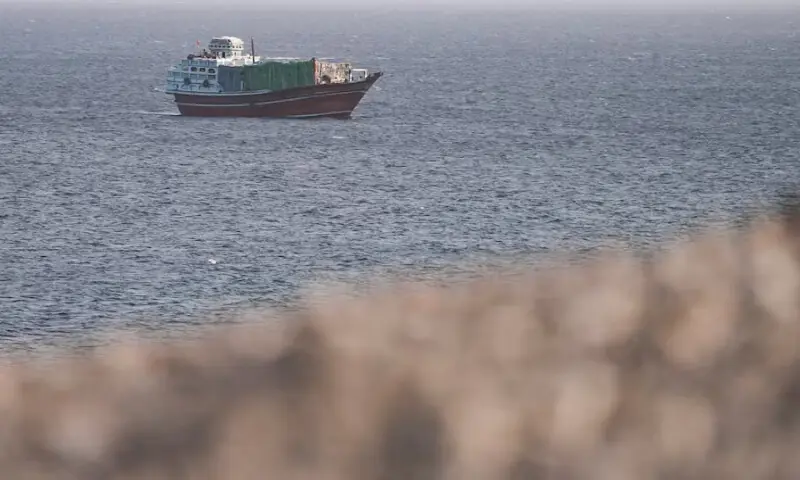
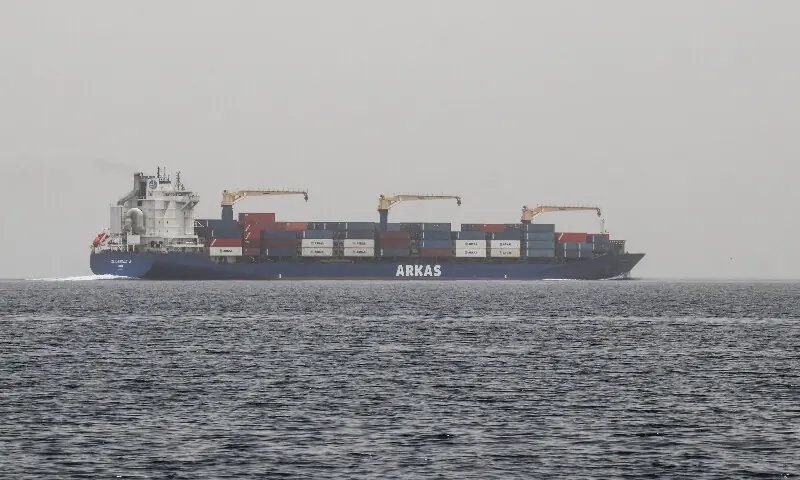
Oil shipments have been largely blocked through the Strait of Hormuz, a chokepoint between Iran and Oman through which around a fifth of the world’s oil is shipped, with a ​number of tankers damaged by strikes and others stranded.

Shipping companies and insurers have begun reassessing their exposure to the region.

War-risk premiums have jumped and some providers have scaled back or withdrawn coverage, industry sources say.

Higher ‌insurance costs ⁠have made it more expensive for tankers willing to risk travelling through the area, prompting some operators to delay voyages or seek alternative routes.

US support for tanker insurance is not unprecedented.

During the Iran-Iraq conflict in the 1980s, Washington reflagged tankers and provided naval escorts when private insurers withdrew coverage.

After the September 11, 2001, attacks, the US issued insurance policies to keep shipping moving amid elevated war-risk premiums.

‘Deals with Iranians’

Shipping sources who declined to be named said Trump’s plan may fall short of calming shippers as long as fighting continues, because the US has a limited number of ships that ​could escort tankers.

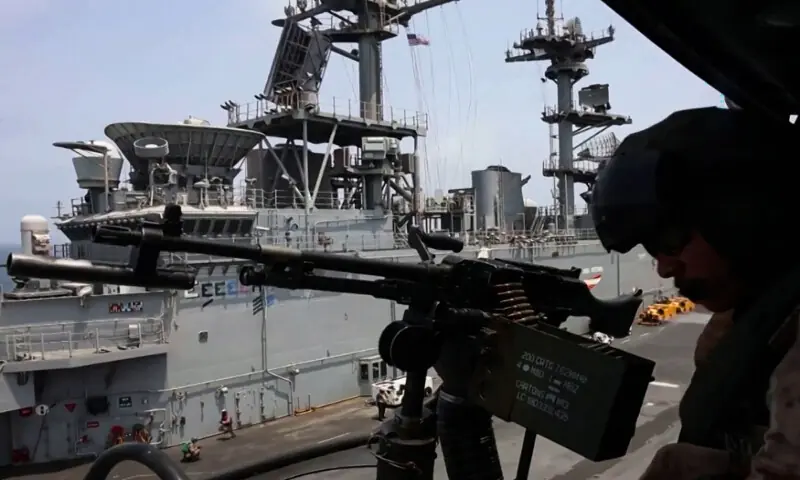
As of Monday, the US navy ​had 12 warships, including an aircraft carrier, ⁠in the Middle East that the military could use to help escort commercial ships.

But some of those vessels are being used to carry out strikes against Iran and shoot down its missiles.

It could also be a risky endeavour for the naval escorts, who could have to ​contend with Iranian projectiles and small armed vessels.

The US navy occasionally escorts ships in sensitive waterways.

There are also a number of multinational naval ​task forces that could ⁠be used to help, including CTF-152, currently commanded by Qatari forces.

Rohit Rathod, a senior analyst with ship-tracking firm Vortexa, said Trump’s measures may not be enough for a wide and safe passage, but that some ships could get through.

“The attacks could still take place,” Rathod said. “What is more realistic is that insurance stays high but we will have individual players making deals with the Iranians to get exemptions ⁠for their ships.”

The Trump ​administration has been reluctant to tap the nation’s Strategic Petroleum Reserve, but officials could soon signal that they are prepared to ​use it if prices continue to climb, one source said.

Kevin Book, policy analyst at ClearView Energy Partners, said focusing on shipping may not be enough to stop rising prices. “The war poses other upside risks to crude prices, including threats ​to production sites.”


For the latest news, follow us on Twitter @Aaj_Urdu. We are also on Facebook, Instagram and YouTube.

US shuts Middle East embassies after Iranian drone strikes

Published 04 Mar, 2026 09:58am 0 min read
Smoke rises following an explosion in Tehran, Iran. – Reuters
Debris lies on a street in the aftermath of an Israeli and the US strike on a police station in Tehran, Iran. – Reuters
A view of debris following an Israeli and US strike on Motahari Hospital in Tehran, Iran. – Reuters
A view of destroyed window blinds and debris following an Israeli and US strike on Motahhari Hospital  in Tehran, Iran. – Reuters
A view of destroyed window blinds and debris following an Israeli and US strike on Motahhari Hospital in Tehran, Iran. – Reuters
Firefighters work following an Israeli and US strike on a police station in Tehran, Iran. – Reuters
A man stands next to damaged vehicles in the aftermath of an Israeli and the US strike on a police station in Tehran, Iran. – Reuters
Aftermath of an Israeli and the US strike on a police station  in Tehran, Iran. – Reuters
Aftermath of an Israeli and the US strike on a police station in Tehran, Iran. – Reuters

Israeli and US forces pounded targets across Iran on Tuesday, prompting Iranian retaliatory strikes around the Gulf as the conflict spread to Lebanon, rattled global markets and sent oil prices sharply higher.

Four days into the war, US President Donald Trump told reporters that the US military had struck ​numerous Iranian naval and air targets, saying that “just about everything has been knocked out.”

Trump also sought to justify the assault on Iran, saying he had ordered the campaign because he had “a feeling” Iran would attack after negotiations over its ‌nuclear programme stalled.

In response to the fierce assault, Iranian drones struck the US embassy in Saudi Arabia after previously hitting the mission in Kuwait.

Washington shut both embassies, as well as its embassy in Lebanon, and ordered non-emergency government personnel and their families to leave much of the Middle East.

Smoke was seen rising near the US consulate in Dubai on Tuesday, and Secretary of State Marco Rubio told reporters a parking lot was hit and all personnel were accounted for.

A source familiar with Israel’s war plan told Reuters that the campaign had been planned to last two weeks and was going through its target list faster than expected, with early success in ​killing Iran’s leaders — including Supreme Leader Ayatollah Ali Khamenei in the opening salvoes on Saturday.

Trump on Monday said initial US projections were for the operation to last four to five weeks.

When asked who he would like to be in charge in Iran, ​Trump on Tuesday gave a blunt assessment: “Most of the people we had in mind are dead.”

Iran’s capital Tehran was repeatedly shaken by explosions throughout the day, as Israel struck the state broadcaster IRIB and ⁠an area around the city’s Mehrabad airport.

The Israeli military also said it hit the Minzadehei underground nuclear development site in Tehran.

The building housing Iran’s Assembly of Experts, tasked with choosing a leader to replace Khamenei, was also flattened by an air attack in the city ​of Qom, Iranian news agencies said. Israel said it was still reviewing the results of that strike.

It was not immediately clear if anyone died in the raid, but Trump said senior Iranians had perished on Tuesday.

As Iranians have fled cities, the capital has become a ghost town.

“How ​long will this continue? Where are the shelters? Where is the government?” Bijan, 32, a bank employee, told Reuters by telephone from Tehran.

“Every night my wife and I hide in the basement. The whole city is empty. There is smoke and blood everywhere.”

Firuzeh Seraj said she was afraid to take her 10-year-old daughter for dialysis treatment after a hospital in the capital was struck.

“World, do you see? They are killing us. Hear our voice,” she said through tears from Tehran.

Stock markets tumble

Global stock markets slid as the disruption of Middle East energy supplies threatened to reignite inflation.

The price of crude oil, gained 5% and the European wholesale ​price for natural gas was up a punishing 40%.

US retail gasoline prices averaged $3.11 per gallon, according to the American Automobile Association — a highly visible sign of the rising consumer prices that voters cite as a top concern ahead of the November midterm elections.

Wall Street stock indexes ​were down in midday trading, following losses of more than 3% in European and Asian indexes.

Iran has called the war an unprovoked attack.

“We have told the enemy that if you try to harm our main centres, we will hit all economic centres in the region,” Revolutionary Guards adviser Ebrahim Jabari said in ‌Iranian media.

Iran has ⁠fired missiles and drones at neighbouring Arab states that host US bases, and strangled shipping through the Strait of Hormuz, where a fifth of the world’s supplies of oil and liquefied natural gas travel past its coast.

Qatar, one of the world’s main exporters of LNG, has halted production, while tankers have dropped anchor in the Gulf rather than brave the strait.

The cost of hiring a tanker to ship oil from the Middle East to Asia has nearly quadrupled since last week to an all-time high well over $400,000 a day.

Trump said the US government would provide insurance to tankers in the region and the Navy would escort them through the strait if necessary.

Global air transport has also been in chaos, with Middle East air hubs linking Asia, Europe and Africa shut.

In Lebanon, Iran’s Hezbollah allies fired on Israel, which responded with air strikes and reinforcements of ground positions in ​the south.

Thick black smoke blanketed Beirut as the sound of explosions ​rumbled. Authorities said dozens were killed.

Iran said deaths from the attacks ⁠had reached 787. That included 165 girls killed on the war’s first day when their school was bombed, the highest toll among several civilian targets reported to have been hit.

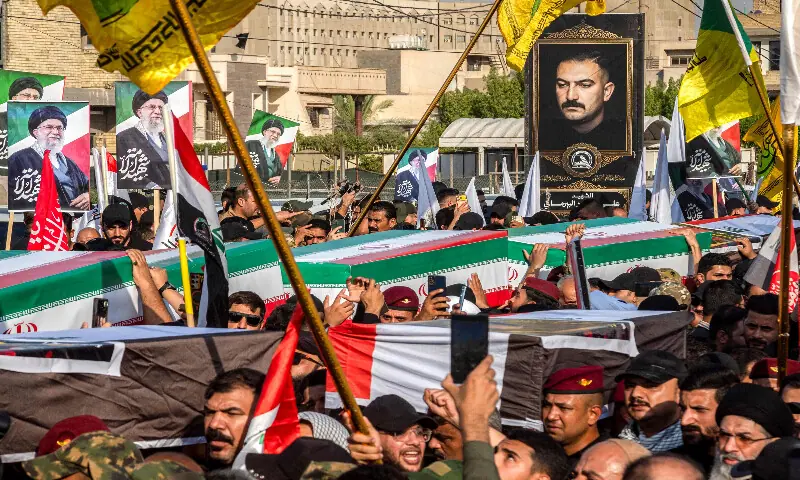
State media showed hundreds packing the streets of the southern city of Minab, where the girls’ small coffins, draped with Iranian flags, were passed from a truck and borne by the crowd across a sea of upraised hands towards the grave ​site.

The UN human rights office demanded an investigation into the strike, which its spokesperson called “absolutely horrific”.

Some Iranians have openly celebrated the death of Khamenei, 86, who had ruled Iran for 37 years and led security ​forces that killed thousands of anti-government protesters ⁠only weeks ago.

Rubio remarks on war

While Israeli officials explicitly say they want to oust Iran’s government, US officials have said the war’s aim is to destroy Iran’s ability to project force beyond its borders.

In a closed‑door briefing with foreign diplomats on Tuesday, Israeli Foreign Minister Gideon Saar declined to set a timeframe for the military campaign, acknowledging Iran’s government could survive the war but expressing confidence it would collapse later, sources said.

The minister’s office did not immediately respond to a request for comment.

Like Israeli Prime Minister Benjamin Netanyahu, Trump has urged Iranians to topple the clerical leadership, which ⁠has tormented the ​US and its allies for generations, but on Tuesday, the president urged caution.

“If you’re going to go out and protest, don’t do it yet. It’s very dangerous out ​there,” he said.

In Israel, where Iranian missiles have killed 10 people since Saturday, air-raid sirens sounded repeatedly, warning of incoming attacks and sending millions into bomb shelters as the blasts of interceptions shook buildings.


For the latest news, follow us on Twitter @Aaj_Urdu. We are also on Facebook, Instagram and YouTube.

Live

Defence executives plan to meet as strikes on Iran diminish stockpiles

Published 04 Mar, 2026 09:20am 0 min read
A still image shows a rocket launch from a ship. – Reuters
A screengrab from a video released by US CENTCOM shows a missile being fired from an unknown location. – Reuters

The Trump administration plans ​to meet with executives from the biggest US defence contractors at the White House on Friday to discuss ‌accelerating weapons production, as the Pentagon works to replenish supplies after strikes on Iran and several other recent military efforts, five people familiar with the plan told Reuters.

Companies including Lockheed Martin and Raytheon parent RTX, along with other key suppliers, have been invited to ​attend the meeting, the people said, speaking on condition of anonymity because the discussions are private.

The meeting underscores ​the urgency felt in Washington to shore up weapons stocks after the Iran operation ⁠drew heavily on munitions.

Since Russia invaded Ukraine in 2022 and Israel began military operations in Gaza, the ​US has drawn down billions of dollars’ worth of weapons stockpiles, including artillery systems, ammunition and anti-tank missiles.

The conflict in ​Iran has consumed longer-range missiles than those furnished to Kyiv.

At least one of the people said the gathering was expected to centre on pressing weapons makers to move faster to boost output.

Lockheed, the Pentagon and White House did not immediately respond to requests for ​comment.

RTX declined to comment. In a social media post Monday, Trump said there was a “virtually unlimited ​supply” of US munitions and that “wars can be fought “forever,” and very successfully, using just these supplies.”

The White House meeting comes as Deputy ‌Defence ⁠Secretary Steve Feinberg has been leading Pentagon work in recent days on a supplemental budget request of around $50 billion that could be released as soon as Friday, one of the people said.

The new money would pay for replacing the weapons used in recent conflicts including those in the Middle East. The figure is preliminary and could change.

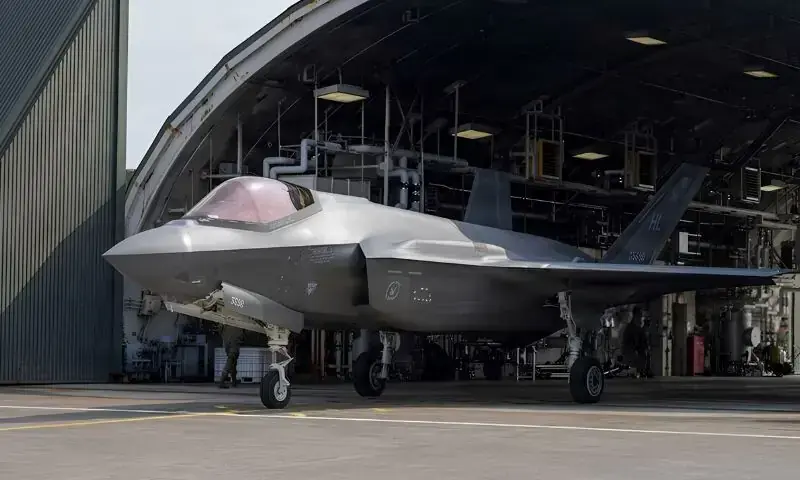
The push ​to boost production has intensified ​following US military strikes ⁠on Iran, where the US deployed Tomahawk cruise missiles, F-35 stealth fighters and low-cost one-way attack drones on Saturday.

Tomahawk missile maker Raytheon has a new agreement with the Pentagon to ​eventually ramp production to 1,000 units annually.

The Pentagon currently plans to buy 57 of ​the missiles in ⁠2026 at an average cost of $1.3 million each.

The administration has been steadily ratcheting up pressure on defense contractors to prioritise production over shareholder payouts. President Donald Trump signed an executive order in January to identify contractors deemed to be underperforming on ⁠contracts while ​distributing profits to shareholders.

The Pentagon is expected to release a list ​of underperforming contractors.

Companies named will have 15 days to submit board-approved plans to correct the situation.

If those plans are judged insufficient, the Pentagon ​can pursue enforcement actions, including contract terminations.


For the latest news, follow us on Twitter @Aaj_Urdu. We are also on Facebook, Instagram and YouTube.

Live

Trump, Rubio offer conflicting reasons for entry into war

Published 04 Mar, 2026 09:01am 0 min read
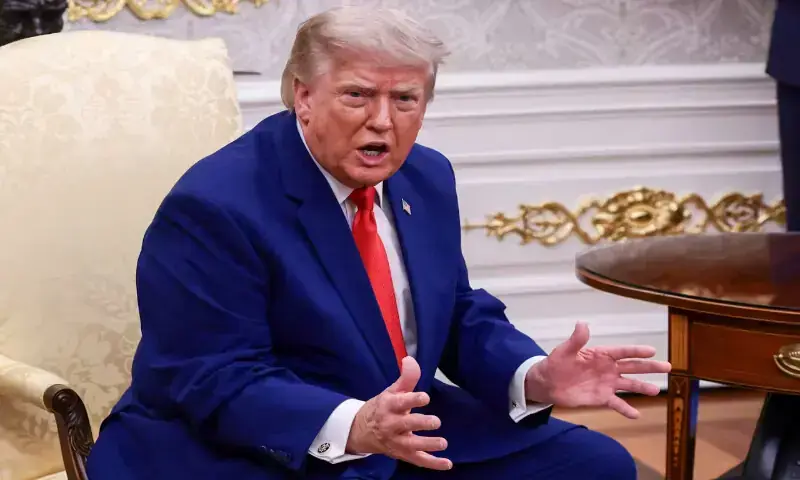
US President Donald Trump speaks as he meets with German Chancellor Friedrich Merz in the Oval Office at the White House in Washington, DC. – Reuters

President Donald Trump said on Tuesday he ordered US forces to join Israel’s attack ​on Iran because he believed Iran was about to strike first, contradicting the rationale offered a day earlier by his secretary of state for how the ‌war began.

Secretary of State Marco Rubio told reporters on Monday that the US launched the attack because of fears that Iran would retaliate in response to planned Israeli action against Tehran.

“We knew that there was going to be an Israeli action; we knew that that would precipitate an attack against American forces, and we knew that if we didn’t preemptively go after them before they launched those attacks, we would suffer higher casualties,” Rubio ​said.

Trump rejected suggestions that Israel pushed the US into the conflict, as his administration gave varying accounts and faced criticism from some supporters and Democrats who accused him of launching ​a “war of choice.”

“I might have forced their (Israel’s) hand,” Trump told reporters in the Oval Office as he met with German Chancellor Friedrich Merz.

“We were ⁠having negotiations with these lunatics, and it was my opinion that they were going to attack first. If we didn’t do it, they were going to attack first. I felt strongly ​about that.”

Iran has said the US assault was unprovoked.

Several prominent commentators ratcheted up their criticism of the Iran attacks, arguing Rubio’s comments indicated that Israel, not the Trump administration, was calling ​the shots.

“So he’s flat out telling us that we’re in a war with Iran because Israel forced our hand,” conservative podcaster Matt Walsh wrote of Rubio to his 4 million followers on X.

“This is basically the worst possible thing he could have said.”

Megyn Kelly, a podcaster, told her audience that she had doubts about Trump’s decision to strike Iran.

“Our government’s job is not to look out for Iran or for Israel. ​It’s to look out for us. And this feels very much to me like it is clearly Israel’s war,” Kelly said in remarks aired prior to Rubio’s comments.

The criticism from Trump’s ​right flank comes as his Republican Party is fighting to hold on to control of the US Congress in the November midterm elections.

The debate over the run-up to the war has forced the White House into ‌damage control.

Trump ⁠on Tuesday took questions from reporters in a public setting for the first time since the US-Israeli air war began three days earlier.

He previously discussed the attacks in two videos, in one-on-one interviews with select journalists, and in brief remarks on Monday at the White House.

The president said he believed Iran was on the brink of launching attacks, presenting no evidence to support his view, after US negotiations with Iran last Thursday in Geneva.

Iran had described those talks as positive, with more planned in the days ahead.

“It’s something that had to be done,” said Trump, who did not ​make a detailed case for war against ​Iran before it began.

Rubio, pressed on Tuesday ⁠about his prior comment during a visit to Capitol Hill, told reporters: “The bottom line is this: The president determined we were not going to get hit first. It’s that simple, guys.”

Two senior Trump administration officials held a conference call on Tuesday with reporters to describe events leading up ​to military operations, in particular the Geneva talks with Iranian officials held by US envoys Steve Witkoff and Jared Kushner and mediated by ​Oman.

The two officials said ⁠Witkoff and Kushner repeatedly pressed Iran to give up uranium enrichment.

Instead, Iran presented a plan that would allow the Iranians to enrich uranium at higher percentages at the Tehran Research Reactor in northern Iran, they said.

The US envoys felt the Iranians were engaging in delay tactics, according to the officials.

“They were unwilling to give up the building blocks of what they needed to preserve in order to ⁠get to ​a (nuclear) bomb,” one official said.

Iran denies seeking a nuclear weapon.

The envoys reported back to Trump, telling him it ​might have been possible to get a nuclear agreement similar to the one that former president Barack Obama’s team and world powers negotiated with Iran in 2015, but that it would take months.

Trump ordered US forces into action ​the next day, and the strikes began on Saturday.

For the latest news, follow us on Twitter @Aaj_Urdu. We are also on Facebook, Instagram and YouTube.

Live

Fire erupts at US Consulate in Dubai after drone attack

Published 04 Mar, 2026 08:06am 0 min read
Smoke billows from an area near the US Consulate in Dubai. – Reuters
Screen grab
Screen grab

A drone attack targeted the US Consulate General in Dubai, causing a fire in the consulate building in the early hours of Wednesday.

The drone attack was likely launched by Iran in response to the ongoing US-Israeli attacks.

Authorities in the Dubai government later claimed that the blaze had been successfully brought under control.

According to Arab media reports, civil defence fire brigades rushed to the scene shortly after the incident.

The diplomatic area was cordoned off, and rescue operations were promptly initiated.

The sound of the explosion was reportedly heard several kilometres away.

The Dubai government stated that no casualties were reported and that the situation is now fully under control.

The US Consulate is located near the British Embassy in Dubai.

The consulates of Saudi Arabia and Qatar are also situated within walking distance of the site.

Moreover, the Pakistani consulate is located approximately 700 meters from the US Consulate.

For the latest news, follow us on Twitter @Aaj_Urdu. We are also on Facebook, Instagram and YouTube.

Pakistan braces for likely energy crisis as Middle East tensions escalate

Published 04 Mar, 2026 02:59am 0 min read
Federal Minister for Energy (Petroleum Division) Ali Pervez Malik. File photo

Federal Minister for Energy (Petroleum Division) Ali Pervez Malik on Tuesday said the government is closely monitoring the escalating crisis in the Middle East and preparing for potential economic fallout.

Speaking on Aaj News programme “News Insight with Aamir Zia,” Malik said the duration of the conflict remains uncertain and warned that Pakistan may require support from allies to manage added financial pressure.

His remarks come as tensions surge following US and Israeli strikes on Iran, raising fears of supply disruptions and volatility in global energy markets.
Malik said the government is assessing all possible scenarios. “We must prepare within our financial capacity — whether it is managing external accounts, maintaining energy reserves or ensuring fiscal stability,” he said.

He confirmed that Pakistan currently holds sufficient petrol and diesel stocks but cautioned that prolonged instability could push up global oil prices and fuel domestic inflation.

“Pakistan imports LNG from QatarEnergy. If the Strait of Hormuz is blocked, supply chains could be disrupted,” he said, adding that LPG imports from Iran may also face delays.

Calling for restraint, Malik urged citizens to conserve fuel and remain vigilant.

“The energy market is under stress. We must be cautious and prepared for challenges ahead,” he said.

The government, he added, is taking contingency measures to mitigate risks and protect economic stability.

For the latest news, follow us on Twitter @Aaj_Urdu. We are also on Facebook, Instagram and YouTube.

Middle East conflict widens as Israeli, US strikes again hit Iran

Published 04 Mar, 2026 12:11am 0 min read
Firefighters work following an Israeli and U.S. strike on a police station, amid the U.S.-Israel conflict with Iran, in Tehran, Iran, on March 2, 2026. Reuters

Israeli and U.S. forces pounded targets across Iran on Tuesday, prompting Iranian retaliatory strikes around the Gulf as the conflict spread to Lebanon, rattling global markets and sending oil prices sharply higher.

Four days into the war, U.S. President Donald ​Trump told reporters that the U.S. military had struck numerous Iranian naval and air targets, saying that “just about everything has been knocked out”.

In his most extensive public comments yet, he also sought to justify the assault on Iran, saying ‌he had ordered his forces into action because he had “a feeling” Iran would attack after negotiations over its nuclear programme stalled.

In response to the fierce assault, Iranian drones struck the U.S. embassy in Saudi Arabia after previously hitting the mission in Kuwait. Washington shut both embassies, as well as its one in Lebanon, and ordered non-emergency government personnel and their families to leave much of the Middle East.

A source familiar with Israel’s war plan told Reuters that the campaign had been planned to last two weeks and was going through its target list faster than expected, with early success in killing its leaders — including Supreme Leader Ayatollah Ali Khamenei in the ​opening salvoes on Saturday.

When asked who he would like in charge in Iran following the death of Khamenei, Trump gave a blunt assessment: “Most of the people we had in mind are dead.”

Iran’s capital Tehran, was repeatedly shaken by violent explosions throughout the ​day, with Israel striking the headquarters of the state broadcaster IRIB as well as an area around the city’s Mehrabad airport.

The building housing Iran’s Assembly of Experts, tasked with choosing a leader to replace ⁠Khamenei, was also flattened by an air attack in the city of Qom, south of Tehran, Iranian news agencies said.

It was not immediately clear if anyone died in the raid, but Trump said senior Iranians had perished on Tuesday, without giving details. “I guess there was another ​hit today on the new leadership, and it looks like that was pretty substantial also,” he said.

As Iranians have fled cities, the capital has become a ghost town.

“How long will this continue? Where are the shelters? Where is the government?” Bijan, 32, a bank employee, told Reuters by ​telephone from Tehran.

“Every night my wife and I hide in the basement. The whole city is empty. There is smoke and blood everywhere.”

Firuzeh Seraj said she was afraid to take her 10-year-old daughter for dialysis treatment after a hospital in the capital was struck.

“World, do you see? They are killing us. Hear our voice,” she said through tears from Tehran.

STOCK MARKETS TUMBLE, ENERGY PRICES SOAR

Global stock markets slid as the disruption of Middle East energy supplies threatened to reignite post-pandemic inflation.

The price of crude oil gained nearly 8% on Tuesday to above $83 per barrel, the highest since July 2024, taking gains since Friday to more than 15%, and ​the European wholesale price for natural gas was up a punishing 40%.

Trump said on Tuesday that as soon as the war ended, “those prices are going to drop I believe, lower than even before”.

Wall Street indexes were down nearly 2% by 1730 GMT, following European stocks’ more than ​3% loss after MSCI’s Asia Pacific index closed down 3.5%.

Iran has called the war an unprovoked attack.

“We have told the enemy that if you try to harm our main centres, we will hit all economic centres in the region,” Ebrahim Jabari, a senior adviser to the Revolutionary Guards commander-in-chief, said in ‌remarks carried by Iranian ⁠media.

Iran has fired missiles and drones at neighbouring Arab states that host U.S. bases, and strangled shipping through the Strait of Hormuz, where a fifth of the world’s supplies of oil and liquefied natural gas travel past its coast.

Qatar, one of the world’s main exporters of LNG, has halted production, while tankers have dropped anchor in the Gulf rather than brave the strait.

The cost of hiring a tanker to ship oil from the Middle East to Asia has nearly quadrupled since last week to an all-time high well over $400,000 a day.

The war has also spread to Lebanon, where Iran’s Hezbollah allies fired on Israel, which responded with air strikes and reinforcements of ground positions in the south. Thick black smoke blanketed Beirut as the sound of explosions rumbled in the air. Authorities said dozens were killed there.

Iran said its death toll from the attacks had ​reached 787, citing the Red Crescent.

State media showed hundreds packing the ​streets of the southern city of Minab to mourn scores ⁠of girls killed in the bombing of a girls’ school on the war’s first day, by far the worst of several reported attacks to hit civilian targets.
The girls’ small coffins, draped with Iranian flags, were passed from a truck and borne by the crowd across a sea of upraised hands towards the grave site.

The U.N. human rights office demanded an investigation into the strike, which its spokesperson called “absolutely horrific”.

Some Iranians have openly ​celebrated the death of Khamenei, 86, who had ruled Iran for 37 years and led security forces that killed thousands of anti-government protesters only weeks ago.

RUBIO SAYS WASHINGTON ATTACKED KNOWING ISRAEL WOULD STRIKE

While Israeli ​officials explicitly say they want to oust Iran’s ⁠government, U.S. officials have said the war’s aim is to destroy Iran’s ability to project force beyond its borders.

Trump has also urged Iranians to topple the clerical leadership, which has tormented the U.S. and its allies for generations, but urged caution.

“If you’re going to go out and protest, don’t do it yet. It’s very dangerous out there,” he said on Tuesday, ahead of a meeting with German Chancellor Friedrich Merz.

Israeli Lieutenant Colonel Nadav Shoshani told a briefing that the duration could depend on developments, adding: “We have prepared a general scope of weeks.” Asked if Israel could deploy ground forces to Iran, Shoshani ⁠said that was ​unlikely.

In Israel, where Iranian missiles have killed 10 people since Saturday, air raid sirens sounded repeatedly, warning of incoming attacks and sending millions into bomb shelters as the ​blasts of interceptions shook buildings and shrapnel crashed through the roof of a residential building near Tel Aviv.

For the latest news, follow us on Twitter @Aaj_Urdu. We are also on Facebook, Instagram and YouTube.

Israel, US strikes hit building of body to elect new Iran supreme leader: media

Published 03 Mar, 2026 11:16pm 0 min read

Israeli and US strikes on Tuesday hit the building of a body tasked with electing Iran’s new supreme leader, local media reported.

Former leader Ayatollah Ali Khamenei was killed during a wave of US-Israeli attacks on Saturday.

“The American-Zionist criminals attacked the Assembly of Experts building in Qom,” south of Tehran, according to the Tasnim news agency.

The assembly is tasked with appointing, supervising and potentially dismissing the supreme leader.

Local media showed footage of the building severely damaged in the strikes.

There was no information on any potential casualties.

The Mehr news agency reported that the building was no longer being used for meetings.

Tasnim reported that strikes had already targeted the main headquarters of the Assembly of Experts in Tehran on Monday.

Iran declared on Sunday the start of a transition process after confirming Khamenei’s death.

The plans include the formation of an interim leadership council including the president, the head of the judiciary and a jurist from the Guardian Council, the body that oversees legislation and vets electoral candidates.

Also playing a central role is Iran’s top security chief Ali Larijani.

The interim leadership council will lead the country while a permanent successor is found for the supreme leader.

For the latest news, follow us on Twitter @Aaj_Urdu. We are also on Facebook, Instagram and YouTube.

Oil infrastructure hit in Oman, UAE as Iran presses on with strikes

Published 03 Mar, 2026 11:10pm 0 min read
A representational image. Reuters file

Drones struck a fuel tank in Oman on Tuesday, while in the UAE, an oil storage zone was hit, as Iran pursued its campaign against the Gulf economy in response to US and Israeli strikes.

The attacks came after Iran widened its targets to include infrastructure in Saudi Arabia, the Emirates and Qatar — where the state-run energy firm suspended LNG production, sending European energy prices skyrocketing.

Several drones also targeted the port of Duqm on Oman’s eastern coast, according to a security source quoted by the official Oman News Agency.

“The resulting damage was contained without any human casualties,” the report said.

The Oman attack is the second on the port in three days, with the sultanate targeted despite acting as a mediator between Iran and the United States just days prior to the war.

On Sunday, a worker was injured when two drones struck the same port. One hit accommodation for workers, while debris from the other landed near fuel tanks, the Oman News Agency said.

They were the first attacks on the sultanate since war broke out.

In the United Arab Emirates, falling debris from an intercepted drone caused a fire at an oil storage and trading zone in the emirate of Fujairah on Tuesday, authorities said.

“No injuries were reported, the fire was brought under control and normal operations in the area have resumed,” the Fujairah Media Office said.

Iran’s attacks have widened to include energy facilities, despite Tehran claiming it is targeting US assets.

QatarEnergy, one of the world’s biggest liquefied natural gas (LNG) exporters, suspended production due to drone strikes against two of its sites on Monday.

Also on Monday, a drone struck a fuel tank terminal in the UAE capital Abu Dhabi, causing a fire, though operations were not impacted.

An oil tanker was also hit off the coast of Oman on the same day, killing one person in a blast in the vessel’s main engine room.

A source close to the Saudi government told AFP that a “concerted” Iranian attack on oil facilities could trigger a military response from Riyadh.

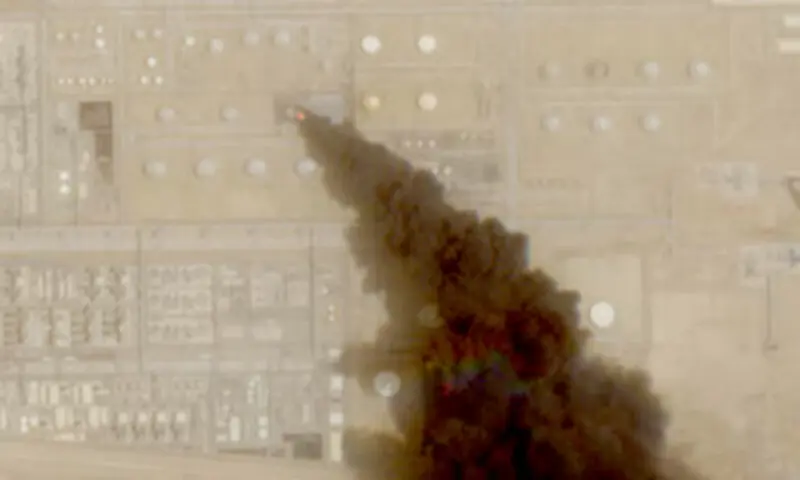
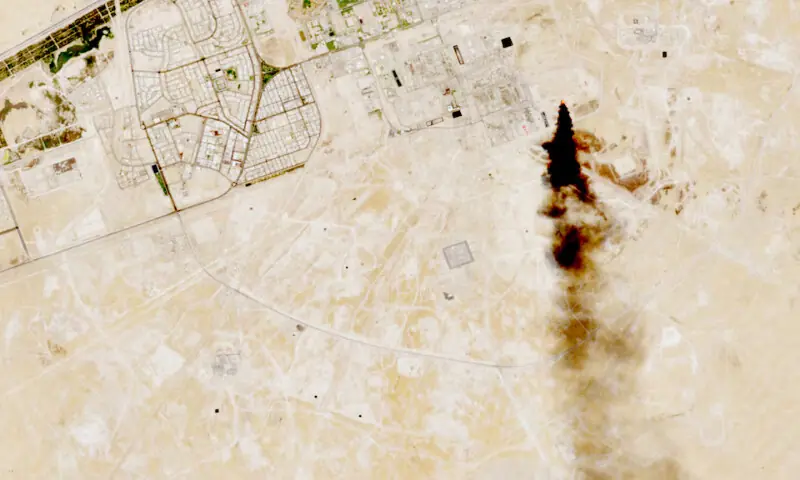
The warning followed a drone strike at state oil giant Saudi Aramco’s Ras Tanura refinery — one of the region’s biggest — which forced it to halt some operations.

“It depends if this is seen as a direct attack on Aramco by the Iranian leadership or a rogue drone,” the source told AFP.

Saudi Arabia would target “Iranian oil facilities if Iran mounts a concerted attack on Aramco”, the source said.

For the latest news, follow us on Twitter @Aaj_Urdu. We are also on Facebook, Instagram and YouTube.

US State Dept orders non-emergency staff to leave six Mideast countries

Published 03 Mar, 2026 10:50pm 0 min read
Traffic moves on a road, with the city’s skyline visible in the background, in Riyadh, Saudi Arabia. Reuters file

The US State Department said Tuesday it had ordered non-emergency staff to leave six Middle Eastern countries, as Iran retaliated against US-Israeli strikes.

The war in the Middle East began on Saturday when joint US-Israeli strikes killed Iran’s supreme leader, causing Tehran to launch retaliatory salvos across the region.

The department said it had updated travel advisories for Bahrain, Iraq, Jordan, Kuwait, Qatar and the United Arab Emirates “to reflect the ordered departure of non-emergency U.S. government personnel”.

The advisories for five of the countries cited an “ongoing threat of drone and missile attacks from Iran”, while the notice for Iraq cited “security concerns”.

Iran’s Revolutionary Guards targeted a US air base in Bahrain, the Islamic Republic’s elite force said in a statement carried on Tuesday by the official IRNA news agency.

In Iraq, hundreds of protesters in the capital Baghdad, many dressed in black, attempted Sunday to storm the fortified Green Zone where the US embassy is located.

In Jordan, the US embassy in the capital Amman said Monday it had temporarily evacuated its staff due to an unspecified threat.

The US embassy in Kuwait said Tuesday it was closed until further notice, a day after an AFP correspondent saw smoke rising from the mission following Iranian attacks on the country.

AFP journalists in Qatar heard explosions on Tuesday, while in the UAE, falling debris from an intercepted drone caused a fire at an oil storage zone.

The State Department earlier urged Americans to leave all of the Middle East from Egypt eastward due to safety concerns.

For the latest news, follow us on Twitter @Aaj_Urdu. We are also on Facebook, Instagram and YouTube.

Strikes hit Iranian military sites near Tehran; seven injured in Israel

Published 03 Mar, 2026 10:16pm 0 min read

Underground military installations in Pardis, near Tehran, were targeted in reported US and Israeli strikes as hostilities between Iran and Israel escalated.

The Israeli military said on Telegram it had launched a new wave of large-scale attacks targeting infrastructure in Tehran. It added that further details would be released later. No immediate official figures on casualties or damage were provided.

Iran’s Islamic Revolutionary Guard Corps claimed it had destroyed alleged enemy positions in Iraq’s semi-autonomous Kurdistan region.

In a statement, it said the sites were being used by groups planning infiltration and attacks inside Iran. Kurdish authorities in Iraq did not immediately respond to the claim.

Meanwhile, Iranian missile fire reportedly struck central Israel, injuring at least seven people, according to Israeli media.

The missiles hit areas including Bnei Brak, east of Tel Aviv, and Rosh HaAyin. Witnesses said buildings and vehicles were damaged by missiles and shrapnel, fires broke out at multiple locations, and roads were affected.

The Israeli military confirmed that Iranian missiles had landed in central Israel and said search and rescue teams were operating at the impact sites alongside emergency services. Authorities said the nature and scale of the damage were being assessed.

For the latest news, follow us on Twitter @Aaj_Urdu. We are also on Facebook, Instagram and YouTube.

Pakistan urges Iran not to target Saudi Arabia: Rana Sanaullah

Published 03 Mar, 2026 10:11pm 0 min read
Adviser to the Prime Minister on Political Affairs Rana Sanaullah. File photo

Adviser to the Prime Minister on Political Affairs Rana Sanaullah has urged Iran not to attack Saudi Arabia, saying Pakistan wants to prevent the conflict from widening and is working to ease tensions in the region.

Speaking on Aaj News programme “Spotlight”, Sanaullah said Pakistan had taken a guarantee from Saudi Arabia for Iran and that Tehran should trust it.

He stressed that Iran should avoid targeting Saudi Arabia, warning that Pakistan would meet its obligations under a defence agreement if required.

He said Islamabad did not want the war to expand and was making efforts to calm the situation.

“This war will remain limited to Iran and Israel,” he said, adding that Pakistan would play its role for regional stability.

The adviser said Pakistan was actively working for peace and was part of diplomatic efforts aimed at de-escalation.

He reiterated that the country sought peace and stability in the region and did not support a broader conflict, but would safeguard its national interests and defence responsibilities.

Sanaullah also warned that strict action would be taken against elements operating from Afghanistan who were involved in terrorism, saying such militants would be dealt with firmly.

For the latest news, follow us on Twitter @Aaj_Urdu. We are also on Facebook, Instagram and YouTube.

Tehran’s Mehrabad airport targeted by strikes: Iranian media

Published 03 Mar, 2026 09:44pm 0 min read
The sun is seen setting through a plume of smoke following a strike on the Iranian capital Tehran, on March 3, 2026. AFP

One of Iran’s two airports, Mehrabad, which mainly handles domestic flights, was targeted on Tuesday by strikes as the United States and Israel kept up their bombardment of the Islamic Republic for a fourth day.

The Mehr news agency published photos showing a cloud of grey smoke rising into the sky behind what appeared to be a runway.

“The American-Zionist terrorists attacked the area around the Mehrabad airport” in the capital’s west, it said.

For the latest news, follow us on Twitter @Aaj_Urdu. We are also on Facebook, Instagram and YouTube.

Two Turkish journalists detained in Israel

Published 03 Mar, 2026 09:36pm 0 min read
Screengrab/social media

Two Turkish journalists in Israel to cover the Iran war were detained in Tel Aviv on Tuesday while filming a live broadcast, Turkish officials and Israeli police said.

Burhanettin Duran, Turkey’s presidential communications chief, said in a post on X that CNN Turk reporter Emrah Cakmak and cameraman Halil Kahraman had been detained in Israel.

They were arrested while shooting a live broadcast in Tel Aviv with Israel’s police saying they “allegedly filmed a security facility”.

CNN Turk posted footage of the moment they were stopped while filming in the street outside the Israeli defence ministry compound.

“Following a call… about two suspects who were equipped with cameras and allegedly broadcasting live to a foreign media outlet, a police unit arrived at the scene, halted the broadcast, and began checking the suspects,” a police statement said.

“The suspects, who identified themselves as journalists, presented an expired press card and were taken for questioning.”

Israeli military censorship prohibits the media from filming live broadcasts during air raid sirens or disclosing the exact locations of impact sites.

Duran said Turkey was “making the necessary efforts for the immediate release of our journalist colleagues” and were carefully following the matter.

The Turkish Journalists’ Union (TGS) said the journalists were there to film in connection with the Iran strikes and to share the latest situation with viewers in Turkey.

“Blocking journalists who are responsible for informing the public, and failing to protect journalists in war zones, is a violation of press freedom,” it wrote on X, urging Israel to “release our colleagues”.

CNN Turk is a Turkish news channel that operates under a licensing agreement with the parent company of CNN International.

For the latest news, follow us on Twitter @Aaj_Urdu. We are also on Facebook, Instagram and YouTube.

Trump: Iran wants talks, I say ‘too late’

Published 03 Mar, 2026 09:00pm 0 min read
U.S. President Donald Trump. Reuters file

Iran stepped up its attacks on economic targets and US missions across the Middle East on Tuesday as President Donald Trump warned it was “too late” for the Islamic republic to seek talks to escape the war.

As drones and missiles crashed into oil facilities and US embassies in the Gulf, Washington’s ally Israel bombarded targets in Iran and pushed troops deeper into Lebanon to battle the Tehran-backed militia Hezbollah.

“Their air defence, air force, navy, and leadership is gone. They want to talk. I said: ‘Too late!’,” Trump posted on his social media site, two days after he had agreed to talks and four days after US and Israeli strikes wiped out much of Iran’s senior leadership.

As if to underline Trump’s new stance, loud blasts echoed around downtown Tehran, AFP journalists in the city reported.

According to Iranian media, US and Israeli strikes had targeted the building housing the committee that is to elect Iran’s new supreme leader.

“The military has launched a ninth wave of strikes in Tehran. The Air Force has now begun a large-scale wave of strikes targeting the Iranian terror regime’s infrastructure in Tehran,” the Israeli military said.

At almost the same moment, the US embassy in Riyadh — which was damaged and briefly caught fire overnight in an Iranian drone strike — on Tuesday warned of an imminent attack in the eastern Saudi city of Dhahran, home to much of the kingdom’s oil and gas installations along the Gulf coast.

“There is a threat of imminent missile and UAV (drone) attacks over Dhahran. Do not come to the US Consulate,” the embassy posted on social media.

As Trump dismissed any remaining hope of a negotiated solution, Israel’s Foreign Minister Gideon Saar urged foreign capitals to cut all ties with Tehran “following the Iranian regime’s attacks on all its neighbours and the massacre of its own people”.

China’s Foreign Minister Wang Yi, according to the official Xinhua news agency, warned Saar in a call that Beijing opposes the strikes.

“Force cannot truly solve problems — instead, it will only bring new problems and severe after-effects,” he said.

The United States and Israel triggered the rapidly spreading war on Saturday with a strike on Tehran that killed supreme leader Ayatollah Ali Khamenei and several more senior Iranian figures, followed by days of air and missile raids aimed at weakening the remaining government.

But Iran’s armed forces responded with missile and drone attacks on Israel, US embassies and military bases and on its Arab neighbours around the Gulf, targeting oil and gas facilities, ports and airports, foreign missions and landmark hotels.

Qatar has shut down its massive LNG industry, shipping traffic through the strategic Straits of Hormuz has all but halted and thousands of flights have been cancelled, leaving foreign governments scrambling to rescue trapped travellers.

The war has already sent shockwaves through world markets. Energy prices are soaring and share prices are falling. Asian giant India added its concern to China’s on Tuesday, with the foreign ministry expressing “great anxiety” for the fate of its 10 million citizens in the Gulf region.

“Our trade and energy supply chains also traverse this geography. Any major disruption has serious consequences for the Indian economy,” ministry spokesman Randhir Jaiswal said.

Market shockwaves

Drones meanwhile struck a fuel tank in Oman and in the UAE an oil storage zone was hit by falling debris from an intercepted drone, as Iran apparently widened its targets beyond US assets.

Qatar’s state-run QatarEnergy said it would halt some downstream production of substances including urea, polymers, methanol and aluminium after Iran attacked two gas processing plants.

The announcement prompted an immediate two percent rise in the price of aluminium on the London Metal Exchange.

In Oman, several drones targeted the port of Duqm on its eastern coast on Tuesday. The attack was the second on the port in three days, with the sultanate hit despite acting as a mediator between Iran and the United States just days prior to the war.

The UAE says it has been targeted with more than 800 drones and nearly 200 missiles since the war erupted.

Reporters in the Saudi capital Riyadh saw smoke damage on the walls and roof of the American embassy after two drones hit it overnight, starting a fire in one building.

Saudi police were swarming the diplomatic quarter and checking the IDs of everyone who entered. The Saudi foreign ministry described the attack as “heinous and unjustified”.

Iran’s Revolutionary Guards spokesman Ali Mohammad Naini meanwhile warned that “the gates of hell will open more and more, moment by moment, upon the United States and Israel”.

United Nations rights chief Volker Turk said he was “deeply shocked” by the war’s toll on civilians, and the UN nuclear watchdog said Iran’s Natanz enrichment plant appeared in satellite imagery to have suffered “recent damage”.

On Monday, the US State Department had urged “Americans to DEPART NOW” from all of the countries and territories of the Middle East “due to serious safety risks”.

Israel, meanwhile, said it was seizing new forward positions inside southern Lebanon, after Hezbollah fired missiles in support of its backer Iran, provoking a furious Israeli bombardment.

Defence Minister Israel Katz said Israeli forces had been authorised “to advance and take control of additional strategic positions in Lebanon in order to prevent attacks on Israeli border communities”.

Shortly afterwards, the military spokesman said: “In practice, Northern Command has moved forward… and is creating a buffer, as we promised, between our residents and any threat.”

A Lebanese army source said Israeli forces had advanced from around Kfar Kila, in an apparent attempt “to establish a broad security belt in south Lebanon”.

Death toll rises

According to a Lebanese military source, following Israel’s “escalation”, the Lebanese army redeployed troops posted near the southern border back to their bases. Hezbollah said it had launched strikes targeting three Israeli bases.

A spokesman for the UN refugee agency said 30,000 Lebanese had been driven from their homes and registered at collective shelters, while “many more slept in their cars on the side of roads”.

Throughout the region, the death toll has steadily increased, with six US military personnel killed so far in the war, according to US Central Command.

Iranian media have reported hundreds of Iranian casualties, including scores at a girl’s school, although AFP reporters have not been able to verify tolls independently.

The US-based Human Rights Activists News Agency (HRANA) on Tuesday said there were 101 casualties inside Iran on the third day of the war, including “85 civilian deaths and 11 military personnel killed”.

For the latest news, follow us on Twitter @Aaj_Urdu. We are also on Facebook, Instagram and YouTube.

At least 116 Middle East-bound flights from Pakistan cancelled

Published 03 Mar, 2026 08:15pm 0 min read
A representational image. File photo

At least 116 flights from airports across Pakistan to the Middle East were cancelled on Tuesday, affecting thousands of passengers as regional airspace closures triggered widespread disruption.

The cancellations followed rising tensions between Iran and the United States and the resulting uncertainty in the Middle East.

Several countries in the region temporarily closed their airspace, forcing airlines to suspend or reroute services.

According to sources, 32 flights were cancelled at Jinnah International Airport, 28 at Islamabad International Airport, and 20 at Allama Iqbal International Airport.

At Peshawar International Airport, 16 flights to Dubai, Sharjah, Qatar and Abu Dhabi were called off. Ten flights were cancelled at Multan Airport, four at Faisalabad Airport and two at Quetta Airport.

Sources said more than 500 Middle East-bound flights have been cancelled over the past four days. Airlines cited airspace restrictions in multiple countries as the primary reason.

The cancellations have caused severe inconvenience to passengers.

PAA denies reports of partial airspace closure

The Pakistan Airports Authority rejected reports circulating on social media about a partial closure of Pakistan’s airspace.

A PAA spokesperson said the country’s airspace remains fully safe and available for all commercial operations.

The authority clarified that NOTAM A0134/26 does not indicate any closure but refers to the temporary unavailability of specific routes.

Gulf closures hit aviation network

Meanwhile, escalating tensions between Iran and Israel prompted several Gulf states to temporarily shut their airspace, disrupting major aviation hubs including Dubai, Abu Dhabi, Doha, Kuwait and Bahrain.

Reports said more than 3,400 flights have been cancelled or rerouted so far, increasing operational pressure at key airports. Over 200 flights from Pakistan to Gulf countries have also been affected.

Aviation experts estimate daily losses to the global aviation network at around $350 million to $500 million, equivalent to roughly AED2 to AED4 billion.

Losses stem from crew costs, passenger accommodation and rebooking expenses, as well as cargo delays.

For the latest news, follow us on Twitter @Aaj_Urdu. We are also on Facebook, Instagram and YouTube.

US embassy in Saudi Arabia warns of threat to eastern city

Published 03 Mar, 2026 07:13pm 0 min read
Vehicles drive along a street near the Diplomatic Quarter, following drone strikes that hit the U.S. embassy compound and were intercepted by Saudi air defences, according to the Defence Ministry, in Riyadh, Saudi Arabia. – Reuters

The U.S. Embassy in Saudi Arabia has issued a security alert warning of a potential imminent missile or drone attack over the eastern city of Dhahran.

There is a U.S. consulate in the city, where the headquarters of Saudi state oil giant Aramco are also located.

Iranian drones hit the U.S. embassy in Riyadh earlier on Tuesday, causing minor damage and starting a fire.

The U.S. mission in Kuwait had previously been struck.

Washington responded by shutting those missions and ordering non-emergency government personnel and their families to leave countries across the Middle East.

For the latest news, follow us on Twitter @Aaj_Urdu. We are also on Facebook, Instagram and YouTube.

Trump says US war supplies mean it can fight ‘forever’

Published 03 Mar, 2026 07:09pm 0 min read
U.S. President Donald Trump. – Reuters

Donald Trump said the U.S. military has enough stockpiled weapons to fight wars “forever”, as the Republican president ​and his administration continued their push to justify a broad, ‌open-ended war on Iran with shifting aims and timeline.

In a social media post overnight, Trump said there was a “virtually unlimited supply” of U.S. munitions ​and that “wars can be fought “forever,” and very successfully, using ​just these supplies.”

“The United States is stocked, and ready ⁠to WIN, BIG!!!” he wrote.

His comments late on Monday ​come as the conflict enters its fourth day following U.S. and ​Israeli air strikes on Iran on Saturday.

Trump, who began his second term last year, campaigned in part on not starting any wars and instead ​focusing on the economy and has long derided the ​United States’ wars in Iraq and Afghanistan. Some top MAGA influencers have spoken out ‌against ⁠the latest Iran strikes, even as Republicans have been generally supportive despite potential political risks ahead of November’s midterm elections.

Trump earlier on Monday offered no details on how long the campaign against ​Tehran would last, ​but said ⁠it had been projected to last four to five weeks.

“We’re already substantially ahead of our time ​projections. But whatever the time is, it’s ​OK. Whatever ⁠it takes,” he said in his first public event since the conflict began, speaking briefly about the war ahead of a ⁠Medal ​of Honour ceremony at the White ​House.

Trump has not given a televised address to the nation, as is customary ​at times of military action.

For the latest news, follow us on Twitter @Aaj_Urdu. We are also on Facebook, Instagram and YouTube.

‘This military aggression was not our choice’, Iran says

Published 03 Mar, 2026 05:43pm 0 min read
Esmaeil Baghaei.
Esmaeil Baghaei.

Speaking at a weekly press conference, Iran’s foreign ministry spokesperson Esmaeil Baghaei called on the U.S. and Israel to halt their military action.

“They have to stop the war, it wasn’t us who started the war, this military aggression was not our choice, our choice was diplomacy,” he said.

For the latest news, follow us on Twitter @Aaj_Urdu. We are also on Facebook, Instagram and YouTube.

Turkiye says it’s engaging with all sides to end Iran war, resume diplomacy

Published 03 Mar, 2026 05:08pm 0 min read
Foreign Minister Hakan Fidan. – Reuters

Turkiye is engaging with all parties to find a way to end the war in Iran and return to negotiations, Foreign Minister Hakan Fidan said, adding that Ankara was also in talks with Oman on the matter as the Gulf nation works for the same goal.

The United States and Israel launched strikes against Iran on Saturday. The war quickly widened with Tehran striking Gulf states that host U.S. bases and Israel attacking Hezbollah targets in Lebanon.

Turkiye, a NATO member and neighbour of Iran, had for weeks urged Washington and Tehran to reach an agreement during their rounds of negotiations over Iran’s nuclear programme and missile capabilities, warning that the region could not handle any more destabilisation.

Fidan told members of Turkish media during a Ramadan fast-breaking dinner on Tuesday that Turkiye was “sensitively carrying out necessary initiatives with all our counterparts” to achieve peace in the region, and added it was critical to preserve the stability of Iran and the region.

“There isn’t a single-layered negotiation, there is a multi-layered negotiation,” Fidan said, according to a transcript of his comments shared on Tuesday.

“We have been talking to the Europeans for a few days… If you want peace, let’s work together. We are urging them to take action. The Gulf nations are now facing a serious situation,” he said.

“We are talking to the Omani (foreign minister). Oman is also still trying to do something there. We are talking to the Americans.”

In his strongest yet opposition to the attacks against Iran, Turkish President Tayyip Erdogan said on Tuesday that they were a “clear violation” of international law.

Fidan warned against the conflict engulfing the whole region and affecting energy supplies. He added that the closure of the Hormuz Strait, where one-fifth of global oil trade skirts Iran’s coast, could “push the United States to obtain a quick result”.

He said Iran was trying to “create costs” for the U.S. and its partners by attacking Gulf states and energy infrastructure, but added that he didn’t believe Tehran could obtain the desired result that way.

“By bombing these places, Iran will say they should pressure the United States and end the war, but that doesn’t seem like it will happen. I don’t know how much Iran has left,” he said, adding that Tehran could instead “bother” Israel with missile strikes.

For the latest news, follow us on Twitter @Aaj_Urdu. We are also on Facebook, Instagram and YouTube.

UK yet to decide on sending warship to defend Cyprus base

Published 03 Mar, 2026 05:01pm 0 min read
HMS Duncan in the port of Limassol, Cyprus. – Reuters

Britain has yet to decide whether it will send a warship to defend its Royal Air Force Akrotiri base in Cyprus, a source close to the matter said.

Earlier, the Times newspaper reported ministers had discussed such a deployment.

An Iranian-made drone strike hit a runway at the Akrotiri base in the early hours of Monday, and Britain has said UK assets were targeted by Iran.

The Times report, citing three sources, states that Defence Minister John Healey had a meeting on Tuesday with senior military figures, in which they discussed sending HMS Duncan to the region.

The Ministry of Defence did not immediately respond to a request for comment on the report.

Earlier on Tuesday, the semi-official Cyprus News Agency (CNA) said France plans to send anti-missile and anti-drone systems to Cyprus.

For the latest news, follow us on Twitter @Aaj_Urdu. We are also on Facebook, Instagram and YouTube.