Live

Iran’s strikes challenge Dubai’s safe-haven status

Published 03 Mar, 2026 02:48pm 0 min read
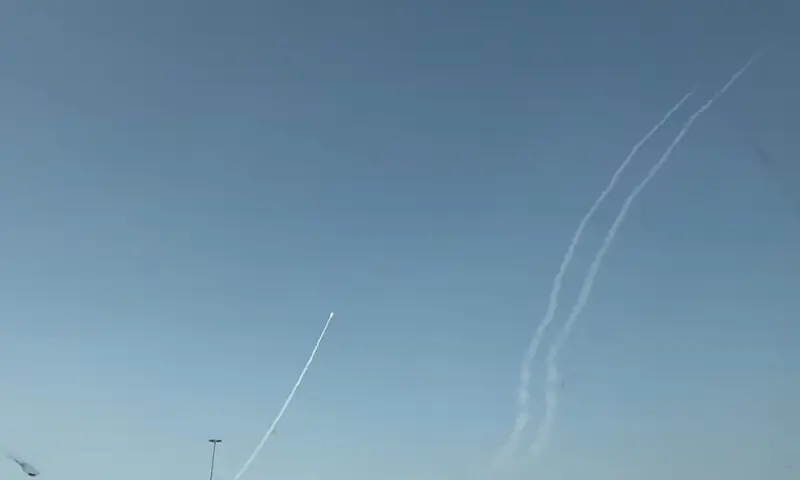
A rocket moves in the sky over Dubai, United Arab Emirates. – Reuters
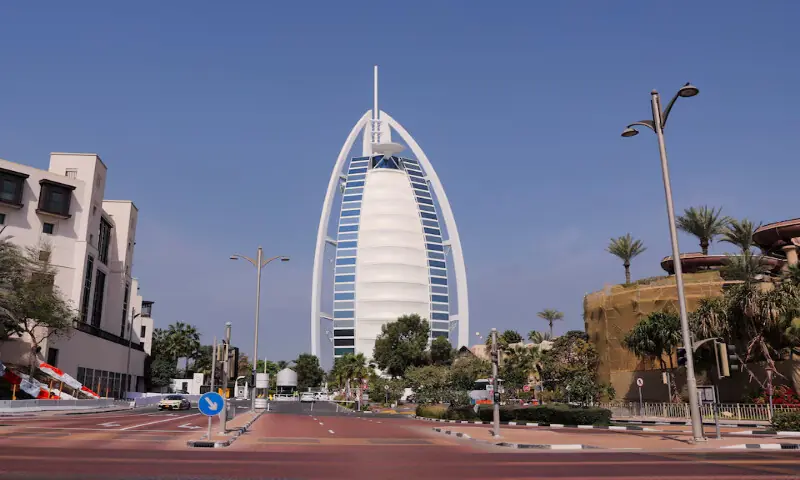
Burj Al Arab stands after an Iranian attack in Dubai. – Reuters
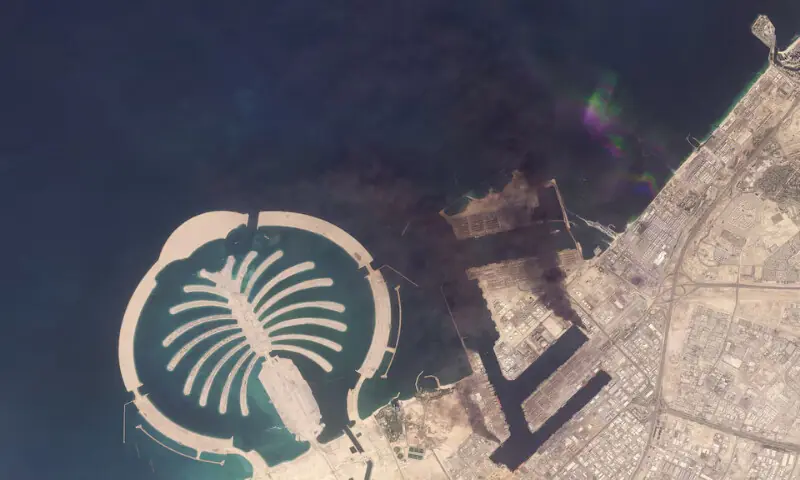
A satellite image of Jebel Ali Port, after one of the berths caught fire because of debris from an intercepted missile, in Dubai. – Reuters
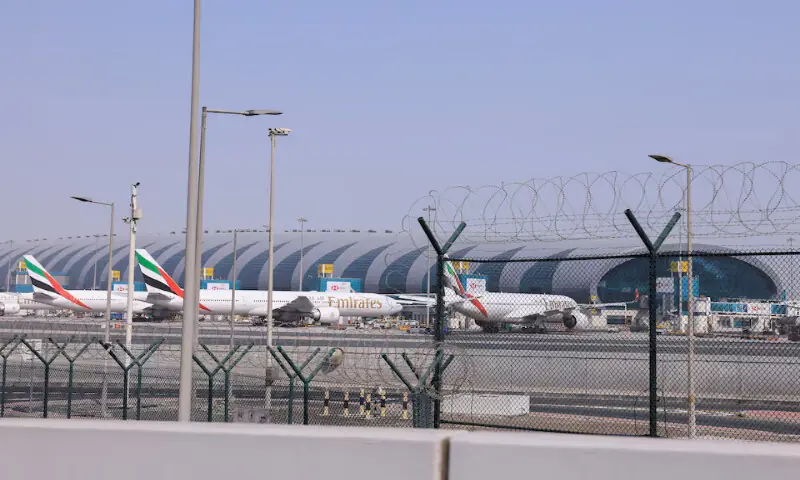
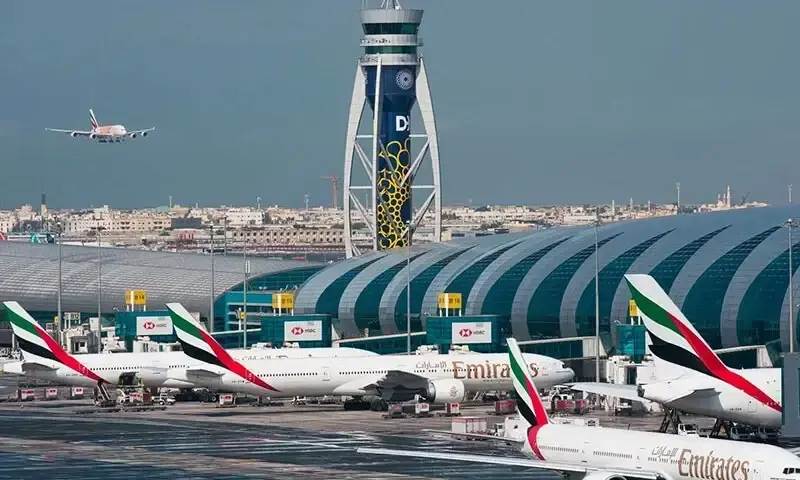
Planes are parked at Terminal 3 of the Dubai International Airport in Dubai. – Reuters
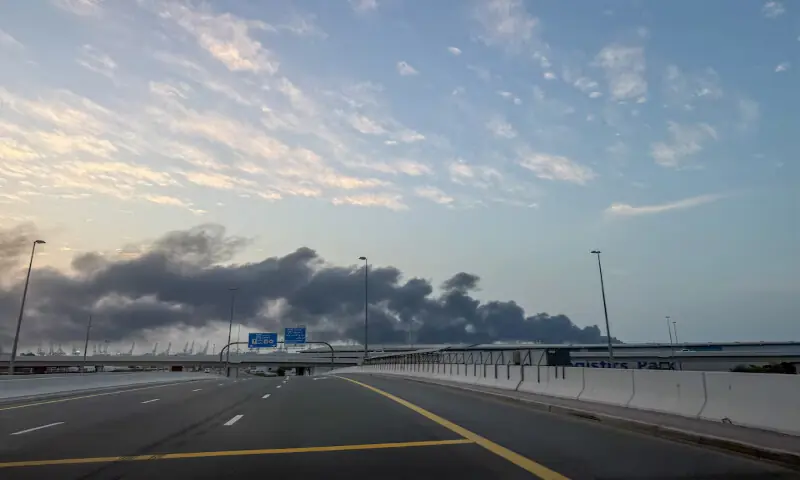
Smoke billows from Jebel Ali port after an Iranian attack in Dubai, United Arab Emirates. – Reuters
People ride scooters on a street with Burj Khalifa in the background after an Iranian attack in Dubai. – Reuters

For decades, Dubai’s sales pitch featured gleaming skylines, tax-free salaries, ease of doing business and something far more intangible: the unspoken promise that whatever was happening elsewhere in the Middle East, this city was different. The conflicts that destabilised the region would somehow stop at Dubai’s borders.

On ​Saturday, that all changed. 

Iran’s retaliatory strikes across the Gulf hit Dubai’s key sectors, landing on airports, hotels and ports.

They also hit the psychological foundations of a city that had spent four decades constructing that identity ‌as one of the world’s most reliable places to do business in an unreliable neighbourhood.

Authorities in the UAE, a close US ally, moved quickly to contain the damage to confidence as much as the physical fallout.

The UAE’s National Emergency, Crisis and Disasters Management Authority said the situation remained under control.

For investors and residents watching their landmarks hit by missiles, as they stockpiled supplies, the reassurances were noted. Whether they were enough is another question.

“It’s hard to overstate the peril for Dubai’s economic model,“ said Jim Krane, a fellow at Rice University’s Baker Institute.

“The physical damage may be slight, and most of the pain thus ​far is psychological. But Dubai’s status as a safe haven for expatriates and their businesses is in increasing doubt. The longer the war continues, the more intense the search will be for alternative locations. Dubai needs this war to wrap up now. ​International capital is highly mobile.”

In a sign of the ongoing strains, the UAE’s stock markets were closed on Monday and Tuesday, while tech outages following a hit to Amazon’s cloud computing facilities were ⁠affecting some banking operations, according to a person familiar with the situation.

Tens of thousands remained stranded in the UAE as airspaces remained largely closed.

How Dubai built the brand

Dubai’s transformation from a modest pearling and fishing port into a global financial centre was a decades-long project.

The launch of Emirates airline in 1985, the opening of the Burj Al Arab in 1999 and laws in the early 2000s allowing foreigners to own property for the first time were the pillars of Brand Dubai.

Dubai’s economy is almost fully powered by non-oil sectors, with ​oil now accounting for less than 2% of GDP.

A mix of trade, tourism, high-end real estate and financial services, built on a regulatory framework that mirrored London and New York, has replaced it.

Neighbouring Abu Dhabi, which holds more than 90% of the UAE’s oil reserves, remains more reliant on oil revenue for growth.

Beirut had been the region’s international financial capital until its civil war in the 1970s shattered that image.

Bahrain stepped into the vacuum until Dubai’s rise rendered it a more modest player.

Each succession was built on the same promise: a stable, open alternative to wherever the region’s last crisis ​struck. Dubai executed that promise more completely than any of its predecessors.

Dubai’s rise was itself partly built on the instability of others.

With Syrians displaced by civil conflict, wealthy families rattled by the Arab Spring, and more recently Russians fleeing because of the Ukraine war, ​new residents all poured capital and talent into the emirate.

The population across the UAE ballooned from about 1 million in 1980 to 11 million in 2024.

Last year, the UAE was on track to attract a record 9,800 relocating millionaires, more than any other country on earth, according to Henley & ‌Partners.

Money has poured ⁠into real estate, propelling Dubai’s developer Emaar Properties to a record high on February 25, valuing the company at about 149 billion dirhams ($40.6 billion).

The creation of the Dubai International Financial Centre (DIFC) in 2004 kick-started a push to draw financial firms.

By the end of 2025, DIFC hosted more than 290 banks, 102 hedge funds, 500 wealth management firms and 1,289 family-related entities.

What changed in the strikes

But vulnerabilities have remained. The Strait of Hormuz, through which roughly a fifth of the world’s seaborne crude oil passes, runs through Dubai’s backyard.

Iran, a country with both the motive and the capability to destabilise Gulf commerce, sits directly across the water.

The physical damage over the weekend was stark.

Dubai International Airport was hit, a berth at Jebel Ali Port caught fire, and the Burj Al Arab sustained damage from interceptor fragments.

Three people were ​killed and 58 injured, according to the UAE Ministry of Defence.

“People ​are afraid of what’s happening. It’s the first time they ⁠have to hide in underground places. Dubai airport, one of the biggest in the world, has to shut down for a few days,” said Nabil Milali, multi-asset portfolio manager at Edmond de Rothschild Asset Management.

He reduced the firm’s exposure to stocks globally last week to prepare for the possibility of an attack on Iran.

“There’s a 70% probability we will keep a geopolitical risk premia (on the region) for ​a long time.”

A source at a UAE-based mid-sized investment firm said their company had begun preemptively planning layoffs and halted fundraising.

Demand for gold bars surged, a jewellery industry source said.

International ​private banks, which had been expanding advisory ⁠operations in the emirate, may also reassess the scope of their presence, according to a private banker.

Firms may begin to rethink serving clients locally versus from another location, the banker said.

“Historically, markets like the UAE have demonstrated resilience during crises, including COVID, supported by strong policy response and governance,” said Madhur Kakkar, founder and CEO of Elevate Financial Services.

“At this stage, a broad structural reallocation of institutional capital away from the UAE or the wider Gulf appears unlikely unless tensions escalate materially or persist for an extended period.”

There is no data yet on capital outflows. The ⁠suspension of trading ​on the Abu Dhabi and Dubai stock exchanges on March 2 and 3 marks an unprecedented step for UAE regulators.

“It’s really quite a big change in perceptions,” ​said William Jackson, chief emerging markets economist at Capital Economics.

“The Gulf economies have generally been seen as safe from Iranian retaliation. I think (that) has really changed over the weekend.”

The impact will depend on how long the conflict continues, he said.

“But I think this is quite a big challenge, particularly when we’re thinking about some of the ​diversification efforts that are underway in the region.”

For the latest news, follow us on Twitter @Aaj_Urdu. We are also on Facebook, Instagram and YouTube.
Gaza fuel running short after Israel closes borders

Published 03 Mar, 2026 02:22pm 0 min read
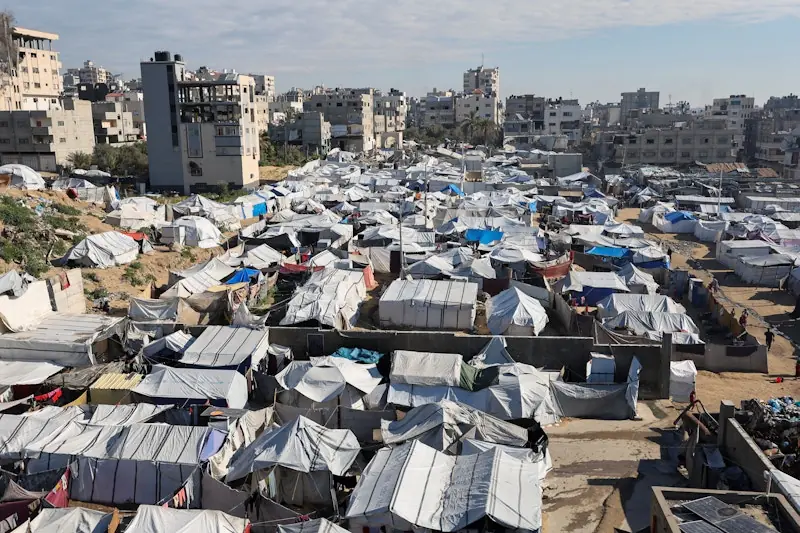
Displaced Palestinians shelter at a tent camp in Gaza City. – Reuters

Gaza is rapidly running out of its limited fuel supply, and food staple stocks may become tight, officials say.

Israel has blocked the entry of fuel and goods into the war-shattered territory, citing fighting with Iran. 

Israeli authorities said late Monday night that they would reopen the Kerem Shalom crossing from Israel to Gaza on Tuesday, for “gradual entry of humanitarian aid” into the strip without saying how much.

For the latest news, follow us on Twitter @Aaj_Urdu. We are also on Facebook, Instagram and YouTube.
Live

US officials: Marines fired on protesters at Karachi consulate

Published 03 Mar, 2026 01:42pm 0 min read
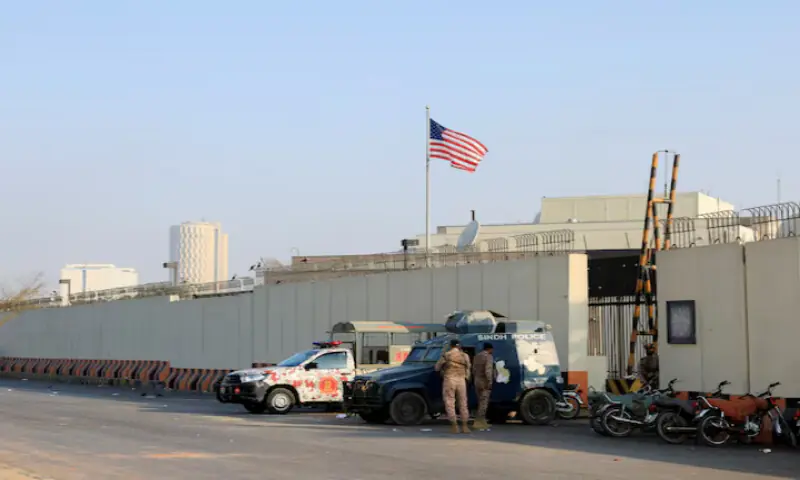
Police and paramilitary vehicles stand outside the US Consulate General in Karachi. – Reuters

US Marines opened fire on demonstrators during the storming of the Karachi consulate over the weekend, two US officials said on Monday — a rare use ​of force at a diplomatic post that could sharply escalate tensions in the country ‌amid widespread protests over the killing of Iran’s leader.

Ten people were killed on Sunday when protesters breached the compound’s outer wall after Iranian Supreme Leader Ayatollah Ali Khamenei was killed in US-Israeli strikes on Iran.

Citing initial information, the ​two US officials said it was unclear whether rounds fired by Marines struck or ​killed anyone.

They also did not know whether shots were also fired by others protecting ⁠the mission, including private security guards and local police.

This would mark the first confirmation by US ​officials that Marines were involved in firing at the protestors.

A provincial government spokesman, Sukhdev Assardas Hemnani, ​said “security” personnel had opened fire, without specifying their affiliation.

Daily security operations at US diplomatic missions are often carried out by private contractors and local forces, and the involvement of Marines in the incident underscores how seriously the ​consulate viewed the threat.

Pakistan is home to the world’s second‑largest Shia community after Iran.

On Monday, the government banned large gatherings nationwide after the protests over the strikes on Iran spread, with 26 people reported dead ‌across ⁠the country.

Protesters gathered outside the consulate to protest the killing of Iran’s supreme leader in US-Isreali attack, where Reuters reporters heard gunfire and saw tear gas fired in surrounding streets.

A video on social media appeared to show at least one protester firing a weapon toward the consulate, and bloodied demonstrators fleeing as shots rang ​out.

A Karachi police official ​told Reuters that the ⁠shots were fired from inside the consulate premises.

The US Marines referred questions to the US military, which in turn referred questions to the State ​Department.

The State Department did not respond to a request for comment.

Shia ​community leaders have ⁠called for more protests in Lahore and Karachi despite the nationwide ban on public gatherings.

Roads ⁠leading ​to the US consulate in Karachi were blocked off with ​a heavy police presence in the area.

Similar measures were in place around US missions in Lahore and Islamabad.

For the latest news, follow us on Twitter @Aaj_Urdu. We are also on Facebook, Instagram and YouTube.

Khamenei’s death brings Khomeini’s grandson into focus

Published 03 Mar, 2026 01:13pm 0 min read
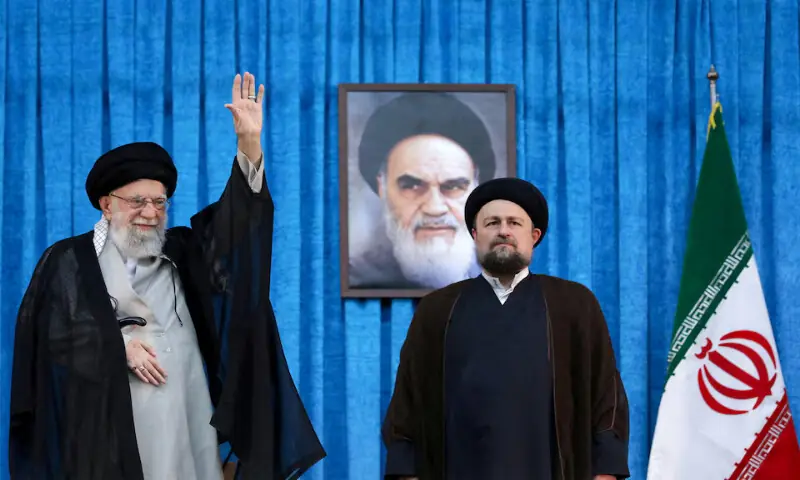
Ayatollah Ruhollah Khomeini’s grandson, Hassan Khomeini stands next to Iran’s late Supreme Leader Ayatollah Ali Khamenei at Khomeini’s shrine in southern Tehran. – Reuters file

A grandson of Ayatollah Ruhollah Khomeini, the late founder of the Islamic Republic of Iran, is likely to figure prominently in the deliberations of the clerics who will determine who replaces Ayatollah Ali Khamenei as Supreme Leader.

The killing of Khamenei, 86, in a US-Israeli attack has brought new urgency to the question of who will be the next Supreme Leader, a long-simmering issue over which there had been no clarity despite his age.

Hassan Khomeini is the most visible of the late Ayatollah’s 15 grandchildren and is seen as a relatively moderate within Iran’s clerical establishment.

He enjoys close ties to reformists, including former presidents Mohammed Khatami and Hassan Rouhani, who both pursued policies of engagement with the West when in office.

Khomeini, 53, holds a symbolically important role in public life as custodian of his grandfather’s mausoleum in southern Tehran. He has never served in government.

Some politicians inside Iran have seen him as a rival to hardliners who gained sway under Khamenei, notably his son, Mojtaba.

The case for installing a moderate successor to Khamenei gained momentum among some Iranian politicians in the wake of unrest that swept Iran in January as a means of shoring up the Islamic Republic in the face of widening dissent.

Accountability for Amini’s death

While loyal to the Islamic Republic established after the Shah was toppled in 1979, Khomeini has a track record of urging reform and has occasionally voiced dissent against authorities.

In 2021, he criticised the Guardian Council — the branch of Iran’s theocracy responsible for vetting presidential candidates — after it barred reformists from running.

The council’s move paved the way for the victory of hardliner Ebrahim Raisi, who died in a helicopter crash in 2024.

“You can’t pick someone for me and tell me to vote for them!” Khomeini said at the time.

He also demanded accountability after Mahsa Amini, a young Iranian woman, died in 2022 after being taken into custody by morality police, accused of violating conservative dress codes — an incident that ignited countrywide protests.

Authorities “must transparently and precisely account for what has happened to this 22-year-old girl under the pretext of ‘guidance and education’,” he said.

But, reflecting his loyalty to the system, the mid-ranking cleric also criticised protesters who chanted against Khamenei.

During the unrest that swept Iran in December and January — the deadliest since the 1979 revolution — he rallied behind the establishment, accusing rioters of serving Israel, taking part in a pro-government march, and likening some of the violence to the actions of Daesh.

In a condolence letter, Khomeini said Khamenei would forever “be the hero of the people of Iran and Muslims”, adding: “The noble people of Iran will once again walk the path of the Imam (Khomeini) by overcoming this incident.”

‘Progressive theologian’

A close friend of Khomeini’s, speaking to Reuters in 2015, described him as a progressive theologian, especially when it comes to music, women’s rights, and social freedom.

He follows trends on social media and is interested in Western philosophy as much as Islamic thought.

His wife, Sayyeda Fatima, is the daughter of an Ayatollah, and they have four children.

Some reformists urged him to run for the presidency in 2012, but he declined.

Khomeini supported the Rouhani government that negotiated the 2015 nuclear agreement, which eased sanctions in return for limits on the nuclear programme — until US President Donald Trump tore it up in 2018.

He has spoken openly about economic hardships endured by Iranians during the years of sanctions imposed over the nuclear programme.

Barred from elections

A decade ago, Khomeini sought to run in an election for the Assembly of Experts, the body responsible for picking the Supreme Leader.

He secured an initial nod of approval for his candidacy from Khamenei, who reportedly gave his blessing while also cautioning Khomeini against doing any harm to his grandfather’s name.

But he was later disqualified by the Guardian Council.

Though his religious credentials were cited for the disqualification — Khomeini holds the clerical rank of Hojatoleslam, one notch below Ayatollah — the move was seen as intended to head off a potential challenge by the reformist camp.

In 2008, he was widely regarded as criticising Iran’s powerful Islamic Revolutionary Guards Corps (IRGC) when he said in an interview that those claiming loyalty to his grandfather’s legacy should follow his order that the military must stay out of politics.

He nevertheless enjoys close ties to the Guards, an elite force tasked with safeguarding the Islamic Revolution.

During the 12-day air war between Israel and Iran last year, Khomeini wrote to Khamenei praising his leadership and saying Iranian missiles had become a nightmare for Israel and a source of satisfaction for the Iranian nation, according to Jamaran, an Iranian news website dedicated to Khomeini’s memory.

Khomeini has described Israel as the “evil Zionist regime” and “a cancerous tumour” backed by the West, and has said the Muslim world should make itself strong to confront Zionism, according to statements reported by Jamaran.

He is fluent in Arabic and English, according to the biography, and was a keen footballer until the age of 21, when his grandfather insisted he go to the city of Qom to study Islamic theology.

For the latest news, follow us on Twitter @Aaj_Urdu. We are also on Facebook, Instagram and YouTube.
Live

Tehran blames Israel for Saudi refinery drone strike

Published 03 Mar, 2026 12:49pm 0 min read

Iran’s Deputy Foreign Minister Majid Takht-Ravanchi has said that Iran was not behind the recent attack on Saudi Arabia’s oil installations.

In an interview with a US television channel, Takht-Ravanchi said Iran has made it clear to Saudi Arabia that it did not carry out the strike on the oil facilities.

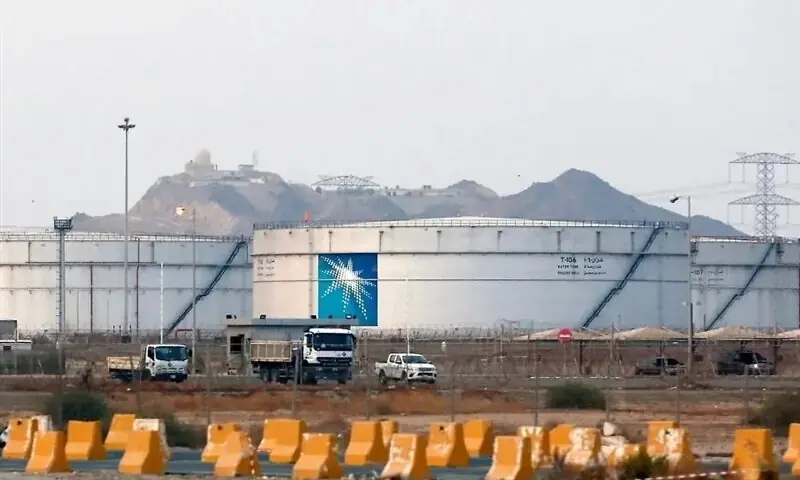
It is worth noting that a drone attack targeted a refinery at Ras Tanura, Saudi Arabia’s largest oil-exporting port and the biggest oil-exporting port in the world.

According to the Saudi Ministry of Defence, debris from the drones caused a limited fire at the refinery, which was quickly brought under control.

No civilians were injured in the incident.

Meanwhile, Iran’s semi-official news agency Tasnim News Agency cited Iranian military sources, claiming that the attacks on Saudi oil installations were part of an Israeli “false flag” operation.

It said the purpose of the Israeli strikes was to mislead regional countries and divert attention from attacks on civilian sites within Iran.

Iranian media sources stated that Iran has clearly declared it will target all US and Israeli interests, installations, and facilities in the region.

However, the Saudi Aramco refinery is not included among these targets, the media reports stated.

Citing intelligence, the reports claimed that the Fujairah Port in the United Arab Emirates could be the next target of Israel’s false-flag operation as Israel was planning to carry out a strike.

For the latest news, follow us on Twitter @Aaj_Urdu. We are also on Facebook, Instagram and YouTube.
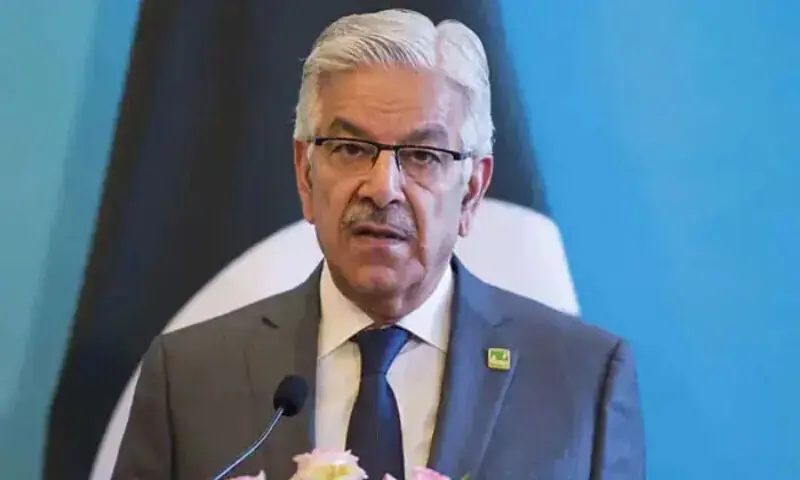
War in Iran aims to bring Israeli influence to Pak borders: Kh Asif

Published 03 Mar, 2026 12:01pm 0 min read
Khawaja Asif. – File photo

Defence Minister Khawaja Muhammad Asif has said that Zionism poses a threat to humanity and that a war has been imposed on Iran with the agenda of extending Israeli influence up to Pakistan’s borders.

In a statement posted on X, he warned that a joint agenda by Afghanistan, Israel, and India could be hostile to Pakistan, urging the nation to recognise and understand such conspiracies.

Khawaja Asif added that every calamity that has affected the Islamic world since the creation of Israel on Palestinian lands stems from the Zionist ideology.

He added that Zionism has controlled the global economic system for over a century and that major powers remain under its influence.

Paying tribute to former prime minister Nawaz Sharif for conducting nuclear tests, he said that Pakistan is an atomic power and that the capabilities of the country’s armed forces are recognised worldwide.

He noted that Pakistan demonstrated its nuclear strength to the world, confirming its status as a nuclear state.

The minister prayed for the liberation of Palestine, adding that the security of Pakistan is paramount.

Khawaja Asif emphasised that unity across the Islamic world is essential at this time.

For the latest news, follow us on Twitter @Aaj_Urdu. We are also on Facebook, Instagram and YouTube.
Live

Netanyahu says US-Israel war on Iran not going to take years

Published 03 Mar, 2026 11:24am 0 min read
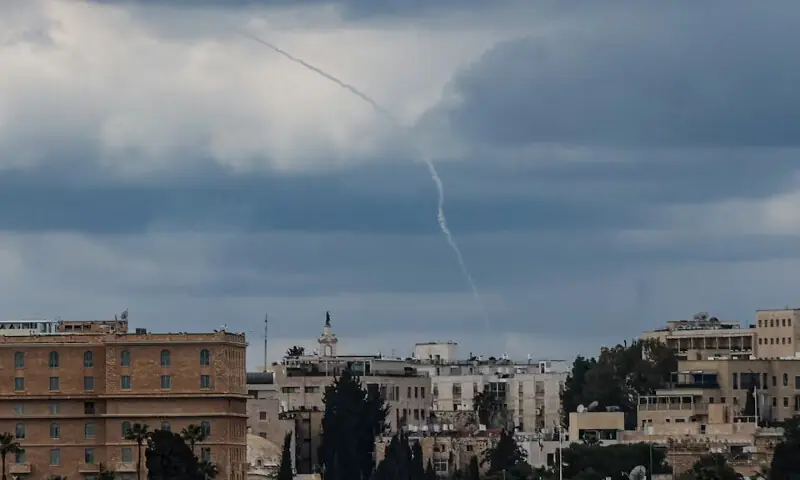
Smoke in the sky over Jerusalem, after missiles were launched from Iran towards Israel. – Reuters

Israeli Prime Minister Benjamin Netanyahu said he expected the war against Iran was “not going to take years”, as the conflict widened with Israel attacking Iran-backed Hezbollah targets in Lebanon and Iran hitting Gulf states that host US military bases.

US President Donald Trump initially projected the war to last four ​to five weeks, but since sought to justify a broad, open-ended war on Iran.

Netanyahu rejected the idea of the conflict lasting years, like previous wars in the region.

“I said it could be quick ‌and decisive. It may take some time, but it’s not going to take years. It’s not an endless war,” Netanyahu said on Fox News’ “Hannity” programme on Monday.

As the war entered its fourth day on Tuesday, explosions shook buildings across Tel Aviv as air defences intercepted incoming Iranian missiles.

Early on Tuesday, two drones, apparently from Iran, struck the US embassy in Riyadh, causing minor damage and starting a fire, and at least eight more drones were intercepted before ​reaching the city, Saudi Arabia’s Defence Ministry said.

The Islamic Revolutionary Guard Corps said on Tuesday that its naval forces had destroyed the main command building and headquarters of a US airbase in Bahrain in what ​it described as the 14th wave of “Operation Promise of the Truth 4”.

The IRGC said in a statement that it had launched a large-scale drone and missile attack on the base ⁠in the Sheikh Isa area early in the morning, with 20 drones and three missiles striking their intended targets.

US Secretary of State Marco Rubio ​on Monday warned that “the hardest hits are yet to come from the US military” in the offensive against Iran.

Asked how long he expected the United States to be engaged in Iran, Rubio told reporters that he did not know, and ​that he did not rule out the possibility that Trump might deploy US troops to fight a ground war in the Middle East.

“We believe the objectives we have set for this mission, the destruction of their ballistic missile capabilities, both launch capabilities and manufacturing, can be achieved without ground forces,” Rubio said.

“Right now, we are not postured for ground forces. But obviously the president has those options, and he is not going to rule out anything.”

The US military said it had struck more than 1,250 targets ​in Iran and destroyed 11 Iranian ships. Six US service personnel have been killed so far, all in Iran’s retaliatory attacks over the weekend on Kuwait.

Kuwait mistakenly shot down three American F-15E fighter jets during an Iranian attack, US Central Command said. All six ‌crew members ejected ⁠and were safely recovered.

For the latest news, follow us on Twitter @Aaj_Urdu. We are also on Facebook, Instagram and YouTube.
Live

US military claims Revolutionary Guard assets destroyed

Published 03 Mar, 2026 10:52am 0 min read
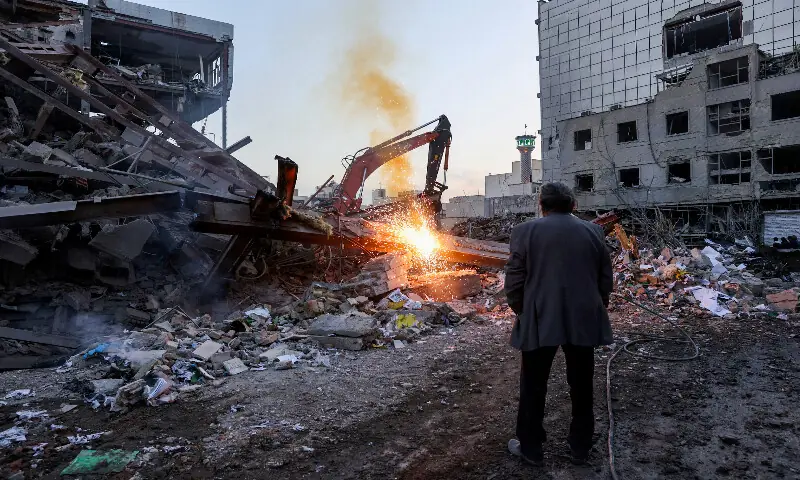
Aftermath of an Israeli and the US strike on a police station in Tehran, Iran. – Reuters

The US Central Command has claimed that it has destroyed the Islamic Revolutionary Guard Corps’ command and control facilities in fresh attacks on Iran.

In a statement, the US military command said that Iranian air defence capabilities, missiles, drone launch sites and military airfields have also been destroyed in strikes.

“We will continue to take decisive action against imminent threats posed by the Iranian regime,” the US military command said in a statement.

Attack on Iran’s IRIB broadcaster

Parts of Iran’s state broadcasting headquarters were hit in US and Israeli strikes on Tehran on Tuesday, according to Iranian media.

The Iranian Students News Agency (ISNA) said sections of the Islamic Republic of Iran Broadcasting (IRIB) complex in the capital had been struck.

Despite the attack, ISNA said broadcasting operations had not been disrupted due to “precautions” taken by IRIB, adding that news transmissions remained on air and that operations were continuing.

In a separate post, ISNA reported that the Shahid Motahhari government complex, located near Vali Asr and Imam Khomeini streets in central Tehran, was also targeted earlier in the day.

Several explosions were heard across central, northern and western areas of Tehran, the agency added.

For the latest news, follow us on Twitter @Aaj_Urdu. We are also on Facebook, Instagram and YouTube.
Live

Oil jumps for third day as Strait of Hormuz threats rattle markets

Published 03 Mar, 2026 10:07am 0 min read
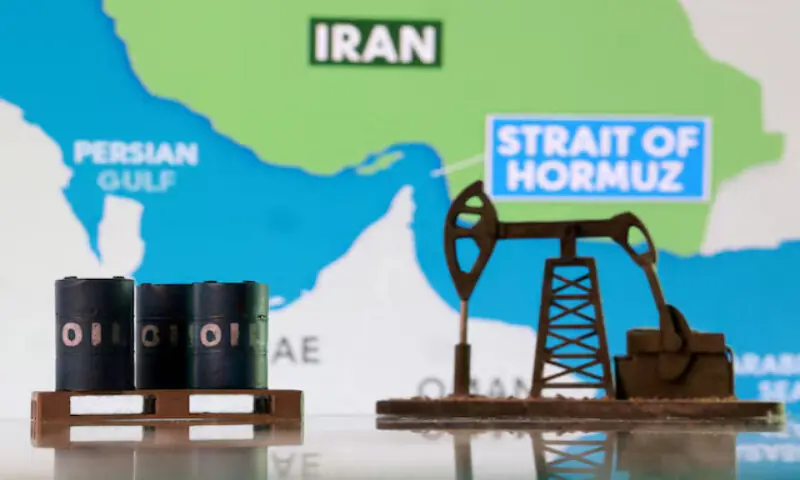
An illustration shows 3D-printed oil barrels, an oil pump jack and a map showing the Strait of Hormuz and Iran. – Reuters

Oil prices rose for a third day on ​Tuesday as the widening US-Israeli conflict with Iran and threats to shipping through the Strait of Hormuz ‌heightened fears of supply disruptions from the key Middle East producing region.

Brent crude futures were at $79.44 a barrel, up $1.70, or 2.2%, by 0400 GMT.

On Monday, the contract surged to as high as $82.37, its highest since January 2025, though it pared those gains to settle 6.7% higher.

US West Texas ​Intermediate crude jumped $1.17, or 1.6%, to $72.40 a barrel.

In the previous session, the contract initially climbed to its highest ​since June 2025 before sliding back to still settle up 6.3%.

“With no quick de-escalation in ⁠sight, the Strait of Hormuz effectively closed and Iran showing a willingness to target energy infrastructure in the region, upside ​risks remain and they grow the longer the conflict drags on,” Tony Sycamore, IG market analyst, said in a note.

The ​US and Israeli air war against Iran widened with Israel attacking Lebanon and Iran responding with strikes against energy infrastructure in Gulf countries and against tankers in the Strait of Hormuz.

Tankers and container ships are also avoiding the waterway as insurers have cancelled their coverage for vessels, while global ​oil and gas shipping rates have soared.

Concerns about transiting the waterway increased after Iranian media reported on Monday that a senior Iranian Revolutionary ​Guards official said the Strait of Hormuz is closed and warned Iran will fire on any ship trying to pass.

About 20% of the world’s oil and gas ‌pass ⁠through the Strait of Hormuz.

“The market continues to digest the risk of escalation in the Middle East,” said ING analysts in a Tuesday note.

“While there are concerns about oil flows through the Strait of Hormuz, a greater risk to the market would be Iran targeting additional energy infrastructure in the region. This could lead to more prolonged outages.”

Analysts expect oil prices to remain elevated over the coming days while markets focus on the impact of escalating Middle ​East conflict.

Earlier, Iranian media reported that the Strait of Hormuz is closed and Iran will fire on any ship ​trying to pass.

The Strait of Hormuz lies between Oman and Iran. It links the Gulf north of it with the Gulf of Oman to the south and the Arabian Sea beyond. 

It is 33 km wide at its narrowest point, with the shipping lane just 3 km wide in either direction. 

OPEC members Saudi Arabia, Iran, the United Arab Emirates, Kuwait and Iraq export most of their crude via the strait, mainly to Asia. 

Qatar, among the world’s biggest liquefied natural gas exporters, sends almost all of its LNG through the strait. Qatar halted its LNG production on Monday.

For the latest news, follow us on Twitter @Aaj_Urdu. We are also on Facebook, Instagram and YouTube.
Live

West Indies, Zimbabwe stranded in India after World Cup exit

Published 03 Mar, 2026 09:59am 0 min read
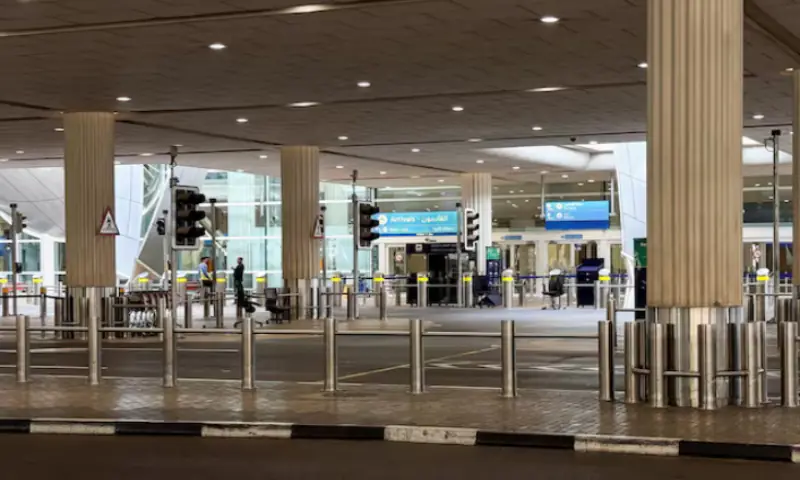
An empty arrivals area at the Dubai International Airport, following the United States and Israel strikes on Iran, in Dubai, United Arab Emirates. – Reuters

The West Indies and Zimbabwe teams said on Monday they have delayed their return ​from India after their exit from the ‌Twenty20 World Cup due to international airspace closures amid ongoing conflict in the Middle East.

West Indies failed to reach the semi-finals after Sunday’s five-wicket loss to hosts India, while Zimbabwe were eliminated after losing all three of their Super Eights matches.

However, neither team could travel back as ​thousands of flights were cancelled in countries across the Gulf, disrupting some of the world’s busiest transit hubs, as conflict ​escalated between Iran and the US and Israel.

“The ​Zimbabwe men’s team remains safe and well in India… the ‌squad ⁠was scheduled to return home via Dubai,” Zimbabwe Cricket said in a social media post.

Cricket West Indies (CWI) said they were working with the sport’s global body (ICC) to make safe travel arrangements for the players and staff.

The ICC, headquartered in ​Dubai, earlier said that it had activated ​contingency ⁠plans for its personnel, who were scheduled to transit through Dubai for onward travel to their ⁠home countries.

“The ​safety and well-being of ​our players, coaches, and officials remain our highest priority,” CWI added.

For the latest news, follow us on Twitter @Aaj_Urdu. We are also on Facebook, Instagram and YouTube.
Live

Trump says military campaign against Iran could last about 4-5 weeks

Published 03 Mar, 2026 09:04am 0 min read
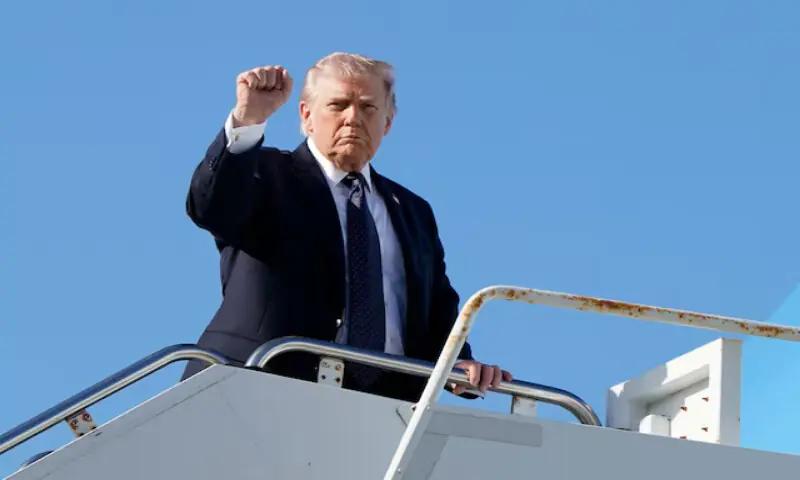
US President Donald Trump gestures as he boards Air Force One at Palm Beach International Airport in West Palm Beach, Florida, US. – Reuters

US President Donald Trump on Monday sought to justify a broad, open-ended war on Iran, offering his most ​extensive public comments yet on an operation whose stated aims and timeline have shifted since it began over the weekend.

Trump, who was back at the ‌White House after a weekend in Florida, said the US and Israeli air attacks that began on Saturday had been projected to last four to five weeks but could go on longer.

The military campaign has killed Supreme Leader Ayatollah Ali Khamenei, sunk at least 10 Iranian warships and struck more than 1,000 targets.

“We’re already substantially ahead of our time projections. But whatever the time is, it’s okay. Whatever it takes,” Trump said ​at his first public event since the conflict began.

He made no mention of regime change, saying the fight was needed to prevent Iran from developing a nuclear ​weapon, which Tehran denies seeking, and to thwart its long-range ballistic missile program.

“An Iranian regime armed with long-range missiles and nuclear weapons would ⁠be an intolerable threat to the Middle East, but also to the American people,” Trump said.

The remarks followed days of conflicting statements from the president, who had discussed the ​attacks in two brief videos and one-on-one interviews with select journalists over the weekend but did not give a televised address to the nation, as is customary in moments of military ​action.

White House Press Secretary Karoline Leavitt pushed back on suggestions that the administration’s messaging on the operation has been confusing.

On X, Leavitt said Trump had outlined “clear objectives,” including preventing Iran’s proxies from launching attacks and stopping production of roadside bombs like those used against US forces after the 2003 invasion of Iraq.

Varying messages

On Saturday, as Trump announced the strikes, he urged Iranians to “take back your country” and implied a goal of ​regime change.

On Sunday, Trump told The Atlantic he was open to talks with whoever emerged to lead Iran and told the New York Times his January operation to capture Venezuelan ​President Nicolas Maduro and his wife was a model for Iran’s future.

In the case of Venezuela, former Maduro ally Delcy Rodriguez emerged as the new leader and has cooperated with Washington.

In Iran’s case, US and ‌Israeli strikes have ⁠eliminated many of those who could step in to take power, Trump said.

Trump’s timeline for the Iran operation has also shifted since it began.

He first told the Daily Mail it could take “four weeks, or less,” then told The New York Times it would take four to five weeks.

In separate remarks on Sunday and Monday, he left open the possibility that the operation could continue longer until its objectives are achieved.

In his notification to Congress about the Iran strikes obtained by Politico, Trump did not provide any timeline.

“Although the United States desires a quick and ​enduring peace, it is not possible at ​this time to know the full scope ⁠and duration of military operations that may be necessary,” Trump wrote.

Jon Alterman of the Centre for Strategic and International Studies, who has served as a State Department official focused on the Middle East, said Trump appeared to have deliberately left the war’s ultimate outcome undefined.

“I’m not ​sure they’re committed to any particular outcome,” Alterman said.

When Trump ordered a much more limited attack against Iran during Israel’s 12-day ​war in June, he immediately ⁠gave a formal address flanked by senior officials.

After the Maduro operation, Trump held a press conference within hours at his Mar-a-Lago club in Florida and officials appeared on television multiple times to explain the move.

This time, senior administration officials skipped the Sunday shows to avoid competing narratives and keep Trump as the main messenger, a White House official said.

The official said the public ⁠framing of ​the operation was still under discussion.

A second official said top aides were in secure rooms all day attending ​national security meetings and that the White House coordinated with Republican lawmakers scheduled to appear on television programs.

The official pushed back against suggestions that messaging was still being developed, saying talking points had already been circulated by ​Saturday.


For the latest news, follow us on Twitter @Aaj_Urdu. We are also on Facebook, Instagram and YouTube.
Live

Iran detains at least six Americans amid escalating strikes

Published 03 Mar, 2026 08:32am 0 min read
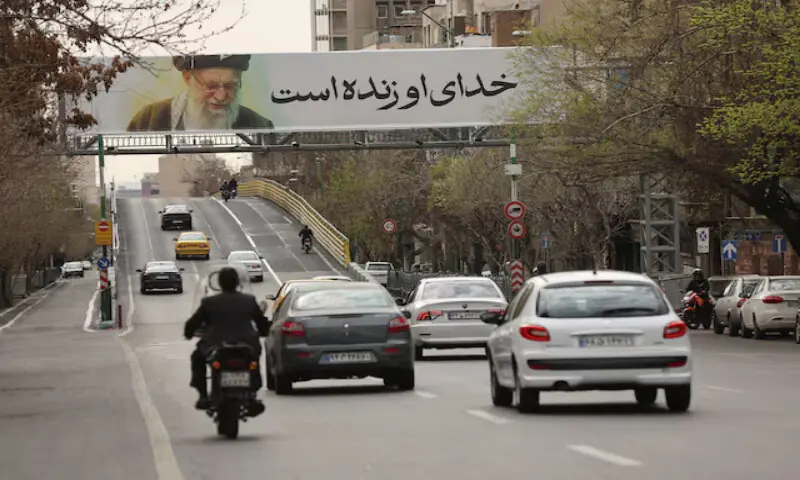
People drive near a banner of Iran’s late Supreme Leader Ayatollah Ali Khamenei on a street in Tehran, Iran. – Reuters

Iran is detaining at least six US citizens or permanent residents, according to detainee advocates, raising fears they and thousands of Americans believed trapped in the country could be used as bargaining chips in ​the escalating war with the US and Israel.

The detainees are among what some experts estimate are possibly thousands of dual US-Iranian nationals and green-card holders who have remained in ‌Iran despite repeated US warnings not to travel there because of the threat of being arrested.

“The regime’s history of seeking to leverage Americans for political aims is long established,” said Ryan Fayhee, a board member of the Foley Foundation advocacy group.

“I would have to imagine that any American is potentially at risk.”

The United States and Israel launched attacks on Iran early on Saturday that killed Supreme Leader Ali Khamenei and other officials, triggering retaliatory Iranian attacks across the region and ​escalating fears that Tehran will seek other ways to hit back at the US.

“There are hundreds, if not thousands, if not more, of dual nationals that are back there that still ​have familial ties despite the risks,” said Kieran Ramsey, a former FBI assistant director now with the Global Reach advocacy group who headed the US ⁠hostage recovery unit.

Iran does not recognise dual citizenship, meaning that other governments cannot provide diplomatic protection or consular services to their citizens who also hold Iranian nationality.

A source familiar with the issue said that ​the US State Department does not know precisely how many Americans are in Iran.

The State Department and the office of the US Special Presidential Envoy for Hostage Affairs did not immediately respond to a request for comment.

“President Trump ​has been clear that he wants every American wrongfully detained to be returned home safe and sound, and that there will be dire consequences for regimes that treat Americans as political pawns,” White House spokesperson Anna Kelly said in an emailed statement.

Iran’s mission at the United Nations also did not immediately respond.

Focus on detained Americans

US President Donald Trump has made securing the release of Americans deemed wrongfully detained or held hostage overseas a foreign policy priority.

More than ​70 Americans have been freed since the beginning of his second term in January 2025, according to the White House.

But Trump has not said how he would protect those detained since the start of ​the attacks on Iran on Saturday.

Only hours before the US-Israeli strikes began, US Secretary of State Marco Rubio on Friday designated Iran as the first state sponsor of wrongful detention under an executive order signed by Trump on September ‌5.

The designation, ⁠he said, could trigger a ban on the use of US passports to travel to and from Iran and other unspecified measures unless Tehran stops taking “hostages” and releases all Americans, the number of which he did not disclose.

Detainee advocates saw the move as a message to Iran not to harm American detainees or any other Americans.

But they expressed concern that it could go unheeded amid a breakdown in Iran’s hierarchy from the strikes.

“When you have kinetic action and military strikes like this, it just ups the risk factor for these folks exponentially,” said Ramsey.

Jail for political prisoners

At least six dual US-Iranian nationals or legal ​permanent residents are known to be held in Tehran’s ​Evin Prison, a notorious jail for political prisoners ⁠and foreigners, or barred from leaving Iran, said Elizabeth Richards, the Foley Foundation research director.

The identities of three of those people are not public.

Israel bombed the prison during its 12-day air war with Iran last June, killing at least 71 people, Iran said.

Those now held in Evin include Shahab Dalili, a green-card holder ​arrested in 2016 on his way to the airport after attending his father’s funeral and given 10 years in jail for allegedly cooperating with ​a foreign government, according to ⁠the Foley Foundation.

Fayhee represents Reza Valizadeh, a dual US-Iranian citizen who was arrested in 2024 after returning to Iran to visit his elderly parents and was also given 10 years in jail for “collaboration with a hostile government,” according to the Foley Foundation.

Valizadeh, a journalist, is being held in Evin Prison, Fayhee said.

So too is Kamran Hekmati, a 70-year-old Jewish Iranian-American jewellery shop owner arrested last year, according to Ramsey, who represents Hekmati’s family.

He was convicted of ⁠going to ​Israel under a law that bars such visits in the past 10 years, even though he provided documentation showing his last ​visit was 13 years before his arrest, Ramsey said.

Hekmati, who is suffering from bladder cancer, was also charged with espionage, for which he has not been convicted. His lawyer was told it was for allegedly meeting Israeli intelligence agents.

Iran often adds such ​a charge as a way of signalling that the detainee would be released only through an exchange with Washington, Ramsey said.

For the latest news, follow us on Twitter @Aaj_Urdu. We are also on Facebook, Instagram and YouTube.
Live

US embassy in Riyadh hit by drones, causing limited fire

Published 03 Mar, 2026 08:10am 0 min read
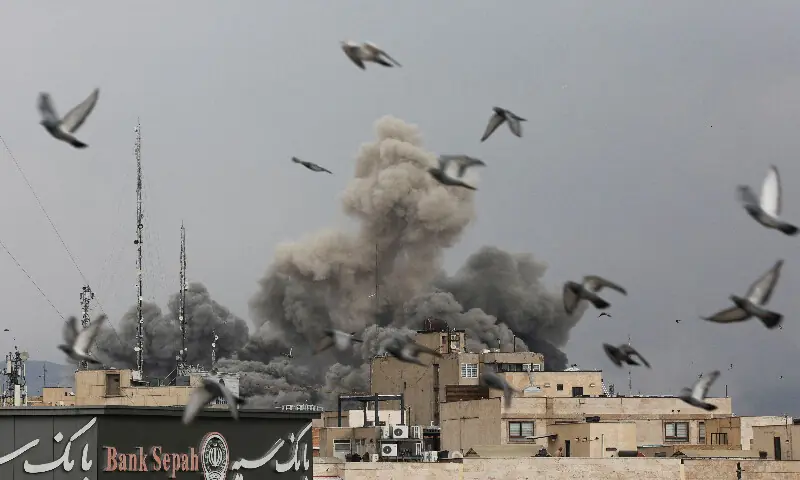
The Ras Tanura oil refinery in Saudi Arabia after a drone attack in Saudi Arabia. – Reuters

The Saudi defence ministry has said the US embassy in Riyadh was hit by two drones, which resulted in a “limited fire” and minor material damage.

Black smoke can be seen rising over Riyadh’s Diplomatic Quarter, which houses foreign missions, two sources told Reuters.

Three people familiar with the matter said a loud blast was heard and flames were seen at the embassy early on Tuesday morning. One of the sources said the fire was minor.

Reuters was not immediately able to confirm the circumstances of the incident.

A fire broke out at the US embassy in the Saudi capital Riyadh after an explosion was heard, two sources have told Reuters.

Black smoke can be seen rising over Riyadh’s Diplomatic Quarter, which houses foreign missions, two sources told Reuters.

Reuters was not immediately able to confirm the circumstances of the incident.

An embassy spokesperson did not immediately respond to a request for comment, nor did the Saudi government media office.

Americans told to take shelter

The US embassy in Riyadh has issued a security alert recommending that American citizens in Saudi Arabia to shelter in place immediately.

The envoy is also limiting non-essential travel to any military installations in the region, it said in a statement posted on the social media site X.

Trump warns of retaliation

United States President Donald Trump has suggested that the US would retaliate “soon” after its embassy in the Saudi capital Riyadh was struck by two suspected Iranian drones.

Speaking to the media, Trump said, “You’ll find out soon” how the US would respond, without providing further detail, after the US embassy confirmed the drone attack.

For the latest news, follow us on Twitter @Aaj_Urdu. We are also on Facebook, Instagram and YouTube.
Lebanese state bans Hezbollah military activities

Published 03 Mar, 2026 12:42am 0 min read
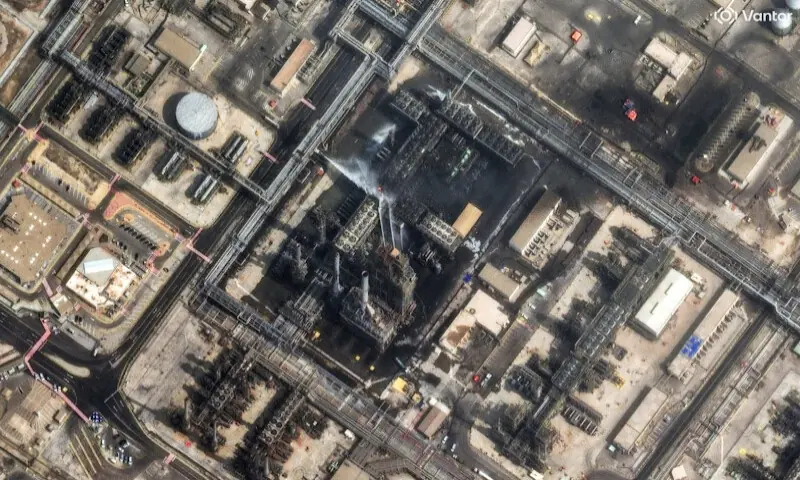
Smoke plumes billow following Israeli bombardment on Beirut’s southern suburbs on March 2, 2026. AFP

Lebanon’s government on Monday took the unprecedented step of banning Hezbollah’s military and security activity, prompting the Iran-backed group to lash out at the decision.

Hezbollah is represented in both the government and parliament, and the move came hours after it announced it had launched rockets and drones towards Israel early Monday to avenge the killing of Iranian supreme leader Ali Khamenei in US-Israeli attacks.

Israel began bombarding Beirut’s southern suburbs and dozens of villages in south Lebanon, vowing to make the group pay a “heavy price”.

The strikes killed at least 52 people and wounded at least 154, according to the Lebanese government.

The Israeli military later said it had “completed a broad wave of strikes on Hezbollah terrorist organisation targets in southern Lebanon”.

“As part of the strikes, more than 70 weapons storage facilities, launch sites, and missile launchers” were hit, it said.

Following an emergency cabinet meeting earlier Monday, Prime Minister Nawaf Salam said: “The Lebanese state declares its absolute and unequivocal rejection of any military or security actions launched from Lebanese territory outside the framework of its legitimate institutions.

“This necessitates the immediate prohibition of all of Hezbollah’s security and military activities, considering them to be outside the law, and obliging it to hand over its weapons”.

In response, Mohammed Raad, the head of the militant group’s parliamentary bloc, condemned Beirut’s “rash decisions”, saying that “the Lebanese were expecting a decision rejecting the (Israeli) aggression”.

Salam had ordered the military and security agencies to take “immediate measures” to implement the cabinet decision and prevent “any military operation or the launching of missiles or drones from Lebanese territory”.

Justice Minister Adel Nassar announced in a post on X that the judicial authorities had tasked “security agencies with immediately arresting those who launched the rockets and their instigators”.

A source close to the Lebanese government reported that two ministers from the Amal Movement, Hezbollah’s fellow Shiite party and a key ally, and one minister from the group itself had approved the cabinet’s decision.

The new strikes sent civilians scrambling, sparking gridlocked traffic in Beirut as residents left in cars and on motorcycles, carrying whatever they could, with some expressing frustration.

“My baby daughter and I have been in the car for three and a half hours… for what? Why? For whom?” wrote user Ali Deeb on X.

Renewed strikes

Israeli strikes hit several buildings belonging to Al-Qard al-Hassan, a Hezbollah-linked financial firm sanctioned by Washington, in several parts of the country, particularly the south.

They came after the Israeli military had issued evacuation warnings for several towns in the south and east, and in the capital’s southern suburbs.

Palestinian Islamic Jihad’s armed wing said on Monday that its commander in Lebanon, Adham Adnan al-Othman, was killed in the strikes.

Later Monday, AFP journalists heard more loud blasts in Beirut, and the state-run National News Agency said “enemy warplanes launched new raids on the southern suburbs”.

The US Embassy in Lebanon renewed its call for citizens to leave Lebanon immediately.

The education ministry announced the closure of schools, universities and educational institutions on Tuesday due to “security conditions”.

The authorities in Beirut have repeatedly said they do not wish to involve their country in the outbreak of conflict in the region, which started after a massive US-Israeli attack on Iran.

Beirut had decided last August to gradually disarm Hezbollah, following a year-long war fought with Israel that ended in a November 2024 ceasefire.

But the agreement did not stop Israel from continuing to strike targets it said were linked to Hezbollah, which it accused of trying to rearm.

The truce is monitored by a committee bringing together Lebanon, Israel, the United States, France and UN peacekeepers.

Salam on Monday called on the countries guaranteeing the ceasefire – the United States and France — to “obtain a clear and final commitment from the Israeli side to cease all attacks on the entirety of Lebanese territory”.

He announced the government’s “full readiness to resume negotiations” with Israel, “with civilian participation and under international auspices”.

For the latest news, follow us on Twitter @Aaj_Urdu. We are also on Facebook, Instagram and YouTube.

Drone attack targets UAE’s Musaffah fuel tank terminal

Updated 03 Mar, 2026 12:47am 0 min read
A representational image. FIle photo

A fire broke out after Musaffah fuel tank terminal in the United ​Arab Emirates was targeted by a drone, ‌without impacting its operations, Abu Dhabi media office said on Monday.

“Abu Dhabi authorities have responded today to a fire ​resulting from the targeting of a Musaffah ​fuel tank terminal by a drone. The ⁠situation was promptly contained,” the office said.

No ​injuries were reported.

Abu Dhabi National Oil Company operates ​a facility in Musaffah from which fuel is transported by trucks, while a 1,600-kilometre pipeline network distributes finished products ​across the emirate of Abu Dhabi.

Yemen’s Iran-aligned ​Houthis targeted the Mussafah Fuel Depot in 2022 during the ‌group’s ⁠war with the Saudi-led coalition.

Earlier on Monday, Saudi Arabia’s state oil giant Aramco shut its Ras Tanura refinery after it was hit by a ​drone in ​an apparent ⁠escalation on the third day of strikes across the region launched ​by Tehran in response to the U.S.-Israeli ​attack ⁠on Iran.

QatarEnergy also said it was halting production of LNG and associated products due to attacks ⁠on ​facilities in Ras Laffan, a ​source with knowledge told Reuters.

For the latest news, follow us on Twitter @Aaj_Urdu. We are also on Facebook, Instagram and YouTube.
Iran says 500 US, Israeli sites hit in sweeping retaliation

Published 02 Mar, 2026 11:11pm 0 min read
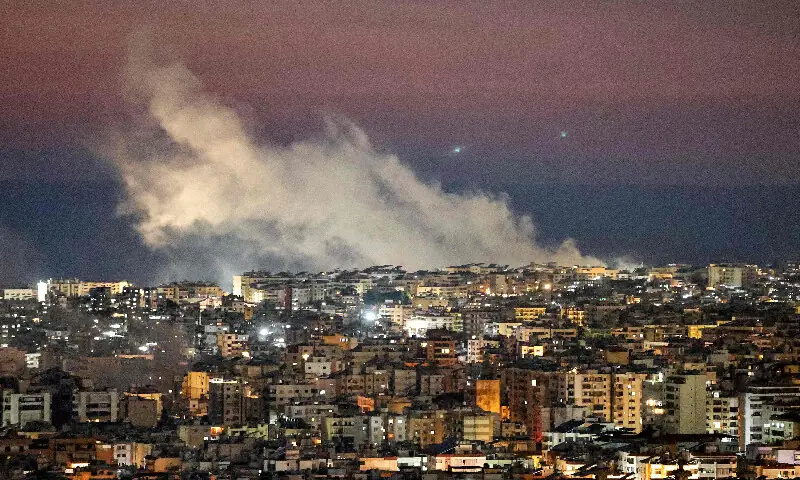
People take shelter in an underground station in Haifa on March 1, 2026, amid Iranian attack fears. AFP

Iran’s retaliatory strikes have so far targeted 500 sites linked to the United States and Israel in the Middle East, the Revolutionary Guards said on the third day of fighting on Monday.

“Since the start of the conflict, the brave soldiers of the Iranian armed forces have attacked 60 strategic targets and 500 American military targets and targets of the Zionist regime (Israel),” the Guards said in a statement.

It added they had launched more than 700 drones and hundreds of missiles.

New missile salvo fired at Israel

The state television said that Iran fired a new salvo of missiles at Israel on Monday in response to US-Israeli strikes that killed Supreme Leader Ayatollah Ali Khamenei.

“The 11th wave of Operation True Promise 4 is underway with missile and drone strikes on targets in Beersheva,” Iranian state TV said at about 3:30 p.m. local time (1200 GMT), citing a statement from the Revolutionary Guards.

Oil tanker attacked in Strait of Hormuz

The Revolutionary Guards also said that they had attacked an allegedly US-linked oil tanker in the Strait of Hormuz as part of a wave of strikes retaliating against a US-Israeli assault.

“The ATHE NOVA tanker, one of the American allies in the Strait of Hormuz, is still on fire after being hit by two drones,” the Guards said in a statement. On Saturday, the Guards said they had closed the waterway, which is vital for oil and gas shipments, after the start of US and Israeli attacks.

Netanyahu’s office targeted

Iran’s missile attacks have targeted the office of Israeli Prime Minister Benjamin Netanyahu and the headquarters of the Israeli air force commander, the Revolutionary Guards claimed.

“The office of the criminal prime minister of the Zionist regime and the headquarters of the regime’s air force commander were targeted,” the Guards said in a statement carried by Fars news agency.

It said Kheibar missiles were used in the attack.

Missile attack on Tel Aviv, Haifa and east Jerusalem

Iran launched missile strikes on an Israeli government complex in Tel Aviv, as well as security and military centres in Haifa, and an attack on east Jerusalem.

“Among the targets of this tenth wave were a targeted strike on the Zionist regime’s government complex in Tel Aviv, attacks on military and security centres in Haifa, and a strike on east Jerusalem,” said a Guards statement carried by state TV.

It said Kheibar ballistic missiles were used in the attack.

Israel and the United States launched attacks of unprecedented scale against Iran on Saturday, and the Islamic republic has responded with missile strikes regionwide.

Strikes kill three Iran Guards members, five army personnel

US and Israeli strikes on Iran have killed three Revolutionary Guard members and five army personnel, according to separate official statements on Monday.

“Three members of the Islamic Revolutionary Guard Corps were killed” in an attack on a detachment in the western Lorestan province, an official IRGC statement said, according to the ISNA news agency.

In a separate attack on the western city of Khorramabad, “five members of the Iranian army were killed”, Tasnim news agency said, quoting an army statement.

For the latest news, follow us on Twitter @Aaj_Urdu. We are also on Facebook, Instagram and YouTube.
Trump doesn’t rule out sending US troops into Iran

Published 02 Mar, 2026 10:31pm 0 min read
US President Donald Trump speaks during a Medal of Honor ceremony in the East Room of the White House on March 2, 2026, in Washington, DC. AFP

President Donald Trump on Monday said he is not ruling out sending US troops into Iran, while threatening a new, “big wave” of attacks.

President Donald Trump on Monday said he is not ruling out sending US troops into Iran, while threatening a new, “big wave” of attacks.

The 79-year-old Republican has long campaigned against decades of US military entanglements in the Middle East, but ordered a large-scale war against Iran starting Saturday.

While so far the assault has focused entirely on aerial attacks by missiles and bombs, Trump refused to rule out sending ground troops — something generally considered to be far riskier in terms of possible casualties.

“I don’t have the yips with respect to boots on the ground — like every president says, ‘There will be no boots on the ground.’ I don’t say it,” Trump told the New York Post in one of numerous brief interviews he has given since launching the Iran operation.

“I say ‘probably don’t need them,’ [or] ‘if they were necessary,’” he said.

Trump also spoke to CNN on Monday, flagging what he said would be an escalation in the assault on Iran.

“We haven’t even started hitting them hard. The big wave hasn’t even happened,” he told CNN, without elaborating. “The big one is coming soon.”

The US and Israeli forces have so far struck hundreds of targets across Iran, including the Islamic Republic’s missiles, navy and command-and-control sites.

Four US military members have been announced killed, and three fighter jets have been shot down — officially in friendly fire.

Iran has fired missiles at Israel, at US bases around the region and also at targets in regional Arab countries — Bahrain, Jordan, Kuwait, Qatar and the United Arab Emirates — something that Trump called “the biggest surprise.”

Two, four, six weeks?

Trump’s comments came shortly after Defence Secretary Pete Hegseth also signalled that deploying troops inside Iran had not been ruled out.

Asked if there were already boots on the ground, Hegseth told a news conference: “No, but we’re not going to go into the exercise of what we will or will not do.”

“We’ll go as far as we need to go,” he said.

As for how long the war will last, Hegseth said: “Four weeks, two weeks, six weeks, it could move up. It could move back.”

He sought to differentiate the Iran operation from past long-running US wars in Iraq and Afghanistan, saying the war is not an effort to build democracy in Iran.

“No stupid rules of engagement, no nation-building quagmire, no democracy-building exercise. No politically correct wars. We fight to win, and we don’t waste time or lives,” the Pentagon chief said.

“This is not Iraq. This is not endless,” Hegseth said. “Our generation knows better, and so does this president. He called the last 20 years of nation-building wars ‘dumb’ and he’s right.”

General Dan Caine, the top US military officer, spoke alongside Hegseth, saying that air superiority had been achieved over Iran.

Strikes by American forces “resulted in the establishment of local air superiority. This air superiority will not only enhance the protection of our forces, but also allow them to continue the work over Iran,” Caine said.

For the latest news, follow us on Twitter @Aaj_Urdu. We are also on Facebook, Instagram and YouTube.
Govt steps up fuel market monitoring amid fears of global oil price spike

Published 02 Mar, 2026 09:32pm 0 min read
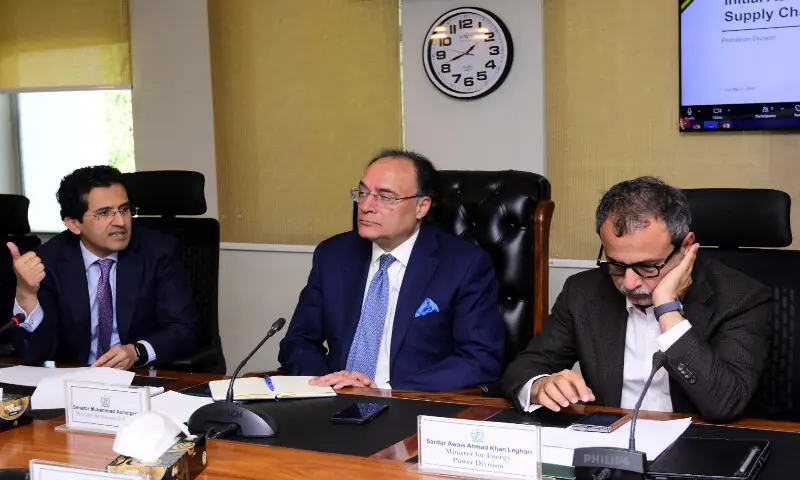
A high-level committee is set up under Finance Minister Muhammad Aurangzeb to assess the situation. Screengrab/Aaj TV

The government has tightened monitoring of petroleum supplies amid fears that rising regional tensions could push global oil prices higher.

A high-level committee set up on the directives of Prime Minister Shehbaz Sharif held its first meeting under Finance Minister Muhammad Aurangzeb to assess the situation.

Officials said the cabinet committee decided to conduct daily reviews of petroleum stocks and prices to ensure uninterrupted supply and effective market oversight.

The finance ministry said Pakistan currently holds adequate reserves of petroleum products and that the country’s energy supply chain remains stable despite global uncertainty.

However, officials described the situation in the Strait of Hormuz and Bab al-Mandab as a major risk to global energy flows. They warned that prolonged tensions could disrupt supplies.

The committee will meet daily to monitor stock levels and price movements in real time. LNG and LPG shipments and terminal operations were also reviewed.

Aurangzeb directed relevant departments to improve coordination and ensure accurate verification of reserves.

He said any impact of global price changes would be passed on in a transparent and orderly manner.

The government assured the public that energy supplies are secure and urged people not to panic.

Meanwhile, gas prices have also surged in international markets amid escalating Middle East tensions.

After QatarEnergy reportedly suspended gas supplies, European markets saw prices rise by nearly 50%, reflecting mounting pressure on global energy availability.

For the latest news, follow us on Twitter @Aaj_Urdu. We are also on Facebook, Instagram and YouTube.
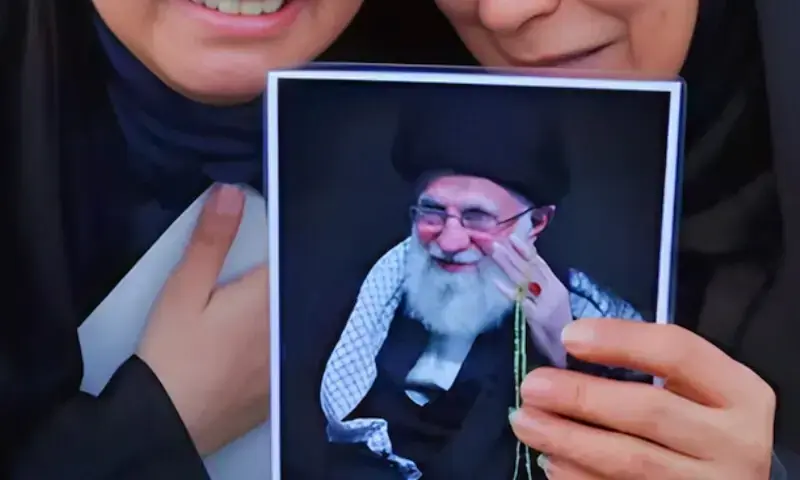
Ayatollah Khamenei’s wife also succumbs to her injuries

Published 02 Mar, 2026 09:20pm 0 min read

The wife of Iran’s Supreme Leader Ali Khamenei has died from injuries sustained in the same joint US-Israeli airstrikes that killed him, Iranian media reported.

According to the Iranian news agency Tasnim, she had been critically wounded in the attack and succumbed to her injuries later.

Iranian state media said the 86-year-old Khamenei was killed early Sunday in coordinated American and Israeli airstrikes.

The Fars news agency reported that several members of the Supreme Leader’s family — including his son, daughter, son-in-law, daughter-in-law and grandson — were also killed in the strikes.

Khamenei led Iran for decades and was the country’s most powerful political and religious authority. During his tenure, Iran consolidated its clerical system and expanded its regional influence.

His leadership also saw heightened tensions with the United States and Israel, particularly over Iran’s nuclear programme, which remained a central point of global concern.

For the latest news, follow us on Twitter @Aaj_Urdu. We are also on Facebook, Instagram and YouTube.

Dubai resumes limited flights as UAE covers costs for stranded travellers

Updated 02 Mar, 2026 09:28pm 0 min read
A representational image. File photo

Dubai Airports announced the limited resumption of flights from Sunday evening, March 2, after widespread regional airspace closures disrupted travel across the Gulf.

In a statement, the operator confirmed that a restricted number of flights would operate from Dubai International Airport and Al Maktoum International Airport.

Passengers have been instructed not to travel to either airport until their respective airlines directly confirm departure times.

Authorities urged travellers to stay in close contact with airlines for updates.

The disruption left more than 20,000 passengers stranded after large-scale flight cancellations linked to Gulf airspace restrictions.

The UAE government has stepped in to cover accommodation and meal expenses for affected travellers.

The Department of Culture and Tourism – Abu Dhabi directed all hotels in the emirate to extend stays for guests unable to depart and bill the government.

Dubai authorities issued similar instructions hours later.

The GCAA confirmed that the state is covering lodging and food costs for impacted passengers.

Private companies have also joined relief efforts.

Dubai-based holiday rental firms opened apartments free of charge, while more than 250 hosts offered complimentary stays within hours.

Officials said coordinated efforts are underway to clear the backlog as flight operations gradually resume.

For the latest news, follow us on Twitter @Aaj_Urdu. We are also on Facebook, Instagram and YouTube.
UAE to run special flights for stranded passengers

Published 02 Mar, 2026 08:43pm 0 min read
A representational image. File photo

The General Civil Aviation Authority said it will operate special flights from UAE airports to help stranded passengers leave the country following recent regional disruptions.

In a statement carried by the UAE’s state media, the authority said “exceptional flight operations” would begin in coordination with airlines, which will directly inform affected passengers of updated schedules and destinations.

Travellers whose flights were cancelled have been advised not to go to airports until they receive confirmed departure details from their airlines.

The authority warned that arriving without confirmation could cause congestion and disrupt operations.

The GCAA thanked passengers for their cooperation and said compliance with instructions was essential to ensure orderly and smooth travel procedures.

For the latest news, follow us on Twitter @Aaj_Urdu. We are also on Facebook, Instagram and YouTube.
Nawaz Sharif offers condolences to Iranians over Khamenei’s assassination

Published 02 Mar, 2026 08:37pm 0 min read
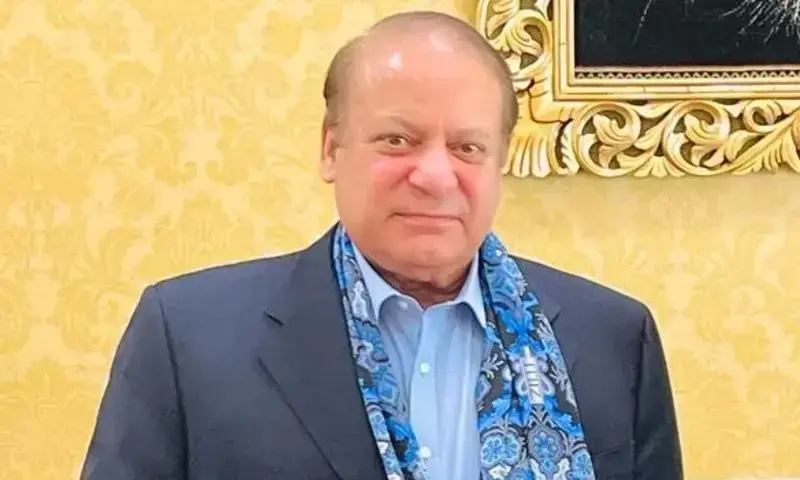
PML-N supremo Nawaz Sharif. File photo

Former prime minister Nawaz Sharif on Sunday offered condolences to the people of Iran following the assassination of Supreme Leader Ali Khamenei.

In a post on X, Sharif described the killing as “a significant moment in the history of Iran,” saying the loss carried “deep emotional, political, and national implications.”

“I stand in solidarity with the Iranian nation and extend my sympathies to all those who are grieving,” he wrote.

Sharif also reaffirmed the “importance of stability, peace, and mutual respect among nations, particularly in our region,” urging restraint amid rising regional tensions.

He concluded by praying for strength and resilience for the Iranian people during what he called a “profound and irreparable loss.”

For the latest news, follow us on Twitter @Aaj_Urdu. We are also on Facebook, Instagram and YouTube.
Iranian-made drone hits British air base in Cyprus, causing limited damage

Published 02 Mar, 2026 08:19pm 0 min read
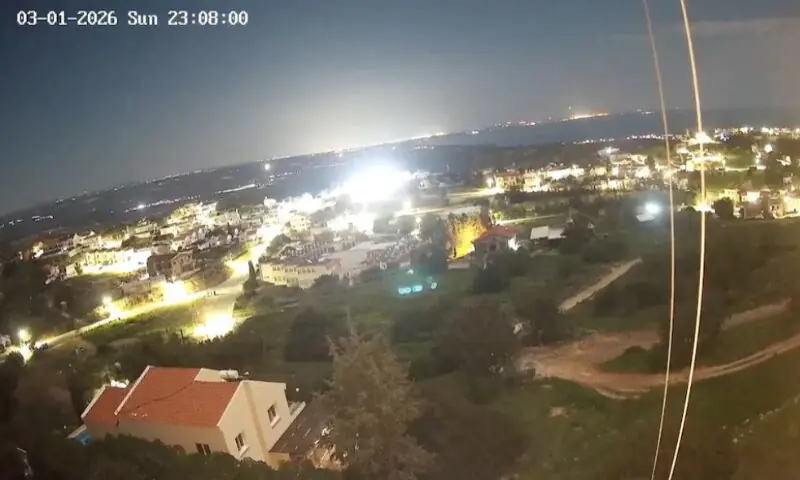
Flashes appear in the sky over RAF Akrotiri, as seen from Pissouri, Limassol District, Cyprus in this screen grab taken from a handout video obtained on March 2, 2026. Reuters

A drone strike hit a British air base in Cyprus overnight, causing limited damage and no casualties, Cypriot and British officials said on Monday, in a marked escalation effectively dragging an EU member state into the conflict surrounding Iran.

The threat continued into Monday when a government spokesman posted on X that two more “unmanned aerial vehicles” that were heading towards the British Royal Air Force base of Akrotiri were intercepted. Sirens sounded at the base after midday on Monday (1000 GMT) and Reuters witnesses saw aircraft taking off.

The overnight strike, which hit a runway at the base, shook the east Mediterranean island, a holiday hotspot and home to thousands of foreign companies. The base, used in the past for military operations in Iraq, Syria and Yemen, was last attacked by Libyan militants in 1986.

Britain had moved additional air assets to Akrotiri in anticipation of U.S. action against Iran in preceding weeks while saying British bases would not be used.

On Sunday, however, after the US and Israel launched attacks on Iran, Prime Minister Keir Starmer said Britain had accepted a U.S. request to use its bases for defensive strikes against Iranian missiles in storage depots or launchers.

British foreign minister Yvette Cooper said the U.S. had not requested access to the Akrotiri air base and that the UK was being targeted by Iran.

“We cannot ignore that,” she told the Good Morning Britain television show.

Cypriot President Nikos Christodoulides said in a speech that the Shahed-type unmanned aerial vehicle caused minor damage when it crashed into the military facilities at 12:03 a.m.

It was not immediately clear from where the Iranian-made Shahed had been fired.

“All the competent services of the republic are on alert and in full operational readiness,” Christodoulides said.

EU, GREECE OFFER SUPPORT

Akrotiri base, south-west of the coastal city of Limassol, is one of two bases Britain has retained in the former colony since independence in 1960.

Although the bases are regarded as British sovereign territory, Cypriot government officials say they have emphasised to Britain that they should only be used for humanitarian purposes. Britain has no legal obligation to inform Cyprus of its use in military operations, but it is customary for London to inform Nicosia of activity.

“I want to be clear: Our country does not participate in any way and does not intend to be part of any military operation,” Christodoulides said.

Cyprus itself is an EU member and now holds the bloc’s rotating presidency. While Cyprus is not a member of NATO, it is part of the EU’s mutual defence clause meaning other members of the bloc should come to its aid if it were attacked.

Commission President Ursula von der Leyen offered support.

“While the Republic of Cyprus was not the target, let me be clear: we stand collectively, firmly and unequivocally with our Member States,” she said in a post on X.

Greece ’s Defence Minister Nikos Dendias said on Monday that Greece would defend Cyprus “with any possible means” and that it was sending two frigates to Cyprus, one with an anti-drone system, plus two F-16 fighter jets.

On Sunday, before the drone strike, British defence secretary John Healey said Britain had intercepted two missiles fired in the direction of Cyprus, but added he didn’t believe Cyprus was deliberately targeted.

An EU official, speaking on condition of anonymity, told Reuters they believed Iran was trying to expand the conflict and drag Europeans into it.

RESIDENTS TAKE SHELTER

People from the nearby civilian village of Akrotiri, home to Greek Cypriots, fled the community overnight, with some taking shelter at Cypriot army barracks in Limassol, local Mayor Pantelis Georgiou told the Cyprus News Agency.

“I was watching TV and I heard a big explosion. I called the SBA (bases police) asking what was happening, they said they couldn’t say anything. I took my wife, my in-laws, to Limassol,” a person identified as Theodoros told the state broadcaster CyBC from Akrotiri.

Britain has roughly 7,000 British personnel and dependents on Cyprus. The bases’ territories, covering 99 square miles of Cyprus, or just under 3% of the island, also host a key listening post of the Joint Service Signal Unit at Ayios Nicolaos, which is part of the base on the eastern part of the island.

For the latest news, follow us on Twitter @Aaj_Urdu. We are also on Facebook, Instagram and YouTube.
Trump to decide how long to wage Iran war, Hegseth says

Published 02 Mar, 2026 07:15pm 0 min read
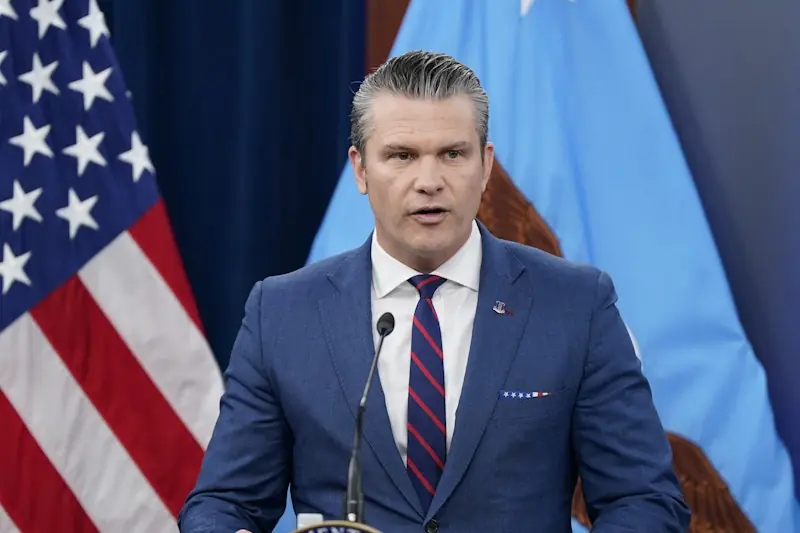
US Defence Secretary Pete Hegseth. – Reuters

U.S. Defence Secretary Pete Hegseth declined to give a timeline for the U.S.-Israeli assault on Iran, saying it was up to Trump to decide the length of the military campaign.

“As far as time frame, I would never hang a time frame,” he said during a press conference at the Pentagon.

“This is not Iraq. This is not endless,” he added.

Pressed on the issue, he said: “President Trump has all the latitude in the world to talk about how long it may or may not take, four weeks, two weeks, six weeks. It could move up. It could move back.”

U.S. Defence Secretary Pete Hegseth also said the United States was not ruling out any options in its war with Iran, adding: “We fight to win.”

The U.S. mission in Iran was to destroy Iran’s missiles and navy and to deny Tehran nuclear weapons.

“This is not a so-called ‘regime change’ war, but the regime sure did change,” U.S. Defence Secretary Pete Hegseth said, adding: “And the world is better off for it.”

For the latest news, follow us on Twitter @Aaj_Urdu. We are also on Facebook, Instagram and YouTube.