Live
Iran israel war

PM briefs president on US-Iran talks, next diplomatic push

Published 14 Apr, 2026 08:05pm 0 min read
President Asif Ali Zardari and Prime Minister Shehbaz Sharif during a meeting in Islamabad on Tuesday. Radio Pakistan

Prime Minister Shehbaz Sharif on Tuesday briefed President Asif Ali Zardari on the ongoing dialogue between the United States and Iran, outlining progress made through Pakistan’s mediation efforts.

During a meeting in Islamabad, the prime minister provided a detailed update on various stages of the talks and key developments so far.

He also informed the president about his upcoming visits to Saudi Arabia and Turkiye aimed at advancing diplomatic efforts to promote regional peace.

President Zardari reviewed the evolving security and diplomatic situation, warning that the crisis carries far-reaching implications for regional stability as well as the global economy and political landscape.

He commended Pakistan’s role in facilitating dialogue between Washington and Tehran, calling it a significant diplomatic achievement.

The president also praised the coordinated efforts of the government, including Deputy Prime Minister Ishaq Dar, Chief of Army Staff and Chief of Defence Forces Field Marshal Syed Asim Munir, and other state institutions in enabling the high-level engagement.

Highlighting Pakistan’s diplomatic legacy, President Zardari said the country has once again demonstrated its commitment to global peace by providing a platform for critical negotiations.

He urged the government to maintain proactive engagement with the United States, Iran and other key regional and international stakeholders to sustain momentum in the peace process and ensure long-term stability.

For the latest news, follow us on Twitter @Aaj_Urdu. We are also on Facebook, Instagram and YouTube.

Jet fuel shock from Iran war worsens crisis for global airlines

Published 14 Apr, 2026 07:27pm 0 min read
Passengers sit at the window at Ronald Reagan Washington National Airport, in Arlington, Virginia, U.S., on November 11, 2025. Reuters file

Air travel’s worst crisis in years lurched deeper on Tuesday as Qantas Airways warned ‌of spiralling costs, Lufthansa said it may have to ground planes and Virgin Atlantic flagged a looming supply crunch, with the Iran conflict squeezing fuel supplies.

The war has upended routes between Asia and Europe that relied on Gulf hubs, while a doubling of jet fuel prices and tightening of supplies are hitting airlines hard. Since the US-Israeli strikes on Iran began on February 28, carriers have hiked air fares, introduced ​fuel surcharges and cut routes.

Underscoring efforts to preserve cash, Qantas has delayed a planned share buyback, citing higher and volatile fuel prices, one of the first ​major carriers to stall shareholder returns.

Meanwhile, Lufthansa CEO Carsten Spohr warned that jet fuel supplies will remain constrained, driving up costs.

“Kerosene will remain ⁠in short supply and therefore more expensive for the rest of the year,” Spohr told German newspaper Frankfurter Allgemeine Zeitung.

Lufthansa has not yet grounded planes due to shortages ​but this “may be unavoidable” as kerosene availability is already critical at some airports, particularly in Asia, he said.

In South Korea, low-cost carrier T’way Air plans to furlough some cabin crew without ​pay in May and June, a local report said, among the first carriers to reduce staffing.

A two-week ceasefire has provided little relief with the Strait of Hormuz still shut, removing roughly a fifth of global oil and liquefied natural gas supplies from the market and refineries will take time to repair damage inflicted on them.

“Despite the pause in the conflict we remain concerned about jet kerosene supply and price ​increase,” UBS analyst Jarrod Castle said in a note on Tuesday, adding that December jet kerosene futures prices are still up more than 50% year-on-year.

Fuel, typically airlines’ second-largest cost after ​labour, accounts for about 27% of operating expenses. Prices have more than doubled since the conflict began, far outpacing a roughly 50% rise in crude prices before the ceasefire.

The turmoil may spur ‌consolidation, with ⁠stronger airlines gaining share from weaker rivals, analysts and executives said.

Reuters reported on Monday that United Airlines CEO Scott Kirby pitched the potential for merging with American Airlines days before the U.S.-Israeli strikes on Iran.

EU AIRLINES URGE BRUSSELS TO STEP IN

Flight capacity, in particular from the Middle East but also into Europe, has shrunk and is not projected to recover to pre-conflict levels anytime soon, analysts said.

Virgin Atlantic CEO Corneel Koster said in an interview with the Financial Times that the airline has about six weeks of secure jet fuel supplies ​before the outlook gets more uncertain.

And European airlines ​on Tuesday urged Brussels to step in ⁠with emergency measures to cushion the impact, including EU-level kerosene purchasing, a temporary suspension of the bloc’s carbon market for aviation and scrapping certain aviation taxes.

Industry group Airports Council International Europe (ACI) warned last week that Europe could face a systemic jet fuel shortage in three ​weeks.

Several carriers, including SAS, are not hedged, leaving them fully exposed to soaring fuel costs. Delta Air Lines last week said ​its jet fuel bill ⁠this quarter would be some $2 billion more than last year.

While Qantas has hedged much of its crude exposure, it remains significantly exposed to the spike in jet fuel spreads.

To offset rising costs, the Australian flag carrier is raising fares and shifting capacity toward stronger routes such as Europe, where demand remains firm, while trimming domestic capacity by about 5 percentage points in the June ⁠quarter.

Lufthansa’s Spohr said ​record revenues on Asian routes were also helping offset the impact of rising kerosene costs.

But the airline ​has prepared contingency plans, including cutting its capacity by 2.5% or 5% and grounding 20 to 40 older, less fuel-efficient aircraft earmarked for early retirement.

For the latest news, follow us on Twitter @Aaj_Urdu. We are also on Facebook, Instagram and YouTube.

China slams US blockade as ‘dangerous’

Published 14 Apr, 2026 06:58pm 0 min read
Chinese Foreign Ministry spokesperson Guo Jiakun. – Reuters file

China accused the United States on Tuesday of “dangerous and irresponsible” behaviour over its blockade of Iranian ports, with President Xi Jinping vowing Beijing would play a “constructive role” in promoting peace in the Middle East.

US President Donald Trump has threatened to sink ships entering or leaving Iranian ports and coastal areas in the Gulf after peace talks between Washington and Tehran failed over the weekend.

The blockade came into force at 1400 GMT on Monday, despite the United States and Iran agreeing to a fragile two-week ceasefire days earlier.

“The US increased military deployments and took a targeted blockade action, which will only exacerbate tensions and undermine the already fragile ceasefire agreement and further jeopardise safety of passage through the Strait (of Hormuz),” Chinese foreign ministry spokesman Guo Jiakun told a news conference.

“This is dangerous and irresponsible behaviour,” he added.

Iran has effectively closed the vital Strait of Hormuz, allowing only vessels serving countries it deems friendly — such as China — to cross.

Hardened US stance

Trump’s blockade, analysts say, aims to starve Iran of funds and pressure Beijing, the biggest buyer of Iranian oil, to push Tehran to open the strait, through which one-fifth of global oil transits in peacetime.

Tehran’s ambassador to the United Nations called Trump’s blockade a “grave violation” of Iran’s sovereignty.

Speaking publicly about the war for the first time, Xi echoed those warnings on Tuesday, calling for the national sovereignty of countries in the Middle East and the Gulf to be “respected”.

Xi spoke as he met with Abu Dhabi Prince Sheikh Khaled bin Mohamed bin Zayed Al Nahyan in Beijing. He vowed China would continue to play a “constructive role” in promoting peace talks.

China also took a firm stance on Tuesday against Trump’s threats to impose new tariffs on Chinese products entering the United States following reports Beijing was supplying or intends to supply weapons to Iran.

Trump — who is scheduled to visit Beijing next month for talks with Xi — said on Sunday he would hit China’s goods with a 50 per cent tariff if it provided military assistance to Tehran.

Guo, the Chinese foreign ministry spokesman, said those reports were “completely fabricated”.

“If the US insists on using this as an excuse to impose additional tariffs on China, China will definitely take resolute countermeasures,” Guo said.

String of leaders

China is welcoming a string of leaders from countries impacted by the Middle East war to visit Beijing this week.

Vietnam’s To Lam and Russia’s Foreign Minister Sergei Lavrov also touched down in the Chinese capital on Tuesday, hoping to boost cooperation on the conflict, as well as bilateral issues.

The Russian foreign ministry has said Lavrov and China’s top diplomat Wang Yi would discuss the situation in the Middle East during their meeting, which follows a call this month, in which the pair agreed to work together to de-escalate tensions.

Spanish Prime Minister Pedro Sanchez is also visiting Beijing this week for a trip largely focused on bilateral trade ties.

Sanchez told reporters on Tuesday that China can play an “important role” in the Middle East, while Xi warned against a return to the “law of the jungle” in international relations, according to state media.

“Both China and Spain are principled countries that stand for justice. They should strengthen communication, consolidate mutual trust, and cooperate closely to oppose the world’s regression to the law of the jungle,” Xi said during their meeting at Beijing’s Great Hall of the People.

For the latest news, follow us on Twitter @Aaj_Urdu. We are also on Facebook, Instagram and YouTube.

US-Iran talks split over nuclear freeze timeline: NYT

Published 14 Apr, 2026 06:39pm 0 min read
A representational image. File photo

The United States and Iran remain divided over the duration of a proposed suspension of Tehran’s nuclear activities following high-level talks in Islamabad, according to a report by The New York Times.

The report said Washington pushed for a 20-year halt to uranium enrichment, while Tehran signalled willingness for a maximum five-year suspension, leaving a key gap between the two sides.

US and Iranian officials discussed multiple proposals during the negotiations, but failed to reach a final agreement due to differences over the timeline. Despite the impasse, both sides have stressed the need to continue dialogue.

The first phase of talks between the delegations was held in Islamabad on April 11, lasting around 21 hours, but ended without a deal.

US Vice President JD Vance said in an interview that there had been positive progress, adding that Washington had presented its proposals and “the ball is now in Iran’s court”.

Tensions persisted in the Strait of Hormuz, where several vessels continued to transit despite a US naval blockade announcement. No immediate reports emerged of ships being intercepted.

Markets reacted positively to expectations of easing tensions, with oil prices declining and stock markets in Asia and Europe posting gains.

Officials said further direct talks between Washington and Tehran are under consideration, though no details have been finalised.

Regional tensions remain high, with reports of Israeli air strikes in Lebanon and casualties across Iran, Lebanon, Israel and Gulf states.

Analysts say resolving differences over Iran’s nuclear programme remains critical for regional stability and global security.

For the latest news, follow us on Twitter @Aaj_Urdu. We are also on Facebook, Instagram and YouTube.

Second round of US-Iran talks in Islamabad likely Thursday: Report

Published 14 Apr, 2026 03:18pm 0 min read
A Pakistani official stands ahead of the US-Iran talks in Islamabad on April 11, 2026. – Reuters

Talks between the United States and Iran on a possible second round of negotiations are still under discussion, with officials indicating that a meeting could take place as early as Thursday, a media report said on Tuesday.

Two US officials, speaking on condition of anonymity due to the sensitivity of the matter, said key details — including the venue, timing and composition of delegations — have yet to be finalised, according to Arab News.

Separately, Reuters said negotiating teams from the US and Iran could return to Pakistan later this week to resume negotiations to end the war in the Gulf.

There was no immediate confirmation from US ​officials about the plans, which the Iranian and Pakistani officials discussed on condition of anonymity.

A source who ​has been involved in the talks said a proposal had been sent to Washington and Tehran ⁠for the delegations to return to Islamabad to resume discussions.

No date had yet been decided, but both countries could ​return as early as the end of this week.

An official at the Iranian embassy in Islamabad said, “The coming rounds ​of talks can come sometime later this week or earlier next week. But nothing is finalised as of now.”

Earlier, a senior Iranian source told Reuters: “No firm date has been set, with the delegations keeping Friday through Sunday open.”

A senior Pakistani official said Islamabad had ​reached out to Iran, “and we got a positive response that they will be open to a second round ​of talks”.

The official and a second Pakistani source said Islamabad was communicating with both sides about the timing of the next ‌round, ⁠and the meeting would be likely to take place over the coming weekend.

Pakistan has proposed hosting the next round of talks in Islamabad in the coming days, ahead of the expiry of the current ceasefire, Pakistani officials said.

They noted that the proposal remains flexible and could change if both sides prefer an alternative location.

One Pakistani official said the initial round of talks, although inconclusive, should be viewed as part of an ongoing diplomatic process rather than a one-off effort.

Another official told Al Jazeera that Pakistan remains committed to facilitating dialogue for “as many rounds as it takes” to help secure peace, adding that communication between all parties is continuing.

For the latest news, follow us on Twitter @Aaj_Urdu. We are also on Facebook, Instagram and YouTube.

China’s export engine stutters as Iran war chills global demand

Published 14 Apr, 2026 02:36pm 0 min read
A sign which reads “China’s plastic trade town welcomes you” is seen in Zhangmutou Town, as rising oil prices drive up production costs for plastic manufacturers, in Dongguan, Guangdong province, China. – Reuters

China’s export engine slowed sharply in March as war in the Middle East triggered shocks to energy and transportation costs, ​hurting global demand and exposing the risks in Beijing’s strategy of leaning on manufacturing to sustain growth.

The world’s second-largest economy surged into 2026 on red-hot ‌AI-fuelled electronics demand, raising expectations it could eclipse last year’s $1.2 trillion record trade surplus.

But the conflict has disrupted global growth, leaving China especially vulnerable as it has relied on foreign demand to offset a prolonged inability to revive consumption at home.

Outbound shipments grew by just 2.5% in March, customs data showed on Tuesday, a five-month low, and far below the 21.8% surge seen over the January-February period. Economists had forecast ​growth of 8.3% in a Reuters poll.

“Export growth to major destinations slowed across the board,” said Zhiwei Zhang, chief economist at Pinpoint Asset Management, attributing the drop to ​global uncertainty over the Iran war.

“I think China’s trade surplus will shrink this year, as China cannot pass through the higher energy prices ⁠completely to foreign consumers,” he added.

The signs are already evident: China’s March trade surplus came in at just $51.13 billion, far below expectations of $108 billion.

A sharp 27.8% surge in imports — the ​strongest since November 2021 — weighed on the balance. That compared with a 19.8% increase in January-February and forecasts for 11.2% growth.

China’s status as the world’s largest manufacturer and energy importer leaves ​it acutely exposed to a global energy shock.

Diversified supplies and large oil reserves offer some protection, but uncertainty over the conflict’s duration risks undermining artificial intelligence-fuelled demand for chips and servers, blurring the growth picture.

Even China, long criticised by trading partners for subsidy-backed, cut-price manufacturing, is not insulated from the hit to buyers’ purchasing power as fuel and transport costs rise.

Separate GDP data due on Thursday is expected to show ​the $19 trillion economy regaining some momentum in the first quarter, but full-year growth is set to slow to 4.6% from last year’s 5.0%, broadly in line with the official target ​of 4.5%–5.0%.

Chinese goods more competitive?

Chinese goods will be “even more competitive” as the energy shock “pushes up the price in most of the countries” more than in China, said Chen Bo, senior research fellow at the ‌National University ⁠of Singapore’s East Asian Institute.

Chen expects global demand for Chinese-made electric vehicles to increase.

Fred Neumann, HSBC’s chief Asia economist, said China could stand to benefit from taking the decision in the early 2000s to stockpile commodities as it could help blunt the impact of raw-material shocks on factory gate prices.

China’s exports of refined oil products rose 20.5% month-on-month, totalling 4.6 million metric tons.

Disruptions to global energy supply lines will be felt in China, even if it’s not yet showing up in the data.

Natural gas imports for March dropped an annual 10.7%, the lowest level ​since October 2022, with Chinese ships diverting between ​eight and 10 cargoes over the ⁠course of the month to sell where prices are higher, according to ICIS, Kpler and Vortexa data.

Crude oil imports also fell 2.8% year-on-year, but this was predominantly due to a high base effect, with March arrivals having been loaded onto ships before the war began.

The figures were ​further muddied by the seasonal effects of a late Lunar New Year national holiday, said Xu Tianchen, senior economist at the ​Economist Intelligence Unit, during which ⁠factories shut as workers down tools to celebrate.

“This explains the decline across the low-value-added sectors, textiles, garments, bags, toys, furniture, as they are reliant on migrant workers,” Xu said.

A high base is also a drag, after Chinese factories rushed shipments a year earlier to beat US President Donald Trump’s April 2 “Liberation Day” tariff deadline.

March factory activity data out of China showed goods exports continued to support ⁠growth, but the ​war in Iran weighed on sentiment as commodity prices rose sharply, lifting input costs.

Some analysts expect sustained tech ​demand to underpin Chinese exports.

“For Q1 as a whole, export growth rose to its highest level in four years,” said Zichun Huang, China economist at Capital Economics.

“Despite the energy price shock, exports should stay solid in the coming ​quarters, thanks to strong demand for semiconductors and green technologies.”

For the latest news, follow us on Twitter @Aaj_Urdu. We are also on Facebook, Instagram and YouTube.

Hezbollah chief urges Lebanese govt to cancel talks with Israel

Published 14 Apr, 2026 01:54pm 0 min read
Hezbollah chief Naim Qassem. – Reuters

Hezbollah leader Naim Qassem has rejected an upcoming meeting between Lebanese and Israeli officials in the United States, describing the planned talks as “futile” amid intensified Israeli strikes on Lebanon.

In a televised address on Monday, Qassem urged the Lebanese government to take what he called a “historic and heroic stance” by refusing to participate in the proposed discussions, Al Jazeera said in a report.

Lebanese and Israeli ambassadors to the US are scheduled to meet in Washington, DC, on Tuesday to discuss the possibility of opening direct negotiations between the two countries.

Qassem said the initiative was aimed at pressuring Hezbollah to disarm, claiming Israel had made its objective clear.

“So how can you go to negotiations whose objective is already clear?” he said.

He added that Hezbollah would not back down, saying: “We will not rest, stop or surrender. Instead, we will let the battlefield speak for itself.”

Israel stepped up its military operations in Lebanon in early March. A ceasefire nominally in place since November 2024 has been repeatedly violated, with Israel continuing near-daily strikes.

Hezbollah said its March 2 attack was in response to the killing of Iran’s Supreme Leader Ayatollah Ali Khamenei at the start of a US–Israel campaign against Iran.

Since then, Israeli strikes and a ground offensive in southern Lebanon have killed at least 2,055 people, including 165 children and 87 medical workers, according to Lebanese authorities.

More than 6,500 others have been injured, and around 1.2 million people have been displaced.

Lebanese officials say their priority is securing a ceasefire, while Israel has called for formal peace negotiations and the disarmament of Hezbollah, without committing to a full withdrawal from southern Lebanon.

Israeli Prime Minister Benjamin Netanyahu has said Israel seeks “the dismantling of Hezbollah’s weapons” and a long-term peace agreement.

Qassem, however, said the proposed talks would require broad Lebanese consensus to shift from non-engagement to direct negotiations, calling them a “free concession” to Israel and the United States.

His remarks came after protests in Beirut over the weekend, where demonstrators accused the government of betraying Lebanon by engaging in talks while Israeli strikes continue.

On Monday, the Israeli military said its forces had fully encircled the southern town of Bint Jbeil, while Hezbollah claimed ongoing attacks on Israeli positions in the area.

Qassem warned that northern Israeli towns would remain under threat, adding that Hezbollah rejects any attempt to strip it of its weapons.

He also accused Lebanese authorities of undermining the group by declaring its military activities illegal.

He further said that efforts to empower the Lebanese army were intended to facilitate Hezbollah’s disarmament, arguing that the military would not take such action.

For the latest news, follow us on Twitter @Aaj_Urdu. We are also on Facebook, Instagram and YouTube.

China proposes four-point plan for Middle East peace

Published 14 Apr, 2026 12:55pm 0 min read
Chinese President Xi Jinping meets with Sheikh Khaled bin Mohamed bin Zayed Al Nahyan, Crown Prince of Abu Dhabi, in Beijing on Tuesday. – Courtesy social media

Chinese President Xi Jinping on Tuesday put forward a four-point proposal aimed at promoting peace and stability in the Middle East during a meeting with Sheikh Khaled bin Mohamed bin Zayed Al Nahyan, Crown Prince of Abu Dhabi, in Beijing.

Xi called for adherence to the principle of peaceful coexistence, stressing the need to advance the building of a common, comprehensive, cooperative and sustainable security architecture for the Middle East and Gulf region, Xinhua said in a report.

He also emphasised respect for national sovereignty, saying the sovereignty, security and territorial integrity of countries in the Middle East and Gulf region must be fully respected, while the safety of personnel, facilities and institutions from all countries should be effectively ensured.

On upholding the international rule of law, Xi said its authority must be safeguarded to prevent the world from sliding back into “the law of the jungle.”

He further stressed that development and security should be coordinated, calling on all parties to work together to create a favourable environment for the development of countries in the Middle East and Gulf region.

For the latest news, follow us on Twitter @Aaj_Urdu. We are also on Facebook, Instagram and YouTube.

Vance says US-Iran talks made progress towards US demands

Published 14 Apr, 2026 12:42pm 0 min read
US Vice President JD Vance speaks during a news conference in Islamabad. – Reuters

US Vice President JD Vance has said that recent negotiations in Islamabad made “some progress” on US demands for the removal of nuclear material from Iran and the establishment of safeguards to prevent future uranium enrichment.

In an interview with FOX News Channel’s Special Report, Vance said the talks had seen movement in Washington’s direction.

“They moved in our direction,” he said, adding that Iranian negotiators appeared “unable to cut a deal” without approval from authorities in Tehran.

He said US negotiators had made clear that President Donald Trump would prefer Iran to be treated as a “normal country” with a functioning economy, though he did not elaborate on the details.

Vance said he believed there was still scope for a broader agreement but stressed that any further progress would depend on Tehran.

“There really is, I think, a grand deal to be had here. But it’s up to the Iranians, I think, to take the next step,” he said.

Responding to a question, Vance said the United States made a lot of progress ​in talks ​with Iran.

Vance, ​asked whether more ​talks were coming, said the ‌ball ⁠was in Iran’s court.

He added that the US expects Iran ​will ​make ⁠progress on opening the Strait ​of Hormuz, warning ​that ⁠the negotiation would change if Tehran does ⁠not.

For the latest news, follow us on Twitter @Aaj_Urdu. We are also on Facebook, Instagram and YouTube.

PM Shehbaz Sharif to visit Saudi Arabia on April 15

Published 14 Apr, 2026 11:36am 0 min read
APP file
APP file

Prime Minister Shehbaz Sharif is set to visit Saudi Arabia on April 15 for a two-day official trip, according to sources.

During the visit, the prime minister is expected to hold meetings with Saudi leadership, where the overall regional situation will be discussed in detail.

The talks are likely to include the future course of ongoing US-Iran negotiations, efforts to reduce tensions, and the possibility of a lasting ceasefire.

After concluding his visit to Saudi Arabia, the prime minister will travel to Türkiye, sources said.

He is expected to participate in the Antalya Diplomacy Forum during his stay in Türkiye.

The visit came at the invitation of Saudi Crown Prince Mohammed bin Salman.

The prime minister will be accompanied by a high-level delegation.

Officials said the visit carries added significance in the wake of recent Iran-US talks held in Islamabad.

Earlier, Deputy Prime Minister and Foreign Minister Ishaq Dar held a telephone conversation with Saudi Foreign Minister Prince Faisal bin Farhan, during which he briefed him on talks held in Islamabad.

According to a Foreign Office spokesperson, Dar stressed the importance of adherence to ceasefire agreements by all parties.

He also reaffirmed Pakistan’s commitment to continuing its role in facilitating diplomatic efforts

For the latest news, follow us on Twitter @Aaj_Urdu. We are also on Facebook, Instagram and YouTube.

Pakistan weighs Eurobonds and loans to replace $3.5bn UAE facility

Published 14 Apr, 2026 11:29am 0 min read
Finance Minister Muhammad Aurangzeb speaks during an interview at the International Monetary Fund and World Bank Group’s annual spring meetings in Washington DC. – Reuters

Pakistan is considering Eurobonds, loans from other countries and commercial debt to replace a $3.5 billion facility ‌from the United Arab Emirates (UAE) and manage its foreign reserves, Finance Minister Mohammed Aurangzeb said.

Muhammad Aurangzeb also told Reuters the shock from the ongoing war in the Middle East meant that Pakistan must consider a strategic petroleum reserve and a faster switch to renewable energy.

“All options are on the ​table,” Aurangzeb said when asked if the government was in talks with Saudi Arabia for a loan that ​could replace the UAE facility.

Reuters reported that Pakistan will return a $3.5 billion loan to the UAE this ⁠month, putting pressure on its reserves and risking breaches of its International Monetary Fund (IMF) programme targets.

Islamabad has ​been thrust into the international spotlight as it plays the role of a mediator between the US and Iran to end the ​war in its neighbourhood.

Aurangzeb, speaking on the sidelines of the IMF/World Bank annual spring meetings, said the country could manage all debt repayments, and that its reserves remained at roughly 2.8 months of import cover. Maintaining at least that level, he said, would be “an important aspect of ​our overall macro stability as we go forward.”

“We are looking at Eurobond, we are looking at Islamic sukuk, we are ​looking at dollar-settled rupee-linked bonds,” Aurangzeb said, adding that they expected to issue Eurobonds this year and are also exploring commercial loans.

Aurangzeb said ‌while the ⁠country had not yet requested any additions or changes to its $7 billion IMF lending programme due to the economic shocks of the war in the Middle East, it was a potential option.

“Depending upon how things pan out over the next few weeks, that’s something which can be discussed,” he said.

The Fund’s board is likely to sign off on the latest lending tranche by the ​end of this month or ​early next month, Aurangzeb said, ⁠which would unlock just under $1.3 billion via the Extended Fund Facility and the Resilience and Sustainability Facility.

Pakistan also expects to launch its first-ever Panda bond — debt denominated in Chinese yuan — next ​month, he said.

The $250 million issue, the first of a planned $1 billion programme, will be ​backed by the ⁠Asian Development Bank and the Asian Infrastructure Investment Bank.

Aurangzeb said the country’s expected GDP growth of close to 4%, remittances of around $41.5 billion and targeted assistance to the poorest citizens could withstand the Iran war shock for this fiscal year, which ends on June ⁠30.

But the ​price spikes meant the country should focus on establishing strategic reserves of ​fuels and LPG — rather than simply relying on commercial reserves — and accelerate its move towards renewable energy.

“When you go through a supply shock like this… it ​sends a very clear view that we need to accelerate these journeys,” he said.

For the latest news, follow us on Twitter @Aaj_Urdu. We are also on Facebook, Instagram and YouTube.

Pakistan proposes second round of US-Iran talks in Islamabad

Published 14 Apr, 2026 11:00am 0 min read
US Vice President JD Vance speaks with Prime Minister Shehbaz Sharif in Islamabad. – Picture courtesy social media

Pakistan has proposed hosting a second round of talks between the United States and Iran in Islamabad in the coming days, ahead of the expiry of the current ceasefire, according to two Pakistani officials.

The officials, speaking on condition of anonymity as they were not authorised to discuss the matter publicly, said the proposal remains under consideration and would depend on whether both sides prefer an alternative venue for the next phase of discussions.

One of the officials said that although the initial talks in Islamabad ended without an agreement, they were part of an ongoing diplomatic process rather than a one-off engagement.

The development comes as the United States and Iran remain in active discussions over holding another round of face-to-face negotiations aimed at securing a longer-term ceasefire and preventing renewed conflict after earlier talks in Pakistan failed to produce a deal, according to Bloomberg, citing people familiar with the matter.

The proposal reportedly involves scheduling a follow-up meeting before the temporary ceasefire — brokered earlier in April — expires later this month.

Despite the lack of a breakthrough, both sides are said to have signalled willingness to keep diplomatic channels open, with Islamabad also being considered as a potential venue for renewed talks, underscoring Pakistan’s emerging role as a mediator between Washington and Tehran.

Diplomatic sources say US and Iranian officials remain in contact, with Pakistan continuing efforts to facilitate dialogue and revive the process before the ceasefire lapses. However, there has been no official confirmation of any new meeting.

The discussions take place against a backdrop of heightened regional tensions following a US blockade on Iranian ports, with US President Donald Trump warning that Iranian vessels could be “eliminated” while also maintaining that a diplomatic settlement remains possible.

Despite a rise in tensions, the BBC, in a report, suggests that negotiations remain active and a potential pathway toward a wider agreement has not been ruled out.

The proposals come amid a fragile ceasefire, raising concerns about possible escalation and disruption to global energy flows.

For the latest news, follow us on Twitter @Aaj_Urdu. We are also on Facebook, Instagram and YouTube.

Trump warns Iran of ‘severe’ consequences if no deal is reached

Published 14 Apr, 2026 10:31am 0 min read
A vessel at the Strait of Hormuz, off the coast of Oman’s Musandam province. – Reuters file

US President Donald Trump has issued a stark warning to Iran over the future of the ongoing ceasefire, saying the consequences of failing to reach a deal would be severe while reiterating that Tehran would not be allowed to develop a nuclear weapon.

Speaking to reporters, Trump declined to spell out specific actions if negotiations collapse, but signalled a tough response.

“I don’t want to comment on that, but it won’t be pleasant for them,” he said, adding that hostilities had paused for now.

He pointed to existing pressure measures, saying Iran was already facing a blockade and had been largely cut off from business activity.

Trump also claimed that Iran’s military capabilities had been significantly degraded.

The US president reaffirmed Washington’s long-standing position on Iran’s nuclear programme, insisting that Tehran would not be permitted to acquire nuclear weapons.

“If they don’t agree, there is no deal… There will never be a deal,” he said, adding, “we are going to get the dust back; either we will get it back from them, or we will take it.”

For the latest news, follow us on Twitter @Aaj_Urdu. We are also on Facebook, Instagram and YouTube.

US, Iran leave door open to dialogue after tense Islamabad talks

Published 14 Apr, 2026 08:45am 0 min read
US Vice President JD Vance talks to Chief of Defence Forces and Chief of Army Staff Field Marshal Asim Munir and Deputy Prime Minister and Foreign Minister Ishaq Dar before boarding Air Force Two after attending talks on Iran in Islamabad. – Reuters

After a sleepless and at times tense night in Islamabad, Iranian and US officials ended their highest-level talks in decades without a breakthrough, but 11 sources familiar with the negotiations said dialogue was still alive.

The weekend meeting to resolve the conflict between the US and Iran, held four days after last Tuesday’s ceasefire announcement, was the first direct encounter between US and Iranian officials ​in more than a decade and the most senior engagement since Iran’s 1979 revolution.

Inside Islamabad’s luxury Serena Hotel, the talks unfolded across two separate wings and one common area — one for the US side, one for the Iranians and one for trilateral meetings ‌involving Pakistani mediators, operational staff told Reuters.

Among the slew of issues at stake was the Strait of Hormuz, a major transit point for global energy supplies that Iran has effectively blocked, but the US has vowed to reopen, as well as Iran’s nuclear programme and international sanctions on Tehran.

Phones were not allowed in the main room, forcing delegates, including US Vice President JD Vance and Iranian Parliamentary Speaker Mohammad Baqer Qalibaf, to step out during breaks to relay messages back home, two of the sources said.

“There was a strong hope in the middle of the talks that there would be a breakthrough and the two sides would reach an agreement. However, things changed in no time,” a Pakistani government source said.

Another source involved in the talks said ​the parties came “very close” to an agreement and were “80% there” before running into decisions that could not be settled on the spot.

Two senior Iranian sources described the atmosphere as heavy and unfriendly, adding that while Pakistan tried to soften the mood, neither side showed any willingness to ease tensions.

Atmosphere began to lift

Nevertheless, the two Iranian sources said that by early Sunday morning, the atmosphere had shown some improvement, and the possibility of a one-day extension began to take shape.

However, differences persisted. A US ⁠source said the Iranians did not properly understand that the core US aim was to have a deal that ensured Iran would never obtain a nuclear weapon.

Among Iran’s concerns was a distrust of US intentions.

This account, based on sources who spoke on condition of anonymity due to the sensitivity of the matter, offers ​a first account of the internal dynamics of the meeting, how the mood in the room shifted, how talks ended after signs that the meeting might be extended, and how further dialogue remains on the cards.

There was no immediate response from the Iranian government to a request for comment on the issues reported in this ​story.

On Monday, US President Donald Trump said Iran had “called this morning” and that “they’d like to work a deal.”

Reuters could not immediately verify the assertion.

A US official, referring to Trump’s comment, said there was continued engagement between the US and Iran and forward motion on trying to get to an agreement.

Asked for comment, White House spokeswoman Olivia Wales said the US position had never shifted in the Islamabad meeting.

“Iran can never have a nuclear weapon, and President Trump’s negotiating team stuck to this red line and many others. Engagement continues toward an agreement,” she said.

‘Ups and downs’

A Middle East-based diplomat said conversations between mediators and the Americans have continued since Vance left Islamabad, while the source involved in the talks said Pakistan was ​still passing messages between Tehran and Washington.

“I want to tell you that a full effort is still on to resolve the issues,” Prime Minister Shehbaz Sharif said on Monday.

Despite numerous obstacles to peace, both sides appear to have strong reasons to consider de-escalation.

The US strikes appear unpopular at home and look unlikely ​to topple Iran’s ruling system, while Tehran’s strangling of energy supplies is hurting the global economy and pushing up inflation months before the US midterm elections.

Also, war damage to Iran’s ailing economy risks leaving the authorities there weaker internally.

In Islamabad, the longtime foes had gathered ‌to try to chart ⁠a path to a long-term settlement, after a Pakistan-brokered ceasefire paused six weeks of war that has killed thousands of people and disrupted the world’s energy supplies.

Central to the dispute is a belief among Western countries and Israel that Iran wants a nuclear bomb. Iran denies seeking nuclear weapons.

A White House official said the US wanted Iran to end all uranium enrichment, dismantle all major nuclear enrichment facilities, turn over its highly enriched uranium, accept a broader peace, agree on a security framework that includes regional allies, end funding for regional proxies, and fully open Hormuz and charge no tolls.

Iran’s demands included a guaranteed permanent ceasefire, assurances of no future strikes on Iran and its allies in the region, lifting of primary and secondary sanctions, unfreezing of all assets, recognition of its right to enrichment and continued control of Hormuz, Iranian sources said.

Four of the 11 sources said that at times the dialogue appeared close to producing at least a framework understanding, but unravelled over Iran’s ​nuclear programme, the Hormuz Strait, and the amount of frozen assets Tehran wants access ​to.

The Iranian sources said most of the substantive exchanges in Islamabad ⁠were between Vance, Qalibaf and Iranian Foreign Minister Abbas Araqchi.

“There were ups and downs. There were tense moments. People left the room, and then came back,” the security source said.

Pakistani representatives, including Army Chief Asim Munir and Foreign Minister Ishaq Dar, moved between the sides through the night to keep things on track, five Pakistani sources said.

‘How can we trust you?’

The talks stretched for more than 20 hours, with on-duty hotel staff eating, sleeping and working on site after undergoing expedited ​background checks, they said.

When discussions turned to guarantees, both non-aggression assurances and sanctions relief, the tone of the normally mild-mannered Araqchi grew sharper, the two Iranian sources said.

The sources quoted him as saying: “How can we trust you when, ​in the last Geneva meeting, you said the ⁠US would not attack while diplomacy was underway?”

The US-Israeli attack on Iran began two days after the two sides held a previous round of talks in Geneva.

In addition to differences over Hormuz, sanctions and other topics, the two sides also disagreed over the scope of any deal.

While Washington focused on the nuclear file and Hormuz, Tehran wanted a broader understanding, according to two of the sources.

During one tense moment, raised voices could be heard outside the negotiating room before Munir and Dar called a tea break and moved the two sides back into separate rooms, the government source said.

‘Our final and best offer’

Toward the final stages of the discussions, which spilled into Sunday ⁠morning, the US delegates ​were moving between the negotiating room and their private floor far more often than the Iranians, the senior Pakistani official said.

A US source said the vice president came to the talks ​with the aim of making a deal and reaching a mutual understanding.

The US side has been wary of protracted negotiations with Iran, believing the Iranians are adept at delaying tactics and refuse to make concessions, the source said.

Despite the deadlock, when Vance appeared in front of reporters later to announce the talks had ended, his remarks suggested more exchanges of some kind might be in ​prospect.

“We leave here with a very simple proposal, a method of understanding that is our final and best offer,” he said. “We’ll see if the Iranians accept it.”

For the latest news, follow us on Twitter @Aaj_Urdu. We are also on Facebook, Instagram and YouTube.

McDonald’s, Iran, and the pope: Trump’s bizarre press conference

Published 13 Apr, 2026 11:58pm 0 min read
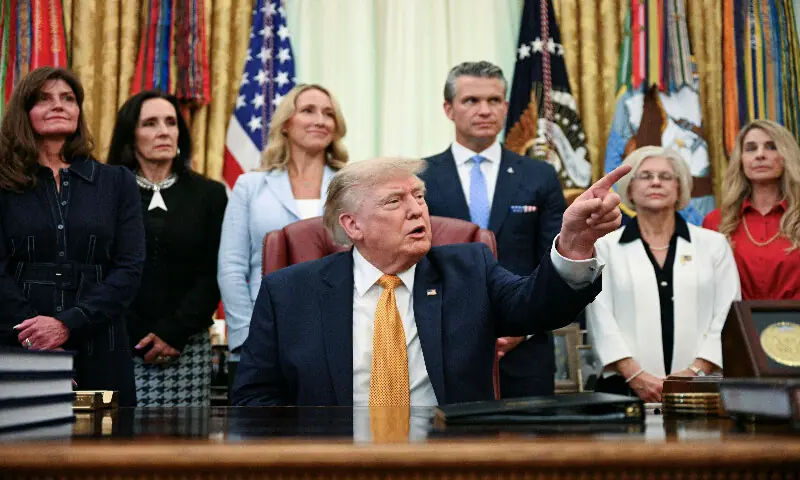
US President Donald Trump tips Doordash delivery worker Sharon Simmons after she delivered Mcdonald’s outside of the Oval Office at the White House, in Washington, DC, on April 13, 2026. AFP

If the McDonald’s delivery to the Oval Office on Monday wasn’t extraordinary enough, President Donald Trump’s press conference on Iran, the pope and Jesus certainly was.

The 79-year-old, a well-known fast food fan, emerged from the heart of the White House to take possession of two bags of burgers from a DoorDash employee.

“I have a DoorDash order for you Mr President,” said delivery worker Sharon Simmons, wearing a red t-shirt with her company’s logo, as she handed him the paper bags.

“This doesn’t look staged does it?” Trump asked reporters after receiving the delivery from Simmons, whom the company described as a grandmother of ten from Arkansas.

The event was designed to highlight billionaire Republican Trump’s “no tax on tips” policy, which he said had resulted in an $11,000 rebate for Simmons this year.

But as ever with the oldest elected president in US history it quickly swerved into surreal territory, on the biggest possible topics.

“Mr President, did you post that picture of yourself depicted as Jesus Christ?” asked a reporter.

Trump had come under fire after a now-deleted, AI-generated image appeared on his Truth Social account on Sunday night showing him as Jesus, shortly after he criticized Pope Leo XIV over his stance on Iran.

The president was having none of it.

“I did post it — and I thought it was me as a doctor and had to do (with the) Red Cross,” Trump replied.

“And I do make people better. I make people a lot better.”

The questions then turned to the Iran war, a conflict that has sent oil prices soaring and raised questions about the US economy ahead of crucial midterm elections in November.

Trump’s self-imposed blockade on Iranian ports took effect just over two hours before the press conference, following the failure of talks in Pakistan at the weekend.

Insisting that Iranian representatives had called Washington since, Trump said Iran “very badly” wants to make a deal, which he said had to include stopping Tehran from ever getting a nuclear weapon.

‘Good tippers’

With the bemused delivery worker still at his side, Trump then also made it clear he was not going to be apologising any time soon to the first US-born head of the Roman Catholic Church.

“There’s nothing to apologise for. He’s wrong,” Trump told reporters, a day after another Truth Social Post and comments to reporters slamming Pope Leo over his opposition to the Iran war.

“Pope Leo said things that are wrong. He was very much against what I’m doing with regard to Iran, and you cannot have a nuclear Iran,” said Trump, adding that Leo was “very weak on crime and other things.”

Trump then veered onto one of his favourite topics — his administration’s ban on transgender people in women’s sports — and asked Sharon Simmons what she thought.

“I really don’t have an opinion on that,” she told the president of the United States. “I’m here about no tax on tips.”

Another question for the DoorDash employee came from reporters.

“Are the White House good tippers?” she was asked.

“Um…” she said with a shrug.

“Wait,” said Trump, before reaching into his trouser pocket, pulling out what appeared to be a folded $100 bill and handing it to Simmons.

“Thank you,” the grinning president said to the reporter. “You reminded me!”

For the latest news, follow us on Twitter @Aaj_Urdu. We are also on Facebook, Instagram and YouTube.

Efforts still underway to broker Middle East settlement: PM

Updated 13 Apr, 2026 09:20pm 0 min read
Prime Minister Shehbaz Sharif. File photo

Prime Minister Shehbaz Sharif said the ceasefire between the United States and Iran remains intact, with intensive efforts underway to remove obstacles and secure a lasting regional settlement.

Chairing a federal cabinet meeting in Islamabad, the premier said Pakistan’s diplomatic engagement enabled direct contact between the US and Iranian leadership for the first time in 47 years.

He thanked Iranian President Masoud Pezeshkian and US President Donald Trump for agreeing to a ceasefire and sending high-level delegations to Pakistan.

The US delegation, led by Vice President JD Vance, and the Iranian side, headed by Parliament Speaker Mohammad Bagher Ghalibaf, held continuous talks in Islamabad for 21 hours — an engagement the prime minister described as unprecedented.

PM Shehbaz said both sides appreciated Pakistan’s sincerity, hospitality, and mediation, adding that the talks created a rare opportunity to advance global peace.

He also praised Deputy Prime Minister Ishaq Dar and Chief of Army Staff and Chief of Defence Forces Field Marshal Syed Asim Munir, along with their teams, for their “tireless efforts” in securing the ceasefire and bringing both sides to the negotiating table.

The cabinet unanimously passed a resolution commending Pakistan’s leadership for facilitating what it termed “historic” peace talks, ending a nearly half-century-long diplomatic deadlock between the two adversaries.

The resolution paid tribute to PM Shehbaz , Ishaq Dar, and Field Marshal Asim Munir, stating that Pakistan’s role in promoting peace would be remembered in world history.

It also expressed gratitude for the opportunity to play a central role in regional and global peace efforts and prayed for the success of Pakistan’s continued mediation.

For the latest news, follow us on Twitter @Aaj_Urdu. We are also on Facebook, Instagram and YouTube.

NATO allies refuse to join Trump’s Strait of Hormuz blockade

Published 13 Apr, 2026 05:51pm 0 min read
NATO’s Secretary General Mark Rutte. – Reuters

The United States’ NATO allies said on Monday they would not get involved in President Donald Trump’s plan to blockade the Strait of Hormuz, further ratcheting up tensions within the increasingly fragile alliance.

Trump said the US ‌military would work with other countries to block all maritime traffic in the waterway, after weekend talks failed to reach an agreement to end the six-week conflict with Iran. The US military later specified that the blockade, due to start at 1400 GMT on Monday, would only apply ​to ships going to or from Iranian ports.

“The Blockade will begin shortly. Other Countries will be involved with ​this Blockade,” Trump said in a post on Truth Social on Sunday.

But NATO allies, including Britain ⁠and France, said they would not be drawn into the conflict by taking part in the blockade, saying instead ​that it was vital to open the waterway through which one-fifth of the world’s oil usually passes, which Iran has ​effectively closed since the conflict began on February 28.

Their refusal to participate is yet another point of friction with Trump, who has threatened to withdraw from the military alliance and is weighing pulling some US troops from Europe after several countries resisted supporting the US campaign against Iran ​by denying US military planes use of their airspace.

Considerable pressure

“We’re not supporting the blockade,” British Prime Minister Keir Starmer ​told the BBC.

“My decision has been very clear, that whatever the pressure, and there’s been some considerable pressure, we’re not getting dragged into ‌the ⁠war,” he said.

NATO Secretary General Mark Rutte told European governments that Trump wants concrete commitments in the near future to help secure the Strait of Hormuz, diplomats told Reuters last week.

NATO could play a role in the strait if its 32 members could agree on the formation of a mission, Rutte said on April 9.

Several European countries have said they’re willing to ​help in the strait, but ​only once there is a ⁠durable end to hostilities and an agreement with Iran that their ships will not be attacked.

France will organise a conference with Britain and other countries to create a multinational mission ​to restore navigation in the strait, French President Emmanuel Macron said on X on ​Monday.

“This strictly defensive ⁠mission, distinct from the belligerents, will be deployed as soon as the situation allows,” Macron said.

Britain is working on ways to reduce insurance premiums for ships passing through the strait once the fighting has stopped, according to a senior European official.

The Strait of ⁠Hormuz ​should be reopened by diplomacy, Turkish Foreign Minister Hakan Fidan said on ​Monday, adding that creating an international force to oversee it would be complicated as he called for NATO to reset its ties with Trump at ​a summit in Ankara in July.

For the latest news, follow us on Twitter @Aaj_Urdu. We are also on Facebook, Instagram and YouTube.

Shehbaz Sharif receives call from Japan’s PM, discusses US-Iran talks

Published 13 Apr, 2026 05:17pm 0 min read
Pakistan PM Shehbaz Sharif and Japanese PM Sanae Takaichi had a phone conversation following Islamabad talks – APP

Prime Minister Shehbaz Sharif on Monday received a telephone call from Prime Minister of Japan Sanae Takaichi, who appreciated Pakistan’s diplomatic role in facilitating the ceasefire and talks between the United States of America and Iran.

During their warm and cordial conversation, the two leaders discussed the recently held Islamabad Talks, hosted by Pakistan.

Prime Minister Takaichi expressed Japan’s full support for the peace process and its importance for regional stability and global energy security.

While thanking the Japanese prime minister for her good wishes, Prime Minister Shehbaz said that he was grateful to both the US and Iranian delegations for their extensive discussions in Islamabad and said that Pakistan would continue its efforts to ensure that the ceasefire was maintained.

Prime Minister Shehbaz expressed his desire to further strengthen Pakistan-Japan bilateral cooperation, which was reciprocated by the Japanese premier as well. Both leaders agreed to maintain close coordination.

For the latest news, follow us on Twitter @Aaj_Urdu. We are also on Facebook, Instagram and YouTube.

Trump unlikely to re-enter war with Iran: The Economist

Published 13 Apr, 2026 05:05pm 0 min read
US President Donald Trump during a press conference at the White House in Washington on April 6, 2026. Reuters file

A report by The Economist claims that US President Donald Trump is unlikely to pursue another war against Iran, having concluded that launching the conflict in the first place was a mistake.

According to the publication, every war produces a loser, and if current tensions with Iran end in a ceasefire, Trump himself could emerge as the biggest political casualty.

The report argues that the conflict has exposed weaknesses in Trump’s vision for a new model of projecting American power. It adds that his previously aggressive rhetoric about destroying Iran now appears aimed at masking a strategic retreat.

Trump is also said to recognise that a renewed war would destabilise global markets and undermine his claims of ushering in a “golden era.”

The report notes that Washington’s key objectives — securing the Middle East, toppling Iran’s leadership, and permanently halting its nuclear ambitions — have largely not been achieved.

On the other side, Iran also faces pressure to de-escalate. Its leadership remains under threat, while damage to energy and transport infrastructure has made governance increasingly difficult. Tehran is also seeking sanctions relief.

However, the magazine notes that Iran believes time is on its side, as the United States cannot indefinitely sustain military readiness.

Iran’s naval and air capabilities remain limited, and its stockpile of missiles and drones has been significantly depleted, compounded by a weak economy strained by years of US and Israeli strikes.

The report warns that the conflict could heighten nuclear risks. Despite damage to its facilities, Iran retains enough enriched uranium to potentially produce multiple weapons, raising fears of future proliferation.

It also highlights growing negative sentiment within the US towards Israel, which could weaken Washington’s broader position.

Concluding, the report says the war underscores that military strength alone is insufficient.

While US superiority was evident, Iran managed to wage an asymmetric conflict, and the absence of a clear strategy ultimately undermined American power.

For the latest news, follow us on Twitter @Aaj_Urdu. We are also on Facebook, Instagram and YouTube.

Khawaja Asif says Iran-US talks making positive progress, further round expected soon

Published 13 Apr, 2026 04:26pm 0 min read

Defence Minister Khawaja Asif said on Monday that positive progress is being made in talks between Iran and the United States and that the possibility of further talks still exists.

Talking to the media, Khawaja Asif said a new round of talks between Iran and the United States is expected to begin soon.

He said that after recent contacts and discussions, overall satisfaction is being expressed, and no negative aspects have emerged so far.

The Defence Minister further said that only positive news is being received regarding the talks, which is welcome for stability in the region.

He said all parties appear serious about resolving issues through talks.

In response to a question on whether Pakistan will make future decisions in the region, Khawaja Asif said that decisions are made by Allah Almighty, and He knows best what will happen.

In response to a question related to India, the Defence Minister said that the people of India are suffering, have rotted and are mourning there.

For the latest news, follow us on Twitter @Aaj_Urdu. We are also on Facebook, Instagram and YouTube.

Oil tankers steer clear of Hormuz ahead of US blockade

Published 13 Apr, 2026 04:19pm 0 min read
A map showing the Strait of Hormuz and a 3D printed oil pipeline are seen in this illustration. – Reuters file

Two Iranian-linked tankers exited the Gulf ​on Monday as other vessels began avoiding the Strait of Hormuz after the US said it would start blockading Iranian ports ‌later in the day, unsettling shipping markets at a vital energy chokepoint, shipping data showed.

The move followed the collapse of weekend talks between Washington and Tehran, prompting President Donald Trump to say on Sunday the US navy would enforce a blockade targeting vessels entering and leaving Iranian ports, even as Washington stressed it would not restrict transit through the strait itself.

Trump’s announcement effectively ​slowed oil tanker movements in the strait, with just two Iranian-linked tankers leaving the Gulf.

In normal trading conditions, crude and products loaded ​from Iranian ports are typically headed for China, with India a recent buyer of Iranian crude.

The tanker Auroura ⁠is laden with Iranian oil products, while the New Future vessel is carrying diesel loaded from the Hamriyah port in the United Arab Emirates and ​is heading to Sohar, Oman, Kpler and LSEG data showed. Both are medium-range tankers carrying about 330,000 barrels of oil.

US Central Command said US forces ​would begin implementing the blockade of all maritime traffic entering and exiting Iranian ports at 10am on Monday.

It would be “enforced impartially against vessels of all nations entering or departing Iranian ports and coastal areas, including all Iranian ports on the Arabian Gulf and Gulf of Oman,” it said in a statement on X.

US ​forces would not impede freedom of navigation for vessels transiting the Strait of Hormuz to and from non-Iranian ports, and additional information would be ​provided to commercial mariners through a formal notice prior to the start of the blockade, it said.

Iran’s Revolutionary Guards said on Sunday that any military vessels attempting to ‌approach the ⁠Strait of Hormuz would be considered a violation of the ceasefire and be dealt with harshly and decisively.

Liberia-flagged very large crude carrier (VLCC) Mombasa B, which transited the strait earlier on Sunday, is sailing empty in the Gulf and heading to Basra, Iraq, according to the data.

Malta-flagged VLCC Agios ​Fanourios I, which attempted to enter the Gulf on Sunday to load Iraqi Basra crude for Vietnam, ​has since turned back ⁠and is anchored near the Gulf of Oman, the data showed. The tanker plans to head to Iraq.

Eastern Mediterranean Maritime, which manages Agios Fanourios I, did not respond to a request for comment.

Despite the stalemate, three supertankers fully ​laden with oil passed through the Strait of Hormuz on Saturday, shipping data showed.

They appeared to be the first vessels to exit the Gulf since the ceasefire deal was struck ​last week.

For the latest news, follow us on Twitter @Aaj_Urdu. We are also on Facebook, Instagram and YouTube.

Gulf conflict hits luxury sales in Dubai and Abu Dhabi

Published 13 Apr, 2026 04:00pm 0 min read
People shop at the Mall of the Emirates in Dubai, United Arab Emirates. – Reuters file

Sales at Europe’s biggest luxury brands have shrunk in Dubai and Abu Dhabi as the Iran conflict hit the sector’s fastest-growing market in the latest setback ‌for the $400 billion industry, whose value has contracted over the last three years.

Luxury brands in March reported sales drops of 30-50% at the Mall of the Emirates, one of Dubai’s largest, compared to the same month last year, according to a source with knowledge of the previously unreported figures.

The figures are a gauge of the impact of the conflict on the luxury sector, just as LVMH, Kering and Hermes are due to ​report quarterly sales this week.

Footfall at the Mall of the Emirates, home to luxury boutiques spanning LVMH’s Louis Vuitton and Dior, Kering’s Gucci, Richemont’s Cartier, Chanel and Rolex ​alongside an indoor ski resort and a wellness clinic, dropped by 15% in March, according to the source.

Traffic at the larger Dubai Mall, ⁠which is more popular with tourists, was down around 50%, this source and a second industry source added, indicating a potentially even larger sales drop.

In Abu Dhabi, a smaller shopping hub ​than Dubai, which is less reliant on tourist spending, March sales at the Galleria mall were more resilient, but still down around 10% across the board, according to the second industry source.

None ​of the companies responsible for operating the Mall of the Emirates, Dubai Mall and Galleria replied to a Reuters request for comment.

LVMH, Kering and Hermes also did not respond to a request for comment on their Middle East sales and the impact of the conflict.

Strategic region for luxury

Since a luxury boom ended in 2022 as China struggled to recover from the COVID-19 pandemic and growth slowed, the combined market ​capitalisation of LVMH and Kering has fallen by more than 100 billion euros, more than a quarter of their value.

Annual industry-wide sales fell by 2% last year, according to consultancy ​Bain & Company.

The Middle East, accounting for roughly 5% of global luxury consumption, had been one of the luxury industry’s rare bright spots, reporting double-digit annual revenue growth in recent years, said Carole Madjo, head of ‌luxury research ⁠at Barclays.

“It was definitely a strategic region. Everything was okay,” Madjo added.

But Dubai’s carefully curated image of glamour and stability has been shaken by the conflict that began with US and Israeli strikes on Iran on February 28.

Dubai’s major airport hub has been targeted multiple times by Iranian drone attacks along with other infrastructure, while the city’s landmark Burj Al Arab hotel suffered some damage when debris from an interception hit its facade.

Recovery likely to take time

Getting back to normal will take months for the hub, even if diplomatic efforts succeed in bringing an ​end to the conflict in the near ​term.

Bernstein analysts said in a note this ⁠month that the conflict’s ripple effects, including higher costs for oil and travel, inflation or a possible stock market rout, could “easily disrupt” shopper appetite beyond the Gulf, too, in particular in the United States.

“If it now turns out that whatever luxury recovery we were hoping for in ​2026 is not going to happen, and it’s going to be postponed at best into the second half or into next year, ​I don’t think anybody can ⁠be surprised by it,” said Christopher Rossbach, portfolio manager at J Stern & Co in London.

LVMH, the world’s biggest luxury group, was due to report first-quarter sales on Monday, followed by Gucci-owner Kering and Hermes later this week.

Kering will hold its capital markets day on Thursday.

Due to the Middle East’s relatively small size, the conflict’s immediate impact on quarterly sales will be limited.

But the war’s ⁠effect on profits, ​which most listed luxury groups only report on a half-year basis, could be far more significant, Rossbach said.

With ​low rents and labour costs, higher retail prices than other regions and virtually no taxes, Dubai is one of luxury’s most lucrative sales spots.

For megabrands like Louis Vuitton, Hermes or Chanel, annual sales per square metre can surpass several ​hundred thousand euros in Dubai, multiple times the global average, the source with knowledge of the Mall of the Emirates’ performance said.

For the latest news, follow us on Twitter @Aaj_Urdu. We are also on Facebook, Instagram and YouTube.

Turkey concerned about any new Iran-US rules for Strait of Hormuz

Published 13 Apr, 2026 03:54pm 0 min read
Turkish Foreign Minister Hakan Fidan. – Reuters

Turkey’s foreign minister raised concerns on Monday about Iran or the United States proposing ​any new regulations for transiting the Strait of Hormuz, and ‌said he saw difficulties around proposals to reopen the waterway with an international force.

Foreign Minister Hakan Fidan - who is in close touch with the US, Iran and ​mediator Pakistan - said in comments reported by state-owned Anadolu Agency that ​Hormuz should be opened through diplomacy, after weekend US-Iran talks failed to reach a deal to end the war.

Negotiators should use “convincing methods” in talks with Iran, and Hormuz should be opened as soon as possible, he said, adding that “nobody wants” the strait to become part of the war.

“There are many difficulties in intervening here with an international armed force. Especially as the ​war continues, how much will it narrow or expand? We see many countries ​are not keen on this,” Fidan said.

“The problem is whether there will be proposals ‌on ⁠new regulations from now on, particularly from Iran,” which could decide to be “more active” on the strait, he added.

In retaliation for US-Israeli attacks, Iran effectively closed Hormuz, through which about a fifth of global energy supplies ​transit, sending energy ​prices soaring.

Starting on ⁠Monday, the US military said it would begin a blockade of all maritime traffic entering and exiting Iranian ports ​and coastal areas. Washington has sought help to reopen ​the strait ⁠from allies, who have not expressed interest.

Fidan said the US and Iran were “sincere” in their ceasefire talks, but added that they could encounter problems if they ⁠approached ​the issue of Iranian nuclear enrichment from ​an “all-or-nothing” perspective.

A source said Fidan spoke on Sunday with US and Pakistani officials involved in the ​talks.

For the latest news, follow us on Twitter @Aaj_Urdu. We are also on Facebook, Instagram and YouTube.

Iran economy struggles as brief ceasefire brings limited return to work

Published 13 Apr, 2026 03:36pm 0 min read
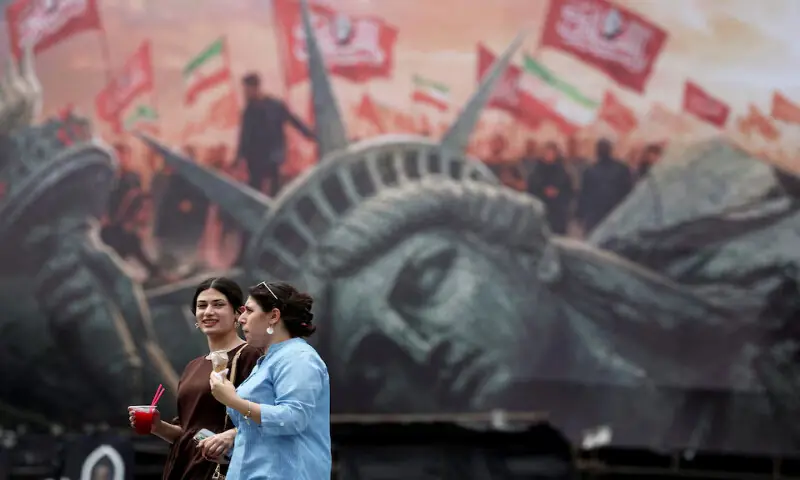
People walk past a billboard featuring an image of the late Supreme Leader of Iran, Ayatollah Ali Khamenei, on a building in Tehran, Iran. – Reuters file

More people in Iran return to work this week as a pause in fighting between the United States and Israel provides a temporary respite from bombardment, but the economic outlook remains bleak.

In Tehran’s Grand Bazaar, more shops opened for longer hours on the first working day of the week compared with the period before a ceasefire announced overnight into Wednesday. However, merchants said sales remained weak.

“It’s almost complete stagnation,” said one vendor selling metal goods, tools and light industrial items.

He said new wholesale price lists showed increases of 20–30 per cent compared with late January, adding that it was unclear how or when imports would resume amid the war.

The January prices themselves had already risen sharply amid inflation linked to protests, killings, and a 20-day internet blackout, traders said.

The Islamic Republic has since imposed another near-total internet shutdown since the start of the war on February 28, severely disrupting work and income streams.

A Tehran-based online English teacher said she has been forced to switch from Google Meet to state-run platforms on a domestic intranet, which does not support her foreign students and raises concerns over security and encryption.

A bazaar vendor said online sales had fallen to nearly zero due to limited internet access and poor search functionality on local systems.

The government of President Masoud Pezeshkian has said restrictions will remain for “security considerations”. The ICT ministry has proposed limited support for some digital businesses, while telecom firms are planning a tiered “Internet Pro” system.

Analysts say the wider economy faces worsening pressure as attacks have damaged steel, petrochemical, aluminium, transport and energy infrastructure, with rebuilding expected to take years even if fighting ends.

More than 50,000 US troops remain in the region, with Washington maintaining pressure on Tehran amid ongoing tensions and sanctions.

Layoffs have spread across sectors, including car manufacturing and media, while businesses report collapsing demand and shrinking savings.

“With or without the war, it feels like we’ve been dead for a long time,” said a Tehran-based video game critic and content producer.

For the latest news, follow us on Twitter @Aaj_Urdu. We are also on Facebook, Instagram and YouTube.

Diplomatic traction, rising economic exposure

Published 13 Apr, 2026 03:13pm 0 min read
A man walks past a billboard near the media centre set up for the US-Iran talks in Islamabad. – Reuters

Pakistan deserves credit for trying to create diplomatic space in a conflict that the region, and the world, can ill afford.

Hosting direct rounds of US-Iran engagement in Islamabad was not a small diplomatic achievement. But there is no point pretending that access is the same as resolution.

The talks may have created room for de-escalation, yet they did not produce a breakthrough.

That was always the more realistic outcome. A conflict shaped by four decades of mistrust, strategic rivalry, sanctions, nuclear anxieties, and regional proxy politics was never going to be settled in a few intense meetings.

Even so, Pakistan’s foreign policy handling has been better than expected.

It has stayed relevant without becoming reckless, visible without becoming partisan, and engaged without fully surrendering its room for manoeuvre.

In a polarised region, that is not nothing. Pakistan is getting global attention for the right reasons, and it is managing, as far as possible, to preserve a degree of neutrality.

But diplomacy should not be romanticised. It can create openings. It cannot, by itself, dissolve contradictions that have been hardening for decades.

The ceasefire, therefore remains fragile. That is the real point. The world economy cannot indefinitely function with the Strait of Hormuz hanging over it as a live geopolitical choke point.

Even if shipping is not fully halted, the threat alone is enough to keep energy markets nervous, freight costs elevated, and inflation expectations unsettled.

Pakistan may have helped lower the immediate temperature, but it cannot impose a settlement on powers whose core red lines still clash.

This limited diplomatic success has nevertheless given the government some badly needed public oxygen after years of political fatigue.

That is precisely why this is the moment for sobriety, not exuberance. Foreign policy gains can improve optics. They do not fix macroeconomic fragility.

As the regional conflict lingers, Pakistan’s economic exposure is becoming more pronounced.

Oil prices are likely to remain elevated, second-round inflationary effects are bound to build, and the external account remains vulnerable at a time when large repayments and rollover dependencies are still part of the story.

This is not the moment for premature populist relief on petroleum prices, especially without fixing the refinery pricing formula.

Artificially suppressing prices may buy temporary applause, but it worsens fiscal strain, delays adjustment, and deepens distortions.

When the state is already under pressure, cosmetic relief becomes an expensive indulgence. Belts need to be tightened, not loosened for the sake of a few easy headlines.

Foreign policy also takes time to pay economic dividends. Domestic vulnerabilities, by contrast, demand immediate attention.

Pakistan’s relations with the UAE may be diplomatically sound, but that does not reduce economic dependence.

The country is repaying around $3.5 billion to the UAE while also managing other large external obligations, including the Eurobond repayment.

That creates a real financing gap. Reports that Saudi support may help fill part of that space are certainly reassuring at face value, but replacement financing is not the same thing as stronger fundamentals.

If one deposit is merely replaced by another, or if support comes in the familiar form of safe deposits and deferred oil facilities, then the structure of vulnerability remains intact.

The hole may be plugged, but the balance sheet does not become healthier.

The real gain would come only if fresh support arrives in a form that improves the quality of external financing, whether through longer-duration flows, actual investment, or inflows that reduce dependence on short-term political goodwill.

Even then, another problem emerges: concentration risk. Pakistan is already too dependent on a narrow set of friendly capitals for external comfort.

More reliance may feel stabilising in the short run, but it also makes the economy more hostage to external relationships over which it has limited control.

The remittance channel is another source of concern. The UAE accounts for a large share of Pakistan’s remittance inflows, and any disruption in labour market access there would quickly become a balance-of-payments issue here.

There are already anecdotal concerns around visa restrictions and labour market tightening.

Even if the picture is still unclear, the risk should not be dismissed.

More than a million Pakistanis work in the UAE. If a meaningful number return home, or if new worker outflows slow sharply, Pakistan would have to absorb that pressure in an economy already struggling with weak job creation, low private-sector dynamism, and limited room for self-employment.

The economic impact would be significant. The social impact would be worse.

That is the broader lesson. Better foreign policy can bring Pakistan into the limelight for the right reasons, but visibility is not strength.

Diplomatic traction does not substitute for fiscal consolidation, structural reform, or internal economic coherence.

Without those, the problems of 240 million people will not ease in any durable way. The government appears to have regained some public support.

It would be foolish to waste it on self-congratulation. This is the time to use that space to restore internal cohesion, impose fiscal discipline, and push a reform agenda while the opening still exists.

Copyright Business Recorder, 2026

This article first appeared in the daily Business Recorder on April 13, 2026

For the latest news, follow us on Twitter @Aaj_Urdu. We are also on Facebook, Instagram and YouTube.